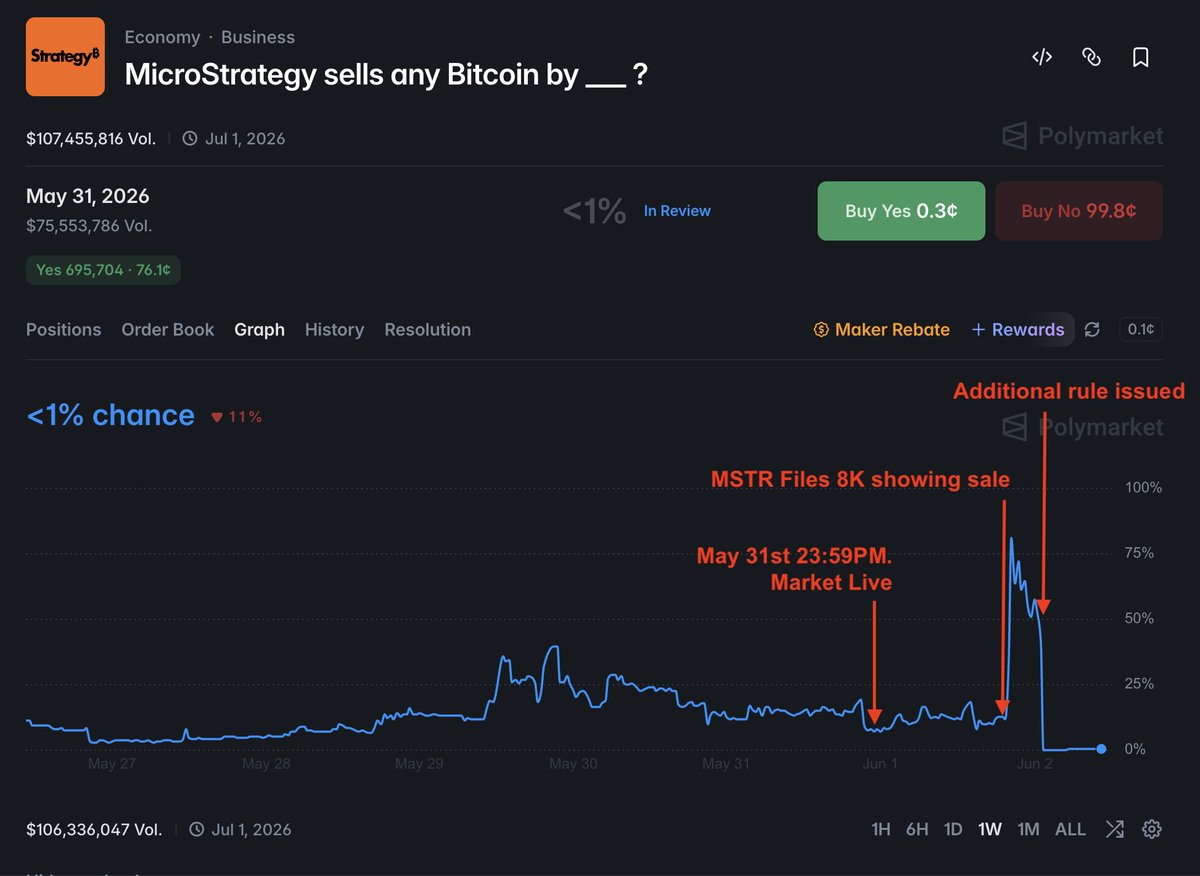
If you just used Ansem's timeline as your personal exit liquidity and shorted every call he made since 2024, your PnL would be absolutely parabolic. Generational counter signal. LAMO
https://t.co/vKWOCpYeB5
I am coming on here begging for some help! My name is braylen and I’m an 18 year old kid that works 6 days a week right now and is trying to start a business. A while ago now I one a giveaway from @stevewilldoit and have been trying to get in contract with him since and have not been able to. I have all proof that I won from this video and it is 100 grand which is life changing money to me and my mom.I have tried and tried to reach out to him and this is my last resort I am not coming out trying to blast Steve or anything I am simply asking for help to get in contact with him! This money would help me start a business and help me make my dreams come true, I honestly don’t like to think about the situation cause it makes me sick to my stomach thinking I may not get it. PLEASE HELP
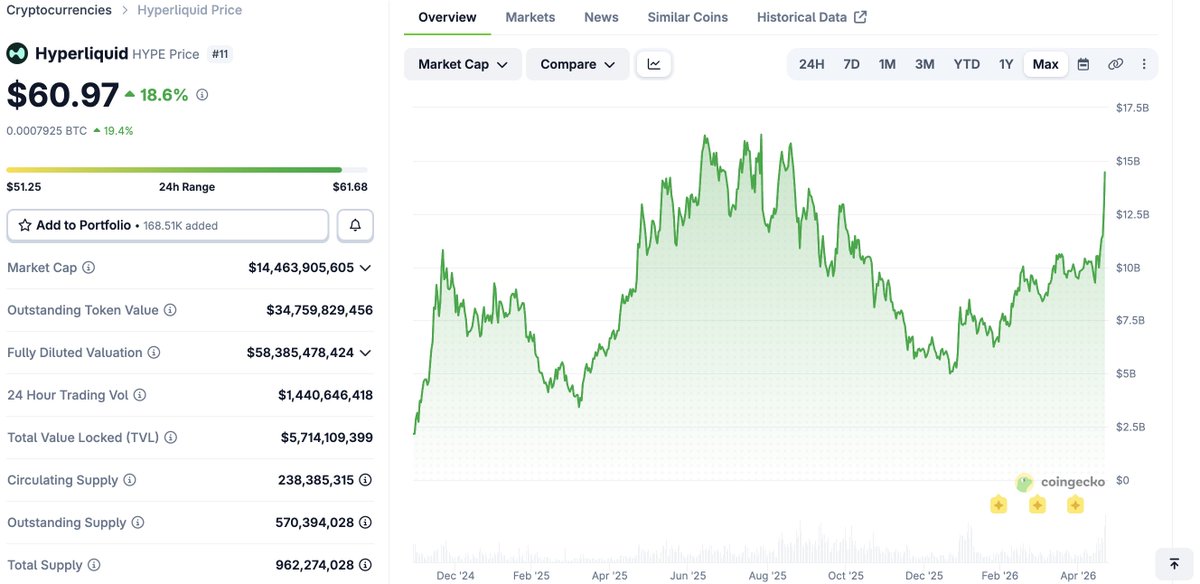
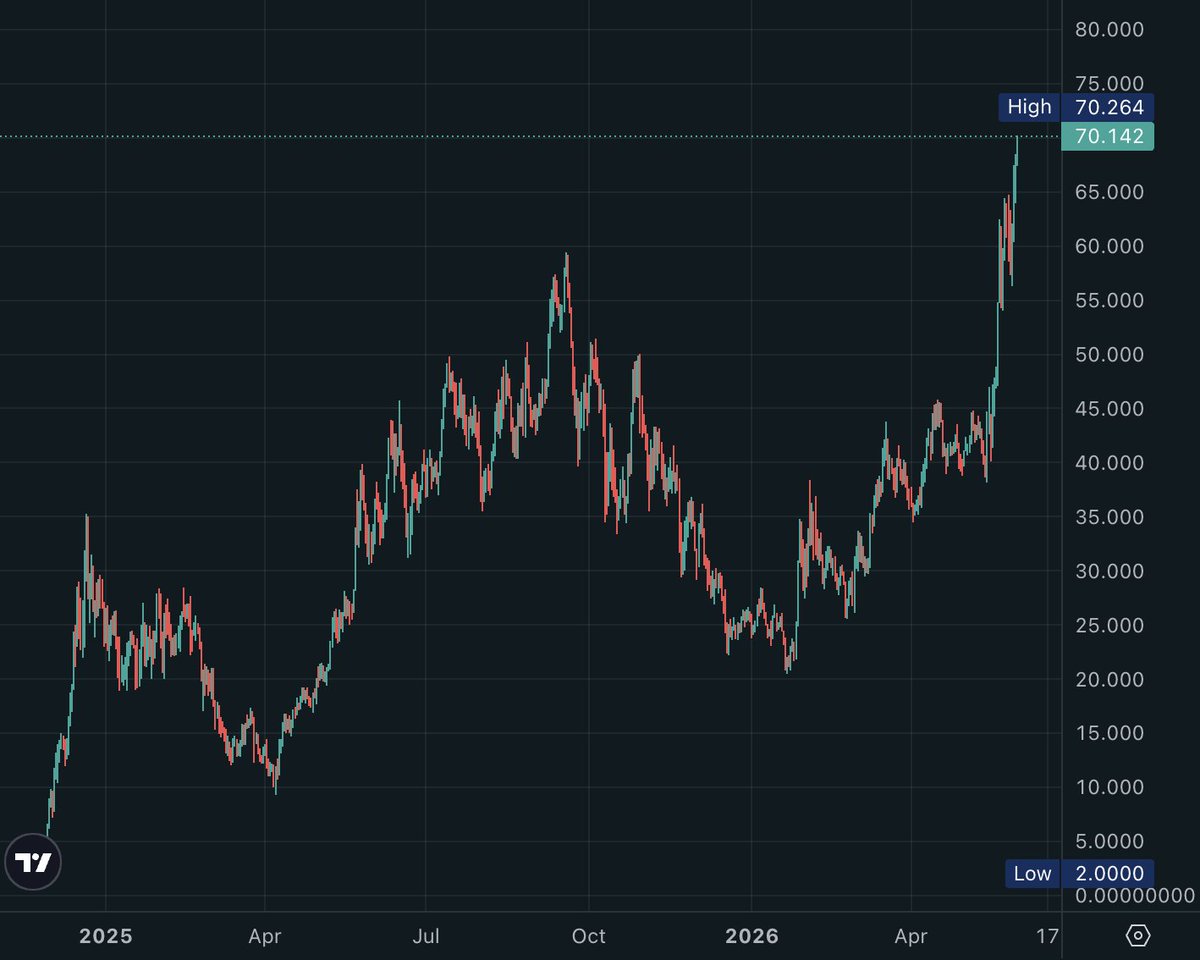
This is a rare sight. $HYPE is at an ATH, but its market cap is actually lower than the last time it traded at these levels. Deflation and sinks..
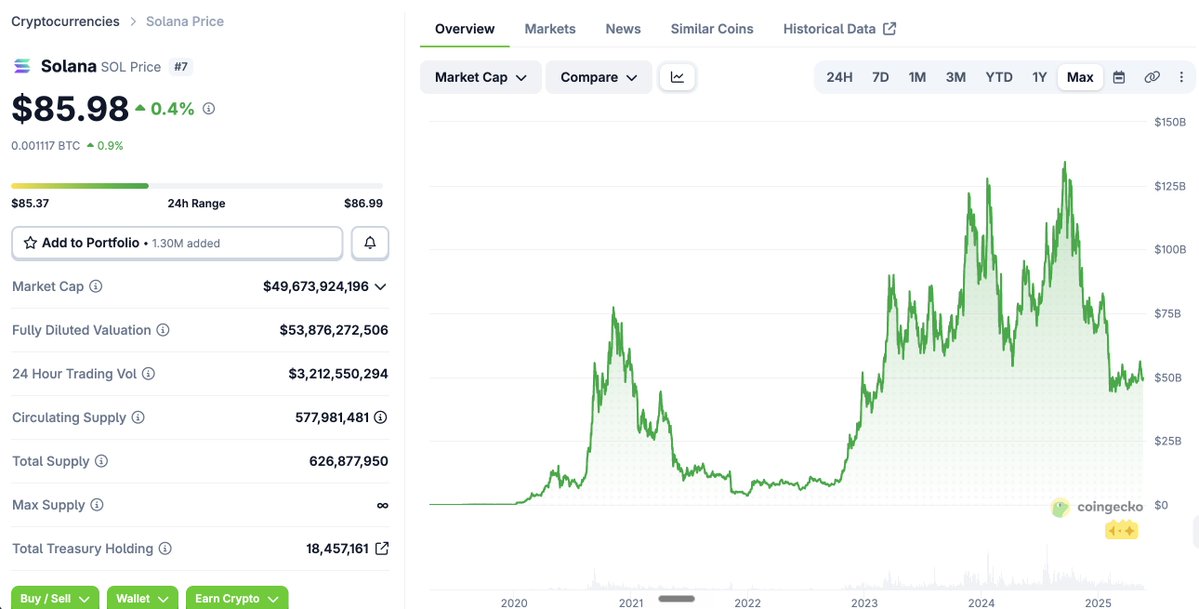
Compare this to $SOL, incredible 2025 run kudos to the ecosystem, but it needed a massively higher market cap just to touch the same level. Inflation kept diluting holders at every level.
HYPE >$50. Some thoughts:
Asset prices reflect the last trade in a market’s continuous auction. While this is often treated as “fair value,” only a small share of supply actually changes hands. As a result, price usually reflects the most aggressive buyers and sellers, and the premium or discount they are willing to accept relative to the recent price range. Still, over time, slower-moving supply and demand respond, and the market starts to re-equilibrate.
Therefore, while there are many ways to value an asset, the best way to contextualize its current value is:
1) What do short-term flows and asymmetries look like?
2) Where are longer-term buyers and sellers likely to step in?
For HYPE, short-term aggressive flows are clearly asymmetric to the upside. ETF access has started ($14.1M volume on May 19th), DATs are buying (Hyperliquid Strategies has $100M left), and the Assistance Fund continues to purchase $10M–$15M a week. On the market side, we are seeing tons of positive catalysts: Circle / Coinbase likely bringing in >$100M of stablecoin-related revenue for Hyperliquid, pre-IPO markets like SpaceX and potentially OpenAI from TradeXYZ bringing outsized TradFi attention, RWA open interest at $2.6B (up 2x from two months ago), and most recently regulatory momentum around tokenized stocks.
This leads to the second question: where do longer-term holders sell into this demand? HYPE spent nearly a year auctioning between $20 and $40, rotating supply into a new holder base. My bias is that much of this supply now sits with less price-sensitive holders: Deployers, the Assistance Fund, DATs, and stakers. If motivated sellers already had repeated exits around $38–$40, how much is left to sell above $50? Instead, we may see a reflexive dynamic where investors waiting for lower (e.g HYPE’s $8 Solana moment) are forced to rotate in.
My view is that flows and demand have already pushed many TradFi equities into extremely stretched valuations, while HYPE, despite being crypto’s clear winner, has remained relatively anchored to fundamentals. This break above the prior range, along with clear improvements in fundamentals (regulation, diversified revenue, 0-1 pre-IPO / 24/7 markets) and access (ETFs and DATs), could create an environment where price discovery turns reflexive and HYPE grinds much higher, detaching from traditional valuation anchors in the same way many high-growth L1s have in past cycles.
Hyperliquid
I have said many times.
The longer @Pumpfun continues to promote memecoins as a daily routine slot machine, the more bullish it is for old @Raydium community memecoins with multicycle narratives.
Position yourselves.