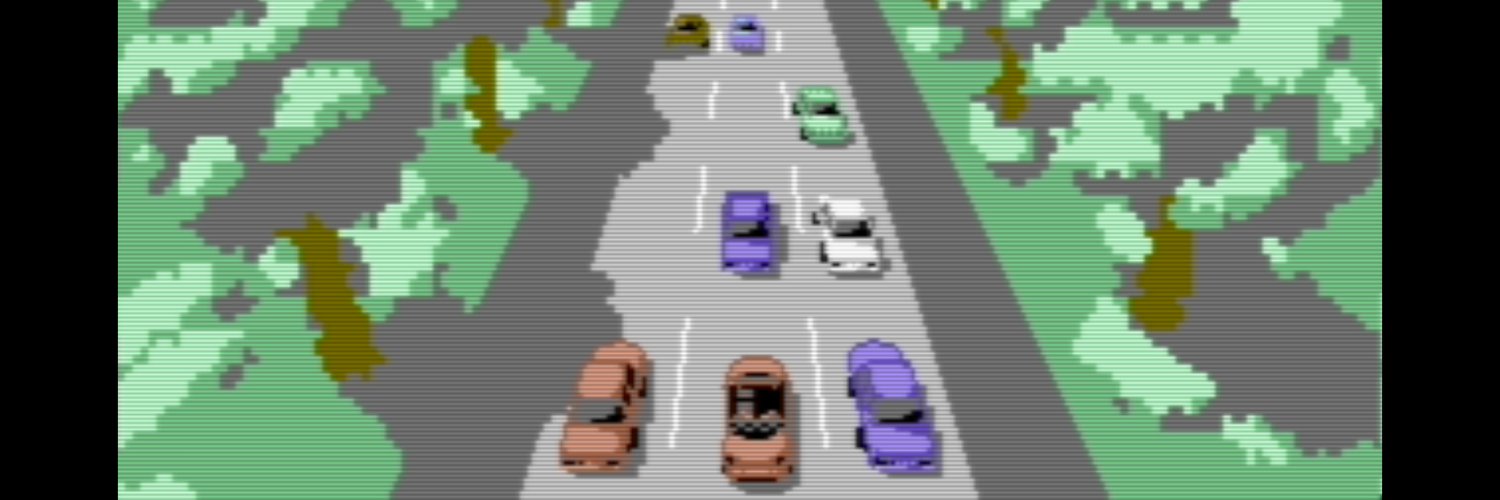
Like many, I'm expecting to finally wind down my use of Twitter after the recent changes and move on to the fediverse. Link in my profile if you want to follow me there.
@CptSparky360@FlightDreamz@MuseumCommodore No, I have a bunch of my own projects to work on. This patch was really just a side-effect of me studying SCR for some other reason. And it was only possible to do because Crammond built it with some support to adjust the time step, presumably for the 16-bit ports.
@cliffski For each object, keep a bitmask of shockwaves already handled, and another one that stores whether the object was inside or outside the wave's radius on the previous frame. Then just loop, compare squared distances and set bits. Parallelise over waves, multithread over objects.
@MechaBarbarian @SkaldRpg All the charm is in the originals! It looks like this style works very naturally with the NUFLI limitations (roughly 3 colours per 8x2 pixel blocks), probably because it doesn't use too many very different colours in small areas.
Finally got around to writing a long article about the #AppleII port of Stunt Car Racer, including a tutorial on how graphics works on this platform: https://t.co/e87TWBKfMR
Against my better judgement I decided to port the #C64 version of Stunt Car Racer to the original #AppleII. To my surprise, it actually worked out pretty well, but it was a really tight fit for 48K. Download link under the video. https://t.co/cEBe3Cgjfe
@rwxdesigns Interesting question! The Oric would be the most straightforward, being a 6502 machine. The graphics could look like on the Spectrum. I guess a VIC-20 port is also possible with RAM+ROM hybrid cartridge (probably not something that existed back in the day).
@markmoxon @khconnell @TheFatSlags Basically he was refining his techniques throughout the 80s, and it was more about building up knowledge than reusing code. For instance, one of the ideas that made SCR efficient was the fisheye projection that he invented for the Sentinel, I believe.