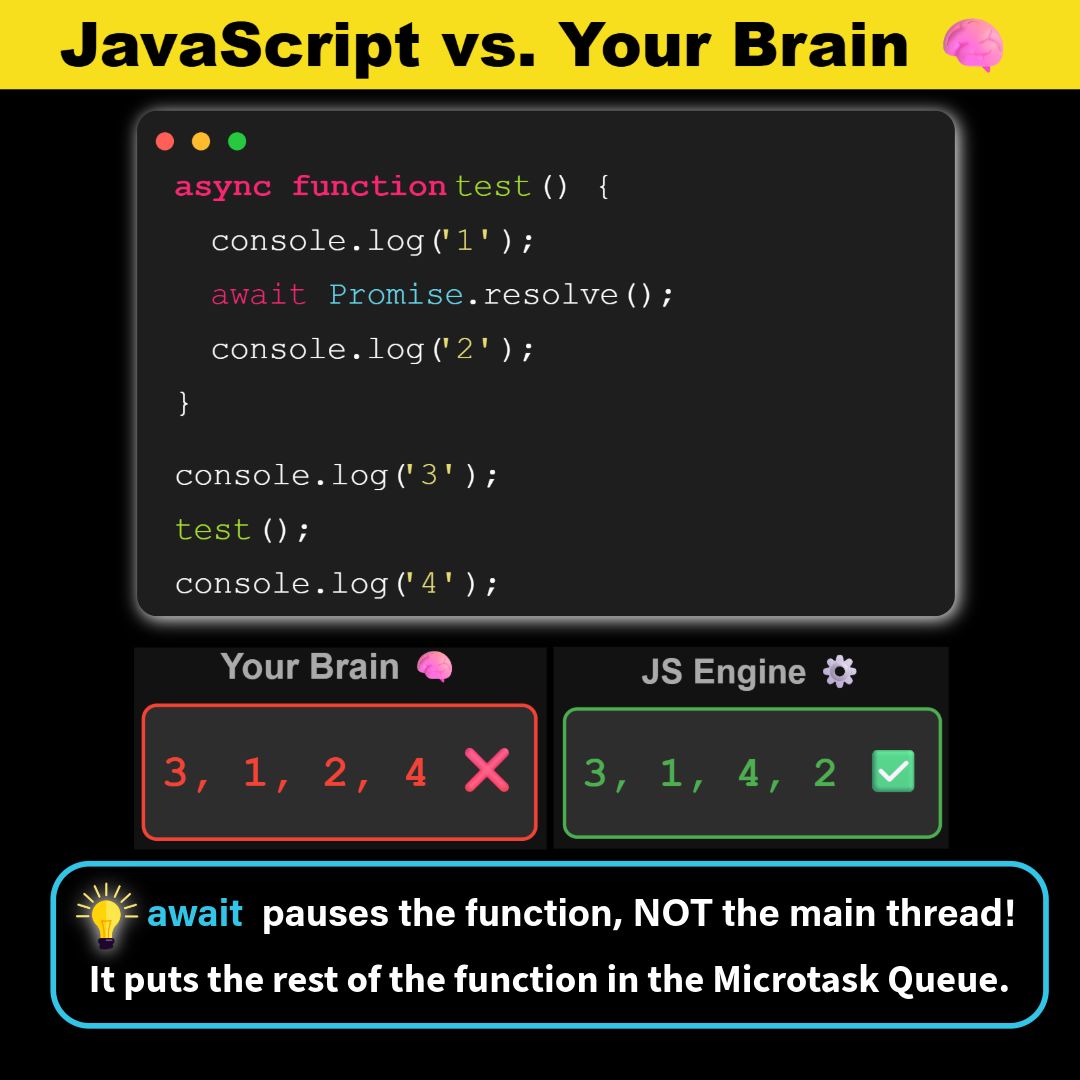
Most developers think the output is 3, 1, 2, 4. They are wrong. ❌
await pauses the function execution NOT the main thread.
JS finishes the script (logs '4') and then logs '2'
📚 Learn JS by Questioning Full Playlist👇
https://t.co/76ael7XSpT
In Part 3 of our "Mastering this" series, we use visual metaphors to surgically precisely control context.
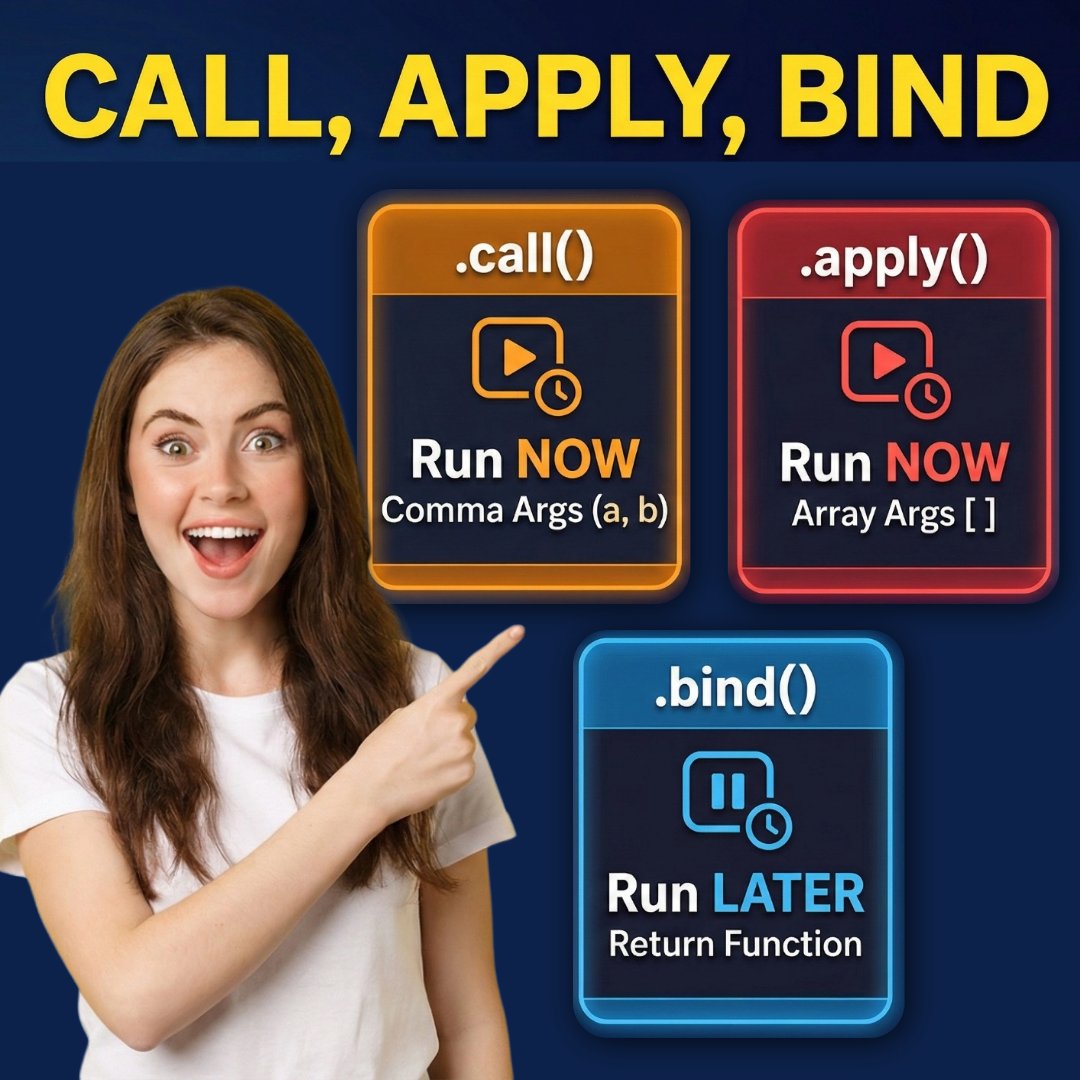
1️⃣ "Run NOW" vs "Run LATER" cheat sheet.
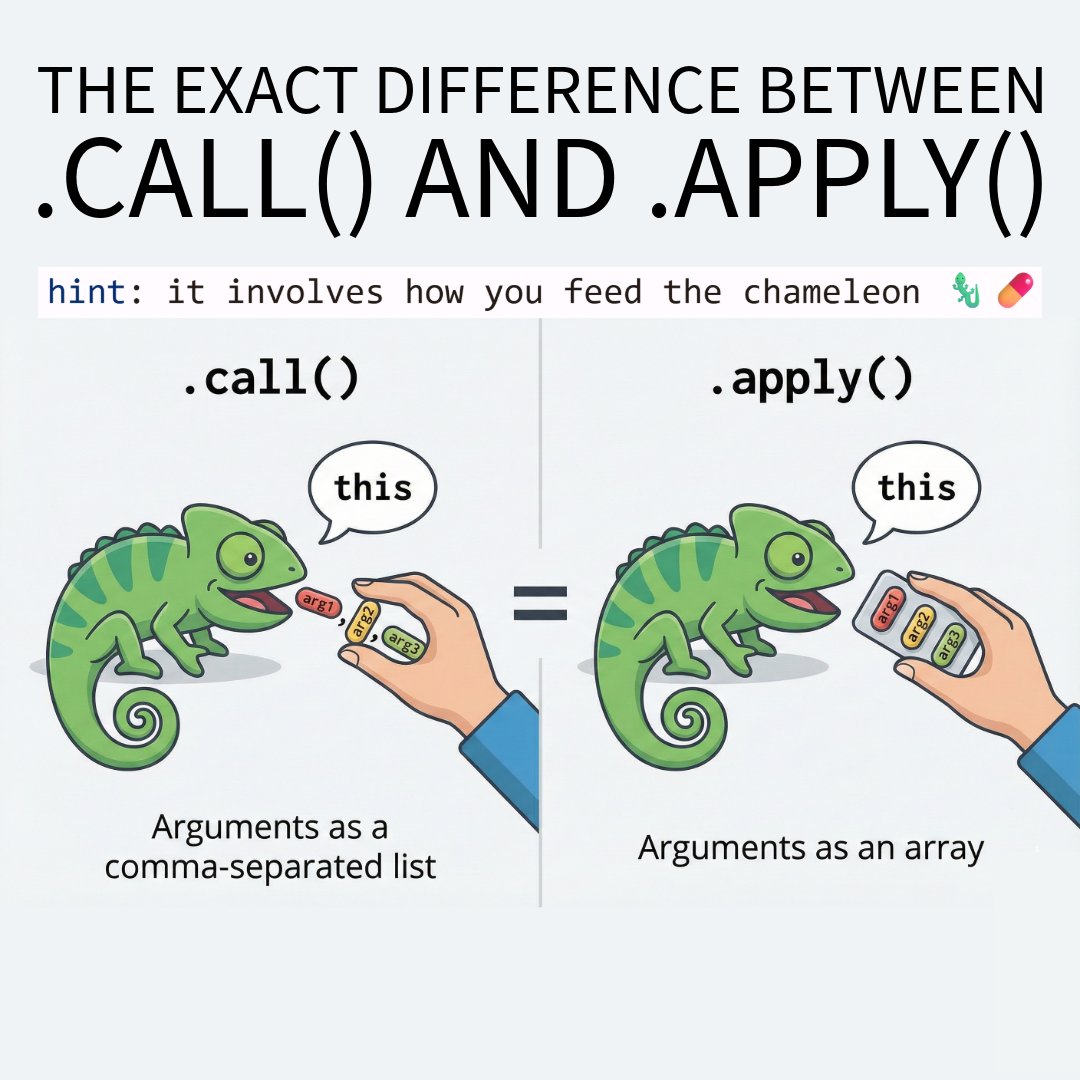
2️⃣ Difference between .call() and .apply()
3️⃣ How .bind() acts like a "time machine"
👇
https://t.co/9qh2MTsJrX
🔥 PART 3 IS LIVE! - Master call(), apply(), and bind() in 5 Minutes!
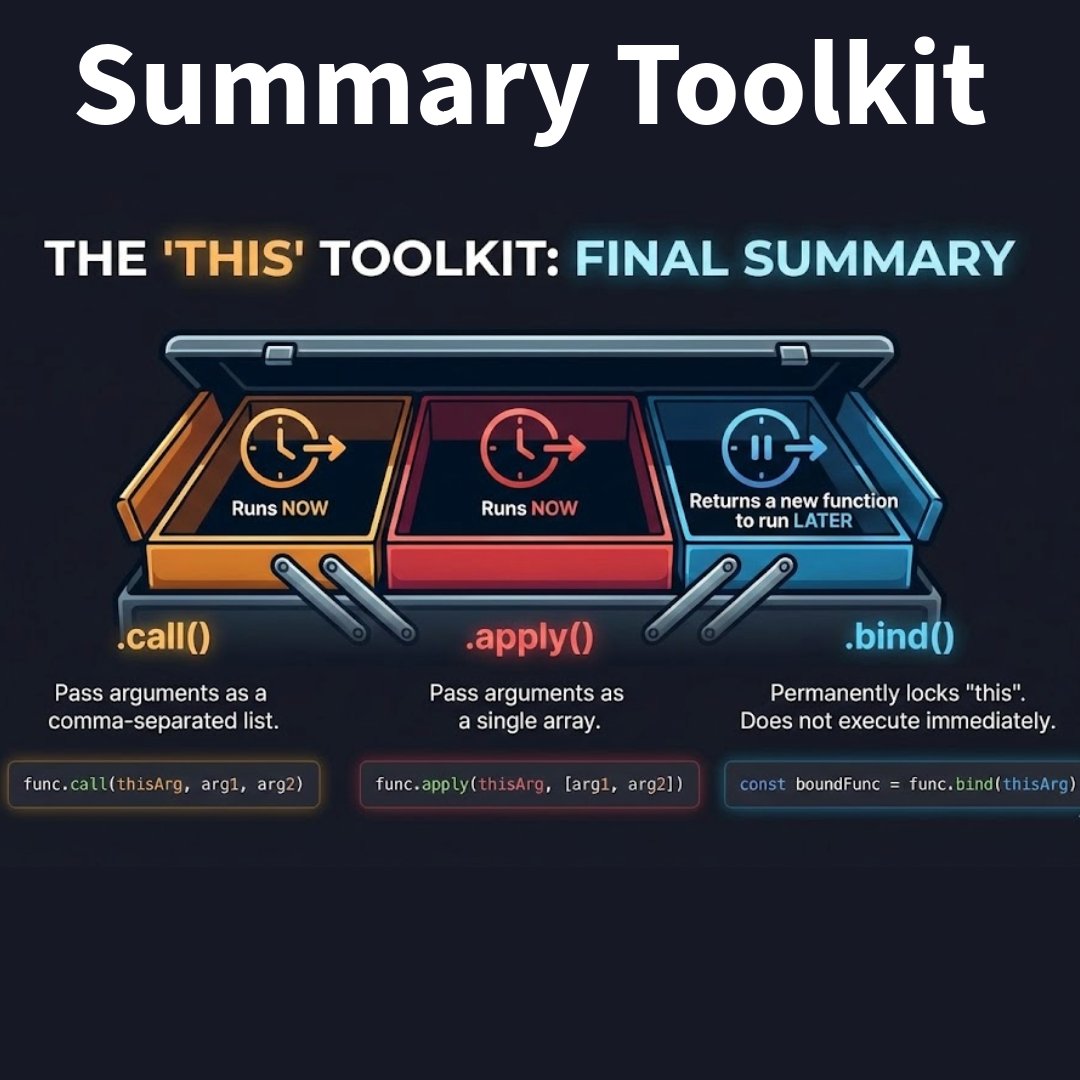
If you've ever wondered how to make one object "borrow" a method from another, you need this toolkit.
Stop guessing. Master the toolkit
📺 Watch the full visual explanation here: https://t.co/9qh2MTsJrX
Stop losing this in callbacks! 🤯
When you hand your function (🦎) to a "Stranger" (forEach, setTimeout), we lose control, and our code hits undefined.
We fixed the CALLBACK TRAP in Part 2!
🎥Watch the full video now! 👇
https://t.co/vriIpj3gDf
In Part 1, we talked about what happens when you call a function(Our Chameleon 🦎) simply, without a dot (a "Function Call").
Missed Part 1?
📺Watch the full visual explanation here 📷https://t.co/qtCzc1wTlR
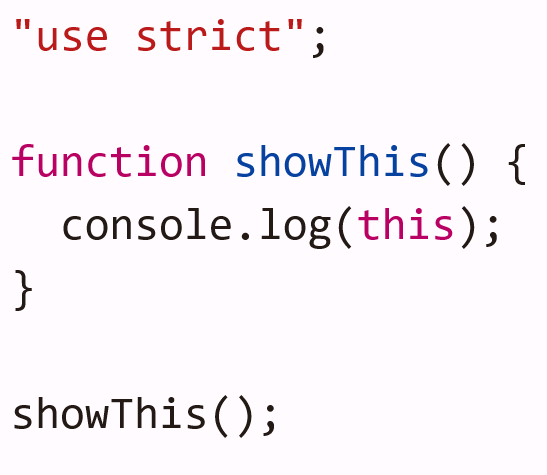
🟡Medium - QUESTION: Strict Mode: On 🛡️
Modern frameworks run in "Strict Mode" by default. Do you know how that changes "this"?
What is "this" in the code below?
A) window / global
B) undefined
C) Error
⚠️If you get this wrong, your app might crash silently! 💥
This is the "Safety Net" difference.
💠 showThis is a regularfn call without a dot. Our🦎is sitting on "no branch"
💠 Legacy JS: It would fall down to the global(window)
💠 Strict Mode: Removes that default behavior, remains undefined.
This is why modern frameworks are safer.
We often pass class methods directly into addEventListener… but do you know what `this` becomes inside the callback?
Try this quick poll and test your understanding 👇
We learned in Part 1 that regular functions are Chameleons 🦎 but what happens when someone else calls them?
I explain exactly how "this" works in Part 1 of my new series - "🎯Master JavaScript this: From Confused to Confident"
In this episode, we fix the classic “crashing button” error step-by-step.
This is just the start.
🚀 Part 2 drops next week: We tackle the 'Callback Trap'
#js
💥 TypeError: Can't read properties of undefined 😭
If `this` keeps confusing you, you’re using the wrong mental model.
Fix 70% of your bugs with 2 rules 👇
🦎 Regular fn → Look at the DOT (dynamic)
📸 Arrow fn → Look at the PARENT (static)
🎥 Part 1:
https://t.co/qtCzc1wTlR
🚫STOP your JavaScript app from crashing due to a single failed API call.
Master the concept of The API Race - Promise.all vs. Promise.allSettled, watch the full Short to understand the crucial difference and level up your async JS!
▶️ https://t.co/YbdQMeCKat
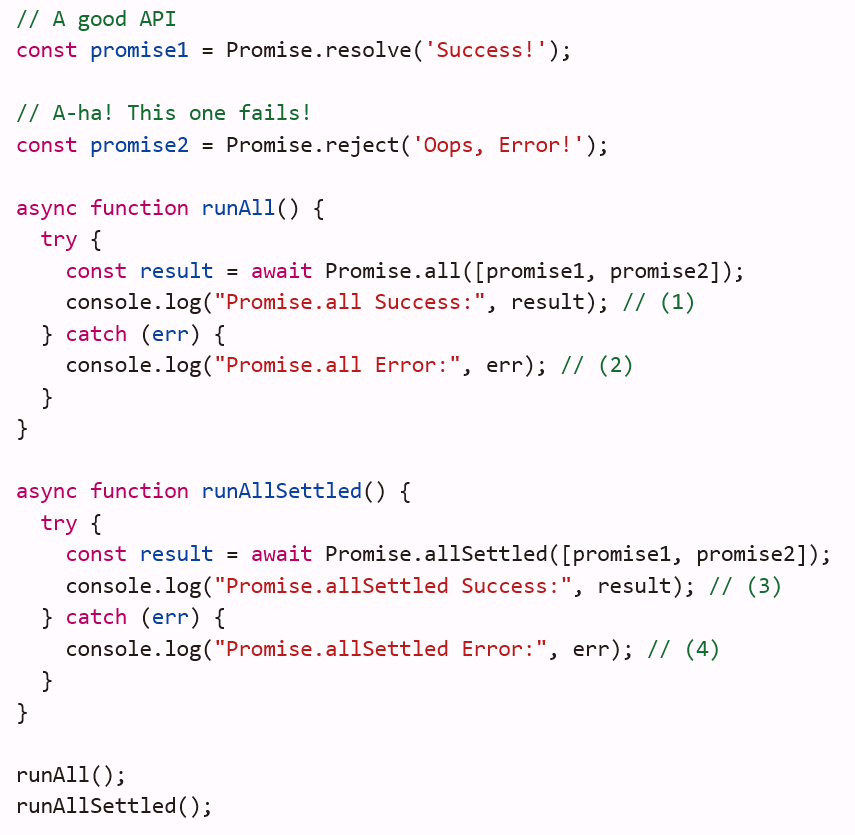
🤯 JS Quiz: The API Race - Promise.all vs. Promise.allSettled
What happens when you run Promise.all and Promise.allSettled with a mix of successful and failed promises? Which of these console.log lines will run?
A. 1&3
B. 2&3
C. 1&4
D. 2&4
➡️ `Promise.all()`: (Think: Group Project) If ONE promise rejects, the ENTIRE thing fails instantly. You only get the error.
➡️ `Promise.allSettled()`: (Think: Report Cards) It waits for all promises to finish (pass OR fail), and gives you a complete list of all outcomes.
🙅♂️Stop committing console.log()!
Use Logpoints in Chrome DevTools instead.
You can log any value without touching your source code.
��� No more "remove log" commits
✅ No save/reload cycle
✅ 100% clean code
Here's a 60-second video showing you how: https://t.co/meHBEYX6MU
🤦♂️Stop committing console.log()!
Use Logpoints in Chrome DevTools instead.
You can log any value without touching your source code.
✅ No more "remove log" commits
✅ No save/reload cycle
✅ 100% clean code
Here's a 60-second video showing you how: https://t.co/meHBEYX6MU
Stop committing console.log()! 🤦♂️
Use Logpoints in Chrome DevTools instead.
You can log any value without touching your source code.
✅ No more "remove log" commits
✅ No save/reload cycle
✅ 100% clean code
Here's a 60-second video showing you how: https://t.co/meHBEYX6MU
🤔 Which option did you choose and why? Drop your reasoning in the comments!👇
Sets use a different equality algorithm internally! 🎥 Watch the full breakdown along with the snippets from the actual internal algorithm used by JavaScript
👉https://t.co/tDyr8cnvTE
Most developers know that NaN === NaN returns false in JavaScript. What do you think the output of this code will be?
const mySet = new Set();
mySet.add(NaN);
mySet.add(NaN);
mySet.add('NaN');
console.log(mySet.size); // ??
🤔 Which option did you choose and why? Drop your reasoning in the comments!👇
Sets use a different equality algorithm internally! 🎥 Watch the full breakdown along with the snippets from the actual internal algorithm used by JavaScript
👉https://t.co/tDyr8cnvTE
Most developers know that NaN === NaN returns false in JavaScript. What do you think the output of this code will be?
const mySet = new Set();
mySet.add(NaN);
mySet.add(NaN);
mySet.add('NaN');
console.log(mySet.size); // ??