📢 Remember to save the date for the next @WomenTechmakers Paris meetup:
May 16th: IWD24 Paris: Crafts-Women Techmakers & Friends (@duchessfr, @LadiesCodeParis) @ncraftsConf Conferences
[Mandatory Registration]: https://t.co/EMKo5rMm6R
It worked.
Gave Claude $20.
Left it coding overnight.
Woke up to:
• finished script
• +$95 from first 5 trades
Didn’t touch anything.
Then I found this wallet:
0xb27b...b82
• $384,858 profit
• 13,070 predictions
• $18.5K biggest win
• Started March 2026
Almost no one is watching it.
While building my script, I copytraded it to test the math.
Started with $80.
→ $4,218 in a few weeks
Every position is identical in structure.
Not trading.
One equation.
Running while you sleep.
Examples:
$17,839 → $36,318 (+103%)
$3,112 → $15,011 (+382%)
$10,676 → $22,178 (+107%)
Here’s the exact framework I gave Claude:
1. Temporal bias
Find BTC time windows with >65% edge.
Ignore everything else.
2. Kelly sizing
Size based on confidence.
Never fixed bets.
f* = (p × b − q) / b
3. Volatility filter
Skip high volatility.
Trade only clean conditions.
4. Bayesian updates
Update probabilities after each trade.
The system improves over time.
Claude built everything while I slept.
Funded it with $20.
First trade fired minutes later.
Copytrade my finds →
@polash_ai
…
You’re seeing this early.
That window doesn’t stay open.
You only need Claude + Device + 1 hour/day.
Giving This Free for 24 hours. To get it:
1. Comment the word ' DM '
2. Like and Retweet this post
3. Follow me
@polash_ai
Anthropic senior engineer just released a 1-hour course on building a team of agents with loops & graphs:
• 00:27 - introduction to CLAUDE.md & Plan mode
• 11:24 - building "skills" & "hooks" for Claude agents
• 37:02 - building agents & subagents with Claude
• 52:47 - self-improving loops & graphs for Claude agents
this 1-hour watch will replace a $500 agentic engineering course
watch today, then read how to build a team of self-improving agents that work together
Google Brain founder Andrew Ng:
"Prompting will be dead in 6 months
Agent harnesses built with loops and graphs will replace it"
Agent → Harness → Feedback → Loops → Graphs → Self-Improving Systems
In this 1-hour Stanford lecture, he explains what the best engineers are building instead and how you can start today
Prompt → Run → Verify → Improve
The first 20 minutes teach what most $1,500 courses try to sell you
For free
Bookmark and watch it today
Then read the guide below on building an agent harness that improves itself
Google just dropped the best 1-hour course on Graph Engineering: from one agent to a full 24/7 system
00:00 - What Graphs are
09:16 - Build an agent
21:15 - Graph engineering explained
41:03 - Graph engineering practice
52:21 - Self improving Graphs
Free, the best thing on Graph engineering I've come across
Watch it, then read the full guide on agents and graphs below.
Este ingeniero de Anthropic explica la manera correcta de construir agentes de IA en 14 minutos.
La mayoría de los desarrolladores pasan meses haciéndolo de manera equivocada.
Guarda esto antes de escribir otra línea de código de agente.
instead of watching 2 hours of Netflix tonight, watch this Stanford lecture given by Anthropic engineers
it's the clearest explanation I've seen of how AI agents actually work
useful whether you've never touched AI in your life or have been building with it every day
i took the key ideas and turned them into a practical guide, with ready-to-copy prompts
watch it, then read the guide below on the easiest way to build your own AI agent team that improves itself over time
Anthropic engineer:
"99% of people use Claude Code like Google, and only 1% are running swarms of self-learning Claude agents
I'm running 100+ agents in a loop. I have Chief agent, PM agents - they manage the whole team"
in a 30-minute workshop, an Anthropic engineer revealed how to get max value from Claude Code at min. cost
this is worth more than another $500 vibe-coding course
watch today, then read how to build self-improving agentic systems with Fable in the article below
Build your own harness, folks.
This is absolute banger paper from NVIDIA on self-evolving agent harnesses.
(bookmark it)
They introduce SoL-Pi which cuts token traffic by nearly half.
And it matches its baseline harness on GPT-5.6 Sol and Opus 5.
More details below:
Instead of tuning a harness by hand, they run auto-research loops at the harness layer across many repository-derived and verifier-driven environments, keeping only the mechanisms that survive selection.
Four mechanisms survived:
> Action Fusion changes how actions execute
> Online Context Compact handles compaction during a run
> ObservationPack reshapes observation handling
> Evidence-Preserving Reducer covers delegated reading
On the 51-task EdgeBench evaluation, the savings translate to about a third off API cost. In dollars that is an estimated $8.75 to $13.50 per hour against native Codex and Claude Code harnesses, and $4.36 to $5.71 against the baseline harness.
Because the search runs across many environments rather than one, the retained mechanisms keep working outside the setting that produced them. Code is on GitHub under NVlabs.
Paper: https://t.co/1x26LzuE6d
Chat with Paper: https://t.co/kygTc5XLFB
This is actually insane. This uses @typesafeai Jev model, as a plugin in Claude to review all the un-nesseasary tool calls, and it takes 1s to run!
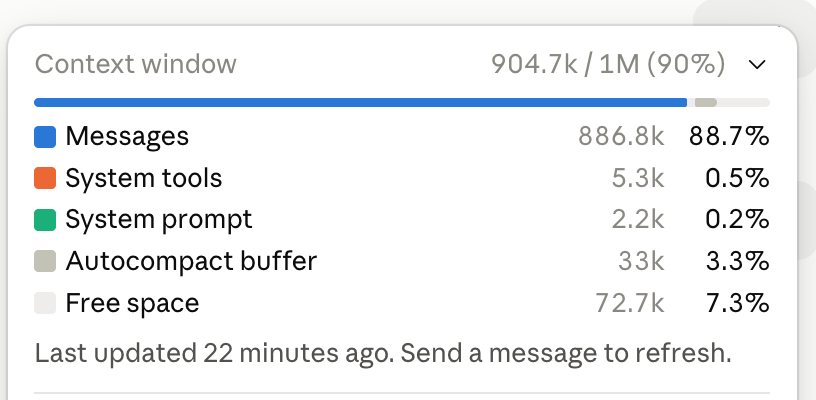
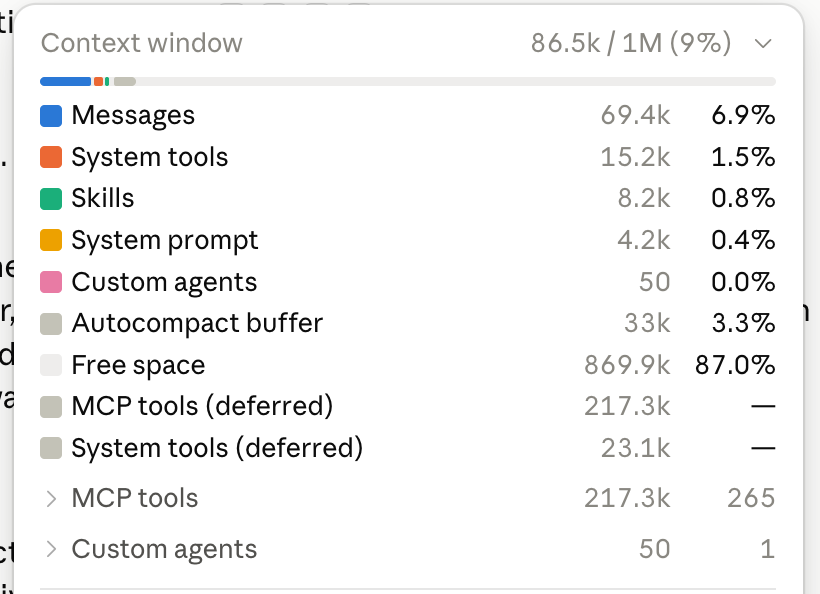
Like, literally, 1 second to take my Claude session from nearly 1M to ... 86K tokens! 😮
Ask your claude to install it and be amazed
Use this prompt
```
Install, and configure :
https://t.co/yD6PncSCtH
```
Jev is "Internet" moment for AI: up to 193x faster and 444x cheaper in tests with Claude Fable 5.1 and GPT-6 Astra
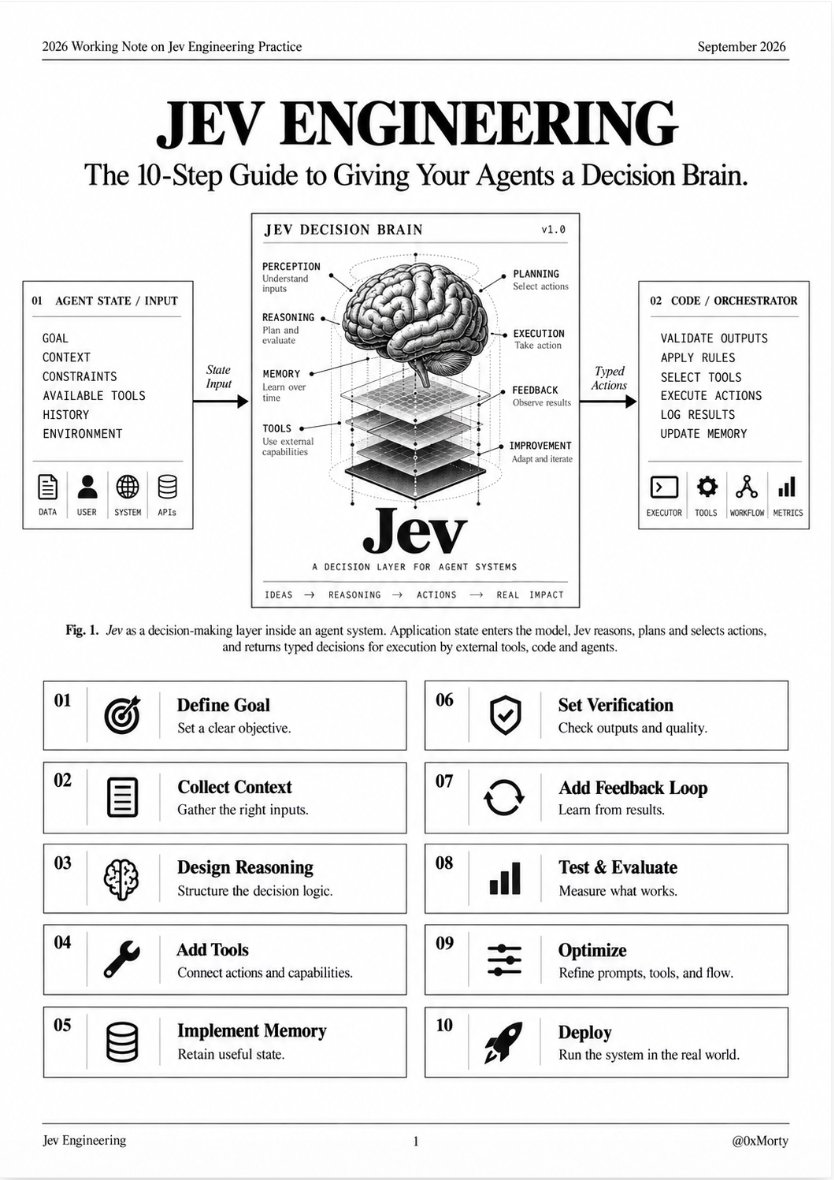
Whar is Jev, how to use and unlock its real 100х advantage in my 10-page research:
step 1 → meet Jev: LLM writes, agents act, Jev chooses the next move - split intelligence from execution
step 2 → turn every agent fork into three primitives: Choice selects one route, Score measures a defined scale, Noul returns the probability of yes
step 3 → build before getting access: use TypeSafe’s official adapter with OpenAI, Anthropic or xAI, then swap in Jev without rebuilding the graph
step 4 → setup first Jev: one state, three parallel decisions, risk-based thresholds and a real queue your agents can execute
step 5 → batch decisions instead of serializing them: 13 questions in one call ran 10x faster and 12.2x cheaper than 13 sequential calls
step 6 → place Jev at every bounded fork: choose the agent, model, tool, browser action or human escalation, then read fresh state
step 7 → benchmark the entire loop: Browser Use hit Google Flights in 7.1s, Every ran 777 checks in under 0.7s, Mobile Jev completed 9 actions in 21s
step 8 → rank wide, read narrow: Jev cut wrong Hermes skill loads from 16.8% to 7.3% and pushed legal Top-10 retrieval from 38% to 62%
step 9 → steal a system, not a prompt: Chief of Staff, model router, inbox firewall, research feed, browser controller and safety gate all use State → Questions → Action → Verify
step 10 → keep Jev out of math, writing and irreversible execution: code computes, LLMs create, Jev decides, fresh state proves the result
the result: one slow, expensive agent becomes an always-on decision machine that routes, scores and escalates in milliseconds
Copy the complete 10-page Jev blueprint - then read full 10-step roadmap below ↓
Ce gars à regroupé tous les projets avec JEV qu'il a vus passer et les à rassemblés dans un seul site !
Pas mal pour voir les use cases et prendre un peu d inspiration ! Le site c est https://t.co/hwJjDGMGf8 👇
Jev doesn’t make the LLM smarter. it makes 193x faster. 444x cheaperand testable
Jev could be the missing decision layer between LLM reasoning and real-world agent execution.
without a decision layer, you usually solve that with:
more prompting
→ more context
→ more retries
→ more tokens
Jev makes the fork explicit.
for every state:
Choice → which route wins?
Score → how good is each option?
Noul → how likely is the condition true?
then execution stays outside the model.
full Jev Engineering breakdown below ↓