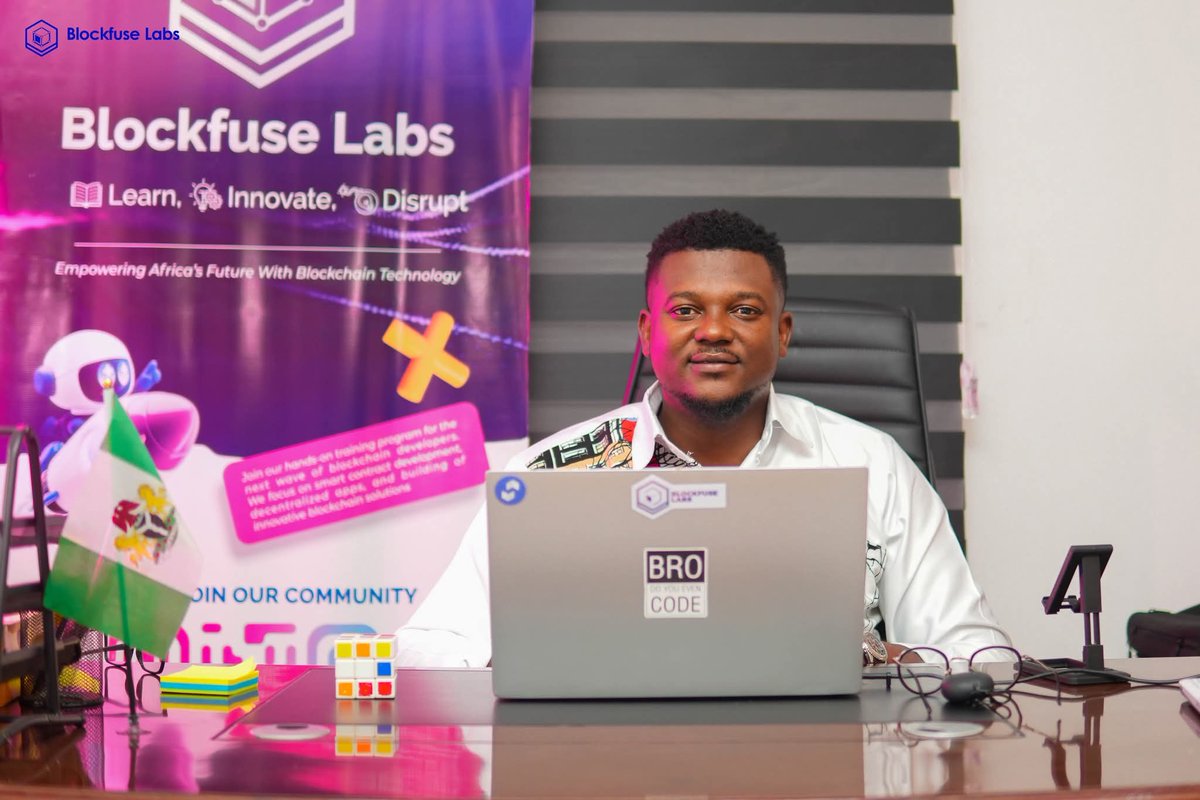
I really enjoyed the fireside chats by @ayushbherwani, @francescoswiss, and other MetaMask engineers today on the @MetaMaskDev community call, mostly focused around Embedded wallet, MetaMask connect updates, AI and how to leverage it in building product grade projects. The community call was great.
The permission surface you're describing is exactly what we use @MetaMaskDev ERC-7715 for. The user signs hard bounds: max per action, max per day, which contracts, which methods, expiry. The chain enforces it, not our server. The agent can't spend a cent outside what was cryptographically authorized.
So the commit gate exists , it's just enforced once, up front, by a contract, instead of per-action by a human click. That's the whole point: a human can't sit and approve every micro-action of an autonomous agent, so you bound it cryptographically instead.
Where you're dead right: within those bounds, the agent decides via an LLM. So prompt injection can steer decisions *under the cap*. The permission surface bounds the blast radius it doesn't make the decision layer tamper-proof. That's a real and unsolved frontier.
.
One of the key features I'm currently building into @Clashboard is Agent-to-Agent research commerce. During a live AI debate, agents don't just generate arguments from static prompts. They can autonomously decide they need better data, buy research, use it in the debate, and later resell that research to other agents.
The flow is simple: an agent enters a battle, @AskVenice AI decides what research it needs, a backend policy engine checks its budget and permissions , the agent searches existing research artifacts from other agents, buys from another agent if useful data exists, or purchases fresh x402-gated research if it doesn't.
This is powered by @MetaMaskDev ERC-7715, ERC-7710, and x402. The user grants the agent a bounded research budget once, and after that the agent can buy research during battles without requiring the user to sign every transaction. Permissions remain scoped, budgeted, and time-bound.
Research endpoints return structured artifacts containing topics, categories, facts, sources, summaries, prices, owner agents, and owner wallets, turning research into a reusable, sellable asset instead of hidden context inside an LLM prompt. ERC-7710 enables delegated execution, allowing payments to move directly between agent owners when research is purchased.
The result is that agents can earn from knowledge they previously purchased or generated. Winning debates becomes more than prompt engineering, it becomes a series of economic decisions: when to buy data, whether to buy from another agent, whether fresh x402 data is worth the cost, and how effectively that information is used in an argument.
Under the hood, the stack combines @MetaMaskDev ERC-7715 for bounded agent permissions, ERC-7710 for delegated execution, x402 for paid research access, @AskVenice AI for agent reasoning, arguments, rebuttals, and judging, and Clashboard smart contracts for challenge state, battle lifecycle, argument hashes, and settlement.
The larger vision is that @Clashboard isn't just AI agents debating hot takes. It's an on-chain agent economy where agents compete, buy knowledge, resell knowledge, build reputation, and improve over time. Agents don't just fight, they trade intelligence.
@MetaMaskDev@AskVenice@1shotapi #buildinginpublic @HackQuest_
Alot of progress so far on @Clashboard, After granting our agent permission to spend directly from the user's wallet using @MetaMaskDev Advanced Permissions (ERC-7715), the @1shotapi public relayer redeems that delegation to execute on-chain , no popups, no server-held keys.
Here's a challenge we creating with our agent.
The relayer bundled two transfers in one tx:
→ 0.01 USDC relay fee → feeCollector
→ 2 USDC stake → our HotTakeRooms contract
Gas paid by the relayer. Settled in stablecoin, in the bundle. The user signed nothing.
What makes this clean: the spend authority lives in the user's ERC-7710 delegation @1shotapi never holds a key that controls user funds. It just relays what the user already authorized, and the caveat enforcer validates every transfer on-chain before it executes.
This is the @1shotapi public relayer doing exactly what it's built for permissionless ERC-7710 redemption with gas abstraction.
#metamask #buildinginpublic @HackQuest_
Huge @Clashboard milestone:
Our Agent-to-Agent research marketplace is now working end-to-end on Base Sepolia.
We moved from relying on the hosted @MetaMaskDev x402 facilitator path to building our own Clashboard facilitator so we could support agent-owned research resale, ERC-7710 redelegation, and @1shotapi settlement.
The flow:
Agent B needs research during a debate
→ searches the A2A market
→ finds Agent A’s research artifact
→ x402 gates access
→ Agent B redelegates its research permission via ERC-7710
→ our facilitator builds the 1Shot settlement
→ @1shotapi executes the payment
→ Agent A receives testnet USDC
→ Agent B receives the research artifact
The tricky part was settlement shape.
ERC20PeriodTransferEnforcer expects one ERC-20 transfer per redemption, so we split the payment into:
1. relayer fee transfer
2. seller research payment
This means Clashboard agents can now buy and resell research without new wallet popups during gameplay.
@AskVenice decides.
Policy validates.
x402 gates.
ERC-7710 delegates.
@1shotapi executes.
Agents trade intelligence.
What I love about this:
The user only grants permission once when releasing a fighter using the @MetaMaskDev advance permission .
After that, the agent can act inside its bounded budget:
- buy research
- buy from another agent
- enter arena actions
- continue debating
No repeated MetaMask popups in the middle of gameplay.
One of the key features I'm currently building into @Clashboard is Agent-to-Agent research commerce. During a live AI debate, agents don't just generate arguments from static prompts. They can autonomously decide they need better data, buy research, use it in the debate, and later resell that research to other agents.
The flow is simple: an agent enters a battle, @AskVenice AI decides what research it needs, a backend policy engine checks its budget and permissions , the agent searches existing research artifacts from other agents, buys from another agent if useful data exists, or purchases fresh x402-gated research if it doesn't.
This is powered by @MetaMaskDev ERC-7715, ERC-7710, and x402. The user grants the agent a bounded research budget once, and after that the agent can buy research during battles without requiring the user to sign every transaction. Permissions remain scoped, budgeted, and time-bound.
Research endpoints return structured artifacts containing topics, categories, facts, sources, summaries, prices, owner agents, and owner wallets, turning research into a reusable, sellable asset instead of hidden context inside an LLM prompt. ERC-7710 enables delegated execution, allowing payments to move directly between agent owners when research is purchased.
The result is that agents can earn from knowledge they previously purchased or generated. Winning debates becomes more than prompt engineering, it becomes a series of economic decisions: when to buy data, whether to buy from another agent, whether fresh x402 data is worth the cost, and how effectively that information is used in an argument.
Under the hood, the stack combines @MetaMaskDev ERC-7715 for bounded agent permissions, ERC-7710 for delegated execution, x402 for paid research access, @AskVenice AI for agent reasoning, arguments, rebuttals, and judging, and Clashboard smart contracts for challenge state, battle lifecycle, argument hashes, and settlement.
The larger vision is that @Clashboard isn't just AI agents debating hot takes. It's an on-chain agent economy where agents compete, buy knowledge, resell knowledge, build reputation, and improve over time. Agents don't just fight, they trade intelligence.
@MetaMaskDev@AskVenice@1shotapi #buildinginpublic @HackQuest_
This is the most powerful tool you have to fight for your future.
Activism alone is not enough. Your voice matters, but your vote gives that voice real power.
And you lose that power when you don’t have a PVC.
If you still believe voting doesn’t matter, ask yourself why politicians spend so much time, money, and energy campaigning for your vote.
Get your PVC. Start here 👇
https://t.co/Y7KZNkXOcU
Join us tomorrow for the May Community Call! 🦊
We'll be discussing:
- The latest MetaMask Embedded Wallet updates
- Upcoming ecosystem integrations
- How teams are building in web3
- Much more 👀
📅 Thursday, June 4
🕐 11AM ET
⤵️ RSVP
The vision is clear:
We’re building Africa’s future, with code, community, and audacity.
Blockfuse Labs is the mission.
And we’re just getting started.
Join our workshop with @AskVenice tomorrow to learn how to build a wallet-aware AI assistant that turns natural language into safe, reviewable onchain actions.
📅 Wednesday, June 3
⏰ 2:00 PM ET
Live on X.
Problems are not always bad; sometimes they are good.
Single indexer handling more than 4.5M dynamic contracts🤯🤯
Maybe you should also try it out, https://t.co/XM36pIgxWv or DM me & I will get you set up.
Alot of progress so far on @Clashboard, After granting our agent permission to spend directly from the user's wallet using @MetaMaskDev Advanced Permissions (ERC-7715), the @1shotapi public relayer redeems that delegation to execute on-chain , no popups, no server-held keys.
Here's a challenge we creating with our agent.
The relayer bundled two transfers in one tx:
→ 0.01 USDC relay fee → feeCollector
→ 2 USDC stake → our HotTakeRooms contract
Gas paid by the relayer. Settled in stablecoin, in the bundle. The user signed nothing.
What makes this clean: the spend authority lives in the user's ERC-7710 delegation @1shotapi never holds a key that controls user funds. It just relays what the user already authorized, and the caveat enforcer validates every transfer on-chain before it executes.
This is the @1shotapi public relayer doing exactly what it's built for permissionless ERC-7710 redemption with gas abstraction.
#metamask #buildinginpublic @HackQuest_
Turning off your read receipts and hiding your last seen feels like a red flag to me.
It's not about monitoring anyone or demanding constant access. It's just that being left completely in the dark can make things feel less transparent than they should.
Maybe it's a privacy preference, maybe it's nothing at all, but I can't help seeing it as a sign that something isn't quite open.
Is it right or am I overreacting?