🧠 What is the difference between thinking and intelligence?
We are excited to host John Krakauer (Johns Hopkins) for the next Cognition in Action Lecture!
📌 Mindcraft: thinking vs intelligence.
📩 Registration: [email protected] https://t.co/uABNw7nafZ
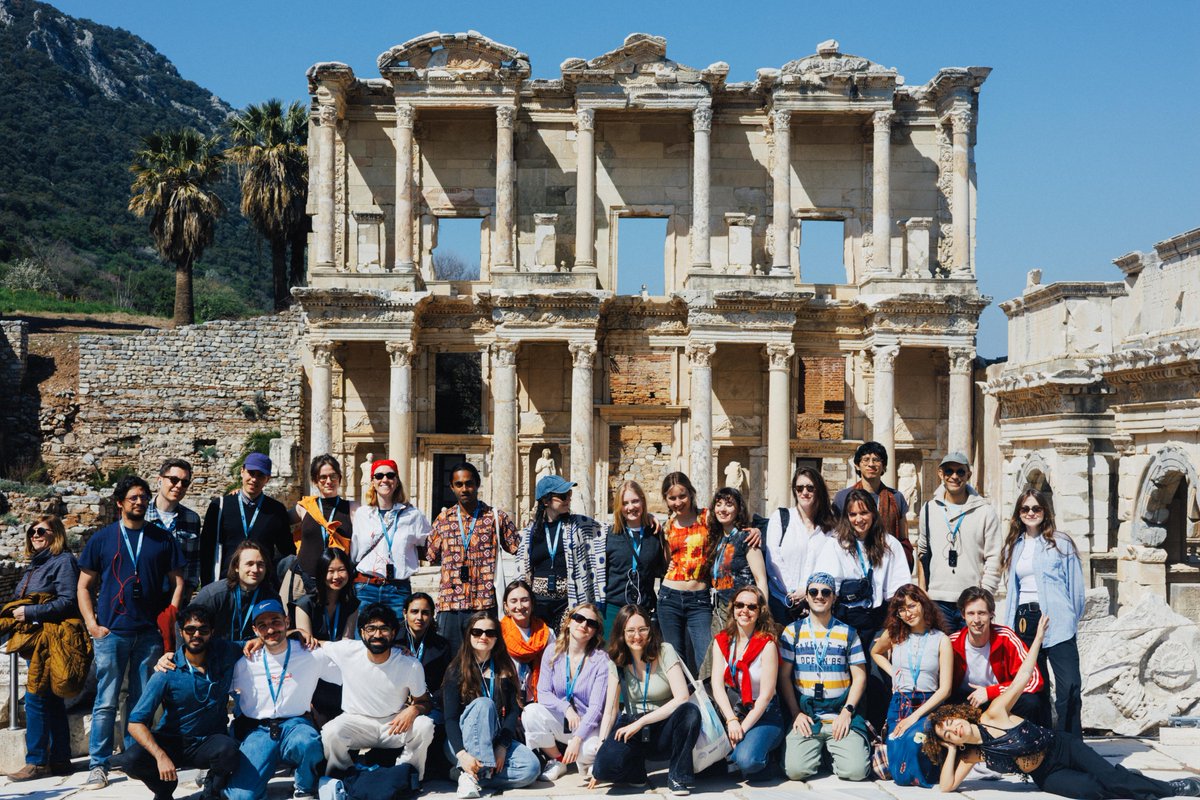
What a delight & privilege it was to be the scientific chair for @mesec_'s 2026 winter school in Ephesus. A wonderful group of students, and simply outstanding organisation from Emma Moorhead, Hector Mendoza, Aziza Chebil, Luis Lips, & Lara Brauchle 🙏🏽🙏���🙏🏽 https://t.co/iySTvL5cBj
Thrilled to share that “Temporal Cognition in Apes”, co-authored with Gerardo Viera, is now out in the Australasian Journal of Philosophy.
In the paper we develop a new way of thinking about the mental representation of time in animals. https://t.co/mmHjndS4sW
Excited to share that my new book, Temporal Cognition in Animals, is now out with @CambridgeUP .
The book presents an innovative framework to study temporal representation across species! 🦜🦧🐋🐝
Video-making: Marco Jetti
🚀 Big picture:
Humans don’t just think about choices 🧠
They see them unfolding 👁️
And sometimes…
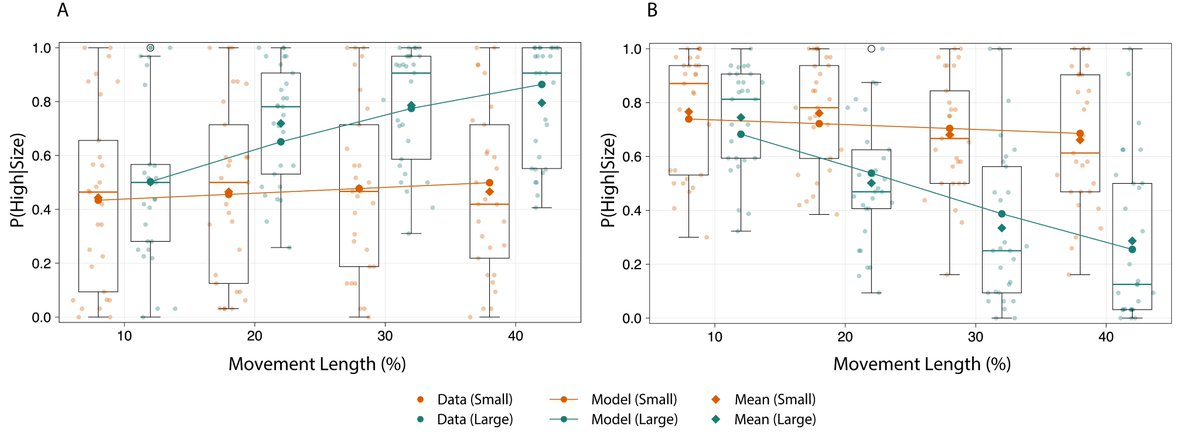
action perception actively shapes what agents treat as rational in strategic interaction ✋ > 📐
A Bayesian model explains it 📊
stable payoff priors + time-dependent kinematic likelihoods → observed choices and coordination patterns.
👉 Rationality updates in motion 🌀
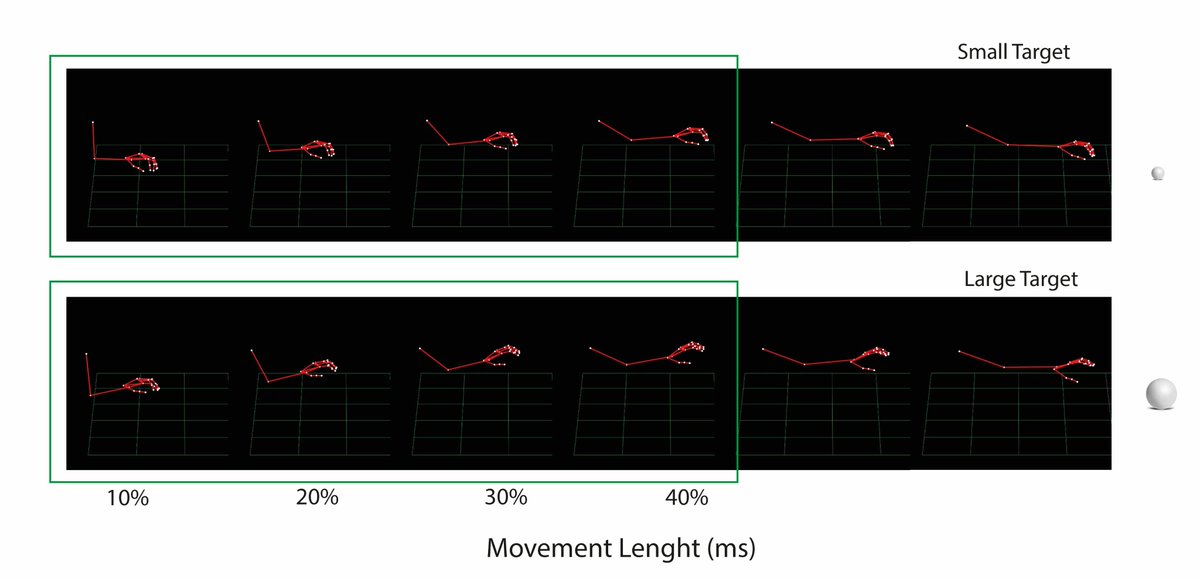
Participants saw only 10–40% of a partner’s grasping action ✋
❌ No objects❌ No outcomes Just motion.
And that was already enough to infer the partner’s choice 👀
📢 New paper just out in Cognition!
Do humans really coordinate by following payoffs? 💰🤔
We test this using a HI–LO game, where strategic reasoning conflicts with real-time action information.
Milliseconds of movement can flip strategic decisions. ⚡📄 https://t.co/6oBA6mNAN5
Join the Cognition in Action Lectures with Tyler Burge (UCLA)!
📌 Title: Map of the Lower Representational Mind
📅 Date: 21 January 2026, 17:00 CET
🌍 Format: Online, in English
https://t.co/HOEHSrBLt8
TGR Leonardo racconta la ricerca del nostro lab: con TMS e segnali muscolari (MultiMEP) decodifichiamo le azioni immaginate 🧠💪 https://t.co/gTZIm32zsZ.
FIS 3: L’Università Statale prima in Lombardia per numero di progetti finanziati e tra questi uno vinto dal coordinatore del nostro lab, Corrado Sinigaglia. https://t.co/vro1tdkTP2
Un innovativo metodo sviluppato permette di decodificare l’immaginazione delle azioni non direttamente dal cervello, ma dai muscoli. Metodo - MultiMEP - grazie al quale si può trasferire l’informazione relativa all’immaginazione di un gesto dal cervello ai muscoli e decodificarla
Un innovativo metodo sviluppato permette di decodificare l’immaginazione delle azioni non direttamente dal cervello, ma dai muscoli. Metodo - MultiMEP - grazie al quale si può trasferire l’informazione relativa all’immaginazione di un gesto dal cervello ai muscoli e decodificarla
Great news! The FIS3 Adv Grant from @mur_gov_ will support @CognitionIn for the next 5 years as we dig deeper into the foundations of human sociality. Big thanks to our team!
Thrilled to share that I’ve been awarded the FIS3 Adv Grant from @mur_gov_! Proud to celebrate this achievement with the entire @CognitionIn team—a 5-year boost to our research on the foundations of human sociality. @LaStataleFilo@LaStatale
Out today 👉 What holds groups together? How interdependence shapes group-living | Behavioral and Brain Sciences | @CambridgeCore@CambridgeUP - https://t.co/lbxZeCHLD9