From SaaS platforms and custom web applications to AI-powered tools and technical consulting, I design logic-led solutions that turn complexity into clarity.
I rebuilt my website in 45 minutes.
Yesterday I opened Replit Agent, pasted in a company overview, and typed one prompt.
Forty-five minutes later, https://t.co/aSU01BWKfg had a new tagline, a rebuilt apps grid, a rewritten About section, and a chatbot that finally knew who it was talking for.
Under $20. No dev team.
That's what vibe coding actually is — not a shortcut, not a toy.
You describe what you want, specifically and honestly. The AI writes the code.
The skill is being clear enough that the machine knows what "right" looks like.
Here's how to make it work without the usual mess:
- Start with a company overview, not a feature list — give the agent context before you give it instructions
- Let it plan the build first before it touches a single file
- Be specific about every decision: which products to show, what to cut, what the tone actually is
- Check the unglamorous stuff before you ship — contrast bugs, legal copy, any AI in your stack that now contradicts your new positioning
- If you have a chatbot, update its voice after you update the site. They need to match.
You don't need a dev team or a budget to reposition what you're putting out into the world.
Full twelve-minute walkthrough in the first comment 👇 — what's the one thing on your site you'd change if you sat down with AI for 45 minutes today?
Three languages on the channel this week.
🌾 Python: while loop that farms forever (Farmer Was Replaced)
🐱 Scratch: sprite movement in 2 blocks
🐢 Minecraft Lua: turtle forward, turn, dig
Which one's for you?
→ https://t.co/7eeQQSSPpG
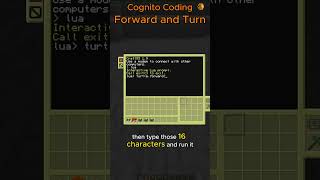
One turtle. Two commands. Real code. 🐢
→ turtle.forward()
→ turtle.turnLeft()
That's how Minecraft CC:Tweaked coding starts.
https://t.co/QJqHdyRBPs #LearnToCode#Minecraft#CCTweaked
Solo tutors don't just teach — they run an entire small business on the side.
Lesson plans, student records, reports, invoices. Usually across 4 different apps.
SoloTutorLite puts all of it in one place. £9.99/month.
What would you automate first?
How does your program decide which number is bigger?
It uses a comparison operator — like a see-saw tipping toward the heavier side.
60 seconds. No jargon. https://t.co/BLwA2RF0b9
Ten if-checks to find one value. There's a fix.
Python dictionaries are like a phone book — look up the name, get the answer back. Instantly.
scores["Alice"] → 10
Where in your code would a dictionary clean things up?
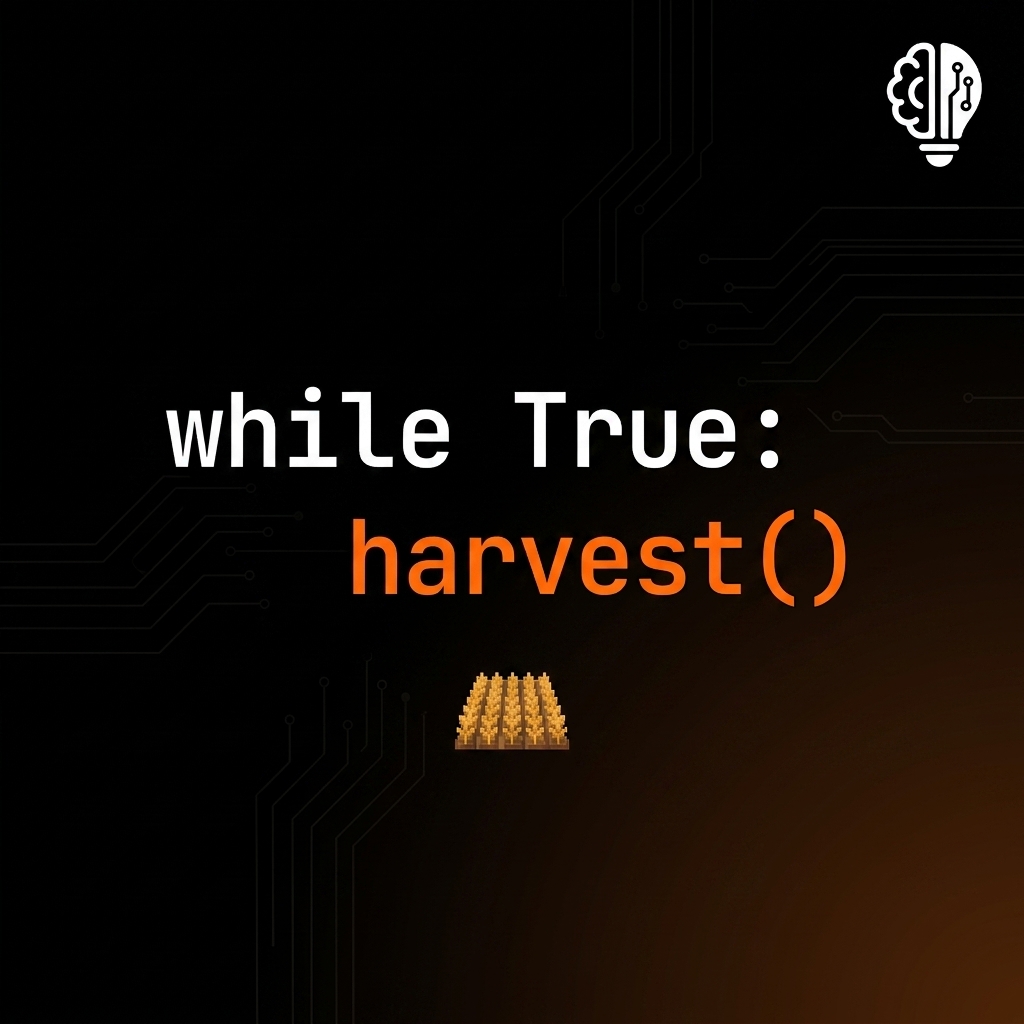
while True:
harvest()
Two words. Runs forever. That's a while loop.
New Short — I used The Farmer Was Replaced to show why this is one of the most powerful concepts for beginners.
Watch → https://t.co/3Sl9Vn79dM
What line of code surprised you when you first ran it?
Dog walkers are quietly running logistics businesses.
They track multiple animals, bill per head, send location proof, invoice monthly.
Most do it in WhatsApp + a notes app + a spreadsheet.
WagTracker is what I built to fix that. https://t.co/Z4IdvMAPdk
Your light switch is either on or off — that's a Boolean.
True or false. That's it. And it powers every decision your code ever makes 🐍
https://t.co/7k6WpG8OcE
The ghost AI in Pac-Man is embarrassingly simple.
👇👇👇 Episode 6 of the Friday Scratch series is live — we're building Pac-Man 🎥🖥️ links in the first comment 👇👇👇
A student watched Pinky dodge around two corners to cut off their escape and said: "that's actual intelligence."
Pinky aims four tiles ahead of where Pac-Man is facing. That's it. One rule.
Everything else is the maze doing the work.
What makes four ghosts feel like a coordinated team isn't complex AI — it's one targeting rule each, plus a shared mode timer that flips all of them at the same instant.
That's a state machine: not intelligence. Just consistent discipline.
If you're working through this with a learner this week:
- Open the project and find the mode timer. Change the scatter duration from 7 to 3 seconds and play the game. Feel how the ghosts turn relentless. That one number is where the tension lives.
- Before reading Blinky's code, explain his targeting rule in one sentence. Then check. If you were right, you already think like a game developer.
- Watch Pac-Man's turn mechanic — he queues a direction key mid-corridor and waits for a junction. That's a two-line rule. Try adding it to any movement project you've already built.
- Look at the cloning setup: one sprite, a "ghost number" variable, four behaviours. Sketch how you'd add a fifth ghost before you touch a single block.
- Ask a child to invent a ghost's rule in plain English first. Clyde's actual rule is "chase until you get too close, then flee." Most kids will invent something just as valid. Then help them build it.
If you've ever thought arcade games are too complex to teach — this is the episode that disproves it.
Links in the first comment 👇
What would your fifth ghost's chase rule be?
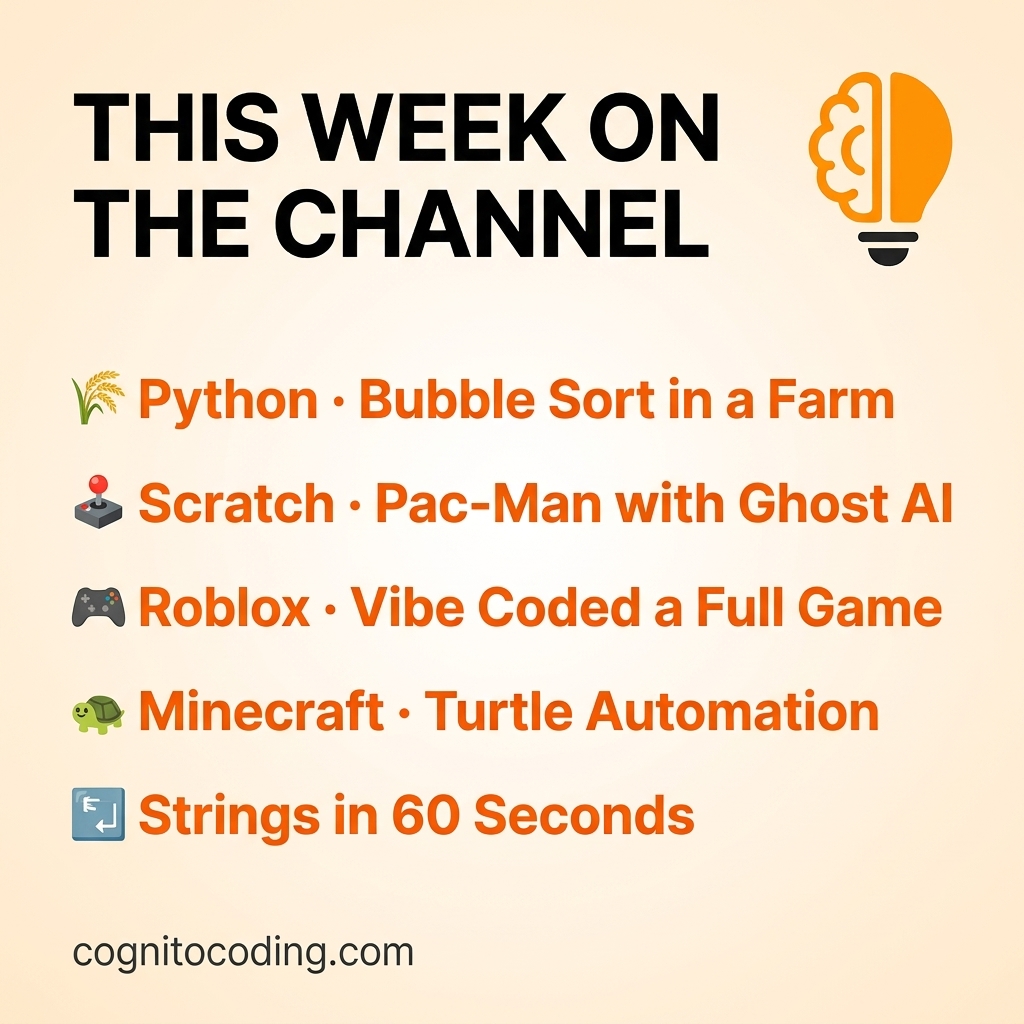
This week on Cognito Coding:
🌾 Bubble sort in a Python farming game
🕹️ Scratch Pac-Man with ghost chase AI
🎮 Roblox vibed into existence with AI
🐢 Minecraft Turtle automation
🔤 Strings in 60 seconds
5 videos. All free. All beginner-first.
https://t.co/vXSFTEdWhw — which one first?
Built Pac-Man in Scratch.
4 ghosts. Individual chase brains. One power pellet that flips them all.
That's a state machine — and now it's the clearest example I teach.
Full build 👇 https://t.co/wrPNGEt9Ur
#Scratch#LearnToCode#GameDev
Three words. Your first block.
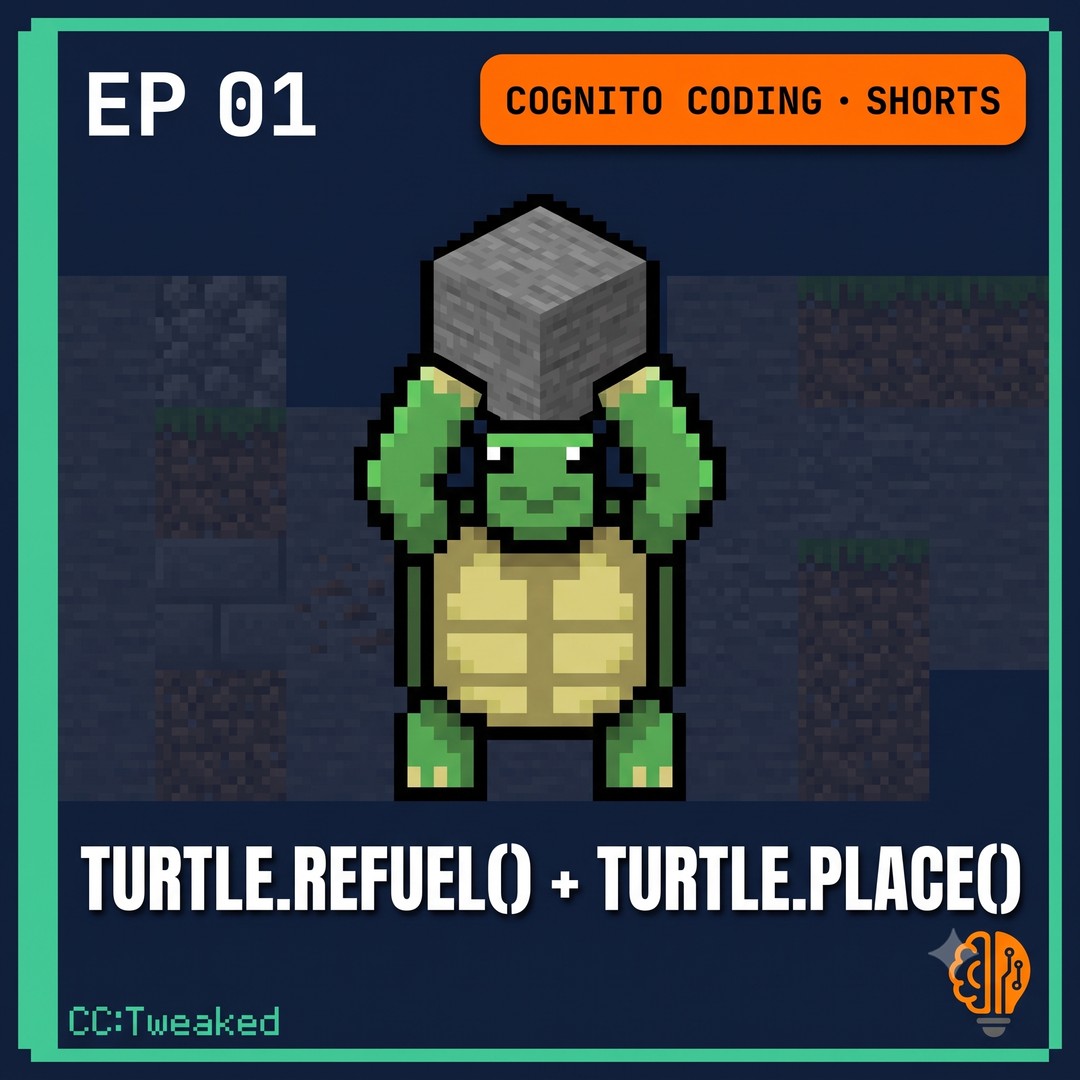
👇👇👇 New Minecraft Lua short — refuel + https://t.co/hcjhqYFV1L() just dropped — 🎥🖥️ links in the first comment 👇👇👇
I was showing a student CC:Tweaked for the first time.
Three words. refuel. `https://t.co/hcjhqYFV1L()`. The turtle dropped a dirt block.
They looked at me like I'd just done magic.
Most beginners need to see something real happen before the abstract stuff lands.
Two Lua commands and a robot physically places a block in the world — in a game they already love.
That's not a tutorial exercise. That's the moment they stop asking "why does this even matter?"
If you want to try it this week:
- Install CC:Tweaked from CurseForge or Modrinth — free, takes about two minutes
- Open your turtle's computer, type `turtle.refuel(0)` and hit enter — if it prints a number, you're live
- Put coal in the turtle's inventory, run `turtle.refuel()`, then `https://t.co/hcjhqYFV1L()` — watch it drop a block
- Don't explain it first. Let them run it and be surprised, then ask "what do you think happened?"
- Once it's clicked, ask: "what would you change to make it place *two* blocks?" — that's their first real coding question
If your kid is already in Minecraft for hours a day, you've got a shortcut most coding teachers don't.
Don't fight the game — use it.
Watch the short — link in the first comment 👇
What's the first thing you'd make your turtle do? Best answer gets its own dedicated short.
Solo tutors don't struggle with the teaching.
They struggle with the hour after — lesson reports, invoices, progress notes — before the next session even starts.
The admin is supposed to serve the teaching. Not eat into it.
What would you automate first?
🧲 Fridge magnets, but in code.
A string = text your program can hold and change.
name = "Alex"
print("Hello, " + name) → Hello, Alex
60-second explainer 👉 https://t.co/K0K9MtLKig
🚜Cactus unlocked. It was a sorting puzzle.
👇👇👇Episode 6 of I Taught an AI to Farm is live now —🎥🖥️ links in the first comment 👇👇👇
The cactus field detonated in one harvest — every plant paying out at once. Before I got there, I had a power farm leaking energy on every cycle, watering 144 sunflowers to harvest one.
When the game gives you measure() and swap(), it's hinting at the algorithm. Bubble sort: compare neighbours, swap if out of order, repeat until nothing moves. Then it crashed at the boundary — my loop tried to compare the last plant with the one after it. There is no plant after the last one. One guard, and the whole field sorted.
If you're learning Python — or teaching it — here's what this episode actually covers:
- Fix the inefficiency before optimising the harvest — the power leak cost more than the crop earned
- Read the API like a hint — measure() and swap() together point directly at the solution shape
- Bubble sort in plain English: compare two neighbours, swap if they're in the wrong order, work your way along, repeat from the top until you go the whole way without swapping once
- Boundary crashes are honest crashes — guard the swap: only compare if there's a next item to compare with
- Test edge cases on purpose: one-item field, two-item field, full patch — if it holds on one, it holds on a hundred
❓❓What's the first algorithm that crashed on you, and what did the crash actually teach you❓❓
Python lists make you remember positions.
Dictionaries let you use names instead.
info[2] — what was that again?
info["age"] — you'll never forget.
One swap. Python gets much easier.
What concept finally clicked for you?
Cactus farming in The Farmer Was Replaced = sorting puzzle.
Wrote my first bubble sort. It worked. Then it crashed at the boundary.
Ep 6 ↓ https://t.co/0Be0gcH76F #Python#LearnToCode
One block missing. Nothing in Scratch runs.
👇👇👇 New Scratch short on the green flag block just dropped — 🎥🖥️ links in the first comment 👇👇👇
A kid showed me their Scratch project recently.
Ten sprites. Sound effects. A score counter. Hours of work.
They clicked the green flag. Nothing happened.
The culprit: no `when green flag clicked` block in sight anywhere.
That block is the entry point — the moment Scratch starts listening. Without it, your code exists but never fires. It's like wiring up a house and forgetting to fit the light switch.
If you're starting a child (or yourself) on Scratch this week:
- Open a blank project with one sprite — no blocks attached yet
- Click the green flag. Nothing happens. Stay in that silence for a moment.
- Drag `when green flag clicked` in from the yellow Events palette
- Stack `move 10 steps` underneath it. Click the flag again.
- That shift — silence to movement — is the whole lesson. Cause and effect, made visible.
Once it clicks, this block becomes instinct. They never open Scratch without reaching for it first.
Link in the first comment 👇
What's the first Scratch block you'd teach a complete beginner, and why?



![CognitoCoding's tweet photo. Ten if-checks to find one value. There's a fix.
Python dictionaries are like a phone book — look up the name, get the answer back. Instantly.
scores["Alice"] → 10
Where in your code would a dictionary clean things up? https://t.co/HxsNte5Umr](https://pbs.twimg.com/media/HMtYFpSWUAAeDK4.jpg)






![CognitoCoding's tweet photo. Python lists make you remember positions.
Dictionaries let you use names instead.
info[2] — what was that again?
info["age"] — you'll never forget.
One swap. Python gets much easier.
What concept finally clicked for you? https://t.co/DUwT4osSUg](https://pbs.twimg.com/media/HMJcUi9WQAEVYJP.jpg)