You list indicators and not one of them has a threshold. Without a threshold you can always call it valuation after the fact.
If the data is too thin to prove the law it's too thin to prove the deceleration too.
And it's brave to admit that failing as a speculative investment isn't the same as failing as a monetary network. Only the first one looks settled. Especially when you've held since 2012.
What Chainlink lacks is a mandate: fees exclusively in LINK, or collateral required from node operators.
That's where capture would exist. Banks use the plumbing and don't buy the token. While that holds, LINK is a good company but …
@RealJimChanos Cos they're already maxed. At 75% margin Nvidia is charging everything the buyer can borrow, so doubling it just doubles the debt and the payback goes 2, 3 years to 5, 6.
March 3, 2027. A 400 MVA transformer gets delivered in three weeks. On the last Wood Mackenzie survey it's 128 weeks average, 144 for GSUs, and +43% in price since 2019. The spec is unreadable, nobody reads it, and every integrator loses their mind.
March 11. Someone claims the interconnection queue was actually just a form problem. 2,060 GW were waiting at the end of 2025 per Berkeley Lab, and 75% of projects filed between 2000 and 2020 were withdrawn.
March 14. The current constraint falls. The demonstration is so obvious that grid engineers, operators and regulators slap their foreheads at the same time, while there's a shortfall of about 15,000 transformer coil winders.
March 17. Proof arrives that heat is a resource, that recovery makes cooling free, and PUE drops below 1.
Only on April 2 does the first data center get approved by a town council without a single objection. Per Data Center Watch, 75 projects worth $130 billion were blocked or delayed in the first quarter of 2026 alone.
Everything gets solved except the people.
Alpoge says he could have finished far earlier, that he talked to Amodei and that there was « a constraint to respect »Anthropic listed on the 19th, the note went up on the 20th. A 167 year old open problem got its publication date from a capital raise. And the thing to check isn't the proof, it's the statement. Lean proves what you wrote, not what you meant.
@adam3us A BTC per share number without the multiple to NAV tells you nothing about price, only about the cross-rate. Cheap against May isn't cheap against the asset.
@PeterLBrandt Dates are wrong far more often than levels. And what matters most… twelve months after the peak we're already inside the historical window.
Half right about the incentive, because there's obviously a lot at stake. Except Taproot went in through a miner vote, precisely because rough consensus couldn't converge. So the someone who calls it, he does exist, and it's miners, and they had to have a procedure built for them because the incentive alone never called anything. Money is a stake, not a procedure, and "the market takes over" is an exit, the market can reprice, it can't merge a PR.
Ok, this is the right bet and almost nobody in quantum is taking it. The moat here will never be the qubit, it'll be whatever people already wrote before the hardware got good, and that's the whole CUDA story, Nvidia's moat was fifteen years of other people's code not a transistor. And Quantinuum is the only one whose published fidelities make the ask credible, trapped ion, two-qubit records, all-to-all inside the trap, so the compiler work is real and not decoration. Four hundred registrants for a hackathon in a market that runs on decks, that's the tell. You're building the layer that survives the fault-tolerant transition, and doing it before it's cool. Keep going.
400+ registrants. Four finalist countries. Three months of intensive building. One winner.
Yesterday in Singapore, we wrapped up Quantinuum’s Singapore Grand Challenge, and the energy in the room was a reminder of why hands-on community building matters so much right now in quantum computing.
Seven finalist teams spanning Singapore, Australia, Malaysia, and the U.S. pitched the quantum applications they spent the last 90 days building, with Team QTensor, emerging as our 2026 Grand Challenge winner.
This is what building a real quantum community looks like. It’s about lowering the barrier for developers, sparking cross-border collaboration, and creating spaces where deep science turns into practical value.
Between the finalist demos, Prof. Harry Buhrman’s keynote, Dr. Ross Duncan’s look at the evolution of Quantinuum’s developer platform, and venture-building insights from QAI Ventures’ Team Tan, yesterday was a clear signal of where this industry is headed.
Stay tuned for more Singapore Grand Challenge updates, including spotlights on the finalists and winning team.
Watch the highlights from yesterday’s finale below. 👇
Right about the debt. But 19.9 of the 21 million are already mined, and the rest is issued over about 114 years, to roughly 2140. So the cap isn't a forward-looking property. It's 95% spent, and what's left is the halving schedule, not the ceiling. The scarcity already happened. You'd be buying its tail.
@StockSavvyShay Apple announced a rebuilt Siri in June 2024 and delayed it twice. So "is building" is the third attempt, not news. Holding the endpoint is distribution, not capability. Apple has two years of evidence that personal context without a model ships nothing.
Twenty-five years is real. It's also the measure of a reversal. Nikon exited EUV development in 2011, Canon went to nanoimprint, and Rapidus now buys ASML. Japan supplies the resist and the metrology. The machine is Dutch, with German optics and a light source built in San Diego. Sovereignty is a purchase order.
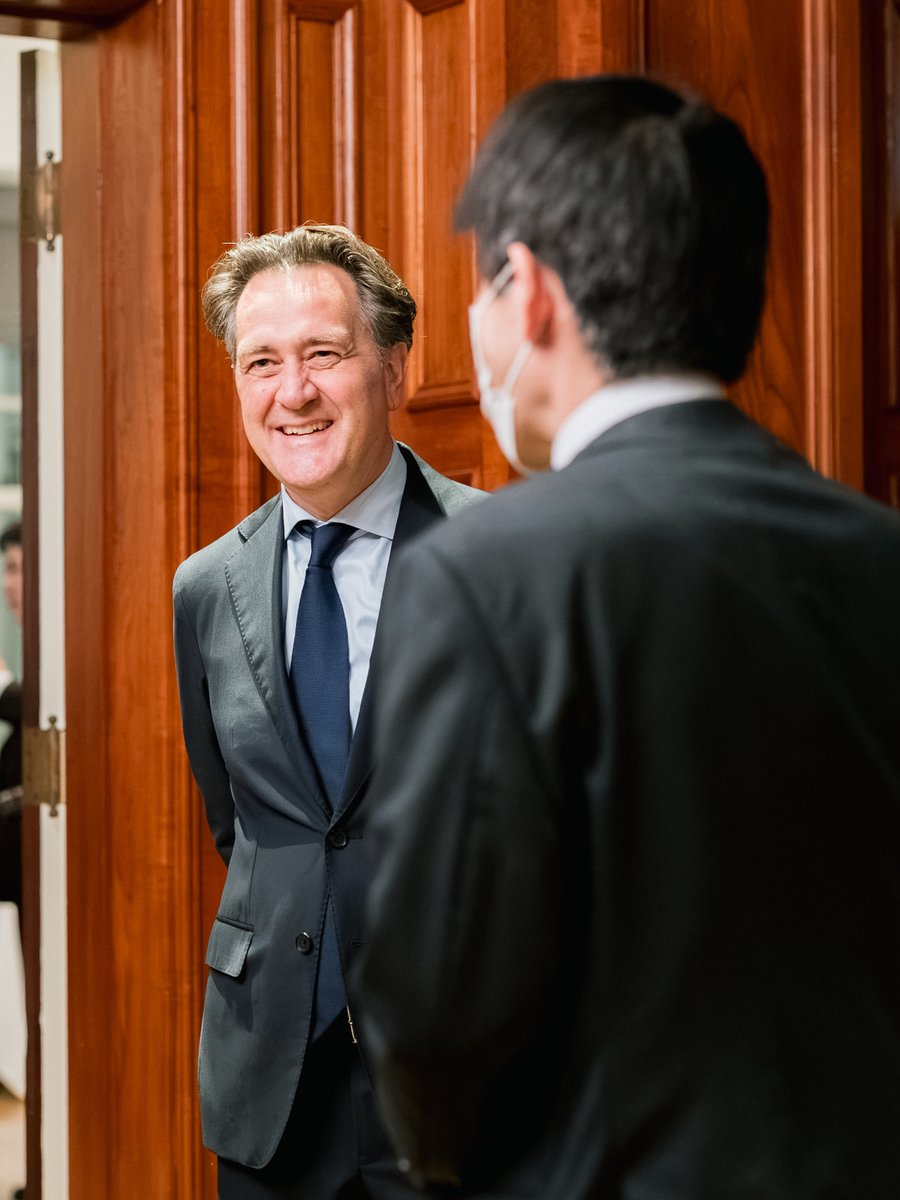
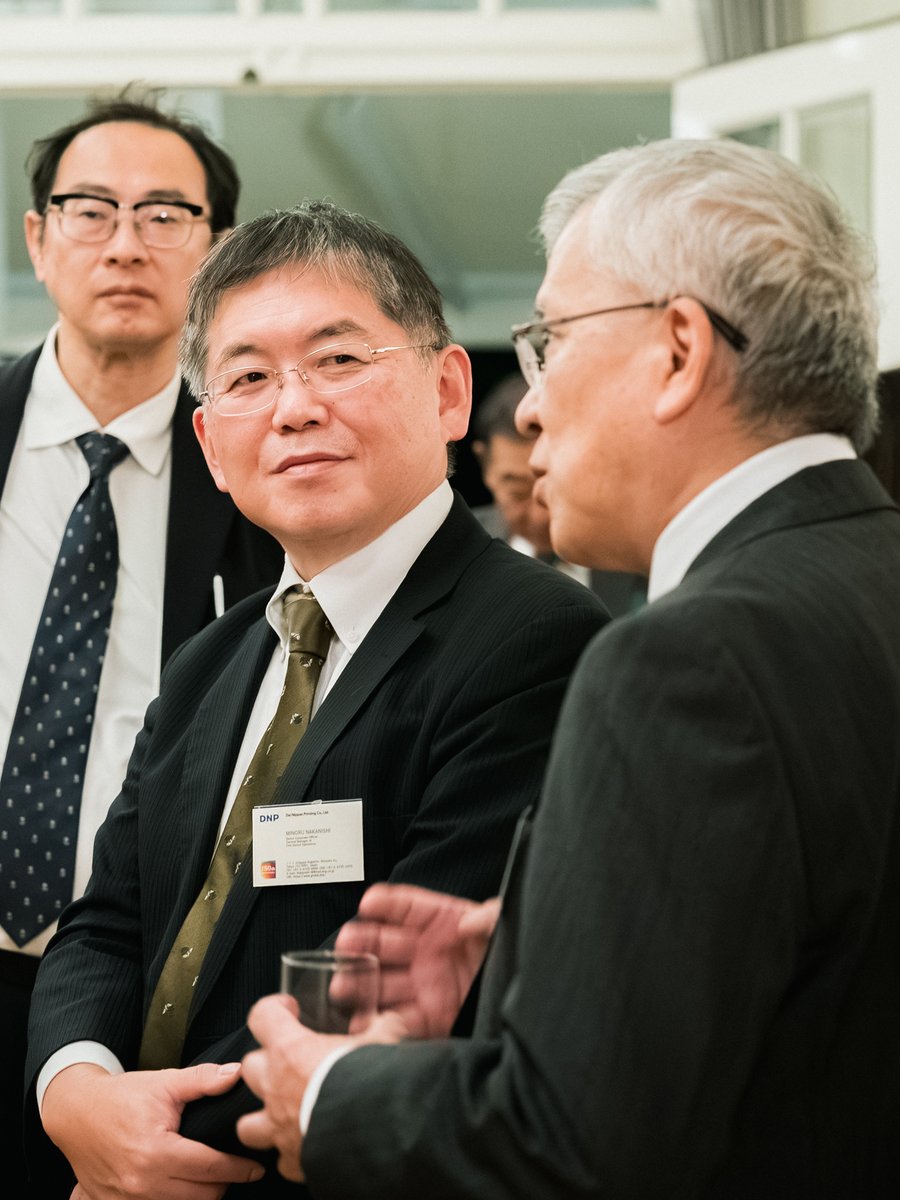
We recently celebrated 25 years of ASML in Japan at an event hosted by the Embassy of the Kingdom of the Netherlands in Tokyo, highlighting our shared cultural heritage and collaboration in semiconductors, AI and digital sovereignty. 🚀
Here’s to the next 25 years! 🤝