This crisis was planned.
The Lead Azide stockpile concerns started in mid 2000s when Red River was BRACed.
Electrochemical, metalic lead reclamation solutions were put forward since 2008 and ignored.
It can still be processed safely, but the powers that be WANT to OD it!
@Arkypatriot How about this...
Her end of the island presents as rock outcroppings with scrub grass...
Move to the lea side of the outcrop, sit your ass down and wait
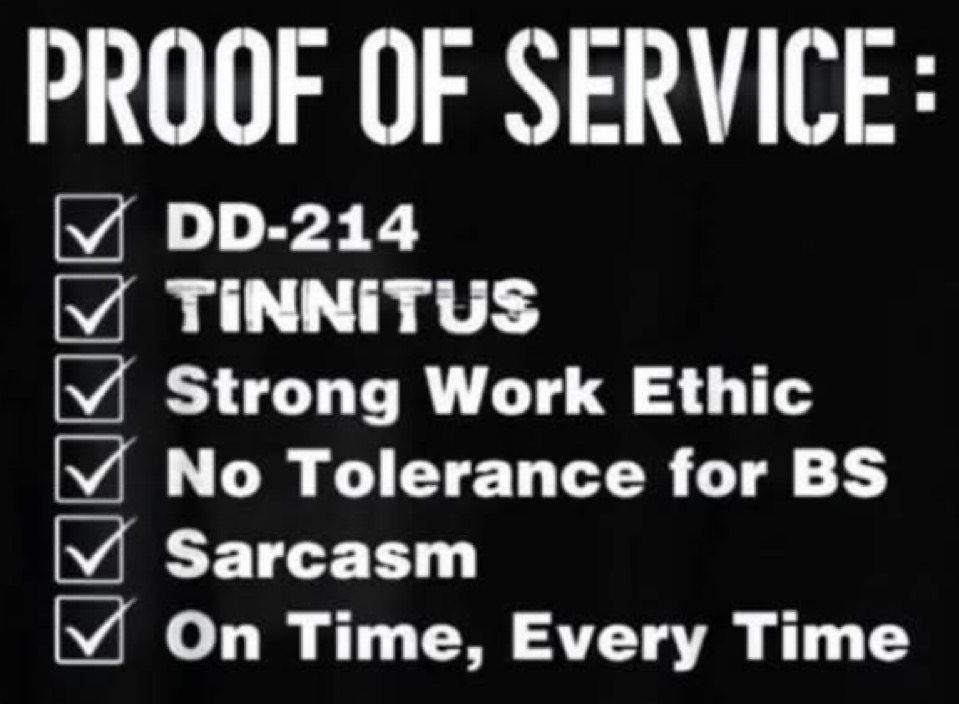
We eat fast.
We check the exits.
We are always early.
We back into parking spots.
We can wait for hours.
We walk on the left.
We say "Roger that."
We are Veterans.
Who wants to communicate with home anyway???? Bahahahaha. Yes, Air Force, we know you scored high enough to have the choice of any branch LOL!!!! Don't rub it in too much. Or, go right ahead. We don't mind.
On this day in 1943, an American submarine was sunk in the Pacific, and a senior officer aboard made a terrible choice. He knew secrets so vital that he could not risk being captured and made to talk, so he rode the sinking submarine down to the bottom rather than let himself be taken alive. This is the loss of USS Sculpin and the sacrifice of Captain John Cromwell.
The Sculpin was a US Navy submarine on patrol near the Japanese stronghold of Truk, part of the great American push into the Central Pacific. Aboard her, in addition to her own crew and captain, rode Captain John Cromwell, a senior officer commanding a group of submarines, who was along to coordinate a coordinated attack. And Cromwell carried in his head some of the most dangerous knowledge in the Pacific. He knew the secret of the major Allied offensive about to open in the Gilbert Islands, and, far more sensitive still, he was aware of the Allied ability to break Japanese codes, the priceless intelligence secret that was helping win the war.
On November 19, after tracking a Japanese convoy, the Sculpin was caught by a Japanese destroyer and savagely depth charged. Badly damaged, she was forced to the surface, where she had no choice but to fight it out with her deck gun against a far more powerful warship. It was hopeless. The destroyer's fire smashed into the submarine, killing men and wrecking the boat, and the surviving crew were ordered to abandon ship and scuttle her, opening the valves to send her to the bottom.
Here Cromwell faced his decision. He could climb out and go into the water with the others and be taken prisoner. But he knew what he knew. If the Japanese captured him and realized who he was, they might torture or drug him and pull from him the secrets of the coming offensive and the broken codes, knowledge that could cost thousands of lives and undo one of the Allies' greatest advantages. He could not take that risk. So Cromwell chose to stay aboard the sinking submarine and ride her down into the depths, deliberately giving his life to make certain the secrets died with him.
The Sculpin went down, taking Cromwell and others with her. A number of the crew did survive and were captured, but their ordeal was not over, and here the story takes a final, almost unbearable twist. The prisoners were loaded aboard a Japanese aircraft carrier to be taken to Japan. That carrier was torpedoed and sunk on the way by another American submarine, the Sailfish, and many of the Sculpin survivors drowned, killed by their own side's torpedoes. And the Sailfish had once been the Squalus, a sunken submarine that the Sculpin herself had helped locate and rescue men from years before the war. The boat Sculpin had once saved now unknowingly sent Sculpin's survivors to their deaths.
For his supreme sacrifice, choosing death to protect the secrets that could have cost so many lives, John Cromwell was posthumously awarded the Medal of Honor, the most senior American submariner to receive it in the war. He had made the hardest choice a man can make, to go down in the dark with his ship so that others might live and the war might be won, on this day in 1943.