/
In the article:
1. We look at the difficulties in always clearly defining acts of bullying
2. The danger of bullying policies being used against innocent employees
3. Ten conflict best practice strategies to combat this risk
(link in next post) /
DISCIPLINARY INQUIRIES AND THEIR PROCESSES
Join us on this nationally popular course and program...teach selected staff to conduct, present or chair internal disciplinary processes, and gain access to highly qualified independent chairpersons, including full support
A FEW OF MY LATEST ARTICLES
(disrespect to the X algorithm intended)
Flowing from some of my consultancy work and global conflicts, I have published a few serious pieces over at Conflict Conversations and Substack.
A short thread on some of these works, always free, always delivered to you as you prefer them.
They include discussions on our immigration challenges, the China / Taiwan conflict, whether Cuba is next in the US / Cuba conflict, what a South African identity would look like and how we can achieve that, and the physical foundations of our interpersonal conflicts.
Grab a coffee and catch up 📰☕️
🧵/
THE BOUNDARIES OF WORKPLACE BULLYING
Workplace bullying is a scourge that destroys careers, and it has no place in the modern workplace. But it also has a dark side, where good intentions go too far, where the bullied becomes the bully, and where systems and processes start harming the organization and individuals involved.
My next article, due for publication next week, takes a comprehensive look at this complex and urgent aspect of South African workplace conflict
ELECTIONS AND DELUSIONS
Go back to our X timelines two years ago. Notice the repetitive patterns. The despair, the reasoned criticism, the political attacks...and the hope. The hope that this party will grow, that that one will be punished, that the political messiahs will be elected and all will be well. This time will be different, this time Person A and Party B will make things right.
We said it then. We meant it, we believed it. We said it earlier, and even earlier. We are always sincere. Our hope is always well-placed. They always care about us during this time. Promise big and deliver small. So very small. We are good people, believing good stories, created and perpetuated by bad leaders and good liars.
We have to believe because we have no alternatives, or so we tell ourselves. We have to believe, because we all love this place in our own ways.
We know that something must be done, and done urgently. We don't really know what that is, so the people who built the mess continue to tell us how they will fix the mess. We believe because what else is there.
And so we believe the same stories, but this time it sounds different. Doesn't it? This time things will change, because they have to. If only we knew of a different way of doing this
/
FIGHT CLUB - the importance of understanding and integrating modern best practices involving the physical foundations of our interpersonal conflicts. My latest article
https://t.co/EV1EgjHUcr
CRISIS COMMUNICATION
We watch those developing news stories where a well-known person or brand comes under attack on social or other media, often in horror, as they try to manage the developing crisis, and how those efforts often make things worse.
What errors do organizations continue to make, and what are the modern best practices and strategies to prepare for these eventualities? My article on this in the next post
SOUTH AFRICAN COALITIONS
There is a disappointing and destructive trend in South African political debate to accept, without much reflection, that coalitions in our cities are chaotic, unstable, and to be avoided at all cost.
At the moment they are indeed unstable, they are chaotic, and they are a big part of our national problem, but they are perceived and experienced as these crises because of the extreme level of conflict incompetence on display by the majority of our politicians.
Coalitions may very well be inevitable for a few years, but they should be embraced, they should be the fuel that drives us to where we should be, the bridges to take us there. We remain our own worst enemies
MIGRATION CONFLICT
This complex conflict continues to escalate, both internally and through external attacks on South Africa. Our political leaders continue to be a part of the problem, and not the solution. We keep on playing with fire
/
Some heavy-duty reading with your morning coffee tomorrow - my article on the China/Taiwan conflict, the possible outcomes, timing, and the implications and risks for South Africa ☕️
CHINA/TAIWAN CONFLICT
President Trump's recent visit to China has brought forward again the highly contentious issue of the China/Taiwan conflict.
What are the various legal, political and moral issues at stake? What are the chances of China attacking Taiwan, and if so, when? Are there other options available to resolve this situation?
What is the US position on this, and what should their response be now, and if China attacks? What are the consequences of these conflict variables for the rest of the world, including South Africa?
We do a comprehensive assessment of this geopolitical minefield in my next article, due for publication next week
AI IN MY WORK...BENEFITS AND BOUNDARIES
It took my work on my new negotiation textbook for me to really make the shift in starting to use AI for anything more than glorified Googling.
With that step taken, I appreciate and acknowledge the tremendous benefits of basic research, scenario modeling, some game theory applications, accelerated complexity insights and so on. That really improves my work, no argument. And it's fun.
Other areas I simply cannot see AI competing with certain high-end human traits and skills, and for AT LEAST the next 3-5 years that is where the edge will be.
What are those human skills we bring to these collaboration? A very long list. Wisdom, judgment, experience, empathy, human connection and the value of relationships, tactical and strategic nuance and instincts, the sheer force of personality that turns tides.
As I have explored, and concluded, in my book Hamlet's Mirror: Conflict and Artificial Intelligence, AI can be a wonderful tool if it stays a tool. It's not a zero-sum game. We can, and should collaborate with what it brings to the table.
But, for now, and in my view permanently, being human and knowing how to access what is best in us, provides us with the winning edge
WORKPLACE CONFLICT AND MEDIATION TRENDS
It is good to see a growing awareness in South African workplaces of the power and benefits of workplace mediation and conflict skills training, either as a tool in preventing costly traditional litigation and disputes, or as an addition to existing disciplinary processes.
The reasons for this development are interesting and give ample warning to the alert employer.
The Labour Relations Act and several other policy trajectories all emphasize a very different approach to workplace conflict management, and these internal skills and processes will be required best practice very soon.
Grievance monitoring across generations also show vastly changed expectations from employees, and this makes these early adaptions not just a responsible reaction to an external development, but also ensuring compliance and efficiency for changing internal realities.
My own consulting work and book research support this changing tide.
Statistics in sources such as the CCMA Annual reports however still show a strangely apathetic employer response to these available solutions, risk management and skills transfers, with still nearly 200 000 dispute referrals to the CCMA in the last reported period (2024/2025).
Add to these arguments the struggling economy, the harm from costly and time-consuming litigation, congested court processes, productivity and much more, and these internal solutions become urgent management responsibilities
It is fascinating to see that Pope Leo's first encyclical deals with humanity and artificial intelligence. My 2024 book, Hamlet's Mirror, also investigated this crucial juxtaposition. An article in the influential Catholic publication Word on Fire reviews my book (next post)/
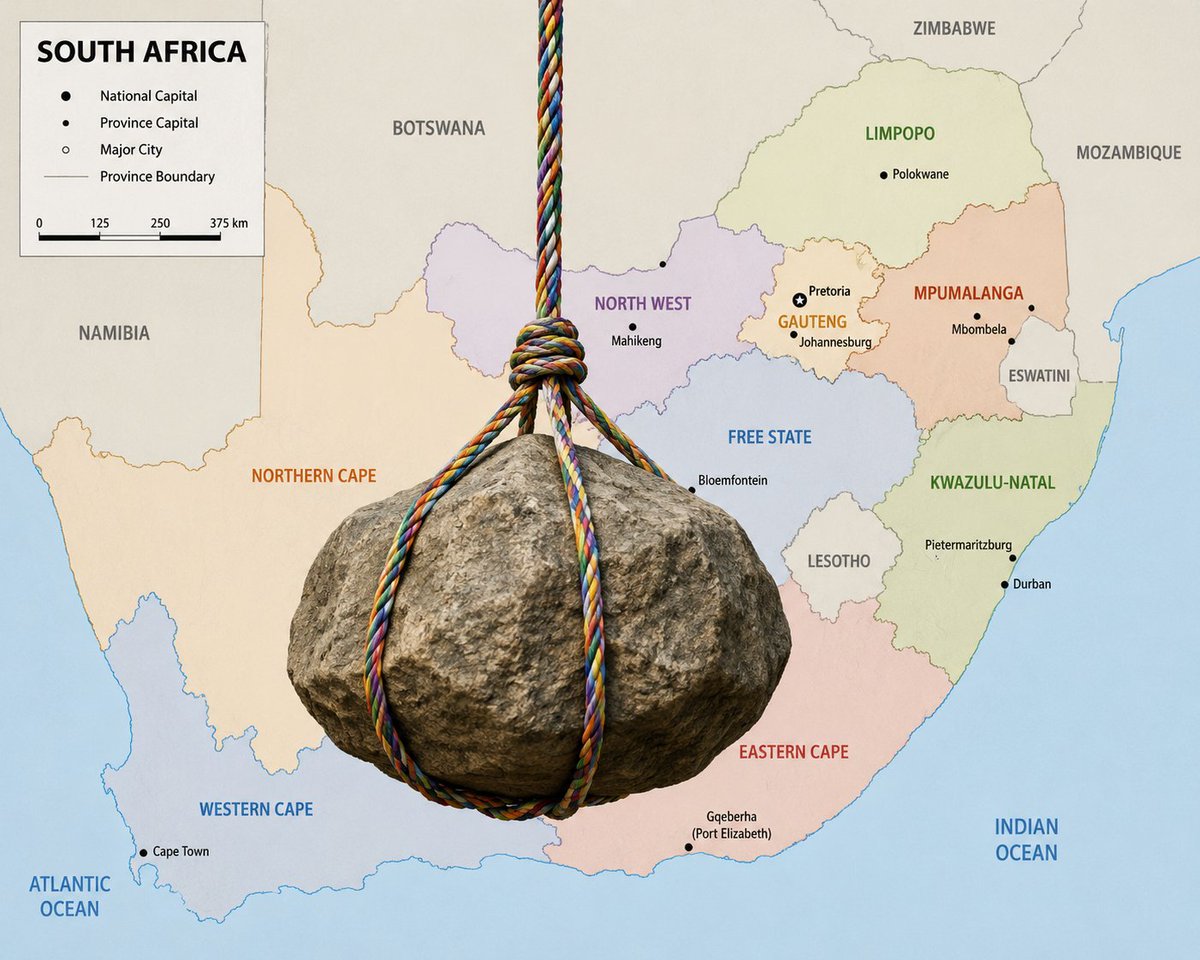
What does a positive South African identity mean in conflict studies? Do we have that already? How do geopolitical and historical case studies warn us against the trajectories we are on at the moment?
To a nation in search of itself:
https://t.co/LDGiPUHrYl