1/ 🎉 We have thrilling news to share!
"Let's Connext" in Delhi was an incredible experience for us! 🙌
👏 We extend a big thank you to everyone who joined us on Saturday to explore @ConnextNetwork. 🙏
🫡 We sincerely appreciate your participation!!
1/ After carefully reviewing user tickets and feedback, we found a few cases where transactions were not counted towards the airdrop as we intended. We’re happy to report that we’ve successfully corrected for this. Here’s what you need to know:
A NEW CHAPTER IN CROSSCHAIN INNOVATION
➡️ We are thrilled to announce the airdrop of NEXT!
A huge step forward for the decentralization of the Connext ecosystem, the NEXT distribution will also be a first-of-its-kind crosschain airdrop.
As always, beware of scams ⚠️
1/12
Projects deploying xERC20s today with @ConnextNetwork enjoy full compatibility with the finalized ERC-7281 specification in the future, 1:1 token transfer between chains (0 slippage) & utilize Connext’s security.
Ready to launch one? Reach out now https://t.co/3ht7kZfb37 🚀
Hum excited hain ki Xocolatl, @LaDAO_Club se, #xERC20 token standard ka sabse latest adopter bana hai, jiska goal $XOC token ko safe transfers ko blockchains ke beech mein kam liquidity requirements aur available best security ke saath saksham banana hai.
We are excited to announce that Xocolatl, from @LaDAO_Club, is the latest adopter of the #xERC20 token standard, with a goal to power safe $XOC token transfers between blockchains with minimal liquidity requirements and the best available security
CROSSCHAIN TOKENS ARE BROKEN! ⛈️
Liquidity is expensive & fragmented across chains...
Token issuers are locked with specific bridges until the worse happens...
How can we create a public good that benefits everyone in the ecosystem?
https://t.co/FpfIcSZLex
This Friday, join members of @Hyperlane_xyz, @modularmedia & @ConnextNetwork for an open discussion about crosschain token standards🪄
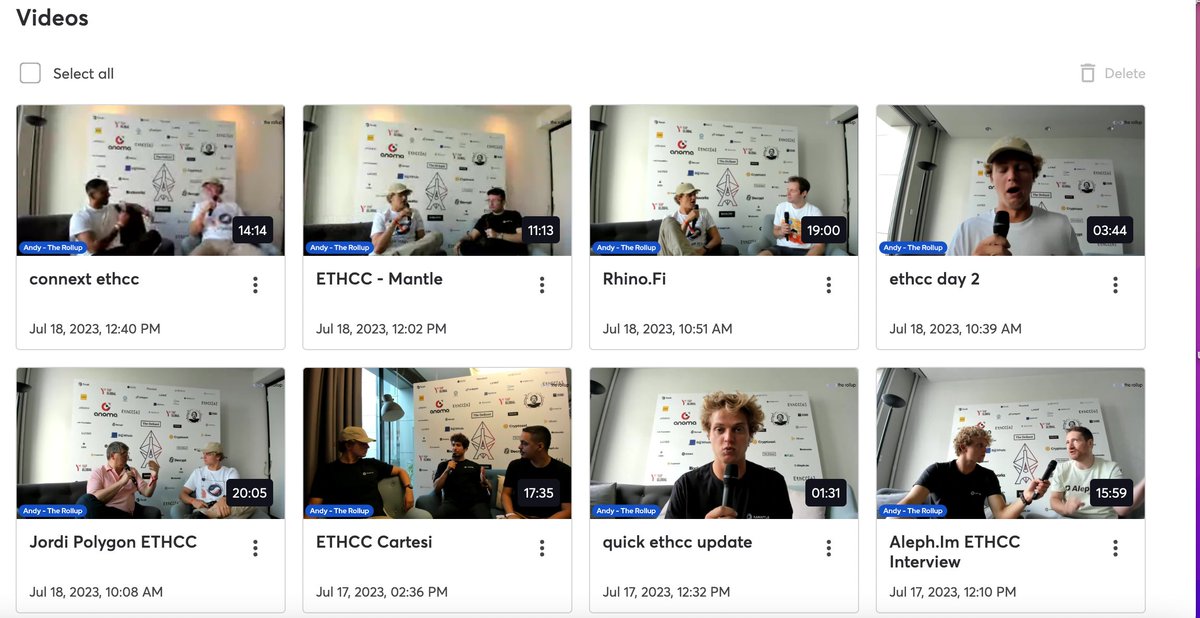
We are just getting started @ETHCC fam 🙏
@ConnextNetwork was easily one of the top interviews today with CTO @RHLSTHRM! He opened my mind to how Connext is building a "public good" with their new token xERC20 & cross-chain governance
More content coming, thx for the support!
An improvement for Account Abstraction is coming to @arbitrum!
Following the approval of the AIP-2,
the Arbitrum network will refine its transaction processing and introduce a new endpoint for AA.
Here's what it means:
1/
📢 कनेक्ट कम्युनिटी कॉल #7 📢
इस गुरुवार को दोपहर 2 बजे UTC पर 👉 https://t.co/4S7mr0Jpi2
लेटेस्ट उपदटेस अराउंड इकोसिस्टम एंड प्��ोडक्ट के बारे में नवीनतम अपडेट, ERC-7281 (जिसे xERC20 भी कहा जाता है), @FujiFinance मेहमान के रूप में शामिल हो रहे हैं और बहुत कुछ देखें 👀
📢 Connext Community call #7 📢
This Thursday @ 2pm UTC
��� https://t.co/whaYOcG7DI
Latest updates around ecosystem and product, ERC-7281 (aka xERC20) discussion, @FujiFinance joining as a guest and much more 👀
Hey Anon 👻,
We’re thrilled to announce that we are publicly launching our V2, known as #Himalaya, which is the first cross-chain money market aggregator.
Get started here: https://t.co/0te7jMX4qO
Let’s dive into it 👇🏻
EIP6160 is definitely super related, but the xERC20 proposal solves a few other problems that we've seen be important for token issuers.
1. Lock-in. We will eventually have fully battle-tested trustless bridging. Until that happens, though, issuers don't want to make a bet on any single project. Adopting a standard interface with flexibility to add/remove supported bridges over time fixes this.
2. Fungibility. A huge UX problem at the moment is the multiple representations created via 3rd party vs canonical (e.g. rollup) bridges. Connext layers on top of rollup bridges to get similar effective security, but even so we don't have minting rights over the specific token the rollup bridge mints. This is a problem shared across both trusted and trustless bridges, and comes specifically from how token minting is implemented in canonical bridges. Ideally, issuers want to just have one canonical representation that they control rather than many fragmented representations.
Note: the above problem is also related to liquidity - the reason we need liquidity in bridges is bc of a lack of fungibility between minted reps.
3. Security. Solving for fungibility and lock-in problems creates a *new* security surface for token issuers as any single bridge getting hacked leads to a total loss of funds (i.e. security is as strong as weakest link.
The xERC20 model solves this using rate limits. By intelligently setting rate limits for supported bridges, token issuers can emulate the *existing* security of having fragmented liquidity but without having to pay tons of money in incentives of deliver a bad UX. The ERC enumerates these cases.
How does EIP-6160 stop the weakest link problem?
Also, how does it fix fungibility on home chain? E.g. case:
- Alice bridges 100 USDT to L2 through rollup bridge
- Alice bridges 100 USDT to L2 using 3rd party bridge
- Alice now has 200 EIP-6160 compatible USDT on L2
- Alice tries to bridge 200 USDT back through either bridge. This fails bc the bridges only custody 100 USDT each.
@seunlanlege I missed 6160 when researching earlier work in this - my bad on that!
However, we did analyze a ton of projects that built in-house implementations v similar to 6160. You can consider 7281 as an iteration on the approach, that additionally solves the problems above.