In his article expanding upon his symposium lecture, author Richard Rothstein discusses how community activist groups can wield their power to challenge local practices that reinforce segregation. Read more here: https://t.co/370lzkcH8u
In his article, Professor Schwemm discusses the potential ramifications of allowing an FHA-based punitive damage award against a municipality, and what that could mean for deterring municipal housing discrimination. Read more here: https://t.co/cqsQl6U4DB
In her essay, Rigel Oliveri addresses the sexual exploitation of low-income women by their housing providers and analyzes various state and federal responses to combat it. Read more here: https://t.co/GprF88XPyq
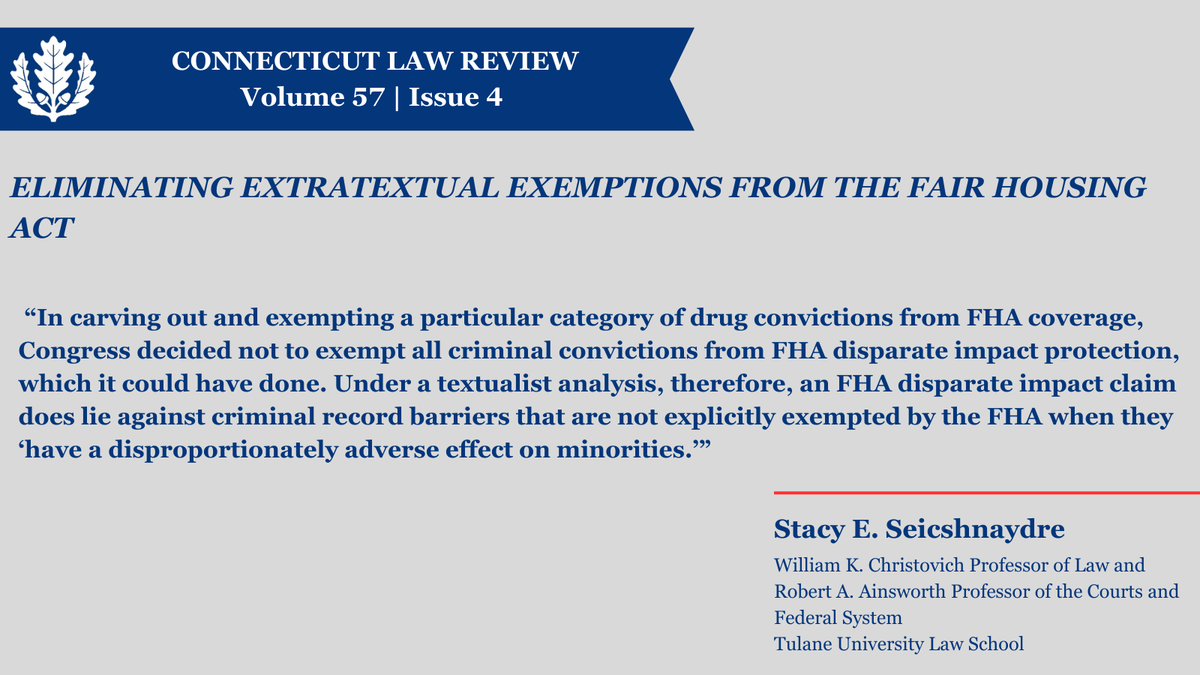
Professor Seicshnaydre’s essay argues against inferred statutory exemptions to the Fair Housing Act and defends the traditional interpretative canon that courts must construe exceptions narrowly. Read more here: https://t.co/WavU1noUTk
In his article, Kelley urges fair housing advocates to center participation parity and self-determination in their reform agendas to create a more just society in the digital age. Read more here: https://t.co/rHZllbFXWr
In his essay, Michael Akinwumi identifies policy gaps and challenges to implementing "AI fairness" and proposes a holistic framework to address this issue. Read more here: https://t.co/cNLKSUaqud
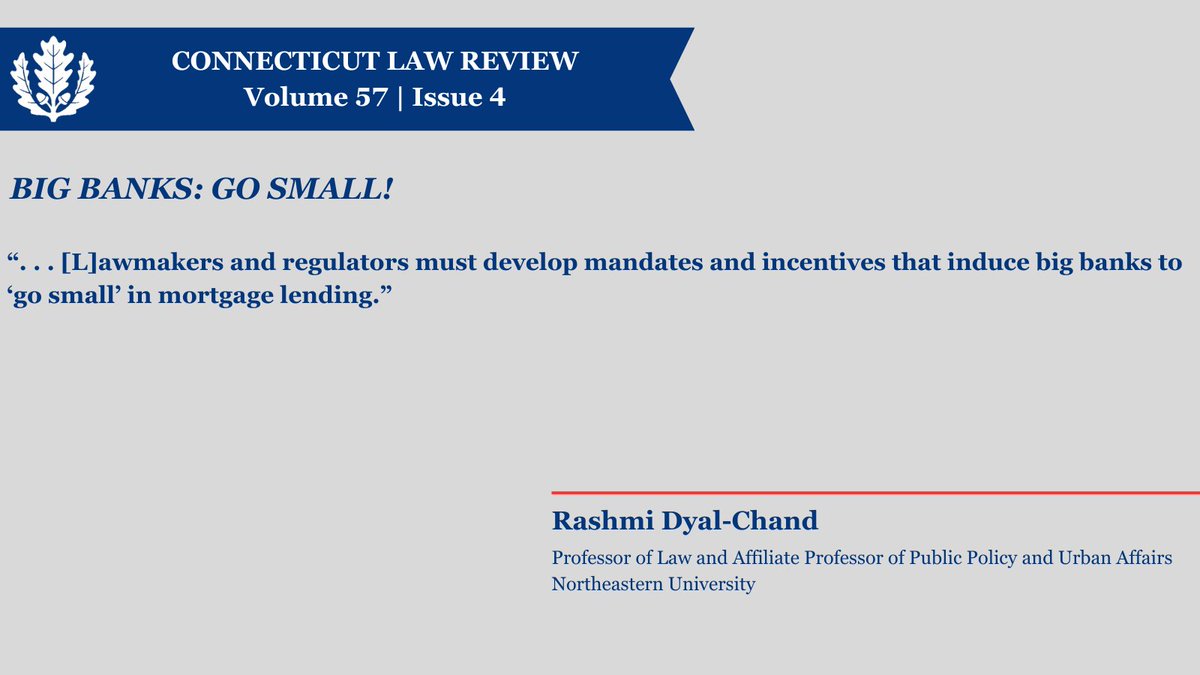
In her essay, Rashmi Dyal-Chand argues that regulatory intervention is necessary to force big banks to "go small" and overcome the racial homeownership gap. Read more here: https://t.co/fqHTrcYy2z
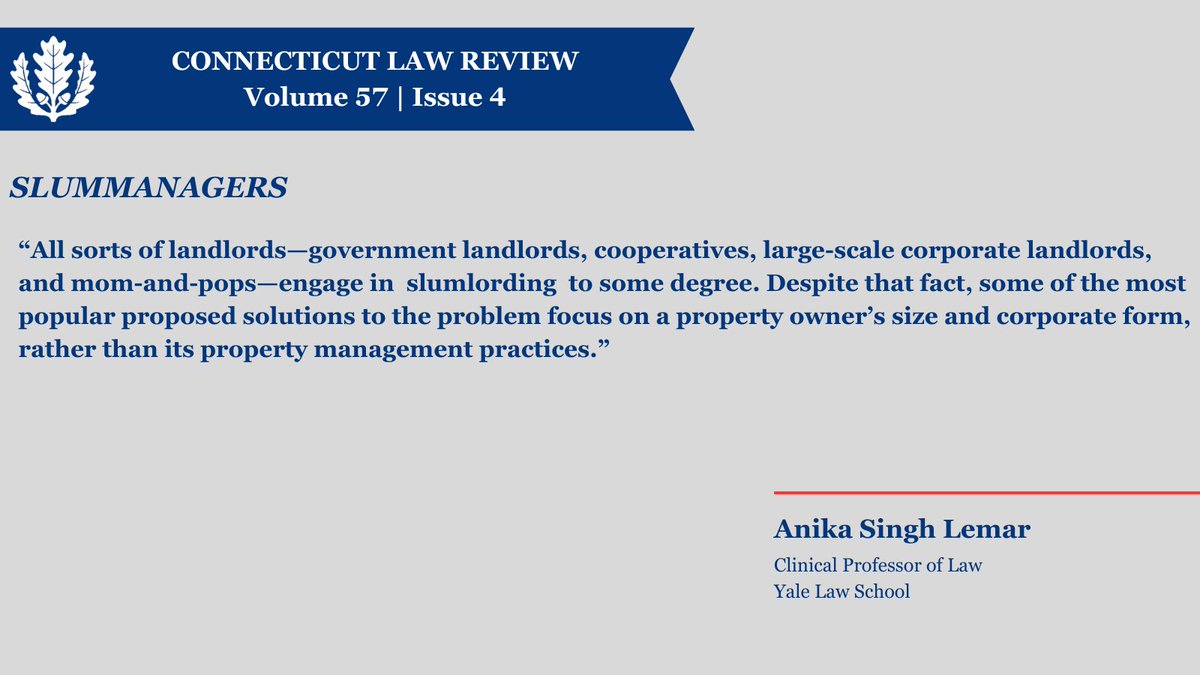
Professor Anika Singh Lemar’s essay contends that the solution to improving tenant living conditions is best achieved through regulations targeting property managers rather than property owners. Read more here:
https://t.co/UlftACEv87
Are there too many eviction cases settled by default? Authors Nicole Summers & Justin Steil argue that eviction by default are often deeply unjust, simply a product of poverty and characteristics associated with low socioeconomic status. Read more: https://t.co/QZqaZkGPT8
In her note, Anna R. Janson argues that more rights should be conferred on houseless populations and that the basis for this is derived from both state and federal sources. Read more here: https://t.co/UgTZmUNKwj
Author Benjamin Rolsma evaluates the historical development and lack of judicial scrutiny regarding the government's use of § 202(c) in cases of energy "emergencies." Read more here: https://t.co/AHqvcCDuyI
Authors Courtney Cross and Gillian Chadwick analyze proposals to expand domestic violence laws nationwide by integrating coercive control definitions. Their research and experiences with victims reveal how these proposals may weaponize the laws by abusers. https://t.co/hcQdtTkeaQ
Lauren Wilson analyzes how the evolving field of copyright law helps protect creators from infringement on their creations while considering the balancing of the freedom of future music production. Read more here: https://t.co/ZjiiRqHNEx
The COVID-19 pandemic catalyzed a global shift toward remote legal proceedings. Through an empirical study conducted before the pandemic Jabotinsky & Sarel study how information flow is altered in virtual meetings and its implications for the legal field. https://t.co/oYBGsYbWL4
Can institutional investors consider ESG factors when making investment decisions? Yifat Naftali Ben Zion argues that investors should consider ESG factors when executing their fiduciary duties. https://t.co/EFtKdWJHYx
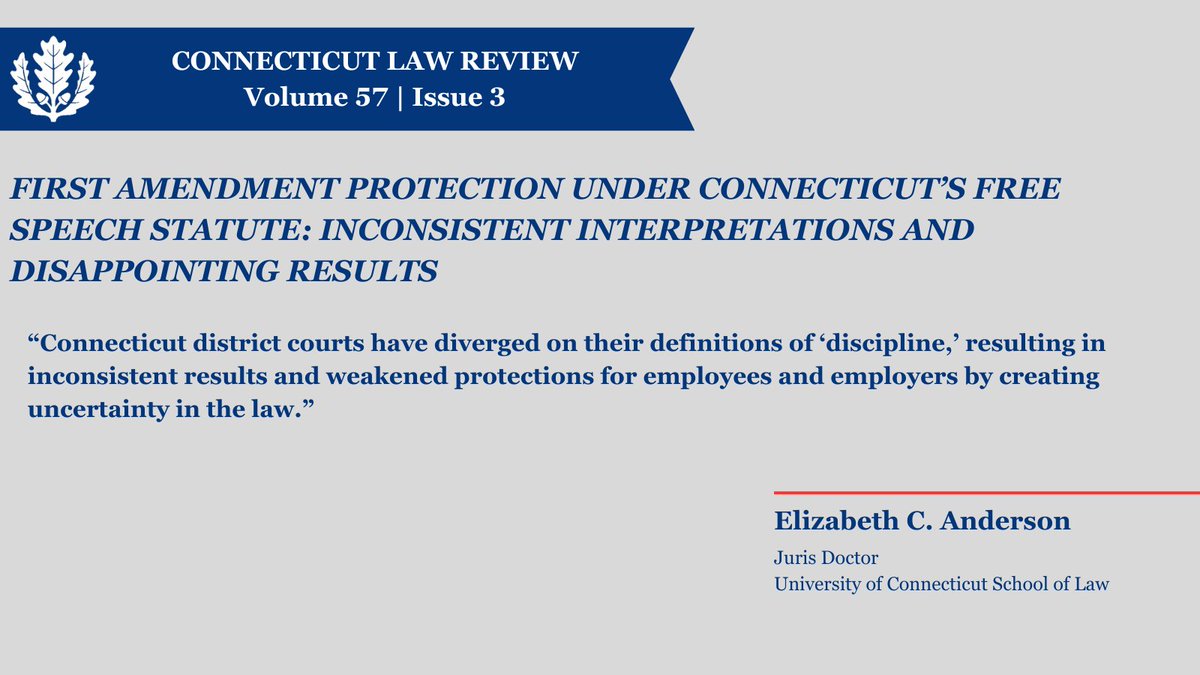
In her comment, Elizabeth C. Anderson argues for the minority "middle-ground" interpretation of the word "discipline" within Connecticut General Statutes § 31-51q, which she argues will balance both employee and employer protections for employee speech. https://t.co/KRQeC2gF5J
J.D. Candidate Sam Mahler warns that a mass vacancy event in Congress could cause a continuity of government crisis. He argues clarifying the Quorum Clause’s interpretation is crucial to avoid uncertainty in such a tragedy. https://t.co/5ReHuCRGlI
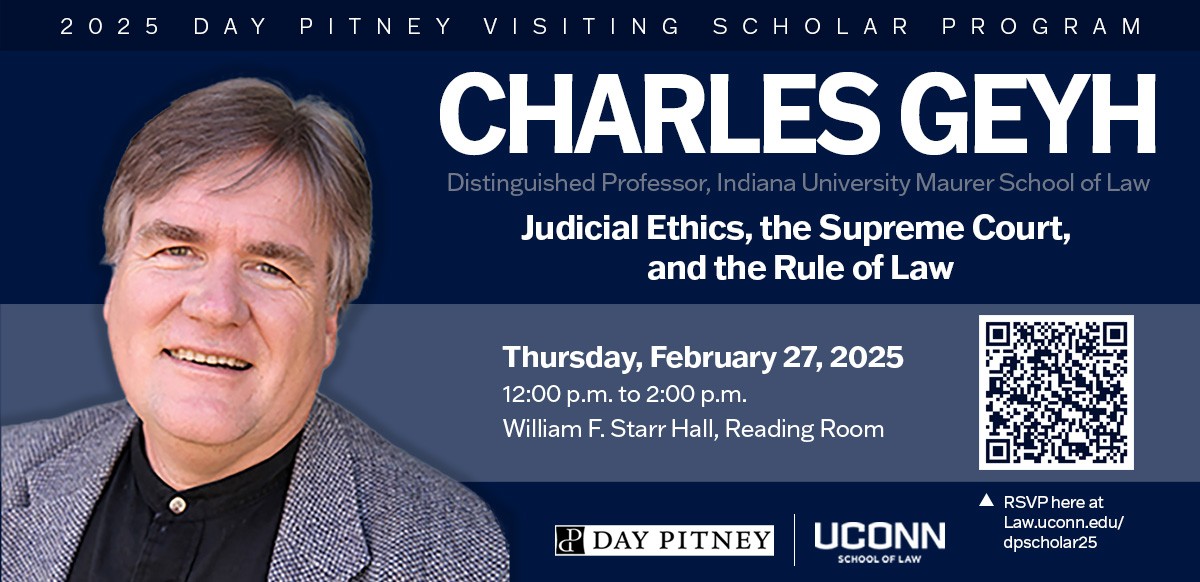
We are excited to host Professor Charles Geyh for the 2025 Day Pitney Visiting Scholar Program for a discussion on Judicial Ethics, the Supreme Court, and the Rule of Law. RSVP using the QR code or the link below.
https://t.co/s8O0Pbevak
Self care has become an $11 billion dollar industry. But should self care be an economic industry at all? Professor Suzanne A. Kim examines the origins of self care and how legal reforms can help better protect the needs and the provision of worker care. https://t.co/p6b0rz8xKW
James Madison is frequently touted as the father of the Constitution. But Professor @TolerUpdike contends that after careful review, Madison’s contributions were less than previously thought, and analyzes what that may mean for the Supreme Court. https://t.co/O3WASyVVLn