Do not eat these. Discard immediately if you recognize any of these in yours or a loved one’s kitchen, it’s the easiest act of love you can do for them today.
A French study in PLOS Medicine examined the impact of emulsifiers (food additives used to improve texture and extend shelf life) on cancer risk.
Researchers analyzed data from 92,000 adults over nearly 7 years and found that certain emulsifiers significantly increased cancer risk:
Mono & diglycerides of fatty acids (E471)—found in processed baked goods, margarine, and ice cream—were linked to:
15% higher risk of overall cancer
24% higher risk of breast cancer
46% higher risk of prostate cancer
Carrageenan (E407 & E407a)—a thickening agent in dairy alternatives, deli meats, and plant-based products—was linked to:
32% higher risk of breast cancer.
Cancer is complex and multifactorial, but one thing is certain: the food we eat plays a massive role in shaping our long-term health. Cutting out ultra-processed foods and focusing on whole, nutrient-dense foods is one of the most powerful steps you can take to reduce disease risk.
Thank you to my friend Vani Hari for this image + bringing awareness to this critical issue.
Your body clock physically moves earlier as you get older. The nightly cue that had you falling asleep at midnight at 20 now arrives closer to 9pm by your 60s, and it wakes you before sunrise whether you want it to or not.
Sleep scientists call this a phase advance. The clock behind it is a pea-sized cluster of about 20,000 brain cells called the suprachiasmatic nucleus, tucked inside the hypothalamus. It sets your daily rhythms of alertness, hunger, and hormones. Those cells wear down with age. In brains studied after death, a daily rhythm in one group of these clock neurons that shows up clearly in young adults has disappeared by age 50.
When the clock drifts earlier, everything it controls drifts with it. Melatonin, the hormone that makes you drowsy, releases earlier in the evening. Core body temperature and cortisol, the hormone that fires up morning alertness, both hit their daily peaks earlier too. By 5am an older person's body has already switched alertness back on, and sleep will not return even if they lie there trying.
Banking extra sleep to compensate is off the table. Deep sleep, the heavy restorative kind, fades fast with age. It fills about 19% of the night for someone aged 16 to 25. By the late 40s it is down to roughly 3%, replaced by lighter sleep that breaks at the smallest disturbance. The body is finished at 5am and it stays finished.
There is an upside to this too. Researchers who study how performance shifts across the day found that most older adults hit their mental and physical peak in the morning. In one set of experiments, older adults tested early in the day tuned out distractions and leaned on the same brain regions as people decades younger. Tested in the afternoon, that advantage vanished. Younger adults run the reverse and peak later in the day.
The early store run maps onto all of this cleanly. They are awake before dawn because the clock forced it, they are sharp because morning is their high point, and the aisles are quiet because everyone under 40 is still in bed. The flip from night owl to early riser is so consistent across a lifetime that some scientists have floated the moment it reverses, around age 20, as a biological marker for the end of adolescence.
I'm a cardiologist. I've spent twenty years as the person patients trust to interpret their bodies. And I need to tell you something that most physicians won't say out loud:
AI is about to change the power dynamic between you and your doctor. Forever.
Four days ago, OpenAI's o3 model diagnosed 18 children with rare diseases that the best human specialists at Boston Children's Hospital couldn't solve — some after nearly twenty years of searching. Published in the New England Journal of Medicine.
Two weeks ago, WashU researchers proved that nine routine blood markers can calculate your biological age — and predict cancer risk years before any tumor forms. A free calculator. Available to anyone.
Last month, AI-enhanced coronary CT angiography detected inflamed arteries in patients whose standard stress tests said "normal." Patients who would have gone home reassured and wrong.
The pattern is unmistakable. The tools that used to require a specialist, a referral, a three-month wait, and a $400 copay are migrating into your phone, your bloodwork portal, and your own hands.
And I'm watching something in my practice I never expected.
Patients are walking in more informed than some of the residents I trained. They've run their PhenoAge score. They know their ApoB. They've read the study about Lp(a) before I've had time to bring it up. They come with questions so specific that the conversation starts at a level it took me years of training to reach.
This used to threaten physicians. It shouldn't. It should liberate us.
Because here's the truth about the old model: a 15-minute appointment where your doctor runs a basic metabolic panel, glances at the numbers, says "looks fine," and sends you home — that model was never good enough. It was just all we had. It missed 75% of future heart attacks. It caught cancer late. It told women with microvascular disease they had anxiety. It filed children with rare diseases as "unsolvable."
AI doesn't replace the physician. I've said this before and I mean it — the human moment, the clinical judgment, the hand on the shoulder when the diagnosis lands — that's irreplaceable.
But AI does something the old model never could: it gives you the ability to see inside your own biology with a depth and speed that was impossible a decade ago. To track your own numbers. To calculate your own biological age. To bring data to your doctor that elevates the conversation from "am I sick?" to "where exactly am I heading, and what do we do about it?"
The patient who walks in with their ApoB, their Lp(a), their hsCRP, their PhenoAge calculation, and a list of questions from the latest research — that patient doesn't threaten me.
That patient is the easiest person in my practice to keep alive.
Because they've already done the one thing most patients never do: they stopped waiting for permission to understand their own body.
I went into medicine because I wanted to help people live longer. What I've learned is that the patients who live longest are the ones who took ownership — not of my job, but of their own data, their own questions, and their own decisions.
The tools are here. The research is published. The calculators are free. The blood tests cost less than a dinner out.
You don't need to wait for your annual physical to find out what's happening inside you. You don't need permission to understand your own biology. And you don't need to accept "looks fine" from anyone — including me — when the science offers a deeper answer.
The revolution isn't coming. It's in your pocket. In your patient portal. In the published studies you can read yourself.
The only question left is whether you'll use it — or keep waiting for someone to tell you it's time.
Your body. Your data. Your life.
Take ownership. Your future self is counting on it.
Right into my veins!💉
Justice Thomas:
"Men and boys with gender dysphoria are not women or girls, even if they believe that they are. Sex is an immutable 'biological' characteristic...it is binary."
"To use language to obscure reality—to show 'indifference regarding the truth'—is to lie to the public..."
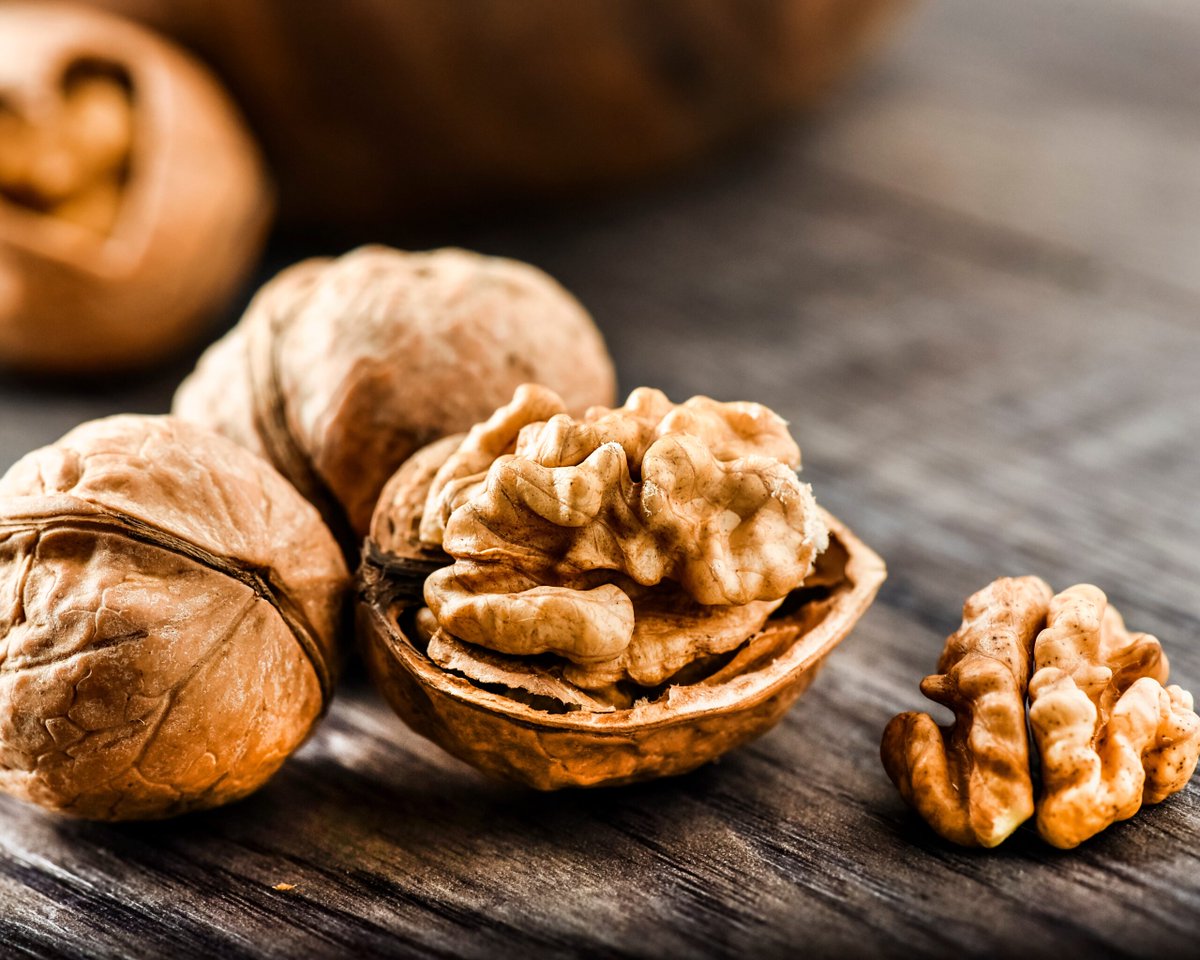
Walnuts are 65% fat, and most of it is fragile polyunsaturated oil, the omega-6 kind that oxidises on contact with air, heat or time. Which is why walnuts go rancid faster than almost any nut on the shelf. That half-used bag in your cupboard oxidised weeks ago.
And it gets worse than stale. Walnuts are one of the tree nuts most prone to mould, and that mould can throw off aflatoxin, one of the most potent carcinogens known. The bag brings the usual plant armoury too: phytic acid that blocks mineral absorption, tannins that hinder protein, oxalates that feed kidney stones.
"But walnuts have omega-3!" They have ALA, the plant form, and your body converts barely a few percent of it into the DHA your brain actually runs on. You would need to eat them by the bucket to match a single fillet of fish, taking on a vast load of oxidising omega-6 to get there.
The brain-shaped-nut-for-your-brain line is folklore dressed as science, built on a coincidence of shape.
The halo of virtue is borrowed as well. Nearly all of America's walnuts come from drought-stricken California, drinking down irrigation water by the orchard.
Eat fish for the DHA your brain can use without the conversion tax. Walnuts are calories with a publicist.
A woman hiking in Canada nearly became a grizzly’s next meal and the video circulating right now is genuinely one of the most intense wildlife encounters you will ever watch - her dog is with her, a massive grizzly is right there, and somehow she kept her head together long enough for both of them to walk away breathing.
That is not a small thing. Most people talk tough until nature is standing ten feet in front of them and every instinct in your body is screaming to run, and running is exactly the worst thing you can do.
Grizzlies are built to chase, they top out over 700 pounds and can cover ground faster than any human alive. The people who survive these moments are the ones who override pure fear with pure discipline and this woman did exactly that.
If you hike, camp, or spend any real time in the wilderness - bear spray is not optional, it is the difference between a story you tell and one somebody else tells about you.
Could you have kept your cool?
Hats off to her.
My name is Ella, I'm 17 years old.
I do long jump. I play volleyball. I go to school in New Richmond, Wisconsin.
When my school allowed a biological male into the girls' restroom without telling parents —
I went to the school board.
With my name attached.
In my own town.
I got bullied for it. Harassed online. Even some of my own teachers came after me.
I'm still here.
Because here's what I know:
The net in women's volleyball is set nearly a foot lower for a reason.
A biological male can hit a ball across that net at force that could seriously injure a girl.
And in track — all it takes is three biological males entering the girls' category
and not a single girl in this state stands on a podium.
I didn't speak up because it was easy.
I spoke up because somebody had to.
The Supreme Court is about to answer the question every girl in America is asking.
We're ready.
@JenniferSey@xx_xyathletics
@Nunyabiznutzz@TeamPillen No sales tax can be imposed. The FAA collects these fees and the State of Nebraska cannot require the FAA to collect sales tax. https://t.co/9cpSKbGphH
A July 2024 study found that drinks stored in glass bottles may contain more microplastics than drinks stored in plastic bottles.
This does not mean the glass itself is breaking down into plastic. Glass is generally inert, but many glass bottles still use plastic-based parts, especially inside the caps and seals.
The researchers tested glass bottles, plastic bottles, and paper-based cartons using filtered water. Glass bottles had the highest average level, at about 630,000 microplastic particles per liter.
Plastic bottles had fewer particles, at about 110,000 particles per liter. Paper-based cartons had the lowest amount, at about 30,000 particles per liter.
The study points to polymer cap liners, adhesives, and manufacturing residue as likely sources of the particles found in glass-bottled drinks.
This challenges the common idea that glass packaging is always cleaner or safer than plastic when it comes to microplastic exposure. Glass may still have environmental advantages, but the full bottle system matters, including the cap, seal, and production process.
Microplastics are a growing concern because very small particles may pass through the gut and enter the bloodstream. Researchers are still studying how these particles may affect organs and long-term health.
The findings suggest that safer bottle components and cleaner manufacturing methods may be needed. They also show why consumers and policymakers should consider hidden plastic materials, even in packaging that looks plastic-free.
Gerakan ini adalah Radio Taiso yang merupakan senam ringan khas Jepang yang sudah ada sejak 1928. Biasanya senam ini disiarkan di radio, kalo sekarang sudah ada di Youtube dengan musik dan instruksi yang mudah diikuti. Durasinya 3-10 menit dengan gerakan sederhana, tanpa alat.
Penelitian menunjukkan bahwa rutin mengikuti gerakan Radio Taiso berasosiasi dengan peningkatan kemampuan fisik, antara lain agility dan endurance. Selain itu pada lansia bisa menurunkan risiko terjadinya demensia dan penurunan kemampuan fisik.
Gerakan ini cocok sebagai pemanasan pagi hari atau latihan ringan sehari-hari. Namun bila kalian punya cedera bahu, nyeri medis, atau kondisi medis tertentu, pastikan sudah berkonsultasi dengan tenaga kesehatan sebelum memulai gerakan ini ya.
Semoga bermanfaat!
Sumber:
Osuka (2024). Effects of Radio-Taiso on Health-related Quality of Life in Older Adults With Frailty: a Randomized Controlled Trial.