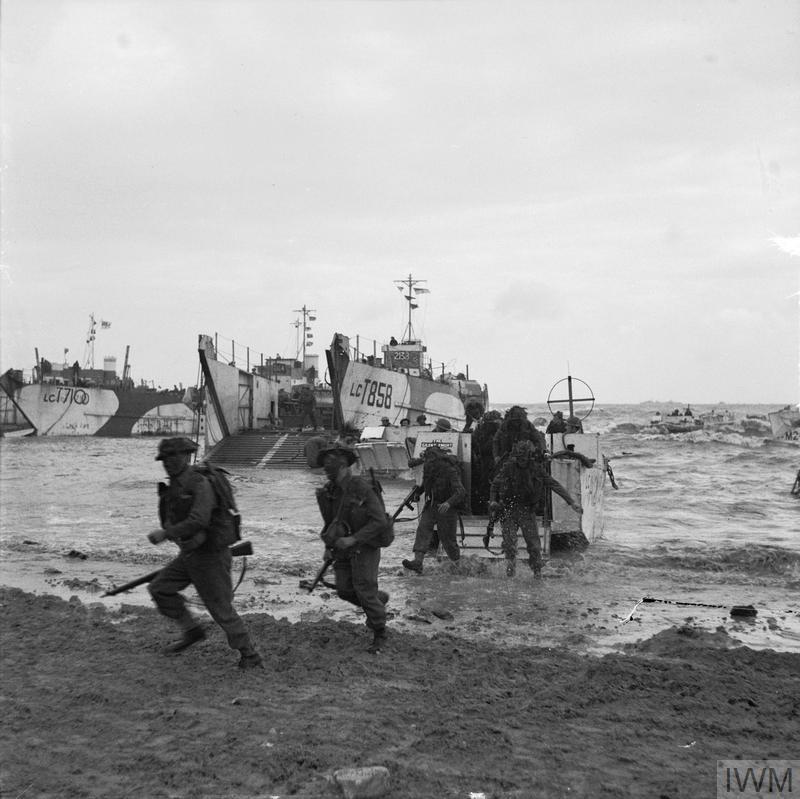
This day in history 6 June 1944, #DDay, British soldiers landed in Normandy alongside Allied forces to begin the liberation of Europe 🪖
Today, we remember their courage, sacrifice, and service 🫡
Lest we forget.
I think it’s worth sharing Andy Burnham’s disastrous 2015 Newsnight interview where he was unable to explain his cornerstone policy of reducing private provision in the NHS when he was shadow health secretary
Robert Jenrick: “We have procured more hotels very rapidly… What I have done in my short tenure is ramp that up and procure even more.”
Nigel Farage: “This man is a fraud. This man isn’t to be trusted.”
Now both are in #ReformUK telling you immigration is through the roof.
You’re the dummy if you believe a single word from either of them. Same circus, different clowns.
@Nigel_Farage@RobertJenrick
Well, things appear to be playing out much as many suspected. Andy Burnham has effectively launched his challenge despite not yet being an MP, and with no guarantee that he ever will be. At the same time, he has chosen to call out Wes Streeting, who clearly lacks the support required to challenge Sir Keir Starmer himself.
What seems to be missing from much of this commentary is the role of Labour members. Sir Keir Starmer knows that support within Westminster is only part of the equation. The wider membership may take a very different view from those currently engaged in leadership speculation.
There is a real danger that sections of the Parliamentary Labour Party are misreading the mood of the grassroots. If members are eventually given a say, some MPs may receive a sharp reminder that Westminster opinion and party opinion are not always the same thing.
Whatever happens next, this episode has made Labour look distracted when it should be focused on governing. If Sir Keir Starmer remains leader, many members will expect him to restore discipline and refocus the party on delivering the mandate it was elected to implement.
The most extraordinary claim in John Rentoul’s article is not that Andy Burnham may one day challenge for the Labour leadership. It is the assertion that Sir Keir Starmer has effectively reconciled himself to defeat and is quietly preparing for the end of his premiership.
There is no evidence presented for such a conclusion beyond anonymous briefings, speculation and Westminster gossip. Indeed, it runs contrary to what many Labour members appear to believe.
The assumption underpinning the article is that support within parts of Westminster automatically translates into support across the wider Labour movement. That is a dangerous assumption to make. Labour leadership contests are not decided solely by MPs, journalists, advisers or political commentators. They are decided by the party itself.
Many grassroots members do not see Andy Burnham as the inevitable successor described by sections of the media. On the contrary, a growing number view the current manoeuvring as an attempt by elements of the left and far left to regain influence within a party that moved decisively away from that politics under Sir Keir Starmer’s leadership.
The irony is difficult to miss. Those same political traditions failed to convince the electorate when they had the opportunity to do so. Sir Keir Starmer, by contrast, led Labour to a landslide general election victory and secured a parliamentary majority larger than all of the opposition parties combined. Whatever criticisms may be made of his government, that electoral achievement remains a matter of fact rather than opinion.
What many members appear to be asking is a simple question. Why would a party abandon a leader who won a historic election victory and a government that is implementing its manifesto commitments in favour of a project built largely upon speculation, personality and aspiration?
The article also reveals a familiar problem within sections of the political media. Westminster has a tendency to mistake its own conversations for political reality. Journalists speak to MPs. MPs speak to journalists. Advisers speak to both. Before long, a narrative develops and begins to feed upon itself until conjecture is presented as inevitability.
Yet outside Westminster there are hundreds of thousands of Labour supporters and members who may see matters very differently. Many are less interested in leadership intrigue than in whether the government is delivering the programme upon which it was elected.
If there is one lesson from recent political history, it is that Westminster is often the last place to understand what the wider public and party memberships are actually thinking.
Perhaps Andy Burnham will become Labour leader one day. Perhaps he will not. But presenting his succession as inevitable, while portraying Sir Keir Starmer as a Prime Minister resigned to defeat, says more about the assumptions of political commentators than it does about the reality of the Labour Party today.
Reading Andy Burnham's interview, I am struck by how much of it is built upon aspiration rather than delivery.
There is nothing inherently wrong with discussing ideas. Politics requires vision. However, there comes a point where voters are entitled to ask a very simple question: what can actually be achieved, and in what timescale?
Take social care. Burnham presents himself as the politician willing to grasp the nettle that others have avoided. Yet social care reform has defeated governments, ministers, commissions and experts for more than two decades. We are offered references to reviews, future proposals, inheritance changes and potential levies, but very little detail about how any of it would be implemented in practice. The difficulty has never been identifying the problem. The difficulty has always been persuading the public to pay for the solution.
The same issue applies to council tax. Burnham suggests replacing it with a land value tax. That may sound attractive as a headline, but council tax has existed for over thirty years and any replacement would require one of the most complex reforms of local government finance in modern British history. It would involve revaluations, legislation, transitional arrangements, appeals, redistribution mechanisms and years of political argument. It is not a policy that could simply be announced and implemented overnight.
Likewise, we hear proposals for fiscal devolution, new powers for councils, changes to procurement rules, social housing reform and wider constitutional change. These are all substantial undertakings. Yet the interview rarely addresses the practical barriers that stand between the announcement of a policy and its delivery.
This is where the comparison with Keir Starmer becomes important.
The current government is not asking to be judged on what it might do. It is asking to be judged on what it has already done and what it is currently doing.
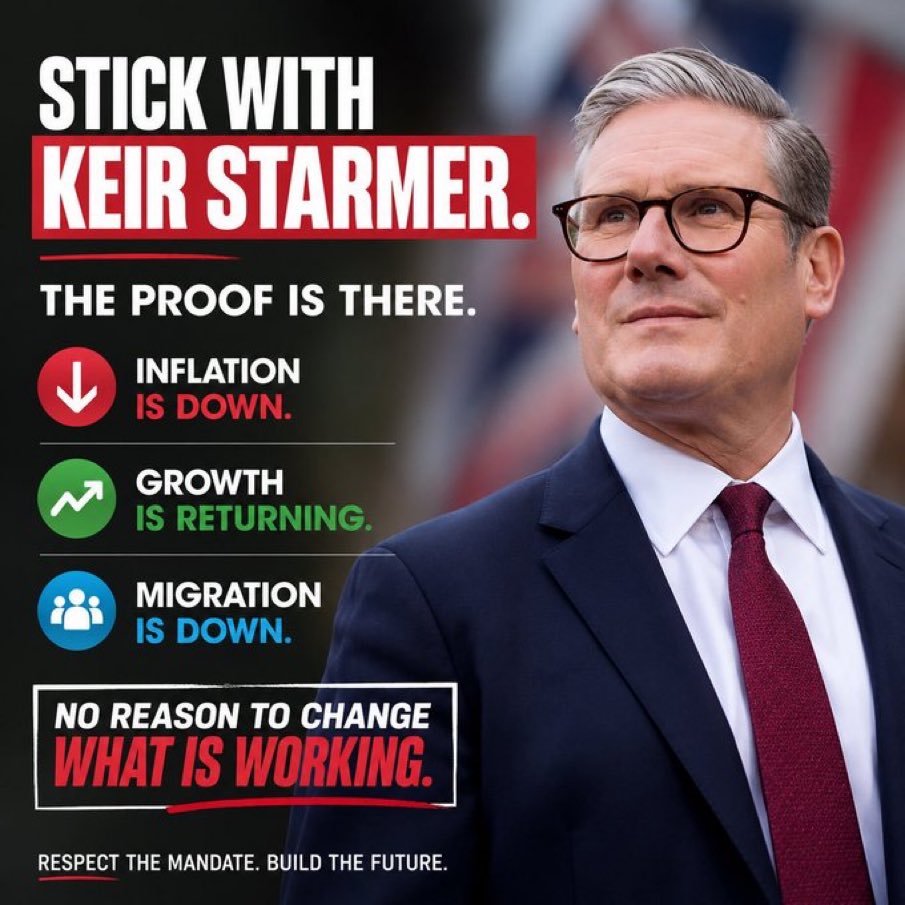
Inflation has fallen dramatically from the levels that were causing severe hardship for households. Economic growth has returned after a prolonged period of stagnation. Relations with Europe have improved without reopening the divisions of the Brexit referendum. Net migration has reduced significantly from its previous peak. Planning reform is under way. Investment decisions are being made. Infrastructure projects are progressing. Defence spending is increasing in response to a more dangerous world.
Whether people believe these measures are sufficient is a matter for debate. However, they are tangible actions rather than aspirations.
Burnham repeatedly presents himself as the politician willing to make difficult choices. Yet many of the difficult choices he discusses remain hypothetical. The government, by contrast, is making real decisions now and facing the consequences of them.
There is also a contradiction running through the interview. Burnham argues for radical change while simultaneously promising adherence to existing fiscal rules. He speaks about rejoining the European Union in his lifetime while insisting that now is not the time to revisit the issue. He criticises the way politics is conducted while carefully avoiding direct answers about his own leadership ambitions.
As a result, the interview often feels less like a programme for government and more like a collection of carefully positioned political signals designed to appeal to different audiences at the same time.
Ultimately, the public may decide that what Britain needs most is not another politician describing what could be done, but a government continuing the difficult work of implementing what can be done.
There is a significant difference between governing and campaigning.
One involves promises.
The other involves delivery.
However, before any of these competing visions are ever put before the British electorate, there is another audience that must first be persuaded: Labour members themselves.
Andy Burnham must first win the Makerfield by election. He must then convince Labour MPs and Labour members that replacing Keir Starmer is both necessary and desirable. It is they, rather than the wider electorate, who will determine whether his ambitions ever move beyond speeches and interviews into a genuine leadership project.
That raises an important question. Is this really the moment for Labour to abandon a programme that is already being implemented in favour of a set of ambitions that may take many years to achieve, if they can be achieved at all?
Many of the policies Burnham discusses are not measures that can be delivered quickly. Social care reform, replacing council tax, introducing a land value tax, restructuring local government finance and further constitutional reform are projects that could consume years of political and legislative effort before any meaningful results are seen. That presents a fundamental political risk. If a government commits itself to a programme whose principal objectives cannot realistically be delivered within the lifetime of a Parliament, it may find itself facing the electorate having promised much but demonstrated little. Voters are generally prepared to be patient when they can see progress. They are far less forgiving when they are asked to place their faith in outcomes that always appear to remain somewhere beyond the horizon. Labour members should therefore consider not only whether these ambitions are desirable, but whether they are deliverable within a timeframe that allows the party to present a credible record of achievement at the next general election.
Political parties rarely earn public trust by constantly changing direction. They earn it by demonstrating competence, stability and delivery. The government was elected on a manifesto and is now in the process of implementing it. Surely the first test should be whether that programme succeeds before Labour turns its attention to an entirely different one.
For Labour members, therefore, the choice is not simply between two personalities. It is a choice between delivery and aspiration, between a government already doing the difficult work of governing and a prospective leadership project built largely upon promises of what might be possible in the future.
That, ultimately, is the debate that now lies ahead.
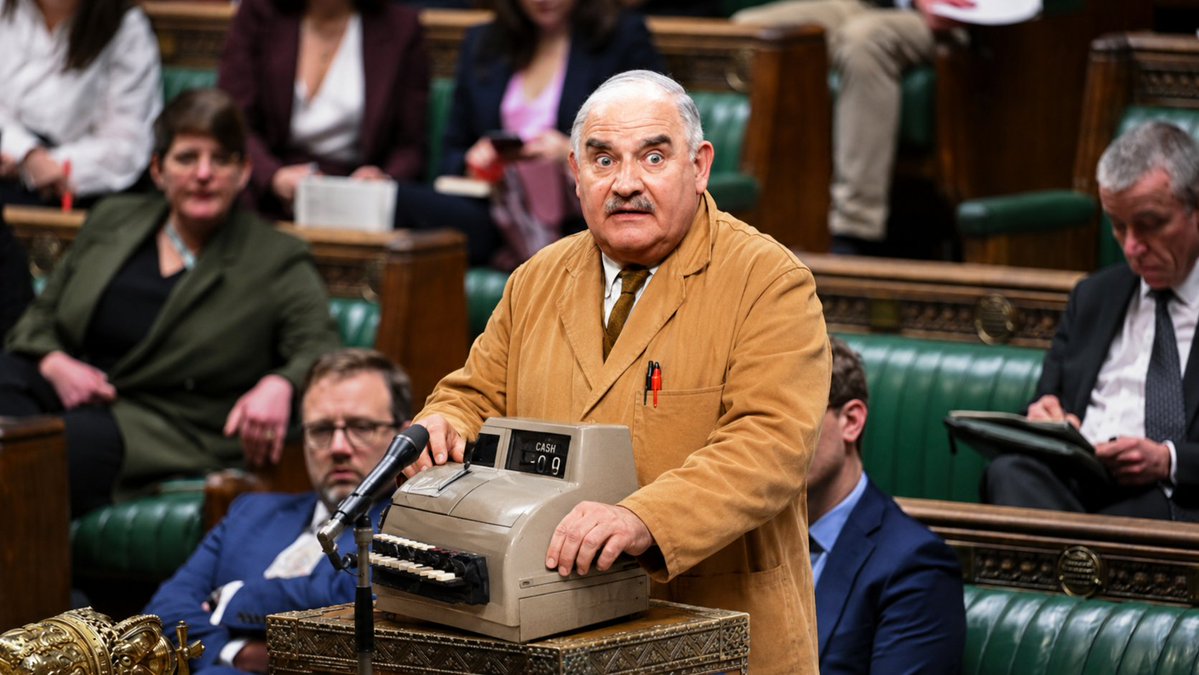
🚨 Bitter blow for Andy Burnham as Sam Allardyce pulls out of being Chancellor until the end of the season due to bung allegations. The offer has now gone to Arkwright from open all hours, who is insisting he brings his cash till. Will keep you posted
This is the sort of pure bred ‘patriot’ that is fighting for his country and will protect you against the ‘invaders’.
This is who you are arguing with online when they say make Britain British again.
So, let me get this straight, Farage is now saying there is a difference between Hot and cold rage.
Hot - explosive
Cold - controlled (bs in my opinion as both mean RAGE..AKA riots)
White cold rage - exact same as cold
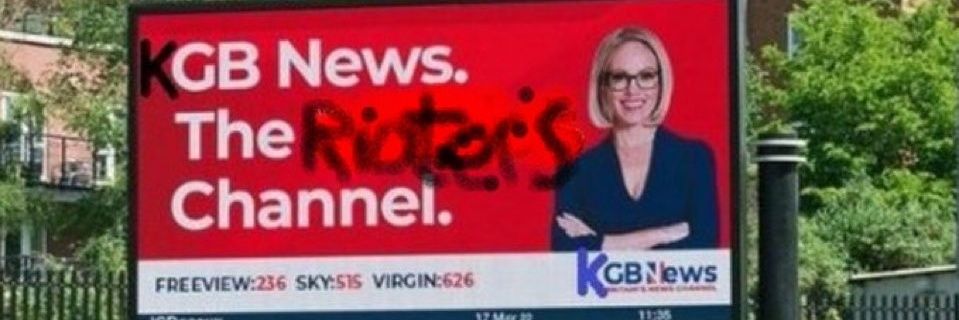
So why did @BBC need to give any apology to him for "white cold rage"
Which basically means the same as cold rage (yes it does, ask whatever search method you use)
Why was ANY apology given???
Yeah because those thugs that attacked the police in Southampton leaving 11 injured REALLY knew the difference between hot and cold rage.
They understood RAGE.
Farage playing silly beggars and taking everyone for fools with dicky language manipulation.
History may remember today's PMQs not only as one of Starmer's finest performances, but as the day he exposed Farage so effectively that it marked the beginning of the end for his political career