JUST IN: Researchers warn 6G could detect people through walls, monitor breathing & heartbeats, & potentially enable mass surveillance even without a phone.
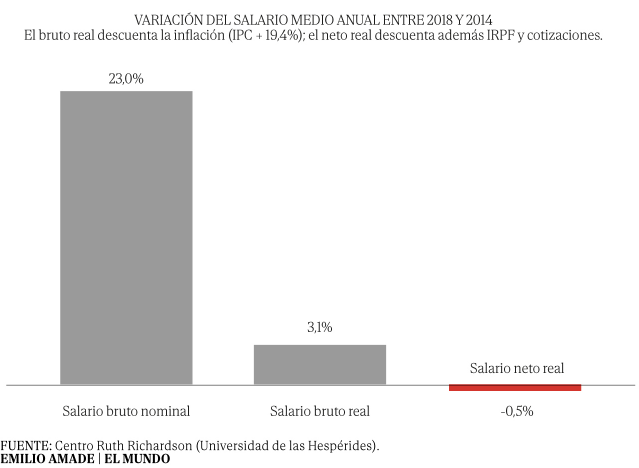
Pedro Sánchez presume de que los salarios han subido un 23% desde 2018, por encima de la inflación. Y es cierto... si hablamos de salarios brutos.
El problema es que nadie paga la hipoteca, el alquiler o la cesta de la compra con el salario bruto. Lo hace con el dinero que realmente llega a su cuenta corriente.
Cuando descontamos inflación, impuestos y cotizaciones sociales, la mejora prácticamente desaparece.
Y si además añadimos que la vivienda es hoy entre un 30% y un 40% más cara que en 2018, la sensación de pérdida de poder adquisitivo que tienen muchas familias empieza a entenderse mejor.
Quizá la gran lección es que crecimiento económico, subida de salarios y mejora del nivel de vida no siempre son la misma cosa. Una economía puede crecer con fuerza mientras muchos ciudadanos sienten que cada vez les cuesta más llegar a fin de mes.
Y esa diferencia entre la macroeconomía y la realidad cotidiana es probablemente uno de los grandes debates económicos de nuestro tiempo.
I get blown away every time I read this paragraph by Carl Jung:
To love someone else is easy, but to love what you are, the thing that is yourself, is just as if you were embracing a glowing red-hot iron: it burns into you and that is very painful. Therefore, to love somebody else in the first place is always an escape which we all hope for, and we all enjoy it when we are capable of it. But in the long run, it comes back on us. You cannot stay away from yourself forever, you have to return, have to come to that experiment, to know whether you really can love. That is the question-whether you can love yourself, and that will be the test.
We are getting to the point when the Euro will start to decline against the dollar. It won’t be long now. Just watch the Arrays. Europe is going to impose capital controls.
Here is a yearly chart of the Russian ruble. Despite all the press how Russia is weak, it is collapsing, etc., sorry, the ruble is rising not declining.
5. Tu mejor versión se construye en silencio.
No aparece de golpe ni con grandes revelaciones. Se forma en esos días tranquilos, en los momentos libres, en las decisiones pequeñas que casi nadie ve.
4. No se trata de correr, sino de avanzar.
La prisa confunde. El paso firme, aunque sea lento, te mantiene en dirección correcta. La velocidad no define el progreso; la intención sí.
3. Cada decisión cotidiana te moldea.
Caminar, descansar, leer, cuidar tu mente, elegir la calma… todo eso, aunque parezca mínimo, va dando forma a tu carácter y a tu futuro.
2. La constancia pesa más que la intensidad.
Un pequeño hábito mantenido en el tiempo vale más que un impulso fuerte que dura dos días. La disciplina suave es la que construye resultados sólidos.
1. Los cambios reales nacen de lo pequeño.
No necesitas grandes gestos para avanzar. Lo que de verdad transforma tu vida son esos pasos discretos que repites cada día sin hacer ruido.
The two biggest barriers to good decision making are your ego and your blind spots. Together, they make it difficult for you to objectively see what is true about you and your circumstances and to make the best possible decisions by getting the most out of others. If you can understand how the machine that is the human brain works, you can understand why these barriers exist and how to adjust your behavior to make yourself happier, more effective, and better at interacting with others. #principleoftheday