Through the Looking-Glass
Nvidia’s Jensen Huang had a warning for G20 governments: in the AI age, the greatest risk may not be investing too much, but being left behind.
Wall Street, however, still treats the AI capital-spending boom as another familiar late-cycle excess. That misses the larger shift. The U.S. economy may be emerging from the post-GFC era of secular stagnation, when cheap money, weak productivity and financial engineering shaped both corporate strategy and market thinking.
In the new economy, companies, countries and investors must spend, build and adapt at extraordinary speed simply to avoid falling behind.
The Red Queen’s world has arrived on Wall Street and the old rules for reading rates, debt and equity valuations may be running in reverse.
And we have not even begun to confront the changing reaction function of central banks. In an economy constrained by debt-service costs, strategic reindustrialization, energy demand and an AI-driven race for productive capacity, policymakers may not respond to inflation, growth and market stress as they did in the post-GFC era.
Yes, this time is different.
WAPW Chief Market Strategist Jim Thorne's perspective on the future of the US economy and market is unique on Wall St., and worth a read. Well laid-out case for being bullish.
“The game itself is changing.” In his July #MarketInsights, @DrJStrategy demonstrates how investors should reposition their strategies to capitalize on the new opportunities of Trump’s America First rebuild—or risk sitting on the sidelines. https://t.co/hphJl5cZBX #Investing#AI
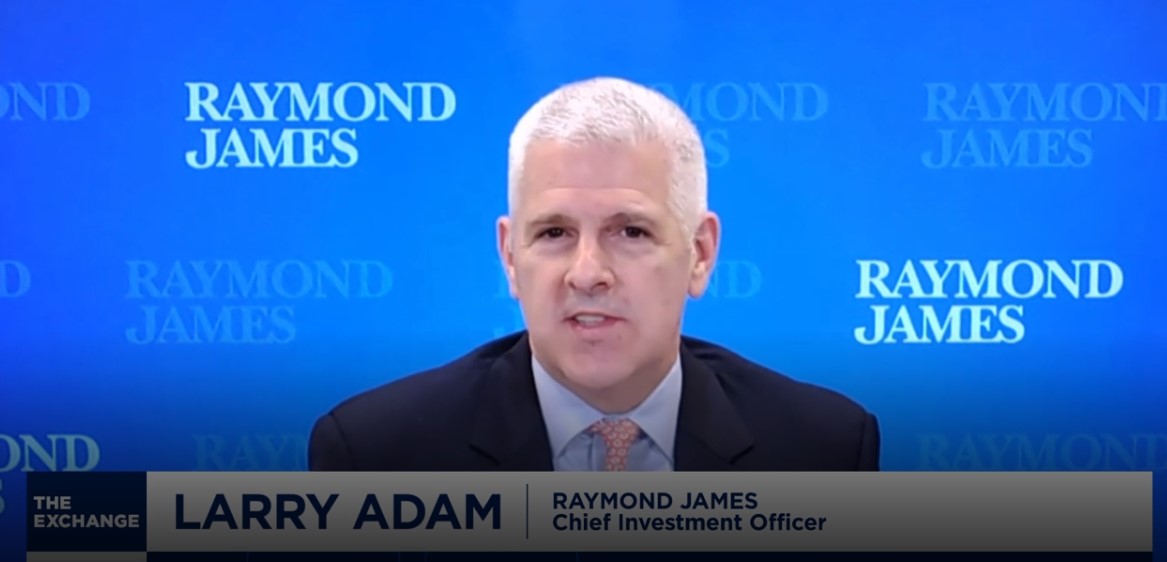
Thank you @KellyCNBC, for having me on @CNBCTheExchange today to discuss tariffs and the potential impact to the economy and earnings.
https://t.co/qQSesLSVrH
On behalf of the entire Investment Strategy Team, I'd like to wish you and your family a Happy Thanksgiving! In my latest commentary video, I discuss the five financial-related dynamics that we are most grateful for. Listen here: https://t.co/bHU5nx0QCS
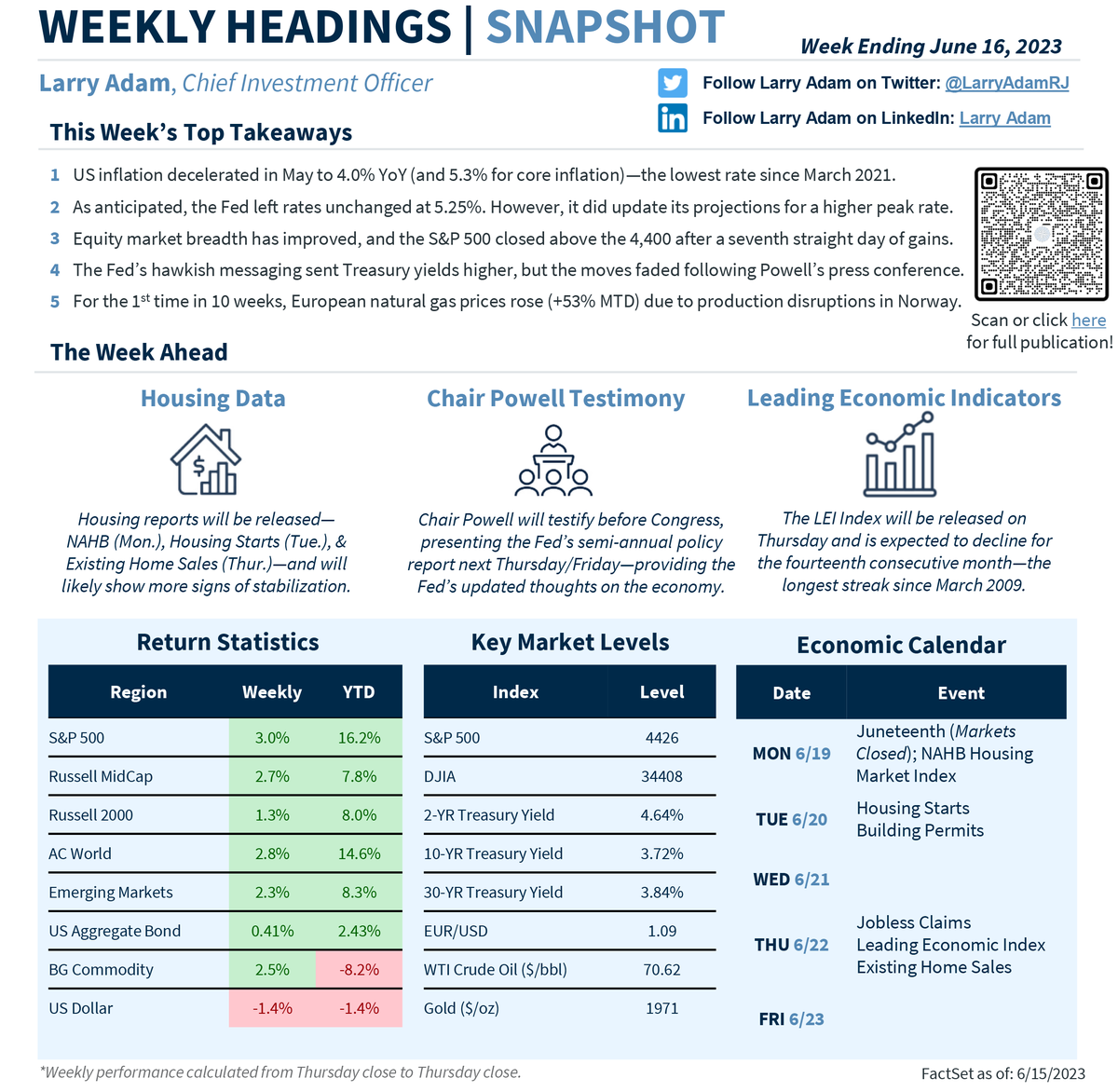
Don't Fight The Fed. On National Cliché Day, we embrace a financial market cliché that suggests it is unwise to position against the direction of monetary policy. In this week's #WeeklyHeadings, we discuss why the Fed should be finished hiking rates. https://t.co/lCLMnOPA2c
Much like Halloween, it has been a scary time for investors with the recent equity pullback. It is important to put this in perspective, and in this week's #WeeklyHeadings, we give reasons to remain optimistic on equities. https://t.co/Y1FUtHffS5
"At Raymond James we have a long history of reaching out to those affected by tragedy," shares Jamie Coulter, Chief Executive Officer, Raymond James Ltd. "Unfortunately there is no shortage of natural disasters, and they all create an urgent need for relief."
"The recent earthqu
Breaking Technicals. The S&P 500 rose above its 200-day moving average (which has been a key level of resistance over the last 12 months) by the widest margin since April 2022. Breaking above this is a positive for the market as it could signal the end of the down trend.
What are RJF's 10 Themes for 2023? Are the negative headlines already priced in? (HINT: yes) Can the #markets rebound after the first negative year for #stocks AND #bonds since 1976? Click the link below to watch our 2023 outlook webinar.
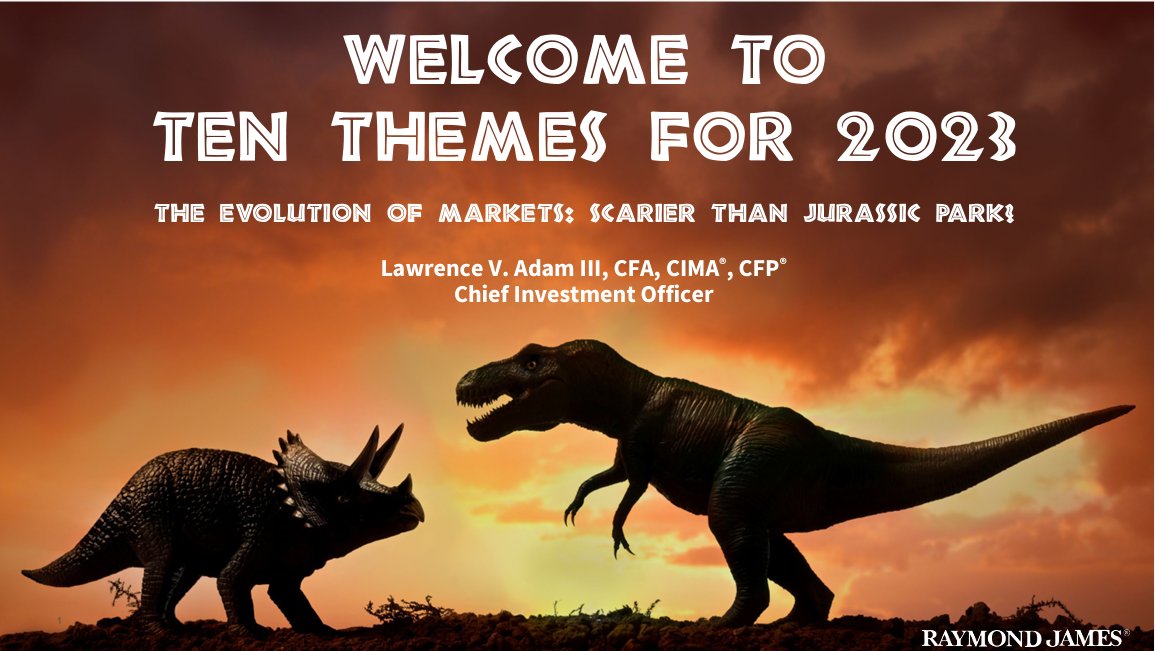
Our 2023 outlook titled “The Evolution of Markets – Scarier Than Jurassic Park?” uses prehistoric and archaeological concepts to present our #TenThemes – a collection of our primary insights for the major asset classes, economy, and portfolio positioning. https://t.co/819loV9aer
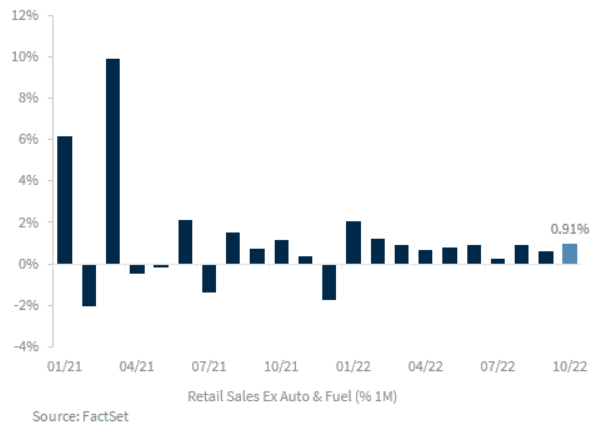
Consumers Still Spending. Despite concerns surrounding the health of the consumer, retail sales ex-autos & fuel rose 0.91% in October - the strongest monthly increase since June. The increase was driven by spending at restaurants and grocery stores.
Tonight we will learn the results of the US #Midterms2022. What would various outcomes mean? According to RJF's Washington strategist Ed Mills, maybe it doesn't matter. The #SPX has been⬆️a year after every midterm #elxn since 1950. Listen to this week's Advantaged Investor pod:
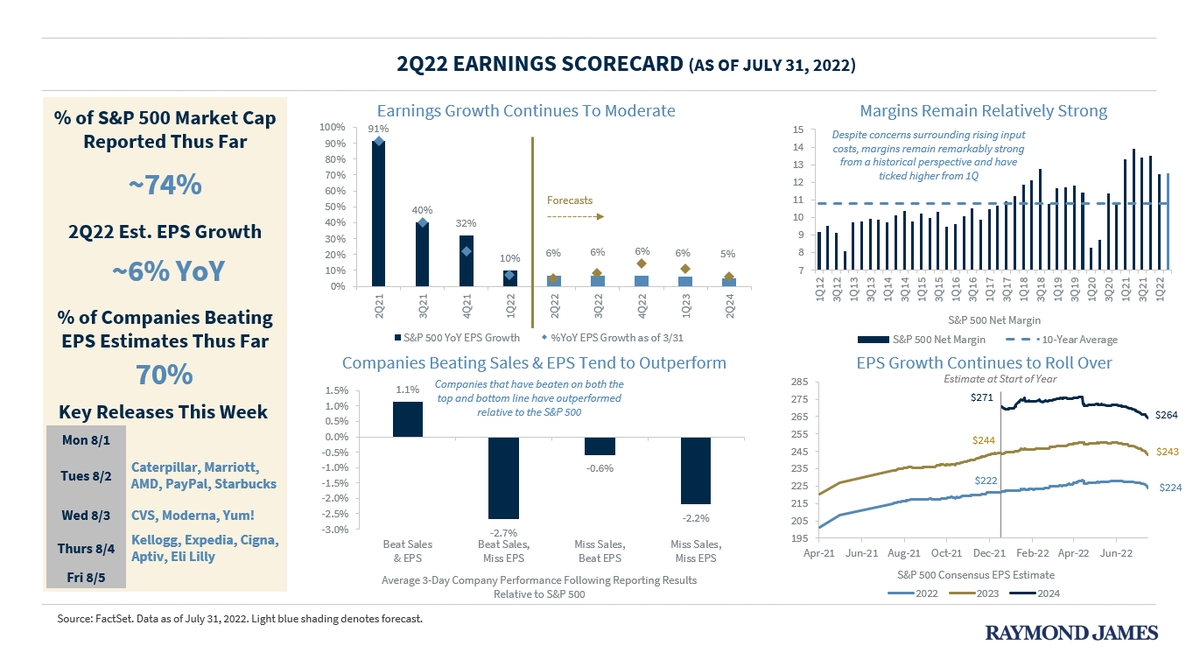
Many market commentators have predicted an #earnings#recession as the market’s next headwind. So far, well into Q2 earnings season, we are not seeing evidence to back up the gloom and doom. #economy#Markets
Earnings Update! 2Q earnings have seen a moderation in growth (+~6%) although many companies are reporting better-than-feared results. This week, ~150 companies are set to report, accounting for ~15% of the S&P 500 market cap.
Moderating Inflation. Core PCE rose 0.3% MoM in May (half of the 0.6% increase seen in CPI), leading to a moderation in the YoY pace of core inflation (+4.7%) for the 3rd consecutive month. We expect further moderation over the next 12 months.
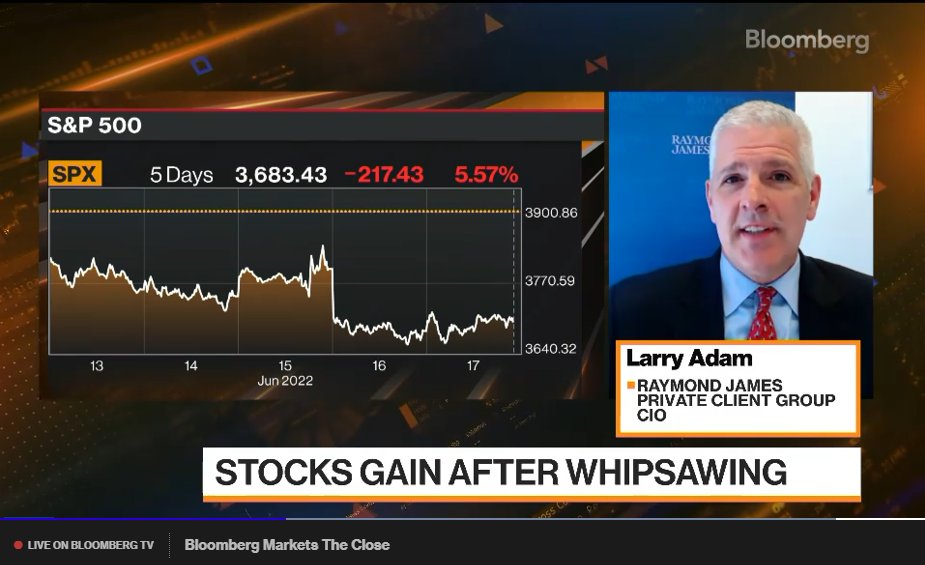
Thank you @CarolineHydeTV, @RomaineBostick, and @RiggsReport for hosting me on Bloomberg @Markets where I shared my thoughts on why the upcoming earnings season and inflation reports may prove that the recent pessimism is overblown. https://t.co/4aE6VhSHJE