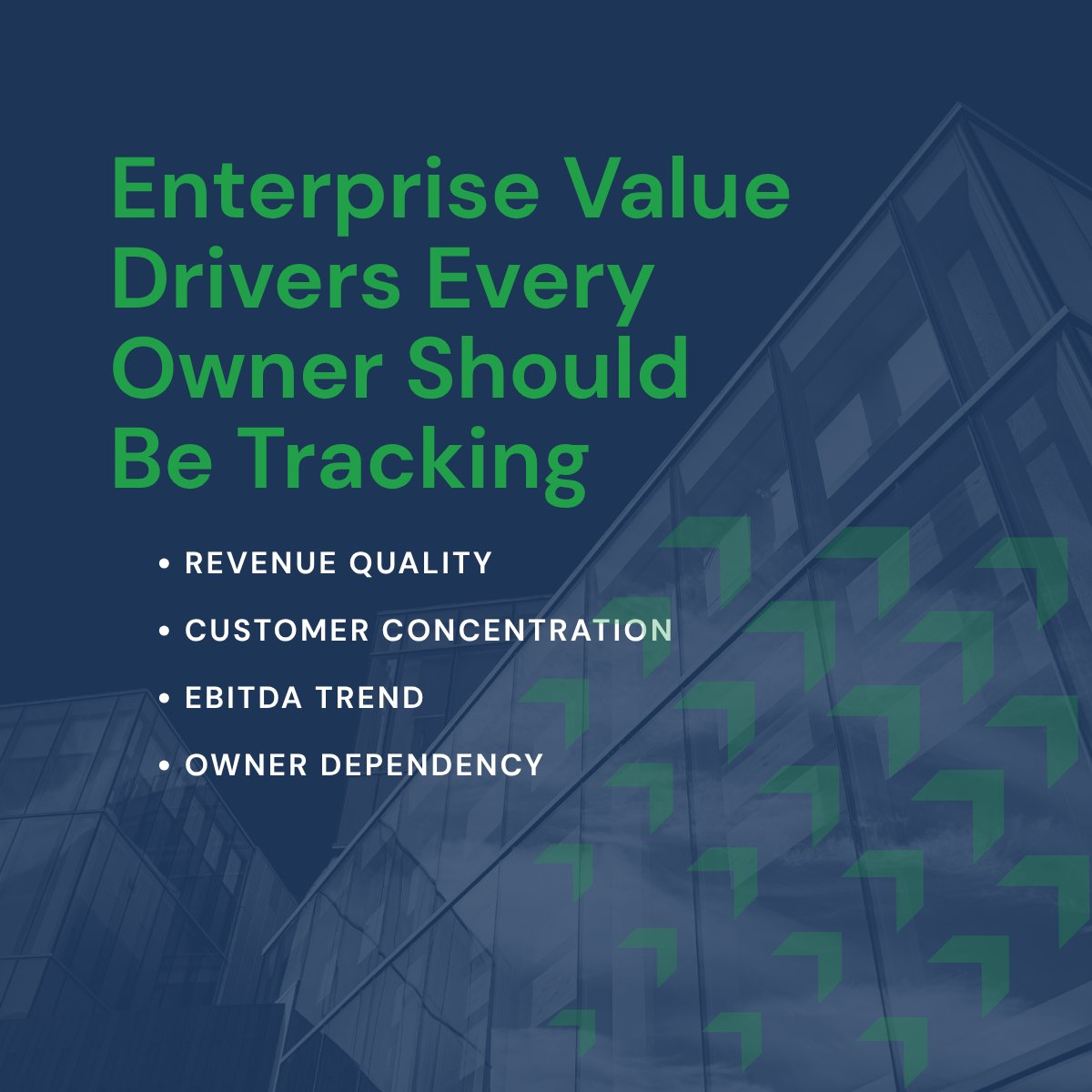
Most owners encounter a formal valuation for the first time when someone else initiates it.
Understanding how the number gets built before that conversation happens is a practical advantage.
https://t.co/POIaC5FTpV
PE activity in the lower mid-market is up. More buyers don't necessarily mean better outcomes.
The founders who negotiated well were already prepared before anyone called.
https://t.co/POIaC5FTpV
Many mid-market buyers scrutinize revenue and EBITDA. The items that cost them post-close are almost always the same ones that got underweighted in diligence.
https://t.co/POIaC5FTpV
The first 60 minutes with a new client isn't a sales call. It's a diagnostic.
The questions are straightforward. The answers usually make the gap clear.
https://t.co/5nrr5uKVxH
The decision to raise capital tends to get made reactively, when the pressure is already on.
The conditions that make a raise the right move are worth understanding before you're in the process.
https://t.co/5nrr5uKVxH
The first 30 days with Contrail follow a consistent structure from diagnostic to buildout. The deliverable is a model that allows teams to lead and grow the business with confidence.
https://t.co/5nrr5uKVxH
Getting to LOI feels like the hard part. It's also where a significant number of mid-market deals fall apart.
The companies that close on favorable terms prepared before the process started.
https://t.co/5nrr5uKVxH
A financial model built to lead, not just report, changes the board dynamic. The questions that used to repeat start getting answered before they're asked.
https://t.co/5nrr5uKVxH
The difference between a business that sells and one that doesn't usually isn't the revenue.
It's whether the business can operate without the owner in the room.
https://t.co/5nrr5uKVxH
Debt is more expensive than it was two years ago. The fundamentals of good capital strategy haven't changed, but the cost of getting the assumptions wrong has.
https://t.co/5nrr5uKVxH
Most founders read their first term sheet mid-negotiation.
Those who know what to look for before the conversation starts negotiate from a different position.
https://t.co/5nrr5uKVxH
The most common question from CFOs at the $10–20M stage isn't about the numbers.
It's about whether the model can still answer the questions that matter most.
https://t.co/5nrr5uKVxH
A model that closes the books is not the same as a model that leads the business.
The difference shows up in capital conversations, board questions, and hiring decisions that don't hold.
https://t.co/5nrr5uKVxH
Enterprise value metrics are not just for companies planning a sale.
They are the metrics of a well-run business. Founders managing them well today will have the most options when it matters.
https://t.co/5nrr5uKVxH
Closing the books accurately is not a CFO function. It is a controller function.
At the $10–20M stage, the gap between the two shows up most clearly in growth moments. And by then, fixing it can be costly.
https://t.co/5nrr5uKVxH
Founders who negotiate well in partnership or acquisition conversations had already made the decision before they were in the room.
Structure clarity before the process starts is leverage.
https://t.co/5nrr5uKVxH
Cash flow, profitability, and margin are not the same number.
Using them interchangeably leads to capital allocation decisions optimized for the wrong thing at the wrong time.
https://t.co/5nrr5uKVxH
Exit planning isn't something you start when a deal is in sight.
The owners who get the best outcomes started 3 to 5 years earlier, when the decisions that set the price were being made.
https://t.co/5nrr5uKVxH
First-time sellers are usually surprised by what due diligence looks for.
The financials need to tell a coherent story that holds up under pressure.
The sellers with the most leverage prepare before the process starts.
https://t.co/5nrr5uKVxH