Two convicted spies were swapped in a prisoner exchange at the Russian-Estonian border in February 2018.
Artem Zinchenko (carrying the blue attaché case) was a Russian national living in Estonia where he operated a business manufacturing baby strollers until his arrest in January 2016. Before moving to Estonia, he’d been recruited by the GRU. His great-grandfather joined the Soviet NKVD in 1938 and later served in the counterintelligence unit Smersh. According to Estonian prosecutors, Zinchenko was recruited in 2009 and began his espionage work in 2013, providing information on the Estonian military and NATO activities in country. He was subsequently sentenced to five years in prison.
However, just one month after Zinchenko’s arrest, Estonian businessman Raivo Susi was arrested at an airport in Moscow while on his way to Tajikistan and charged with espionage in a Russian court stemming from his activities from 2004 - 2007. Susi was sentenced to 12 years in prison in 2018. Few details were publicly divulged in either trial.
Shortly after Susi’s conviction, an exchange was negotiated to take place at a bridge over the Piusa River near Koidula. Alexander Toots, deputy director of the Estonian KAPO conferred with his Russian FSB counterpart in the middle of the bridge before both prisoners were exchanged. As part of the agreement, both men received official pardons for their previous convictions. Zinchenko was the 10th Russian spy caught by KAPO in the space of nine years.
In a shocking turn of events, Zinchenko fled his home in St. Petersburg and defected to Estonia four years after the exchange on the bridge. He later claimed during an interview that he was motivated by his support of Russian dissident Alex Navalny and his own personal opposition to the invasion of Ukraine. Whether he was turned by the KAPO security service during his year in captivity remains an open question.
#border #checkpoint #kapo #fsb #defector
Hay nuevas convocatorias de agentes operativos en la web del CNI. Vigilancias. Seguimientos. Procedimientos “especiales”.
Si se presentan y superan las pruebas, su vida nunca volverá a ser la misma.
Si es difícil, está hecho. Si es imposible, se hará.
https://t.co/SN9aIce9It
Esto es fascinante. Tras años de investigación, el director del medio árabe Al Majalla Ibrahim Hamidi ha localizado al oficial de contrainteligencia sirio Said Jawish, el hombre que capturó al espía israelí Eli Cohen. Aquí la entrevista en inglés.
https://t.co/sZax1rx9Ek
Publicado Call for Papers para el próximo número de Cuadernos de Inteligencia (5), publicacion editada por el Centro Superior de Estudios de la Defensa Nacional (@CESEDEN_OFICIAL).
🚨Fecha límite: 28 de febrero de 2027.🚨
Para más información:
https://t.co/O1cIeFni1t
Reflexiones del coronel Luis Romero, ex número 3 del #CNI, sobre desclasificación de documentos reservados, seguridad nacional, responsabilidad institucional y profesionalidad 👇👇👇
https://t.co/5Q9SkAgB3S
A business owner living in Brazil who disappeared in January 2023 was revealed to be a deep-cover Russian illegal agent who is now likely back in Moscow.
Gerhard Daniel Campos Wittich lived in Rio de Janeiro for more than five years, where he ran a 3D printing firm called 3D Rio. He claimed to be the son of an Austrian father and Brazilian mother, and grew up in Vienna, which explained his accented Portuguese. His company had contracts with Brazilian military and government organizations. When he disappeared, he was in the final stages of closing on a new commercial space located just down the street from the US Consulate in Rio.
According to reporting by Shaun Walker in the Guardian, an Argentinian couple living in Slovenia were arrested in December 2022 and revealed to be Russian spies. Those arrests likely led Campos Wittich to be recalled by Moscow to avoid being arrested in a widening investigation. He told his girlfriend he would be attending a 3D printing convention in Malaysia, then disappeared in early January shortly after arriving in Kuala Lumpur.
Weeks later, Greek media reported that a photographer named Maria Tsalla living in Greece was actually a Russian spy named Irina Alexandrovna Smireva and she was secretly married to another Russian spy named Artem Smirev, AKA Gerhard Campos Wittich. The married couple were living thousands of miles apart, carrying out separate missions, and building entirely separate lives from each other.
A years-long investigation by Brazil’s intelligence community and law enforcement has identified at least nine Russian illegals who have used Brazilian identities to create their own legends. Many of them (including Campos Wittich AKA Smirev) were in the early stages of their decades-long missions when their new lives were disrupted by investigations and media revelations.
"Cine, espionaje y poder: la CIA como herramienta de poder blando. Maria Samper Serra, Gustavo Díaz Matey, Revista de Pensamiento Estratégico y Seguridad CISDE, 11(1), 77-95. https://t.co/Ed6jHSjIxK
Para quienes preguntáis por privado y para quienes no la leyeron en su día, comparto la única entrevista que he dado a un medio de comunicación en cinco años.
Fue en octubre de 2020, y la realizó una gran profesional, María Traspaderne (@traxpi) para EFE.
https://t.co/MjjFvulAjb
Ya publicado Cuadernos de Inteligencia 3, publicación editada por el Centro Superior de Estudios de la Defensa Nacional (@CESEDEN_OFICIAL).
En esta ocasión, sobre la transformación de la inteligencia a través de la innovación.
Para acceder:
https://t.co/idFaBla8Er
No muere lo que no se olvida.
Alberto Martínez González, José Carlos Rodríguez Pérez, Alfonso Vega Calvo, Carlos Baró Ollero, José Ramón Merino
Olivera, José Lucas Egea, José Antonio Bernal Gómez y Luis Ignacio Zanón Tarazona.
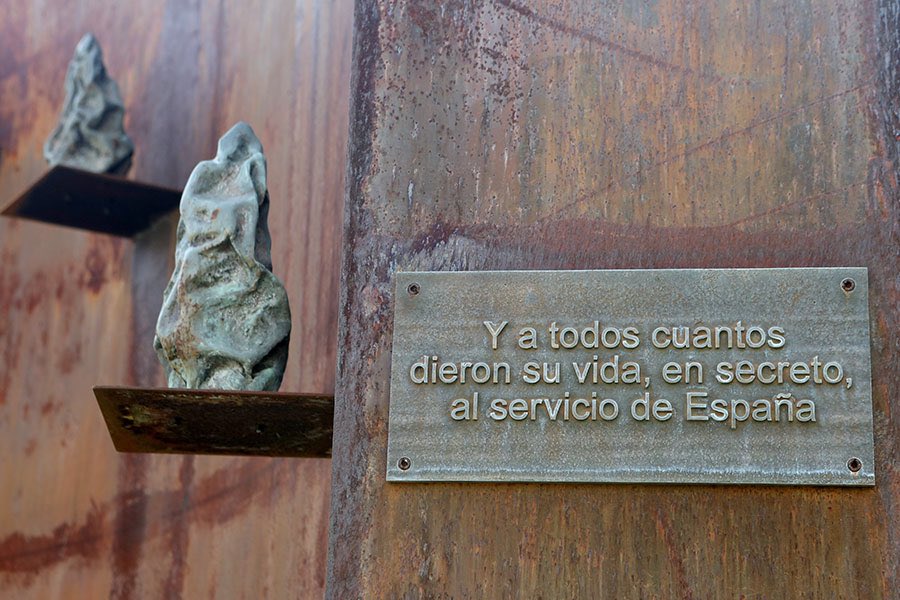
Seréis eternos.
#HéroesdeIrak#CNI
Universidades y centros de investigacion son potenciales objetivos para entidades de inteligencia extranjera de cara a la obtención de info tecnológica, reclutamiento u operaciones de influencia.
Esta nueva guía del NCSC de EEUU analiza dicha amenaza:
https://t.co/1rMmnmZmNX
@monitordisinfo En un entorno saturado de contenido, bots y campañas híbridas, Finlandia demuestra que la mejor defensa es educativa y preventiva. ¿Estamos a la altura en España y Europa? @Nebrija#InformationWarfare#intelligence
Artículo completo: https://t.co/tZeHxCuJ00
Lectura imprescindible
▪︎La caja negra del analista de Inteligencia, es muy negra.
Porque sus fuentes son sagradas y todo lo que entra en ella, sale transformado▪︎
🎧
https://t.co/ofXY2U3pEL