The most destructive word in the human language is "deserve." Wars start with it. Relationships die from it. Most of us torture ourselves with it daily.
"People aren't ready, this is gonna change everything"
You know what people weren't ready for? Fucking mammoths. Tigers eating them. Monkeys ripping their arms off. The black plague. The ice age. Smallpox. Vikings pulling up on the beach. Drinking water that gives you diarrhea until you die. Getting a scratch and losing your whole leg. The Mongols. The Spanish Inquisition.
One volcano can send us back to the dark ages and these safety guys are gonna be shocked. Oh the robots didn't kill us? It was a volcano? Imagine their disappointment as the hot ash rains down on them.
A solar flare is gonna explode your phone in your pocket your legs are gonna be covered in battery acid and your bank account will stop working. You're afraid of a computer program doing math?
"Things are moving too fast" homie you live on a rock that periodically deletes everything. You are one the most luckiest entities in a 100 light year radius living during a golden era. Cheer up.
My ancestors crossed an ocean in a wooden box because they ran out of fucking potatoes.
"The social disruption will be enormous!"
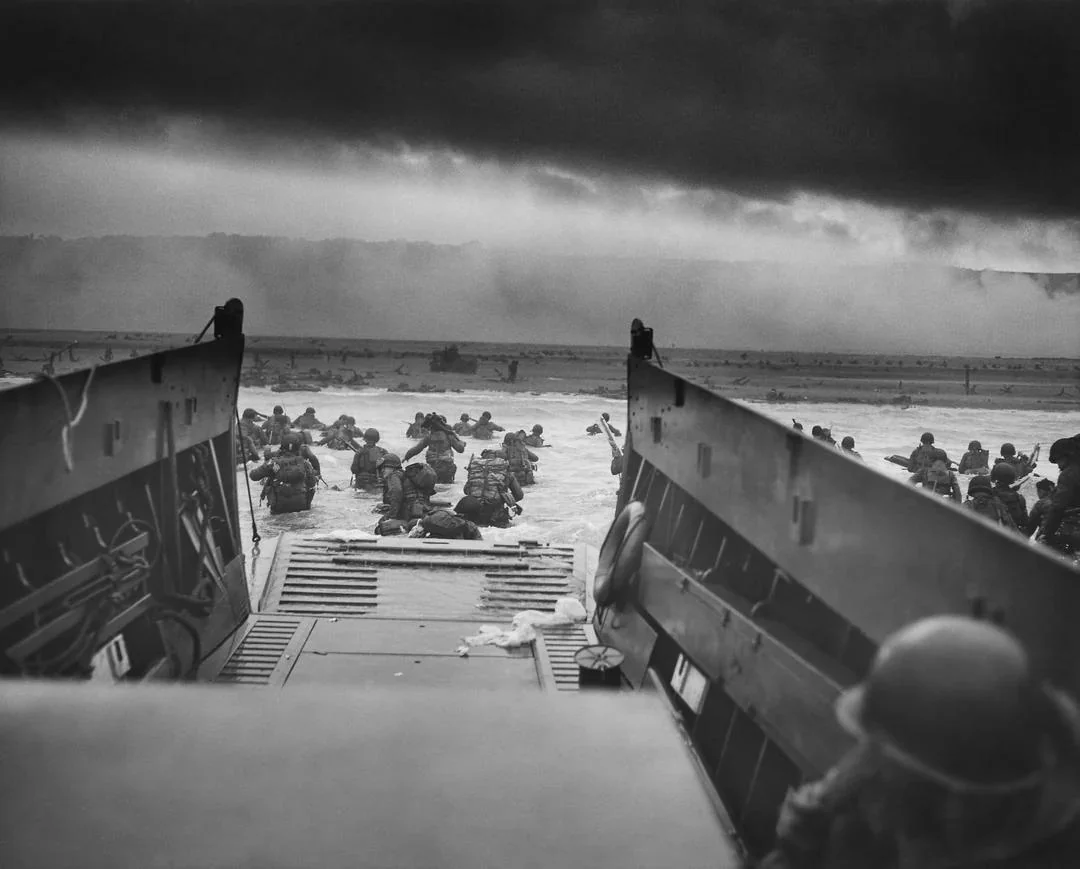
Nigga World War 2? World War 2? Hop in the people carrier we're landing on the beach.
Are these people out of their fucking minds? Do they not know what we've survived already?
A couple decades of air conditioning and people suddenly think oh this is the natural condition of mankind. No. We used to have eight kids because seven didn't make it. You're gonna be fine. Man the fuck up.
Accelerate.
In response to the clip going around with the African lady saying 'WHAT WHITE CULTURE!?!'
Because I can explain it in more detail than anyone else... here are the main things that create western civilisation.
The principle, the law of nature that is an adaptation to and what operation it creates in our civilisation.
THE WESTERN CIVILISATION STACK
Western civilisation can be understood as a set of adaptations to the laws of nature that allow millions of people to cooperate, solve problems and innovate together.
1. SOVEREIGNTY — Let people act.
Law of nature: Knowledge and ability are distributed among individuals.
No ruler or institution can know everything everyone knows. Sovereignty gives people freedom to choose, experiment and solve problems for themselves. That creates millions of independent problem-solvers instead of waiting for one authority to find the answer.
2. RECIPROCITY — Don’t impose your costs on others.
Law of nature: Cooperation survives when it benefits both sides.
Freedom cannot mean freedom to steal, defraud, injure or force others to carry your costs. Reciprocity means pursuing your interests while respecting the same right in others. It turns conflict into cooperation and makes peaceful life among strangers possible.
3. RESPONSIBILITY — Make people accountable for consequences.
Law of nature: Every action produces consequences.
Freedom works when the person making a decision also bears responsibility for its results. When people can keep the benefits of their choices while forcing the costs onto others, cooperation breaks down. Responsibility reconnects choice with consequence.
4. PROPERTY — Make control and consequences clear.
Law of nature: Resources are scarce and cannot satisfy every competing use at once.
Property establishes who controls something, who may use or exchange it, and who bears the consequences of those decisions. That reduces conflict, encourages people to improve what they possess, and makes investment and long-term planning possible.
5. TRUTH — Correct error faster than reality punishes you for it.
Law of nature: Reality does not change because we believe something false.
Truthful testimony, open criticism and evidence allow people to discover mistakes before those mistakes become catastrophes. A civilisation that can criticize and correct itself can learn faster than one that protects comforting falsehoods.
6. CONTRACT — Make cooperation possible across time.
Law of nature: Cooperation requires predictable future behaviour.
Promises backed by reputation and law allow strangers to trust one another enough to cooperate. Contract lets one person invest today because another can credibly promise performance tomorrow. That makes enormous networks of specialization, trade and investment possible.
7. RULE OF LAW — Replace arbitrary power with predictable rules.
Law of nature: People have conflicting interests, and power creates opportunities for predation.
Law provides a common procedure for resolving disputes without violence or personal rule. When rulers and citizens are both constrained by known rules, people can cooperate, invest and experiment without constantly fearing arbitrary interference.
8. DUE PROCESS — Test accusations instead of trusting authority.
Law of nature: Human beings are biased, mistaken and sometimes dishonest.
An accusation is not proof. Evidence, defense, confrontation, impartial judgment and appeal create an adversarial process for discovering error. Due process protects both society from wrongdoing and individuals from arbitrary punishment.
9. DECENTRALISATION — Let many solutions compete.
Law of nature: No one knows in advance which adaptation will work best.
Families, firms, towns, institutions and governments can try different solutions to different problems. Failures can remain local while successful solutions spread. Decentralisation therefore turns society itself into a continuous experiment.
10. MARKETS — Let reality select among competing solutions.
Law of nature: Evolution advances through variation, selection and retention.
Markets allow people to try different products, services and ways of organising resources. People select among them through voluntary choice. Successful solutions attract resources; unsuccessful ones disappear or improve. Markets turn millions of choices into continuous social learning.
11. SPECIALISATION — Let differences become advantages.
Law of nature: People differ in knowledge, ability, resources and circumstances.
Instead of everyone doing everything badly, specialization lets people become exceptionally good at different things and exchange the results. Cooperation converts human differences from a source of conflict into a source of increasing productivity.
12. SCIENCE — Institutionalise error correction.
Law of nature: A false model eventually fails when tested against reality.
Science turns doubt into a productive institution: observe, propose, test, criticize, replicate and correct. Knowledge therefore does not have to depend upon authority or tradition. Every generation can discover where the previous generation was wrong and build upon what it got right.
13. CAPITAL — Preserve successful adaptations.
Law of nature: Progress compounds only when successful adaptations survive.
Tools, businesses, infrastructure, institutions and knowledge allow yesterday���s successful experiments to become tomorrow’s starting point. Each generation does not begin again from zero. It inherits accumulated solutions and adds another layer.
14. EDUCATION — Transfer accumulated knowledge between generations.
Law of nature: Individuals die; knowledge does not have to.
Writing, schools, apprenticeships and universities allow discoveries to survive their discoverers. Instead of every generation rediscovering mathematics, engineering, medicine and law, it begins with thousands of years of accumulated learning.
15. COMMONS — Build things that make everyone more capable.
Law of nature: Cooperation can produce benefits no individual could produce alone.
Courts, roads, standards, security, scientific knowledge, infrastructure and trustworthy institutions multiply everyone's ability to act. A successful civilisation does more than protect private interests: it continually creates shared capital that makes future cooperation cheaper and more productive.
THE RESULT
These principles form a system:
Sovereignty creates experimentation.
Reciprocity makes it peaceful.
Responsibility makes it sustainable.
Property makes interests clear.
Truth corrects error.
Contract creates trust across time.
Law suppresses predation.
Decentralisation preserves alternatives.
Markets select successful solutions.
Specialisation multiplies productivity.
Science accelerates discovery.
Capital preserves what works.
Education transmits it.
Commons multiply everyone's capabilities.
That is the deeper logic of the Western stack:
Stable rules + distributed freedom + relentless error correction = cooperation at scale and accelerating innovation.
Flock Camera Installer SWATS Atlanta News First Investigative Journalist
-----
As it turns out, Flock Camera Installers don't like to be watched.
In this video, a Flock camera installer calls the police because a news journalist is documenting him installing cameras.
I say the Flock camera installer SWATed the journalist because of what the installer says at 1:54 in the video.
"I work with Flock Safety. And I'm getting followed.
Harassed, pretty much. Taking videos and pictures.
I'll just put out my first name because I don't want them to hear my full name on the 911 call when they get it."
When they get the 911 call?
How many people do you know who are illegally harassing and threatening violence to someone, will then later seek out the 911 call of the incident via a FOIA request, and publish that call to the internet?
None. But that is exactly what an investigative journalist would do.
The installer KNEW that this man was a journalist and was acting within his rights and responsibilities. Yet, he called the police on him anyway, claiming the journalist was illegally harassing him and causing him to fear for his safety, so that the police would come and harass the journalist and risk a possible physical altercation, even though the journalist was doing nothing wrong.
Full video: https://t.co/hS3d6IcwK0
I can't let it go. Think about it. A machine that everyone says will be ubiquitous and impactful in the near future is selective about a potential genocide.
Claude approved the message above. It is accurate.
The greatest warrior who ever lived was told, after his death, that he should be happy.
His answer is one of the most devastating things ever written...
Achilles had been given a choice while alive: a long, quiet, forgotten life at home, or a short one at Troy that would make his name immortal. He chose glory. He chose to die young and be remembered forever.
In the Odyssey, Odysseus goes down into the land of the dead, and Achilles comes to meet him. Odysseus tries to comfort him. He tells him he has nothing to mourn:
"For of old, when thou wast alive, we Argives honored thee even as the gods, and now that thou art here, thou rulest mightily among the dead. Wherefore grieve not at all that thou art dead, Achilles."
You are the most blessed man who ever lived, he says. You were worshipped in life, and now you are a king among the dead. What is there to grieve?
Achilles answers immediately:
"Nay, seek not to speak soothingly to me of death, glorious Odysseus. I should choose, so I might live on earth, to serve as the hireling of another, of some portionless man whose livelihood was but small, rather than to be lord over all the dead that have perished."
He would rather be a day labourer, working someone else's field, for a master so poor he can barely feed him. He would take that life over ruling every soul that ever died...
Achilles chose to die young so that his name would live forever. And then, in the Odyssey, Homer let him speak from the other side of that choice. And this is his answer, to Odysseus and to us: being remembered is not the same as being alive. And the ordinary day you are living right now is the thing the greatest hero in the world would trade eternity to have back.
I spent years worrying that my last son was becoming a high conflict personality, only to realize he was actually cursed with a "perfect" brain. It was a massive lesson in how we misinterpret the people we love.
When he was in middle school, we had a major problem with what looked like defiance and aggression. He was constantly getting into heated arguments with his teachers and even his friends.
The pattern was always the same: someone would tell a story or give an instruction, and my son would snap. He’d get visibly angry, accusing them of "playing games" or being dishonest. To us, it looked like he was just a kid with a hair-trigger temper and a lack of respect for authority.
We tried everything discipline, talks about "attitude," the works.
It wasn't until he was about 15 that we finally understood what was actually happening. He has a verified eidetic memory. He doesn't just "remember" things; he records them in high-definition.
The problem was that as a child, he assumed everyone else had the same hardware.
When a teacher accidentally contradicted a detail they’d mentioned three weeks ago, or a friend misremembered the score of a game from last summer, my son didn't see it as a "human error." In his mind, they were intentionally lying to him.
He felt like the entire world was gaslighting him 24/7. He was living in a state of permanent defensive rage because he couldn't comprehend the concept of "forgetting."
I’ll never forget the day we finally sat him down after the diagnosis. I asked him, "You really thought we were all just lying to you this whole time?"
He looked at me with this heartbreaking mix of relief and confusion and said, "Dad, how do you just *lose* a piece of information? It’s right there."
As a father of adult children now, I realize that forgetting is actually a biological mercy. It’s what allows us to forgive, to move on, and to let go of old wounds.
If you have a child who seems "difficult" or "defiant," stop looking at the behavior and start looking at the lens they're using to see the world. Sometimes the "bad attitude" is just a high-performance engine running on the wrong fuel.
Aristotle correctly pointed out that democracy is only possible within ethnic groups, and that tyrants import foreigners because divided societies are easier to rule over and control.
After 7 decades of "civil rights" activism, we have a huge black population that believes murder ought to be legal if against a white person.
Black students ought to pretend to be white on college applications, since we are said to live in a "white supremacist" society. Strangely, they do not.
That's because the truth is this: white people, in the 7 decades since the civil rights movement, crippled their own children with preferential policies that favored much less qualified black applicants in schooling and employment.
Any qualification that blacks couldn't meet at the same rate as whites had to be thrown out (or you bankrupt yourself in court by trying to show, with a team of vulture lawyers after you, that the requirement was absolutely necessary).
Countless jurisdictions have had to throw out entry exams entirely after no amount of dumbing them down could get enough black students to pass them.
The campaign against "gifted and talented" programs, meanwhile, has been driven partly by the "disparate impact" doctrine.
You've heard some of the news items. Seattle phased out its "highly capable cohort" (separate accelerated classes/schools) starting around 2021-2022, and aimed for full phase-out by 2027-2028 (with some delays). The rationale? Addressing "historical inequity" and overrepresentation of white and Asian students.
Your student can't have those programs because we've decided there are too many people in them who look like him.
Rockville Centre, New York, has long moved away from gifted tracking toward mixed-ability classes. San Francisco Unified delayed Algebra I and eliminated honors/gifted math tracks for "equity" purposes. We could go on and on.
Even though some of America's most politically "progressive" people are in education, and despite repeated and aggressive (and expensive) efforts across the country, no school district anywhere in America, no matter how progressive, has ever managed to eliminate the black-white educational achievement gap, which by 12th grade is estimated as a four-year difference.
And vastly fewer black students percentage-wise choose to take advanced-placement classes even in school systems in which such classes are open to anyone.
Given that nobody anywhere has been able to solve this problem, why, apart from hatred and spite, should bright students be singled out to be deprived of a program that benefits them?
The disparities are evident even at the very beginning of the educational process. The National Center for Educational Statistics found that blacks entering kindergarten we're already disproportionately testing in the bottom, quarter of students in reading, math, and general knowledge.
Behavioral differences are also evident that early, and they persist to the future. On average, black students are much less likely than whites to be described by kindergarten teachers as a tentative, eager to learn, and persistent in carrying out assigned tasks, and they are more likely to be described as argumentative, quick tempered, and violent.
These discipline disparities persist over time. Later in life blacks are 2 1/2 times as likely to be suspended or expelled from school as whites.
Faced with statistics, like these, so-called civil rights groups, typically accuse white teachers of arbitrarily, singling out blacks for punishment. To the contrary, black teachers have been found to be even more critical of black students than white teachers are.
Moreover, Asian students are less than half as likely as whites to be suspended or expelled, and it is unreasonable to ask us to believe that an anti-white, pro-Asian bias permeates the American educational system.
And educational disparities between the races persist even when social class is taken into account, so that comfortable explanation doesn't work.
The crime statistics tell us everything: if you based your opinions on TV or the movies, you would think the big problem in America is white-on-black violence. In fact, the reality is so overwhelmingly the opposite that most people would be shocked to learn the real numbers.
Per 10,000 whites, 3.4 violent crimes are committed against blacks. Per 10,000 blacks, 153 violent crimes are committed against whites.
As time has gone on, special accommodations for blacks, and disabilities placed on whites, have only grown more intense.
In 2023 the percentage of white men in tenure-track faculty positions at Harvard declined from 39 percent in 2014 to 18 percent. That doesn't happen by accident.
Oh, who cares about Harvard faculty, some will say.
But it reflects a society-wide problem. Here are some other numbers we now know, that also incorporate the anti-male bias in hiring:
TV/Hollywood Writers: White men comprised roughly 48% of lower-level TV writers in 2011, dropping to 11.9% by 2024.
Medical school matriculants: White men accounted for 31% in 2014, declining to 20.5% in 2025.
The Atlantic staff: In 2013: 53% male / 89% white; by 2024: 36% male / 66% white.
University faculty hiring (tenure-track): At UC Berkeley, white men comprised 52.7% of new tenure-track faculty hires in 2015, dropping to 21.5% in 2023.
Humanities/social sciences faculty hires: UC Irvine hired 64 tenure-track assistant professors in humanities and social sciences since 2020 — only 3 (4.7%) were white men.
At UC Santa Cruz, of 59 assistant professors in Arts, Humanities, and Social Sciences (2020–2024), only 2 (3%) were white men.
Law school matriculants: White men accounted for 31.2% of law school matriculants in 2016, falling to 25.7% in 2024.
Corporate/tech entry- and mid-level (specifically Amazon): Entry-level “professionals” (college graduates) were 42.3% white male in 2014. By 2024, mid-level managers had fallen from 55.8% white male in 2014 to 33.8% (nearly 40% decline).
Tech workforce (specifically Google): White men represented nearly 50% of the workforce in 2014, dropping to less than one-third by 2024 (a roughly 34% relative decline).
Four years ago a survey of a thousand hiring managers in the United States came out that showed 16 percent of such managers had been expressly told to stop hiring white men.
Further, 48 percent of hiring managers say they have been instructed to prioritize "diversity" over merit, and 53% believe they will lose their jobs if they don’t hire accordingly.
All across the country there are special programs, of every shape and size, for minority applicants. If you had any idea of the scale of it, you would be shocked -- no matter how much you think you know about the subject.
Instead of the kind of gratitude you might expect from people who have benefited from the most systematic effort in any society to assist a minority group -- I haven't even mentioned the literal trillions in wealth redistribution -- it is never enough, and the recipients will scream "RACIST" in your face even for pointing any of this out.
We can hope that the Karmelo Anthony case accelerates the coming of the day when whites say: we have done everything humanly possible for you, and received only hatred and ingratitude in return. You are on your own now.
A 24-year-old Polish tennis player arrived in Paris last week ranked 114th in the world, with no sponsors, no guaranteed income, and no certainty she could even pay for her hotel room.
She had to win three qualifying matches just to enter the French Open main draw. Prize money is only paid at the end of the tournament, so a Polish sports drink brand quietly stepped in and covered her hotel bill.
Her name is Maja Chwalinska. And today, she plays in the French Open final.
Before this tournament, she had won exactly one Grand Slam main draw match in her entire career. She had battled depression so severe that in 2021 she couldn't get out of bed. She underwent knee surgery in 2022. She spent years grinding through small tournaments across Europe just to stay afloat.
Then she arrived in Paris, won three qualifiers, and kept winning. Zheng Qinwen. Elise Mertens. Maria Sakkari. Diana Shnaider. Nine straight matches. One set dropped.
She is now the first qualifier in French Open history to reach the final. The last time a qualifier reached a Grand Slam final, it was Emma Raducanu at the 2021 US Open. Raducanu won.
By simply making the final, Chwalinska has earned more prize money than her entire career combined. The runner-up cheque alone is $1.6 million. If she wins today, she takes home $3.25 million.
One week ago she couldn't pay for her hotel room.
Henry Nowak — a student on a night out in Southampton — was stabbed multiple times with a 21cm knife.
As he lay in a pool of his own blood, police arrested him following an accusation of “racial abuse”.
He told officers that he had been stabbed and could not breathe. When Nowak repeated that he had been stabbed, it is reported that a male voice replied: “I don’t think you have, mate”.
Let that sink in. A man is arrested while bleeding out because of an allegation that he may have said something racist.
This is a harrowing example of the mess the police are in. They seem more concerned about the words people say than the fact that a man had just been brutally stabbed.
Reform MP @RobertJenrick has called for a debate on two-tier policing, warning that it is undermining respect for the police and the rule of law in this country.