CSULB Physics and Applied Mathematics student, class of 2024(?)
Tried for a CS degree for a decade, pivoted to physics.
I really like computer rendering
Holy shit I think my hail mary worked
Im dealing with medical issues, but CSULB wants me to take one class. Statistical Mechanics peaked my interest. I added it week 2, prof was absent weeks 3 and 4, and first day I'm there? An Exam! And I think I somehow passed!!
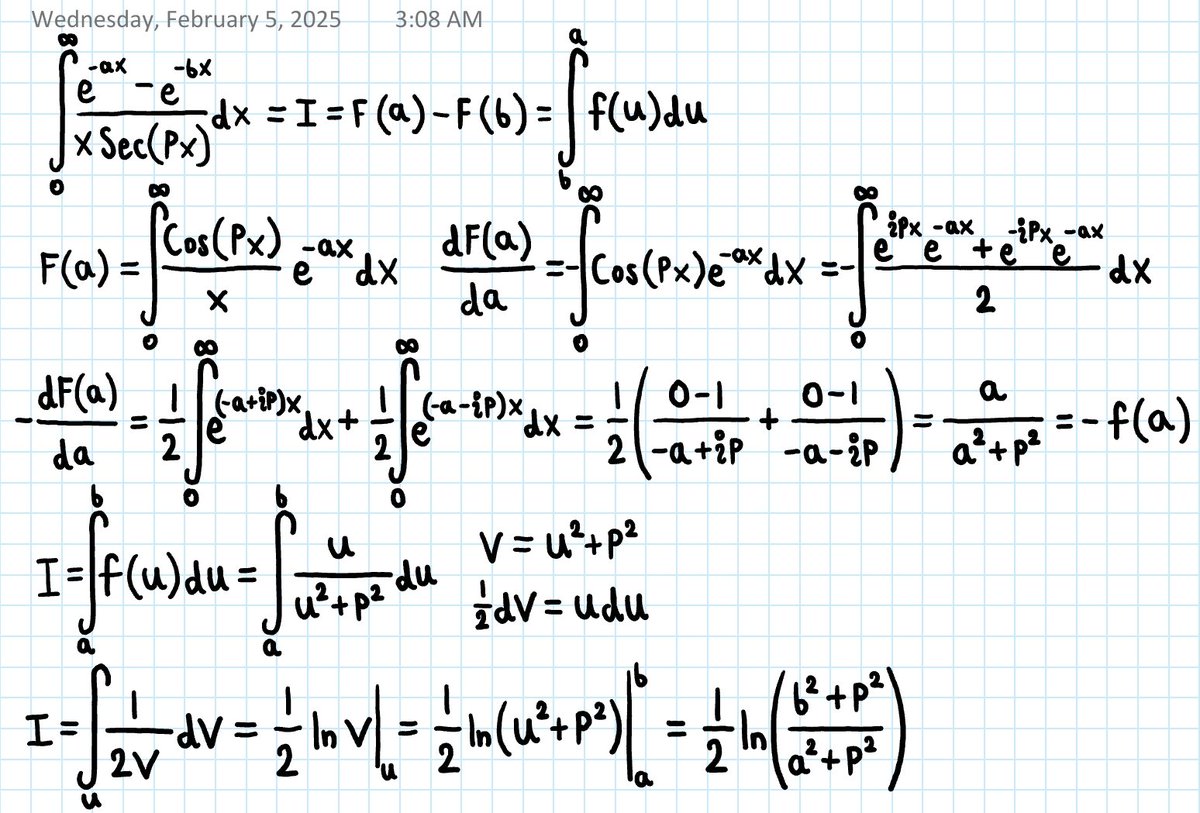
This one was fun! Didn't take too long either. Definitely not hours and pages of work. It's the negative of the laplace transform of cosine, evaluated from a to b. Feynman integration strikes again
https://t.co/1hIu3Vr3yI
My solution isn’t a clean formula, it’s code, so I’m a bit apprehensive to share it. I swear I’ve solved it before too, the same way, to render exact per pixel umbras back in high school. Should I prepare it nicely or just share what I have?
Watched a YouTube math video that setup this cool proof that involved finding the area where a square and a circle intersect, and the presenter said it’s unsolved. I uh… solved this for my physics report a bit ago, but it’s computationally hairy. Should I comment on the video?
I love when latex generates comfy text, but my god I really need to learn how it works under the hood. I can't quite figure out how to get the alignment to do what I want.
This is part of an assignment for a class i got an incomplete in. I'll be posting fun graphics for it soon!
Somehow, of all the things Ive tried (antidepressants included), L-Theanine (a chemical in tea but not coffee), and Creatine (a workout supplement) are the most impactful in terms of energy reserves. I can finally start working again but i can’t shake the feeling theyre placebos.
@lisyarus Since this is a cpu rasterizer, heres a fun experiment if you can get shaders working again: Are shader quads ideal? I know this is how gpu hardware works, but I'm curious if there's any performance advantages to using differently sized pixel groups like 2x1, 3x3, 16x9, etc.
@lisyarus I really like explaining them by deriving Rodriguez rotation and exploring the properties of quat’s in that context. It makes them seem a lot more intuitive as “basis rotation operations” through that lens
@AlexanderRKlotz@PolymerPolymath Njit is a bit picky but it is comparable to c in performance when it works. I’ve used cppyy before as an alternative but it’s way pickier. I think the right decorators help njit compile properly but I usually have to write c-like code for it to be happy
@BenSimsTech No personal experience, but some devs I know use https://t.co/o30atZJkTr because it lets them use markdown easily. There’s a ton of options here to generate static sites apparently. Hugo’s latex integration looks easy, so it’s my first pick when I get around to making one
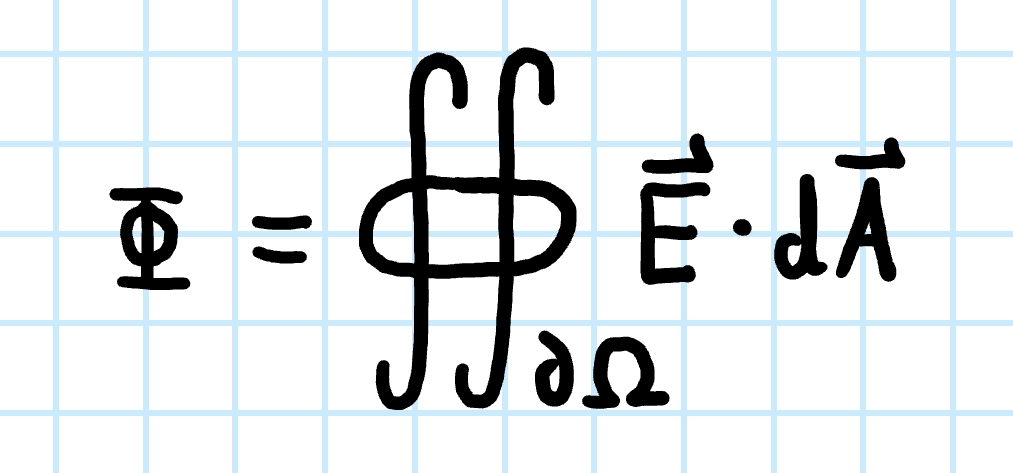
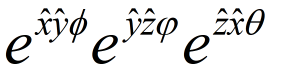
@sp_monte_carlo Whoops! Been using that one as a variant of capital I for so long I completely forgot its capital phi. Full time job as Flux manager makes it very different to the angle triplets
For fun I did a radius inversion (r → 1/r) to watch the behavior as the ray diverges. It appears that the sdf implicitly includes the point at infinity, so maybe PGA is better for sdfs in general? I've really gotta get @EricLengyel's book on this, it looks fantastic
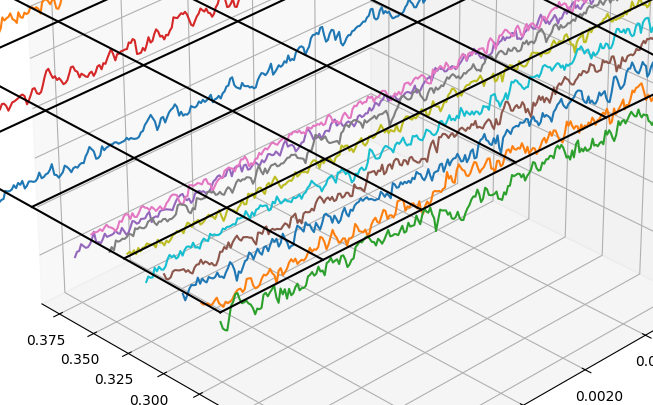
Matplotlib's lack of a zbuffer for 3d plots is a bit of a pain. The black grid should weave between the data shown here, but since its rendered last, it renders on top. I should be able to hack together an sdf solution in time, but I really ought to write my own renderer soon.
However, when I introduce the sdf tree, there are regions where the sdf is horribly incorrect. Given this counterexample, this tree doesn't exhibit optimal substructure, so I can't use it to accelerate rendering. Does anyone know a way to fix this?
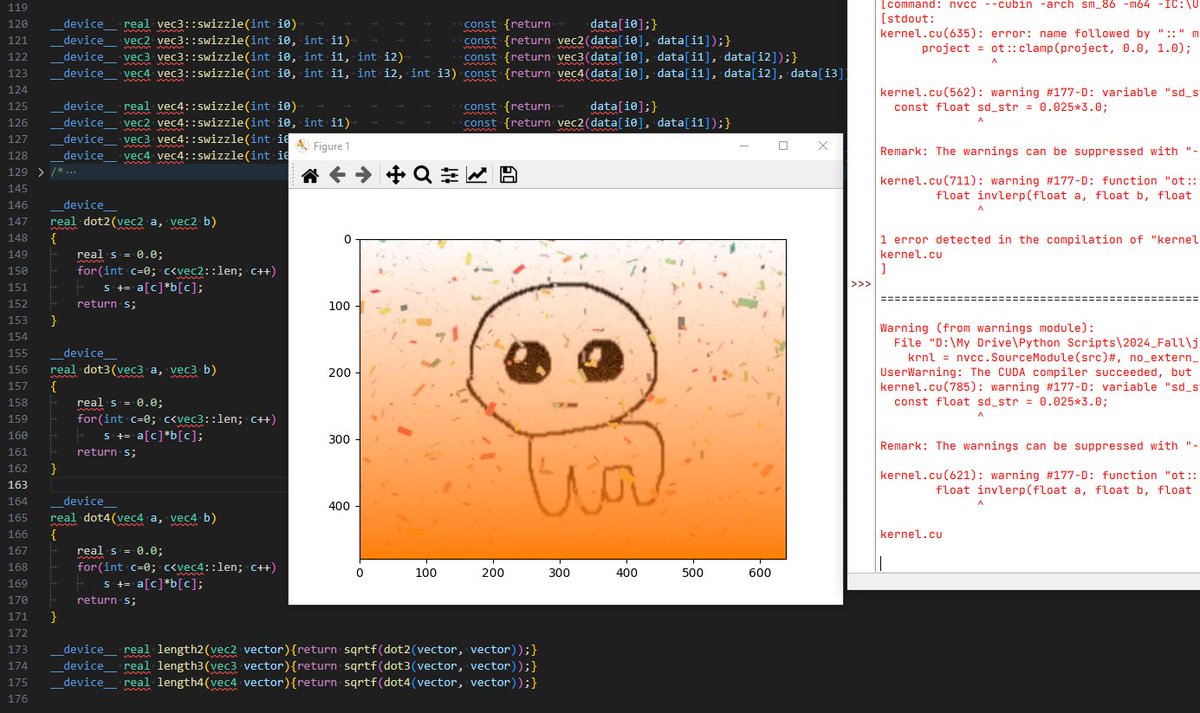
ive really gotta get a better test image than the fucking yippee guy drowning in piss, i get jumpscared whenever my code passes every hour or so and forget every time
@BenSimsTech How do you feel about immediately aliasing these variables? For example with a derivative of smoothstep:
res = 6*timerElapsed()*(1 - timerElapsed())
imo the shorthand is easier to read in this case but i can def see where your coming from
t = timerElapsed();
res = 6*t*(1 - t);




![Copper_irl's tweet photo. I like [the site that shall not be named] more than this one a lot more lately, so if you liked my projects give me a follow over there too! https://t.co/7b4vJT1wDl](https://pbs.twimg.com/media/GiMJjH8acAEA5tD.png)