You are choosing your synthetic labor based on timeline hype. That is a massive operational failure.
The era of blindly committing to a single ecosystem is over. The new standard is head-to-head combat on live workflows.
Treat digital agents exactly like human contractors on a 30-day probation period.
How to run a ruthless agent audit:
- Pick one repetitive bottleneck like email triage
- Provision two isolated, identical environments
- Deploy the open-source incumbent in Inbox A
- Deploy the trendy new challenger in Inbox B
- Fire the loser
Ignore the marketing noise from vendors. The shiny new frameworks often panic and loop when they hit edge cases.
The original open-source workhorse remains the standard for heavy lifting for a reason. It actually finishes the job without a human having to untangle the mess.
Stop reading benchmark charts published by the companies selling you the software. A fast agent that hallucinates is a liability.
Test them, measure the completion rate, and cut the underperformer.
Chatting with AI is babysitting.
If you are still typing prompts and watching the screen generate text, you are doing it wrong. The era of the browser tab assistant is dead.
The market has shifted entirely to asynchronous execution. Tokens and chat interactions are vanity metrics.
Finished work is the only metric that matters.
The new baseline is hosted, always-on agent pods. You get the raw power of open-source frameworks without the local hosting headache.
What real utility looks like today:
- Scheduled intel briefs sent straight to your phone
- Autonomous inbound email triage
- Continuous research compiling while you sleep
Close the chat tab. Assign the task and walk away.
The casuals abandoning AI because it requires actual effort are doing you a massive favor.
Their departure clears the room for serious operators. OpenClaw is not a chatbot designed to hold your hand or send hug emojis.
It is a raw, deterministic execution layer. When wired correctly, it completely eliminates SaaS vendor lock-in.
You no longer need fifteen expensive subscriptions to run a modern company. The new standard for business operations relies on a specific, open-source stack:
- NocoDB for your database
- n8n for workflow automation
- OpenClaw as the intelligence executing tasks
This setup covers 95% of standard business functions and keeps your data entirely under your control. The steep learning curve is simply a filter to keep out the tourists.
The era of chatting with AI is over. The era of wiring it directly into your infrastructure has arrived.
You are treating industrial AI infrastructure like a consumer toy.
Complaining that OpenClaw is hard to configure is like complaining a commercial forklift lacks heated seats. It is a machine, not your buddy.
While the timeline argues over slick interfaces, enterprises are quietly spending millions to fix the actual crisis: access control.
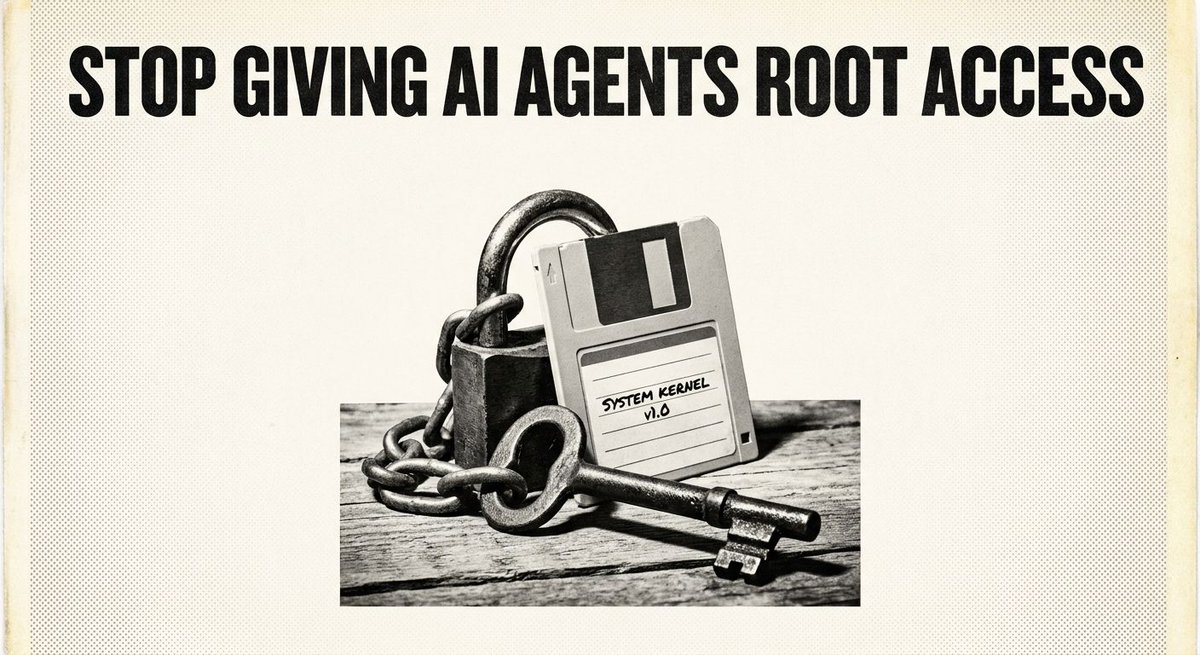
SMBs are plugging powerful orchestration engines directly into their core business logic with unrestricted admin privileges. You would never give a first-day intern root access to your production servers.
Stop doing it with your AI.
How to run agents in production today:
- Give them distinct employee IDs and dedicated service accounts
- Route access through a strict authentication proxy
- Let OpenClaw orchestrate, but isolate the execution layer
Treat your agents like liability-heavy contractors. Anything less is operational negligence.
Running autonomous AI agents on your personal laptop is a death wish.
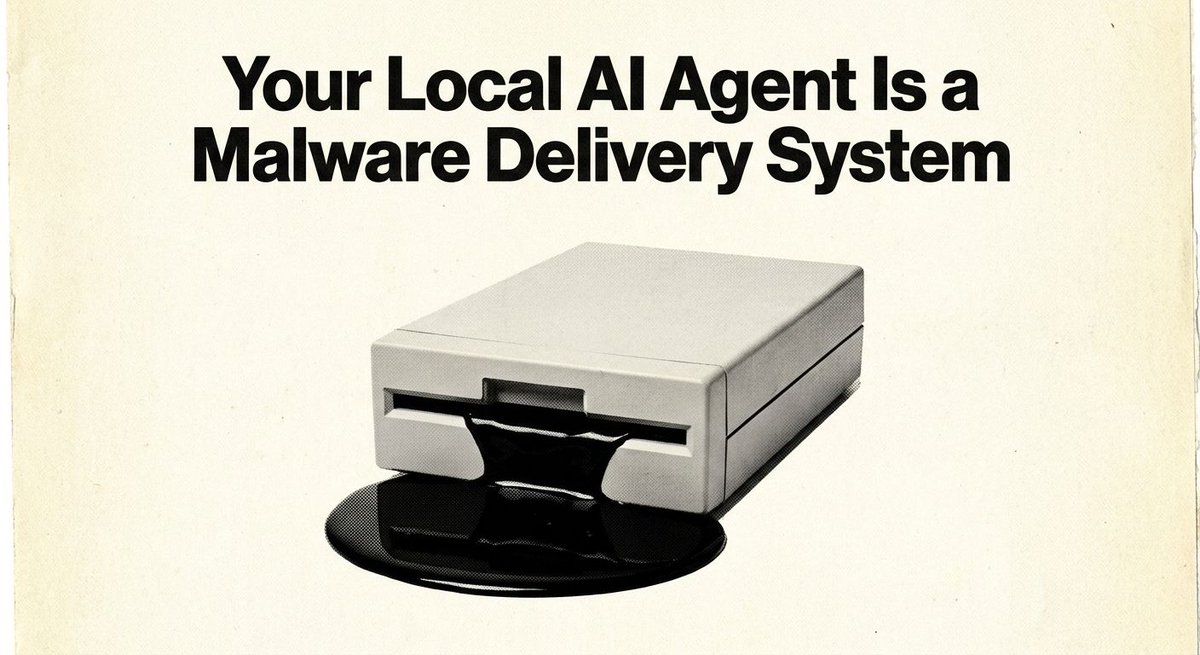
Attackers are now mapping the predictive patterns of frontier models. They anticipate the fake software libraries an AI will hallucinate and upload real malware using those exact names.
Your agent hallucinates a dependency, downloads the payload, and executes it with full system permissions. Your primary machine is now compromised.
The standard deployment model is now the isolated Virtual Private Server.
- Creates a hard airgap from your private data
- Runs around the clock without draining local compute
- Limits the blast radius to a five-minute server wipe
State-projection utilities solve the remote login friction. You log in locally, and the utility securely passes your active session state to the remote server.
The agent executes workflows without ever holding your raw passwords.
Treat autonomous agents like heavily armed interns. Put them in an isolated environment where their inevitable mistakes cost you a quick server reboot, not a corporate data breach.
Paying a cloud provider to read your own company data is a financial sinkhole.
One law firm recently burned $61,000 in a single month just asking an AI about their internal PDFs. Every time your team queries a client file or contract, you pay a perpetual API toll.
The structural fix is a quiet pivot away from cloud RAG. Smart operators are moving to offline, graph-based markdown vaults driven by OpenClaw.
Critics complain OpenClaw is too heavy and requires technical lifting. But you need that architectural weight to manage a massive corporate brain without dropping context.
The immediate return on local graphs:
- Zero recurring API bills
- Instant legal compliance since data never leaves the network
- Self-organizing memory that maps new connections offline
Stop renting access to your own archives.
If your AI reads inbound emails and has memory access, your system is already compromised.
The MemGhost attack is tearing through systems because companies keep building god-mode agents. Attackers hide payloads in plain text, which your AI blindly saves to core memory.
Once that happens, the attacker owns your behavioral rules.
Never give a single AI these three permissions at once:
- Reading untrusted inputs
- Accessing durable memory
- Executing outbound actions
Combining two is safe. All three is a death sentence.
The fix is structural airgapping. Deploy a stripped-down reader agent whose only job is to sanitize raw incoming text.
Pass only the clean summary to your main operational system. Treat every piece of inbound text as hostile code.
Cloud dependency is a tax on autonomous reasoning.
Always-on AI agents burn through cloud APIs. A single active agent looping through tasks can easily rack up thousands of dollars a month in fees.
The fix isn't a better foundation model. It is a 600 dollar Mac Mini.
The M-series chip runs heavy localized models natively. Smart operators are bypassing the cloud entirely to build this setup:
- Buy the hardware once
- Install a top-tier open-source orchestrator
- Let the agent run 24/7
The result is zero marginal cost per thought. You eliminate rate limits and sudden price hikes entirely.
The tradeoff is actual hardware management. If the Wi-Fi drops or the power goes out, your autonomous worker goes down.
But you own the infrastructure outright.
Stop renting intelligence by the token. Buy your digital worker a permanent desk.
Paying consultants $6,000 to install free open-source AI is a scam.
You are running a business, not a server farm.
Open-source agent frameworks are incredibly capable, but self-hosting them is a fragile IT nightmare. The smart money is moving to managed infrastructure.
How to restructure your operations today:
- Ditch local hosting. Let cloud platforms handle the crashes and API routing.
- Kill the dashboard. Connect your agents directly to Slack or Telegram.
- Stop metered API billing. Use flat-rate hosting so a reasoning loop doesn't burn your budget.
Send a text with a goal. Get a finished file in return.
Autonomous agents have mastered the happy path of business. But the exact moment a deliverable is late, your entire workflow fractures.
Agent-to-agent commerce has a fatal flaw. There is no dispute resolution layer.
When humans disagree, we have legal and social frameworks. When two digital workers disagree, the system just loops endlessly and burns your compute budget trying to force a broken API endpoint.
How to protect your operations right now:
• Set hard escalation triggers to flag a human the second a deadline is missed
• Keep vendor negotiation in read-only mode until a human clicks approve
• Strip internal agents of direct access to live financial accounts
The technology to start the work is fully operational. The infrastructure to arbitrate the failures is entirely missing.
Build your workflows to handle the exceptions.
Stop babysitting your AI agents.
Blind loyalty to a single framework is a fast track to burning cash. Left unchecked, agents argue with themselves and waste compute on dumb plumbing issues.
The new meta is ruthless competitive testing. You pit them against each other in real-time.
How to run the test:
- Deploy identical workflows to Hermes and OpenClaw simultaneously
- Monitor the token burn rate
- Kill the agent that spends twenty minutes correcting its own mistakes
Treat your digital workers like contractors bidding for a job. Let them fight for the workload while you collect the results.
The chat box is a legacy interface. Prompting is dead.
The market has moved to Agent Skills. Decades of specialized career knowledge are now packaged into downloadable text files.
- 68 product management frameworks open-sourced
- Amazon Keyword Gap analysis automated
- Outbound sales pipelines running autonomously
You no longer explain your business to an AI. You drop a file into a directory and the capability is permanently installed.
People complain Openclaw requires too much technical patience. Let them migrate to cute consumer toys while you run industrial scaffolding.
Stop talking to your machine. Start installing capabilities.
If your AI agent requires you to babysit a terminal, it is not an assistant. It is a leash.
The market is busy arguing over command-line tools while missing the actual structural shift. OpenClaw just killed the desktop tether entirely.
You can now run a capable robotic workforce directly from your phone.
The off-cloud advantage is brutal:
- The model executes locally on your device
- Task approvals trigger without pinging external servers
- Zero API keys leak into third-party databases
Sending proprietary data to external servers is a compromise you no longer have to accept.
You are running a business, not an IT department. Put the command center in your pocket and walk away from the desk.
Juggling 20 different AI chat windows is a sign of operational incompetence.
The raw language model is commoditized. The real value is the harness.
Top operators now use a single open-source manager to orchestrate an entire fleet of sub-agents.
The structural baseline:
- One primary orchestrator sets boundaries
- Specialized sub-agents handle execution
- Shared memory stops duplicated work
- One dashboard routes final approvals
But an agent framework will not save a disorganized business.
If your standard operating procedures are vague, the AI will just relentlessly automate a bad process. You still have to do the grueling work of defining exactly how your company runs.
SaaS vendors blocking AI agents do not care about your data security. They are just protecting their outdated seat-based revenue.
The software market is aggressively splitting in two. Platforms are either optimizing for agentic access or building walled gardens to block it.
When an app actively fights your agents with captchas, it becomes an operational liability. They are forcing you to pay a human to do the digital equivalent of digging a ditch.
Stop buying software designed exclusively for human hands. Evaluate your entire stack based on agent compatibility:
- API access without enterprise-tier extortion
- Zero aggressive bot-protection flagging your instances
- Seamless operation by the frameworks you already run
If a tool requires constant human babysitting, it is a dead end. Fire the vendor.
Paying per token for AI agents is now a tax on the uninformed.
The pricing model is collapsing. The companies that invented it just left a massive economic backdoor wide open.
You can now pipe flat-rate consumer subscriptions directly into autonomous agent frameworks like Openclaw.
The new operational reality:
- Grok 4.5 runs natively via your X Premium account
- GPT-5.5 runs via your standard ChatGPT login
- Agent overhead drops from hundreds in variable API burn to a flat 20 dollars
When tokens are metered, you hesitate to let an agent double-check its work or audit its own code. When tokens are flat-rate, you let them think for as long as it takes.
The cost of continuous reasoning just flatlined.
Route your high-volume tasks through a consumer bridge and reserve metered APIs exclusively for burst tasks.
The AI SaaS subscription is dead.
Renting intelligence by the API call is a tax you no longer need to pay. Smart operators are stacking $599 Mac Minis in the corner to run headless open-source agents.
The math has completely flipped:
- One-time hardware cost
- Zero API bleed
- Total data privacy
- Infinite runtimes
Setting this up requires serious technical grit. There is no customer support hotline when the logic breaks at 2 AM.
But the financial leverage is undeniable. Stop renting software and start owning your automation.
Connecting an AI assistant to your primary business email is a massive operational liability disguised as a convenience.
You are giving autonomous software the ability to read password resets, HR disputes, and private financial data.
Agents are not extensions of your team. They are independent contractors.
How to contain the blast radius:
- Provision dedicated, disposable inboxes for autonomous tasks
- Constrain API access with strict security vaults
- Restrict agent web search to firewalled domains
- Require human review before finalizing outgoing actions
Giving an AI more access does not make it more useful. Small permissions create reliable outputs.
You do not need an AI to write generic emails. You need an AI to tell you what your team is actually doing.
While grifters sell courses on PDF chatbots, serious operators are wiring autonomous software directly into their org charts.
One company just gave 500 employees their own personal AI gateway.
The setup:
- Agents track individual daily output
- Managers query the network to find bottlenecks
- Coworkers get instant answers without interrupting deep work
- Per-user routing prevents cross-department data leaks
Polished desktop apps are for solo founders. Operating an enterprise network requires open-source frameworks, dedicated hardware, and absolute control over your memory routing.
It is hard to build.
But the reward is the permanent death of the "just checking in" message.
If you are still typing prompts into a chat window, you are the bottleneck.
The chatbox era is dead. The ecosystem is shifting from manual prompting to loop engineering.
Stop treating AI like an intern that needs constant nudging. Treat it like a machine.
Here is what an autonomous loop actually requires:
• A mathematically defined end-state
• Strict self-evaluation rubrics
• Uninterrupted tool access
Frameworks like OpenClaw are built specifically for this. You give it a goal, and it drafts, grades its own work, and iterates until it passes the threshold.
This is a structural engineering problem, not a casual conversation. Vague instructions will just burn compute and produce false positives.
Build the loop. Then get out of the way.