Let’s talk about why emergency departments are full.
We’re going to use Mary as an example. Mary is a completely fictional patient.
Let’s say Mary is 72. Her family doctor retired 5 years ago.
She’s in the ED after a fall “weak and dizzy” (we see this a lot.)
In 2002 through adoption of The Health Quality Council Act the Government of Saskatchewan established the Health Quality Council (HQC). I served on the HQC Board from 2002-2015 & as the interim CEO in 2016-17
(1/10)
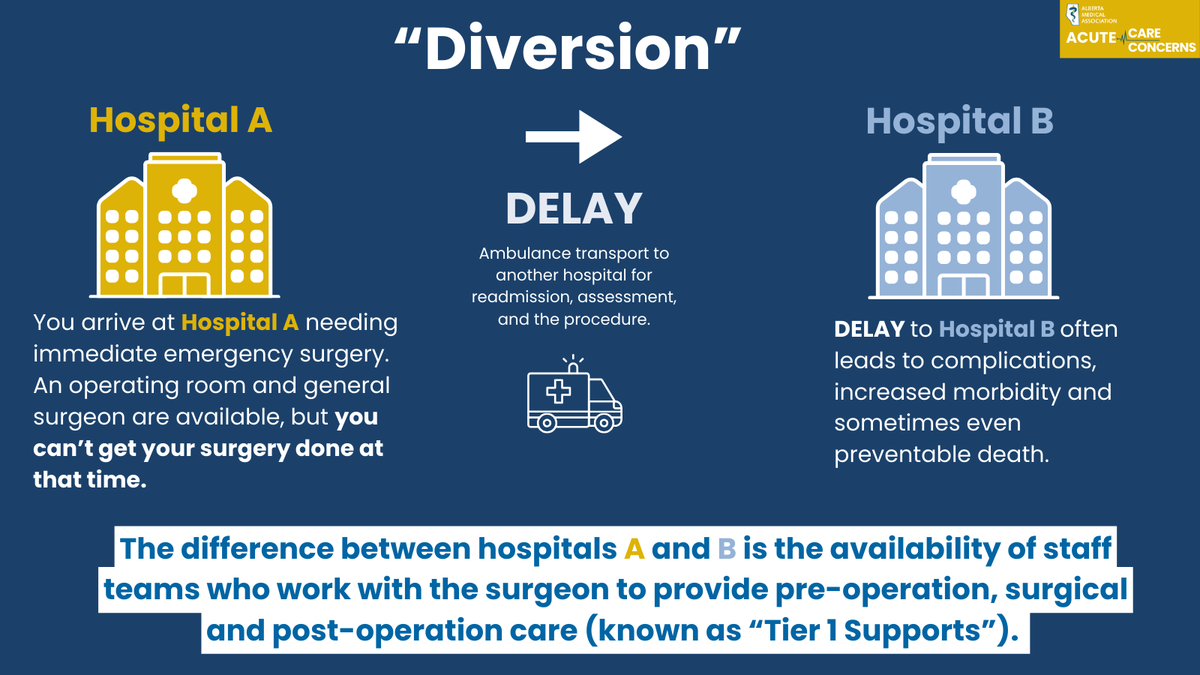
Some patients in the ER who need urgent surgery have to be transferred to other hospitals because of a lack of available support teams. This is becoming more common. Albertans are not just facing delays, but are now at risk of not receiving emergency care in time.
Why do people in Saskatchewan use the term "bunnyhug" for a hoodie?
It is an odd name, so let's explore its history and why the term is used in Saskatchewan!
First, the bunny hug emerged as a dancing style in the early 20th century. A ragtime dance, its style caused an uproar among "polite society".
In 1912, a song called The Bunny Hug was composed by Harry Von Tilzer and William Jerome. One year later, the film Bunny Dips Into Society featured John Bunny performing the Bunny Hug.
If the origin of the term for hoodie comes from this dance, no one really knows how that connection was made.
A second theory for the term is that in the 1920s and 1930s, there was a huge population of rabbits in Saskatchewan. With money tight due to The Great Depression, those rabbits were hunted and their pelts were turned into something resembling the modern hoodie. Therefore, a person was essentially hugged by the hides of bunnies.
A third theory dates back to the 16th century Europe, long before the province ever existed. Back then, hands could be kept warm using the hide of a bunny. The pelts were sewn with an open end on each side for the hands to go into at the front of the person. It is similar to what quarterbacks use to keep their hands warm in football.
As for the hooded sweatshirt, that first began to appear in the 1930s, mostly for children.
In 1940, the New York Daily News advertised a Bunny-hug, but it was a cardigan, rather than a hoodie.
By the 1960s, the hoodie had expanded to men's wear.
Yet, various names seemed to be used for the hoodie, including Hooded Kangaroo in the 1980s.
Some research states that the term bunnyhug, referring to the hoodie, appeared in Prince Albert, Melfort or Yorkton sometime in the early-1960s.
Why does Saskatchewan use the term Bunnyhug?
My best answer is...
*shrugs*
@WillowgroveSPS @StoonPubSchools Great little musician right there. 👏🏻👏🏻 My kids love your music programs so much - it’s something thing they mention regularly.
@lingosteve Consumers need viable alternatives to fossil fuels to be able to make wise choices. So the responsibility falls on government and corporations to lead the way.
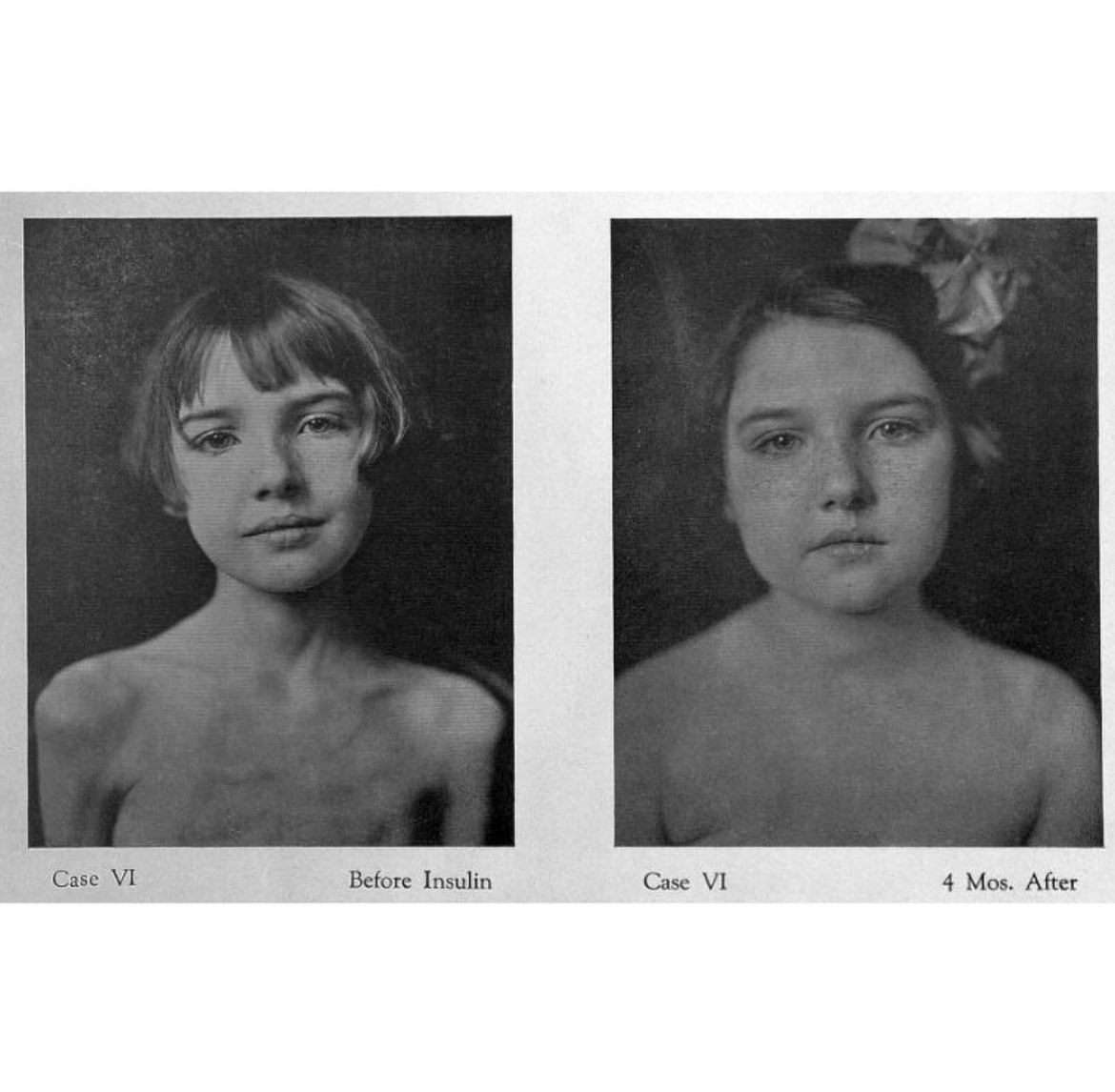
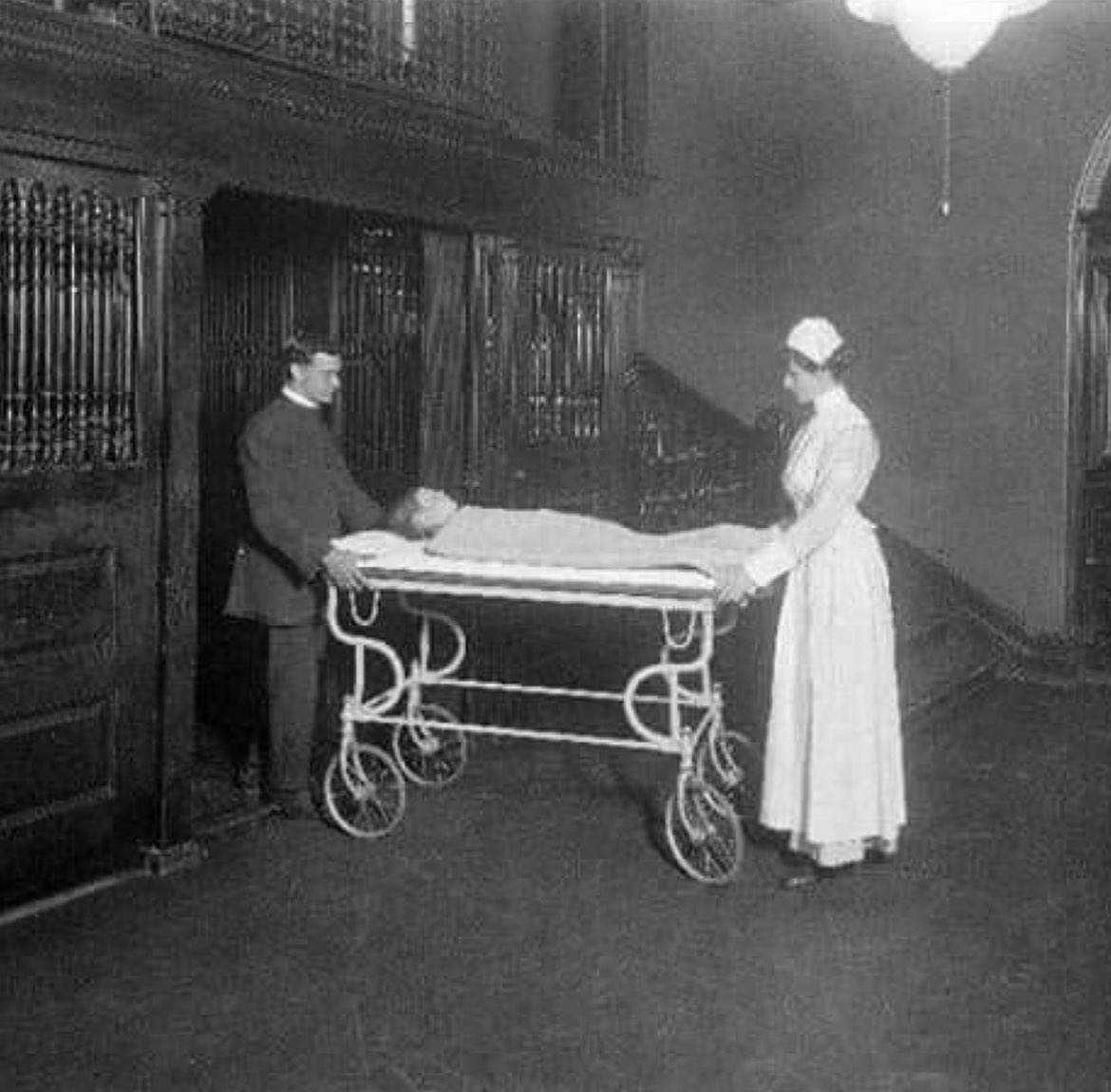
In 1922, a group of scientists went to the Toronto General Hospital where diabetic children were kept in wards. Most of them were comatose & dying from diabetic keto-acidosis. Others were being placed on extremely strict diets, which inevitably led to starvation.
This is the reason that abortion needs to be accessible up until delivery.
Anti abortion advocates tell themselves that exceptions for the health or life of the mother are sufficient, but those protections are only as strong as conservative DA’s are lenient.
@amandalhu@CIHI_ICIS The costs to the system were obvious from the beginning and especially as hospitalizations increased. However the message wasn’t straightforward or echoed and generally seemed to be lost on many who pride themselves as fiscal conservatives.
It's honestly quite depressing when I read tweets that refer to Canada as a communist/ dictatorship regime. As a former C.A.F member that has "visited" countries under those conditions, let me personally inform you that you have no idea what living in those conditions actually..
Let the polling begin!
Test your knowledge of who is at higher risk of severe COVID outcomes and should take extra precautions to avoid infection, according to @GovCanHealth.