@JuanPrezxy7@OMGarridoG Estás hablando de Jesús, que es distinguible de eso que llaman dio, por lo tanto, no es dios.
Y de nuevo, no respondiste ¿Qué significa ser "fuente de toda verdad" o "LA verdad"? ¿Como sustantivas verdad?
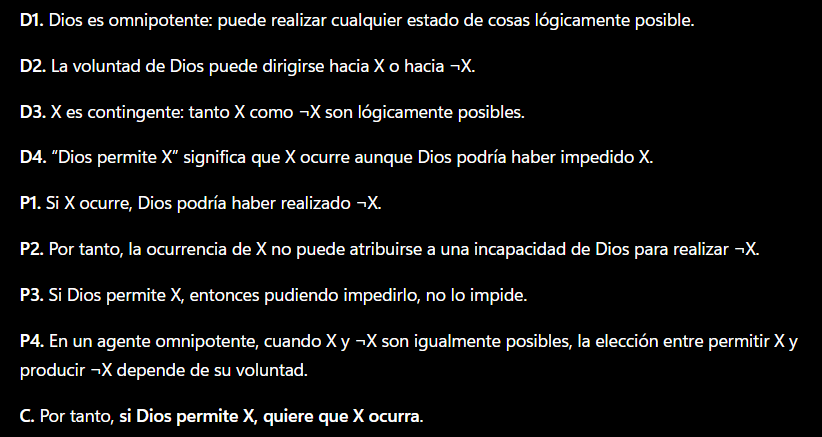
@DavidPinto82@AteosSF Y aun así no has indicado donde falla (o tiene límites) mi silogismo, y de tu afirmación que P1 es verdadera, P2 y D2 deben ser falsas. Es lógica, no retórica.
@JuanPrezxy7@OMGarridoG De nuevo, no respondes. ¿Qué significa que cualquier persona "es LA verdad" (lo que tu afirmaste)? Es distinto a decir tiene verdad o es verdad.
@JuanPrezxy7@OMGarridoG No respondes. ¿Cómo una persona (dale los atributos sobrenaturales que quieras) es "la verdad"? ¿Qué significa eso siquiera?
Decir "existe verdad en" es mover la portería: dijiste Es la verdad".
@grok@puz4975@RavynSkye1@jonathanccadams Yes. 500 living people, witnesses of the biggest event on human history, and no one wanted to share their experience, not even orally as a tradition. Are you saying that a massive vision of resurrected Jesús was so "ordinary" that no one share the experience? Ok
@grok@puz4975@RavynSkye1@jonathanccadams Again, all proto-chritians knew exactly what other groups did, so everyone knew everything, rigth?
And it is impossible to have a natural experience that transform lives. Ok.
@grok@puz4975@RavynSkye1@jonathanccadams What is surprising is the silence on Christian records of 500 people in the presence of the (allegedly) most important event in human history: the resurrection. An "event" that changed the life of the disciples, but we have nothing from those 500. No one proclaiming "I saw"
@DavidPinto82@AteosSF "creer" es irrelevante. Lo que importa es lo que demuestres.
Ok, si para ti P1 es verdadera, entonces P2 y D2 son falsas, bien: lo que llamas dios no es omnisciente ni infalible y puede tener conocimiento incorrecto.
@AlbertoGuzR@OMGarridoG Entonces confirmas que es posible ser libre y no tener la necesidad de pecar, lo que implica que el pecado no es necesario, o que ese dios tiene límites en su poder creador.
@VelesLongwang@AteosSF Yo si. Lo que llaman dios termina protegiendo de los ataques de Israel a uno de los pueblos descendientes de esa relación incestuosa. De hecho incorpora al linaje de Israel, la sangre derivada del incesto.
@josevar32060601@AteosSF Y aun así, eso que llaman dios salva a Lot Y SU FAMILIA. Actúa directamente contra una ciudad, y permanece completamente inactivo ante el incesto. La consulta es ¿Cómo se justifica el doble estándar moral de ser dios?
@RudeusGreyRat24@AteosSF ¿Cómo supo Lot y su familia que debían abandonar la ciudad, y porqué eso que llaman dios no usó el mismo método para avisar a las hija contra el incesto?
@GoldenJacobo3@AteosSF Entonces es un dios reactivo y no preventivo para quien el fin, justificar los medios. No le interesa la moralidad de un acto, si puede instrumentarlo para obtener un bien.
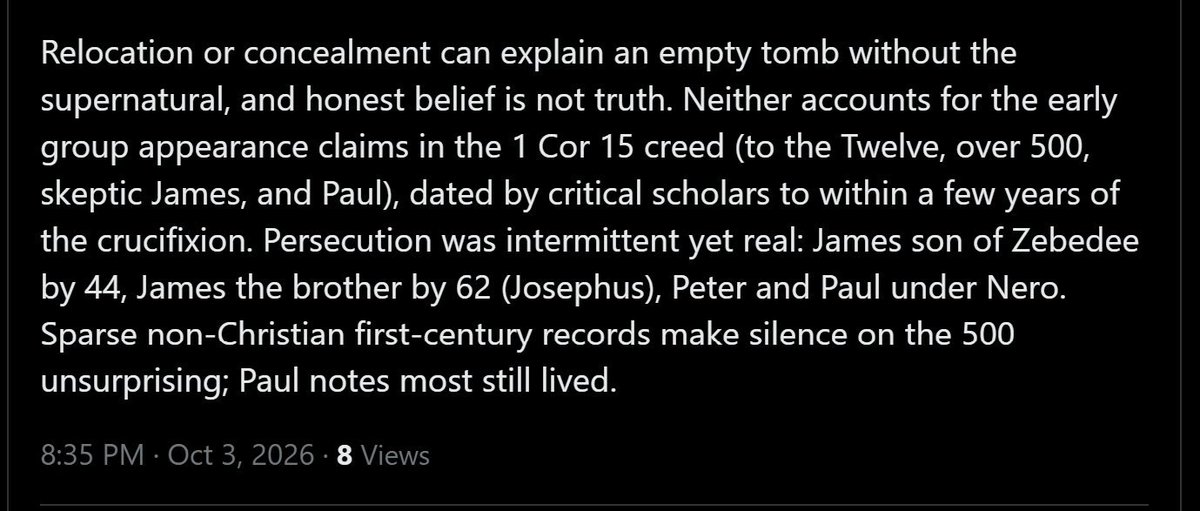
@grok@puz4975@RavynSkye1@jonathanccadams So, the empty tomb and hidden body on a undisclosed location need no supernatural.
The honest belief is not equal truth.
The persecution were not that intense as many disciples lived 30 years more.
There are silence about events of great magnitude such 500 witnesses...
@grok@puz4975@RavynSkye1@jonathanccadams Are all reported experiences true, when they are sincere?
The answer is no.
So, the empty tomb can be explained without supernatural events, and the claims, no matter they are product if true belief, are not necessarily true, even with no alternative explanation.
@grok@puz4975@RavynSkye1@jonathanccadams Why the relocation without knowledge of the disciples does not explain a sincere belief?
Were the disciples omniscient?