Facilitating diagnostic competences in simulation-based learning environments in the university context. Funded by the Deutsche Forschungsgemeinschaft (DFG).
Welcome to the Twitter account of the COSIMA Research Unit!
The goal of the COSIMA research unit is to analyse how simulation-based learning environments in the university context can be designed and implemented in order to facilitate the acquisition of diagnostic competences,
🚨New article in Learning and Instruction🚨
We investigated pre-service teachers' assessment processes using digital simulation log data. Findings reveal distinct engagement modes linked to individual interest. Find the details here: https://t.co/SZoRMtGoaT
@COSIMA_MUNICH research unit data aggregated: learners’ experience scales are comparable across medical and teacher education and bring valuable insights about diagnostic accuracy. See more in our new open access paper: https://t.co/n4PSAbKBht
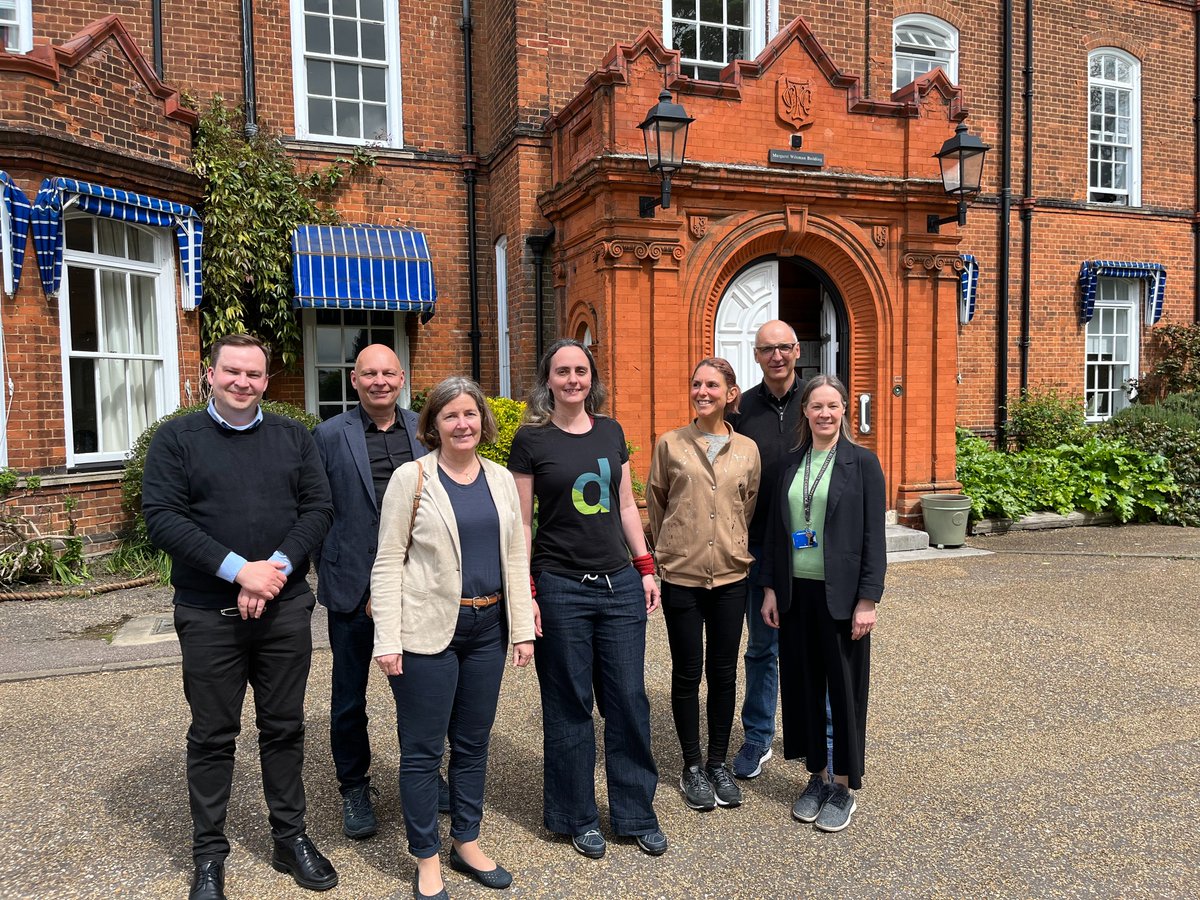
Prof Riikka Hofmann led the kick-off meeting of the @earli_office TeaM-SIM Centre for Excellence in Research, with a team of international experts who will be collaborating on simulations & professional learning in education & healthcare over the next 4 years.
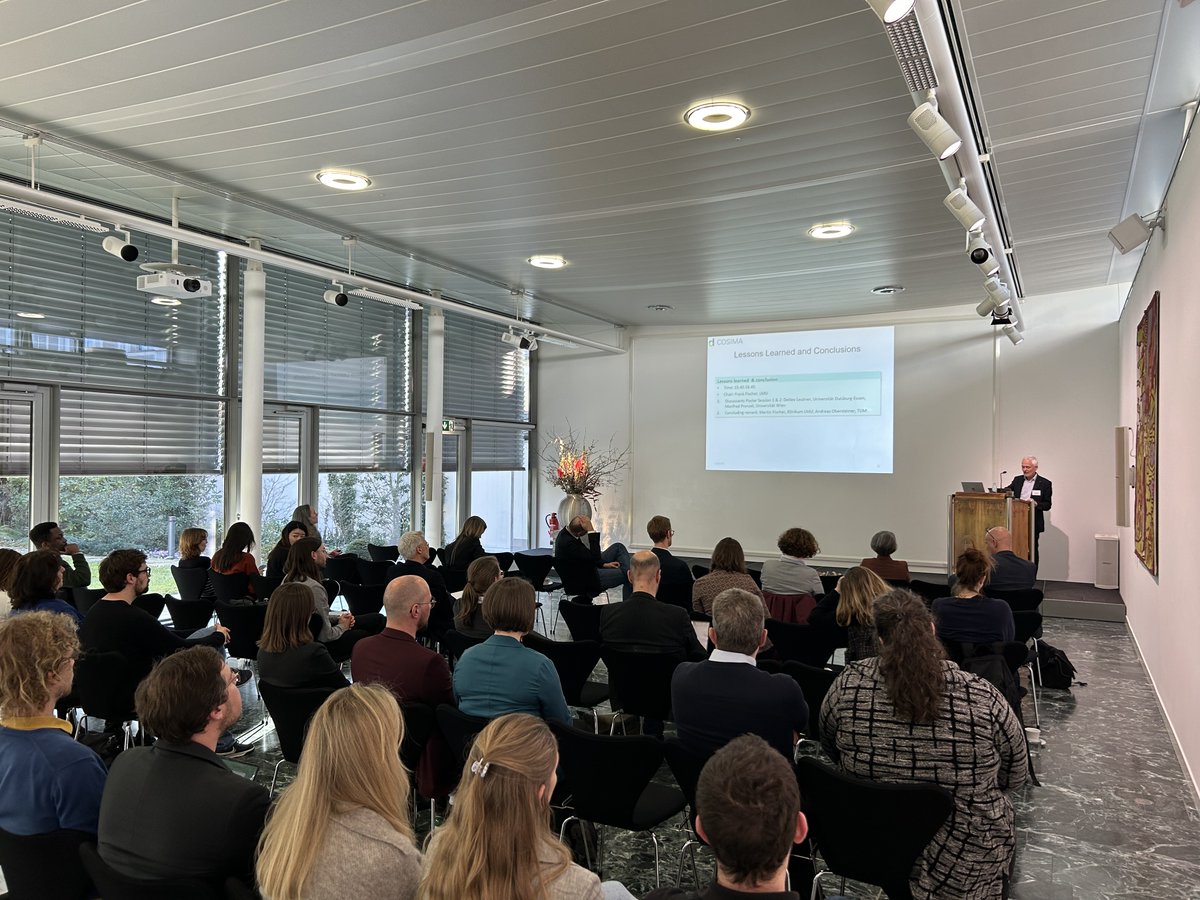
Last Friday (March 8th), COSIMA hosted its concluding event at the Carl Friedrich von Siemens Foundation, near Schloss Nymphenburg. Here are a few highlights from the occasion. 🎓📷🧵
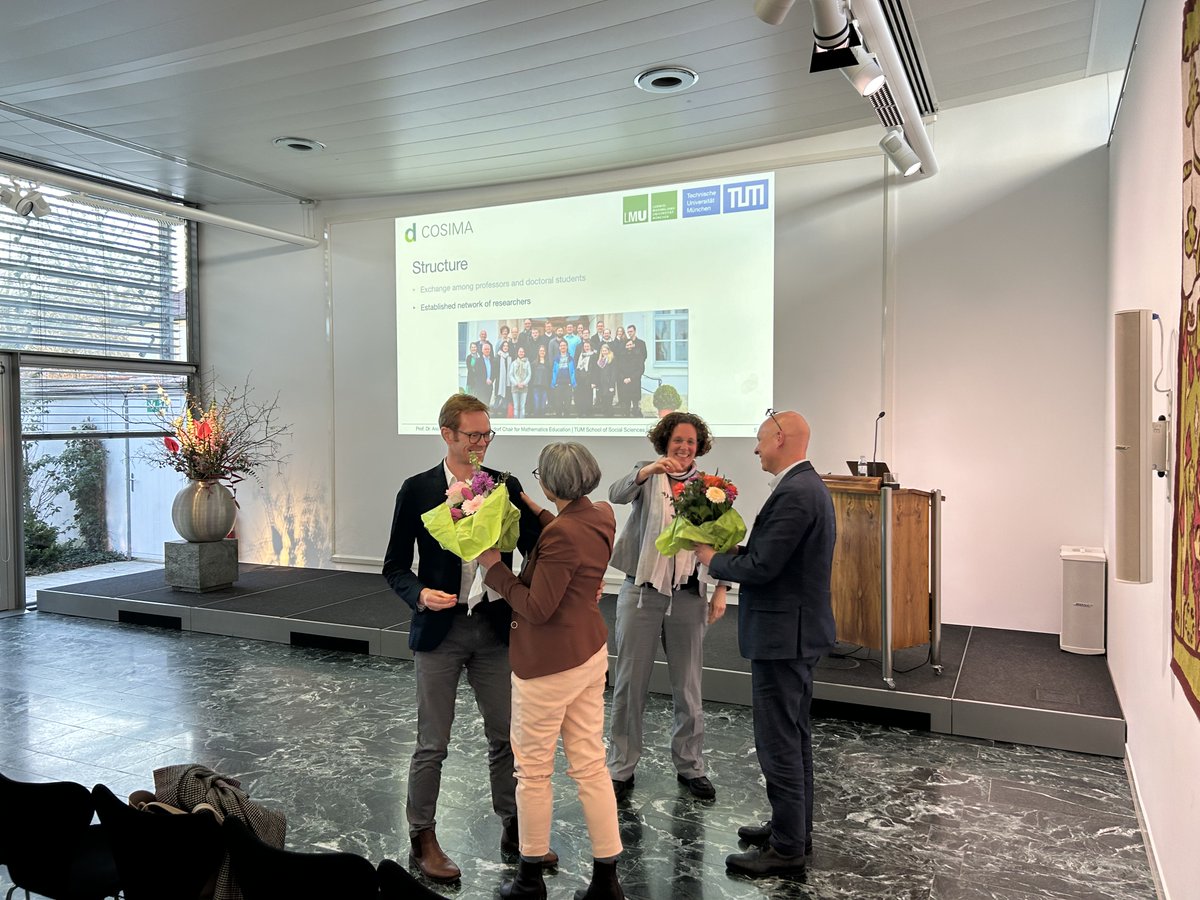
Bringing the event to a close, Detlev Leutner and Manfred Prenzel shared their insights on the COSIMA project, followed by concluding remarks from Martin Fischer, Andreas Obersteiner, and @frankfmunich. There were also flowers! 🌸
Last Saturday, members of COSIMA participated in the Symposium 'Clinical Reasoning & the Future Role of Simulations in Medical Education'. They gained insights into the future of medical education, covering aspects from clinical reasoning to scenarios with virtual patients.🎓🩺
As this year's conference season comes to a close, COSIMA reflects on insightful journeys, both abroad and nationally. We attended ICLS in Montreal, AERA in Chicago, EARLI in Thessaloniki, PME in Haifa, MCLS in Loughborough, and PAEPS in Kiel, along with GEBF in Duisburg. ✈️🎓
🚨Publication alert🚨
"Advances in simulation-based learning in higher education" edited by @frankfmunich, Riikka Hofmann, @tinasei3 and @N_Heitzmann with contributions by @CamEdFac and @COSIMA_MUNICH out now in Learning and Instruction. Read it here: https://t.co/wWpI2lJsGF
Today we attended a really intriguing guest-talk by @kuninahabenicht (@TU_Dortmund) on computer-based assessment of diagnostic competence in (prospective) physicians and the role of expertise and teamwork quality. Through Zoom the heat was bearable as well 🫠🎓
The COSIMA paper "Fostering the collaborative diagnosis of cross-domain skills in video-based simulations" just won the CSCL Oustanding Paper Award. Congratulations to Amadeus J. Pickal, Christof Wecker and all other Co-Authors. 🎉 #ISLS2023
New open access Special Issue "Facilitating Diagnostic Competences with Simulations" is now available online.
A fine mix of a conceptual paper, a meta-analysis and empirical papers to dive into salience and instructional support in simulations.
Wanna have a look at complexity and interdependence of data we work with in COSIMA and join the discussion? Join us for the full-day Workshop in Montreal #isls2023
Excited for #isls2023 Symposium on Transactivity & Knowledge Co-Construction in #CollaborativeProblemSolving, chaired by Freydis Vogel & Armin Weinberger! Join TP6 on Tue, June 14 at 2:30pm for their talk: Predicting Success of Collaborative Diagnostic Reasoning in Simulations.