One of the top #archaeology service providers in the UK. Educational charity. All views developed over millennia of human civilisation. #CASiteTeam#CAArchTeam
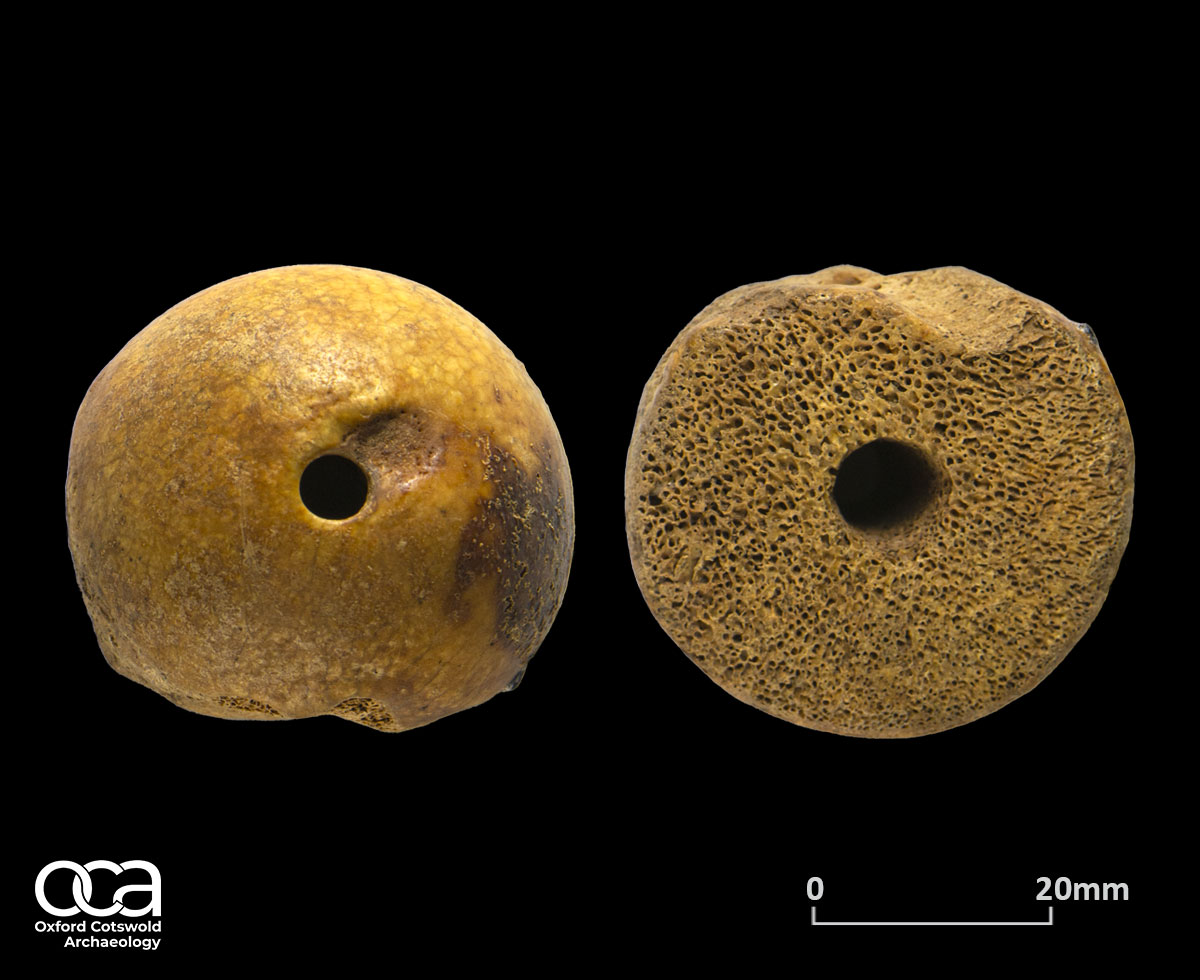
This little bone ring was found during the careful recording and exhumation of a former workhouse cemetery in Bristol, ahead of urban redevelopment. Its positioning in the grave suggests its owner was wearing it at the time of their burial.
The design evokes a type of signet ring – could it be a copy of an original that was lost, or pawned during financial hardship? If so, this replica must surely have held a personal significance to its wearer, potentially being crafted to represent former connections or status, and paid for with what money they had.
You can learn more about this poignant item in our virtual museum: https://t.co/sDb1pebmVP
#Archaeology #Bristol #CAArchTeam #3D #PostMedieval #CA_VM
The search continues! 👀 We’re heading back out to help #OperationMother in their hunt for 'Mother' – the world’s first prototype tank, developed during the #FirstWorldWar and now AWOL for more than a century.
A mix of meticulous research, battlefield #archaeology, modern survey techniques and drone exploration have so far narrowed the potential location of one of military history’s greatest missing machines to #Bovington – spiritual home of the #tank. Now, armed with new tech to tackle the tricky terrain that previously stopped things in their tracks, we'll be using a #drone to scan the final patches of our initial search area.
Want to be part of history in the making? Operation Mother are totally crowdfunded, so every donation helps put the team back on the ground, every share helps spread the word, and all of that helps expand our search area and get one step closer to uncovering Mother! 👇
https://t.co/44hRhNbkby
#WWI #GreatWar #TankHistory #TheSearchIsOn
The search continues! 👀 We’re heading back out to help #OperationMother in their hunt for 'Mother' – the world’s first prototype tank, developed during the #FirstWorldWar and now AWOL for more than a century.
A mix of meticulous research, battlefield #archaeology, modern survey techniques and drone exploration have so far narrowed the potential location of one of military history’s greatest missing machines to #Bovington – spiritual home of the #tank. Now, armed with new tech to tackle the tricky terrain that previously stopped things in their tracks, we'll be using a #drone to scan the final patches of our initial search area.
Want to be part of history in the making? Operation Mother are totally crowdfunded, so every donation helps put the team back on the ground, every share helps spread the word, and all of that helps expand our search area and get one step closer to uncovering Mother! 👇
https://t.co/44hRhNbkby
#WWI #GreatWar #TankHistory #TheSearchIsOn
You may notice us archaeologists get very excited when working on sites with multiple phases of activity. But why do we love 'multiphase' sites so much? It’s because they allow us to see long-term changes in a community's culture, technologies and beliefs, and the impact on daily life and the surrounding landscape.
Our excavations along Northamptonshire's Dallington Brook did just that, and we've just released an interactive webpage – full of 3D models, videos, maps, and reconstructions – so you can explore for yourself.
Discover the Iron Age's changing farming practices and ritual connection to watercourses, the transition to Roman farming and industry, as well as Bronze Age and medieval burial practices.
👉https://t.co/titirDaPCH
@BloorHomes #Archaeology #Northamptonshire #DallingtonBrook #Prehistory #Roman #Medieval
𝗛𝗼𝗹𝗲-𝘆 𝗰𝗮𝗻𝗻𝗼𝗹𝗶 – 𝗳𝗶𝗻𝗱𝘀 𝘀𝗼 𝗱𝗲𝗹𝗶𝗰𝗶𝗼𝘂𝘀 𝘁𝗵𝗲𝘆'𝗿𝗲 𝗮𝗹𝗺𝗼𝘀𝘁 𝗴𝗼𝗼𝗱 𝗲𝗻𝗼𝘂𝗴𝗵 𝘁𝗼 𝗲𝗮𝘁! 😋
On #NationalDoughnutDay, here's a buffet of our holey-ist finds, to tempt your archaeology tastebuds...
On the menu are spindle whorls and loom weights – spindle whorls helped spindles to spin smoothly when making thread, while loom weights kept warp threads under tension during weaving. Our spindle whorl is hewn from bone and dates to the medieval period and the clay fired loom weights, which date to the early medieval period, were found still in their rows from the loom.
And the millstone? That would have helped grind grain – coincidentally, one of the key ingredients for doughnuts... 🍩 ✨
#Archaeology #Loomweights #Millstones #SpindleWhorls #Weaving
You may notice us archaeologists get very excited when working on sites with multiple phases of activity. But why do we love 'multiphase' sites so much? It’s because they allow us to see long-term changes in a community's culture, technologies and beliefs, and the impact on daily life and the surrounding landscape.
Our excavations along Northamptonshire's Dallington Brook did just that, and we've just released an interactive webpage – full of 3D models, videos, maps, and reconstructions – so you can explore for yourself.
Discover the Iron Age's changing farming practices and ritual connection to watercourses, the transition to Roman farming and industry, as well as Bronze Age and medieval burial practices.
👉https://t.co/titirDaPCH
@BloorHomes #Archaeology #Northamptonshire #DallingtonBrook #Prehistory #Roman #Medieval
📣 CA have 𝟭,𝟳𝟬𝟬 𝗿𝗲𝗴𝗶𝘀𝘁𝗲𝗿𝗲𝗱 𝘃𝗼𝗹𝘂𝗻𝘁𝗲𝗲𝗿𝘀... and counting!
Volunteering comes in many guises – helping at community excavations, archiving projects and finds processing in offices to name a few.
During the past year alone, we’ve had opportunities in Gloucester, Suffolk, Milton Keynes and Essex. We've also recently started a five-year community dig in Devon! ⛏️
It's #NationalVolunteersWeek and what better way to celebrate than to feature some of our hard working volunteers and show our gratitude for all they do!
Would you like to volunteer with us? Check out all about it here: https://t.co/yN2zvBNqYH
#archaeology #volunteers #community
A Trainee Archaeologist role in Cirencester Kemble is available with @CotswoldArch, supporting fieldwork, site surveys, and excavation projects while gaining hands on experience in archaeological practice.
Apply: https://t.co/gIcglnXlot
#GlosJobs#ArchaeologyJobs
📣 CA have 𝟭,𝟳𝟬𝟬 𝗿𝗲𝗴𝗶𝘀𝘁𝗲𝗿𝗲𝗱 𝘃𝗼𝗹𝘂𝗻𝘁𝗲𝗲𝗿𝘀... and counting!
Volunteering comes in many guises – helping at community excavations, archiving projects and finds processing in offices to name a few.
During the past year alone, we’ve had opportunities in Gloucester, Suffolk, Milton Keynes and Essex. We've also recently started a five-year community dig in Devon! ⛏️
It's #NationalVolunteersWeek and what better way to celebrate than to feature some of our hard working volunteers and show our gratitude for all they do!
Would you like to volunteer with us? Check out all about it here: https://t.co/yN2zvBNqYH
#archaeology #volunteers #community
Ornately designed clay-pipes are a popular find among archaeologists, but it's this more simplistic version that's excited us for its philosophical potential... 🤔💭
Found during a community dig in Malmesbury – where we were searching for remains of the house of philosopher Thomas Hobbes – this maker-stamped pipe is a product of father and son company ‘Jeffery Hunt I & II’. It originates from 1640-70 – a time of great political instability, and of great influence on Hobbes' best known work ‘Leviathan’.
Now, it’s tantalising to think one of Malmesbury’s most famous alumni possibly smoked on this pipe whilst he mulled over the state of British politics, but it’s very unlikely. This is, however, an invaluable find for lovers of the history of pipemakers, as Jeffery Hunt I & II became founding members of the Bristol Pipemakers' Guild. Their globetrotting clay creations were widely known throughout Bristol and Bath, and travelled through trade as far as Newfoundland!
#Archaeology #PostMedieval #ClayPipes #Malmesbury #Smokin
Ornately designed clay-pipes are a popular find among archaeologists, but it's this more simplistic version that's excited us for its philosophical potential... 🤔💭
Found during a community dig in Malmesbury – where we were searching for remains of the house of philosopher Thomas Hobbes – this maker-stamped pipe is a product of father and son company ‘Jeffery Hunt I & II’. It originates from 1640-70 – a time of great political instability, and of great influence on Hobbes' best known work ‘Leviathan’.
Now, it’s tantalising to think one of Malmesbury’s most famous alumni possibly smoked on this pipe whilst he mulled over the state of British politics, but it’s very unlikely. This is, however, an invaluable find for lovers of the history of pipemakers, as Jeffery Hunt I & II became founding members of the Bristol Pipemakers' Guild. Their globetrotting clay creations were widely known throughout Bristol and Bath, and travelled through trade as far as Newfoundland!
#Archaeology #PostMedieval #ClayPipes #Malmesbury #Smokin
We've got a fresh update on the archaeology around @sizewellc, and it’s overflowing with new revelations...
We have our richest Neolithic activity yet – fantastic flints and polished axeheads abound – and ever‑growing groups of Bronze Age Beaker pits, stuffed with prehistoric pottery. Meanwhile, we've uncovered one of the largest caches of Early Iron Age pottery in the county!
And the Romans? Well, we may've finally tracked down where all those seasonal salt workers were staying. They left behind their lavish imported pottery – a discovery that's really proving worth its salt.... 😌
Curious to know more? See the latest happenings in the Wonderful World of Sizewell: https://t.co/JVKmeShyWv
#OCAArchTeam #Archaeology #Suffolk
We've got a fresh update on the archaeology around @sizewellc, and it’s overflowing with new revelations...
We have our richest Neolithic activity yet – fantastic flints and polished axeheads abound – and ever‑growing groups of Bronze Age Beaker pits, stuffed with prehistoric pottery. Meanwhile, we've uncovered one of the largest caches of Early Iron Age pottery in the county!
And the Romans? Well, we may've finally tracked down where all those seasonal salt workers were staying. They left behind their lavish imported pottery – a discovery that's really proving worth its salt.... 😌
Curious to know more? See the latest happenings in the Wonderful World of Sizewell: https://t.co/JVKmeShyWv
#OCAArchTeam #Archaeology #Suffolk
𝗪𝗵𝗮𝘁 𝗵𝗮𝗽𝗽𝗲𝗻𝗲𝗱 𝗮𝗳𝘁𝗲𝗿 𝗥𝗼𝗺𝗮𝗻 𝗕𝗿𝗶𝘁𝗮𝗶𝗻?
When Britain ceased to be part of the Roman Empire, South-West Britain followed a different path from the emerging Anglo-Saxon kingdoms of the east.
From Cornwall to south Gloucestershire, these early medieval ‘hidden kingdoms’ have often been overlooked. Now, a major new research project is exploring their landscapes, communities and material culture.
Join Professor Stephen Rippon for this year’s 𝗠𝗶𝗰𝗸 𝗔𝘀𝘁𝗼𝗻 𝗔𝗻𝗻𝘂𝗮𝗹 𝗟𝗲𝗰𝘁𝘂𝗿𝗲, sharing the initial results of this fascinating work.
📅 Wednesday 10th June, 7pm
💻 Watch live and free online:
https://t.co/ajDqpvqADN
📍 Or attend in person at the @CoriniumMuseum, Cirencester:
https://t.co/MPa8bwlyrW
#Archaeology #Medieval #AngloSaxon #Roman
We've got BIG questions! But can archaeology answer them?...
Most of the records kept by the Premonstratensian monks of Leiston Abbey have not survived, so despite the Abbey's fascinating and known history – including its literal brick-by-brick relocation – there is still so much we can't say about it.
We want to know: what did this part of Suffolk look like before the monks arrived, and how did it change when they did? We know climate change was a major factor in the monks moving the Abbey building, but how did this move and a changing environment affect their everyday lives?
It's early days in the post-excavation analysis that aims to answer these questions but, in our latest webinar, Abby Antrobus sets out how the archaeological investigations at @SizewellC could provide some answers.
👉If you missed it live, you can catch up now on YouTube: https://t.co/9VT8lF3Lnw
#Webinar #Archaeology #Medieval #MedievalArchaeology
Excavations along the #A66 near Kirkby Thore are advancing what we know about the area’s early medieval past...
Unlike much of southern England, which was largely shaped by the Anglo-Saxons, this part of northern England was influenced by Ireland and the Scandinavian settlers (AKA: The Vikings ⚔️). It's that rich mix of cultures we're revealing through the archaeology.
What we're finding suggests that Kirkby Thore was a much larger and more complex settlement than previously thought, and it had significant social and economic importance. We explain more in our latest article: https://t.co/Q3vMtJCEdC
@NationalHways #NTPA66 #Archaeology #Medieval #Vikings
Excavations along the #A66 near Kirkby Thore are advancing what we know about the area’s early medieval past...
Unlike much of southern England, which was largely shaped by the Anglo-Saxons, this part of northern England was influenced by Ireland and the Scandinavian settlers (AKA: The Vikings ⚔️). It's that rich mix of cultures we're revealing through the archaeology.
What we're finding suggests that Kirkby Thore was a much larger and more complex settlement than previously thought, and it had significant social and economic importance. We explain more in our latest article: https://t.co/Q3vMtJCEdC
@NationalHways #NTPA66 #Archaeology #Medieval #Vikings
We've got BIG questions! But can archaeology answer them?...
Most of the records kept by the Premonstratensian monks of Leiston Abbey have not survived, so despite the Abbey's fascinating and known history – including its literal brick-by-brick relocation – there is still so much we can't say about it.
We want to know: what did this part of Suffolk look like before the monks arrived, and how did it change when they did? We know climate change was a major factor in the monks moving the Abbey building, but how did this move and a changing environment affect their everyday lives?
It's early days in the post-excavation analysis that aims to answer these questions but, in our latest webinar, Abby Antrobus sets out how the archaeological investigations at @SizewellC could provide some answers.
👉If you missed it live, you can catch up now on YouTube: https://t.co/9VT8lF3Lnw
#Webinar #Archaeology #Medieval #MedievalArchaeology