@readswithravi Yes, the quote “When in Rome, do as the Romans do” fits perfectly here. You simply have to study every situation carefully, understand the circumstances, and know the appropriate response for each one.
In today’s Alert, Partner Jacob Ochieng analyses the key provisions of the Virtual Asset Service Providers Regulations, 2026, and their implications for businesses operating within Kenya’s rapidly evolving virtual asset ecosystem.
Read more: https://t.co/Mea5bT0yrx
#VASP
On The Weekly Court Tracker, @IanNdamwesiga explores what happens when a will’s executor dies and the legal requirement for spousal consent when dealing with matrimonial land, based on recent High Court decisions in Kabale and Wakiso.
📹 NBS TV
#NilePostNews
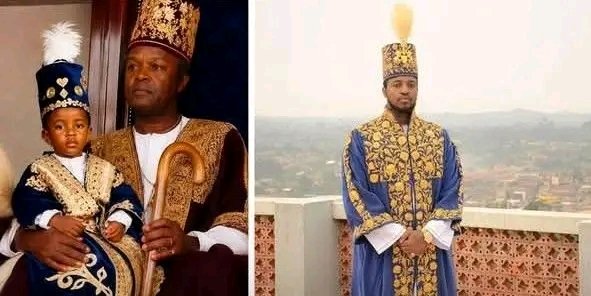
WHY KING OYO WAS CALLED OYO - THE LUO SECRET OF TOORO & BUNYORO
If you are Mutooro or Munyoro, your King has a Luo name. Oyo, Olimi, Rukidi, Winyi, Kaboyo, Duhaga.
How?
Years ago, we had no Babiito. We had Bachwezi.
Kitara Empire was powerful, capital at Bigo bya Mugenyi. Then things went wrong.
King Wamara's cows started producing blood instead of milk. Mugenyi's sacred cow Bihogo died at a salt lick. Rebellions everywhere.
Wamara called his diviners. They brought a fattened calf, rinsed mouth with milk, slaughtered it to read the future.
They cut it open - *no entrails inside*.
No one could explain until a Luo diviner named *Nyakoka* from across the Nile came forward. He hit the head and the legs of the calf. Entrails fell out, with black soot from the fire.
He said:
"Empty stomach means reign of Bachwezi is over. Entrails in head and legs means Bachwezi will survive only as spirits in Mbandwa shrines. Black soot means Kitara will be taken by dark strangers from another land."
Bachwezi tried to kill him. He escaped north across the Nile back to *Bukidi* - today's Lango / Acholi.
Who was waiting in Bukidi?
Years before, a Chwezi Prince called Isimbwa was hunting in Luo land and left his son Kyomya behind. Kyomya married a Lango woman, Nyatworo, daughter of Labongo of Mukwonga clan.
Their child was mixed blood. They called him *Isingoma Mpuga Rukidi*.
Isingoma - father of drums (Bantu name subjects gave him)
Mpuga - _empuuga_ - black-and-white cow (meaning mixed ancestry)
Rukidi - his birthplace
Labongo - his Luo grandfather
He and his brothers were hunters, loved by Luo people.
Nyakoka found him resting under a *Bito tree*. That's why they are called *Babiito*.
He told him: "Kitara has no king. Go and take it."
So a small group of *Biito-Luo* crossed the Nile. Story says they had to sacrifice a child to cross. When they arrived at the empty Chwezi capital, Banyoro looked at them with suspicion - they were half Bantu, half Luo.
Rukidi asked Wamara's wives, Bunono and Iremera: "Where did Bachwezi go?"
They answered: "They disappeared towards Lake Victoria, they will never return."
He took the drum.
That was the start of Bunyoro-Kitara. The new kings lost their Luo language and spoke Runyoro. But they kept Luo names as throne names.
That's why the first Bunyoro kings are:
*Rukidi, Ocaki, Oyo Nyiba, Winyi I, Olimi I, Chwa, Nyabongo...*
When you become Omukama, you drop your childhood name and pick an ancestor name. To prove you are true Mubiito.
That's why:
- The founder of Tooro in 1830 was Prince Kaboyo who rebelled against his father Kyebambe III of Bunyoro. On the throne he called himself *Kaboyo Olimi I* - taking Luo ancestor name.
- Oyo's father named him *Oyo Nyimba* before going to Cuba as ambassador, and elders added *Rukidi IV* after his grandfather.
They even brought *Empaako*. The word _pako_ itself is Luo - it means "to praise someone". Amooti, Akiiki, Abwooli, Ateenyi - Luo pet names and has direct meaning in Luo language.
And Babiito are the only clan in Bunyoro that does NOT marry outside. They marry within to keep that royal blood.
Even Buganda: Rukidi's twin brother is *Kato Kimera*, third King of Buganda.
So we are Bantu people, but our kings are sons of Luo. That is why Banyoro/Batooro says: _"We are children of Bacwezi, grandchildren of Batembuzi, but sons of Rukidi Mpuga."_
Oyo was not just a name. It was 800 years of history.
Rest well, Rukidi IV.
I shot this video of Fort Portal, March-April 2025.
During the British colonial era, Fort Portal was the administrative headquarters of western Uganda, but it's since been eclipsed by Mbarara.
The haunting music is by Kenya's pastoral Maasai, vaguely related to some Batooro.
🚨 There's a succession battle in the Tooro Kingdom after King Oyo died.
Chief Prince Charles Kamurasi, head of the Babiito clan, is insisting the late king left no heir. That clashes with the prime minister and President Museveni, who both say a young boy will be revealed later.
The clan is now looking at other options from the Rukidi line. King Oyo was only 34 and had ruled since he was three.
#TransferNews: Free agent Cedrick Ngaboyintwari is reportedly set to return to APR VC, where he spent seven years from 2018, following his departure from Gisagara VC.
Because the airline was operating on cash basis (receiving and keeping money in hard cash),
Uganda Airlines Juba country manager, a one Joshua Ayebazibwe stole Ugx 393,715,156 ($104000).
But, since September 2024 to date, nothing has ever been done to the said officer.
Chief Justice Dr Flavia Zeija has urged institutions to focus on skills, competence and problem-solving abilities when recruiting professionals, rather than relying solely on academic qualifications.
DETAILS || #VisionUpdates 👉👉https://t.co/QahZQ6gByf
🚨LEGAL UPDATE🚨
Kenya is pursuing clean energy while accelerating oil development. Can both legally and commercially coexist?
🔗Read Full Legal Update: https://t.co/umfPf6z9l4
#LegalUpdate#OilAndGas#EnergyTransition#KenyaLaw
The High Court at Milimani in Ndirangu v Karen Hospital;
A hospital cannot detain a deceased person's body as security for an unpaid bill. The remains must be released for burial, while the hospital is free to pursue the outstanding debt through lawful civil recovery mechanisms.
The Tribunal's reasoning rests principally on Sections 30 of the Tax Appeals Tribunal Act and 56(1) of the Tax Procedures Act.
Section 56(1) places the burden on the taxpayer to prove that the tax decision is incorrect, while Section 30 specifically requires an appellant challenging an assessment to prove that the assessment is excessive.
The Tribunal went further and emphasized that the evidential burden is continuous. It does not end when the taxpayer files an objection. The taxpayer must continue to substantiate its case before the Tribunal.