(1/7) New #OpenAccess article in @CPPJournal: “Gunshot detection technology effect on gun violence in Kansas City, Missouri: A microsynthetic control evaluation” https://t.co/7w8MjKFg9w. A practitioner-focused research brief is available at https://t.co/res1OSjGHn.
In response, CPP has published its first-ever special issue on cybercrime and cybersecurity. Led by @JinRLee_ and @cybercrimeprof, the issue features cutting-edge research and knowledge in this area.
The full issue is available here:
https://t.co/GWDzf4Rw4l
Criminology is just beginning to understand cybercrime and how best to deter and prevent it - or at least reduce its harms. The field needs more empirical testing, systematic analysis, evaluation, and theory development to address this multifaceted and complex crime. (1/2)
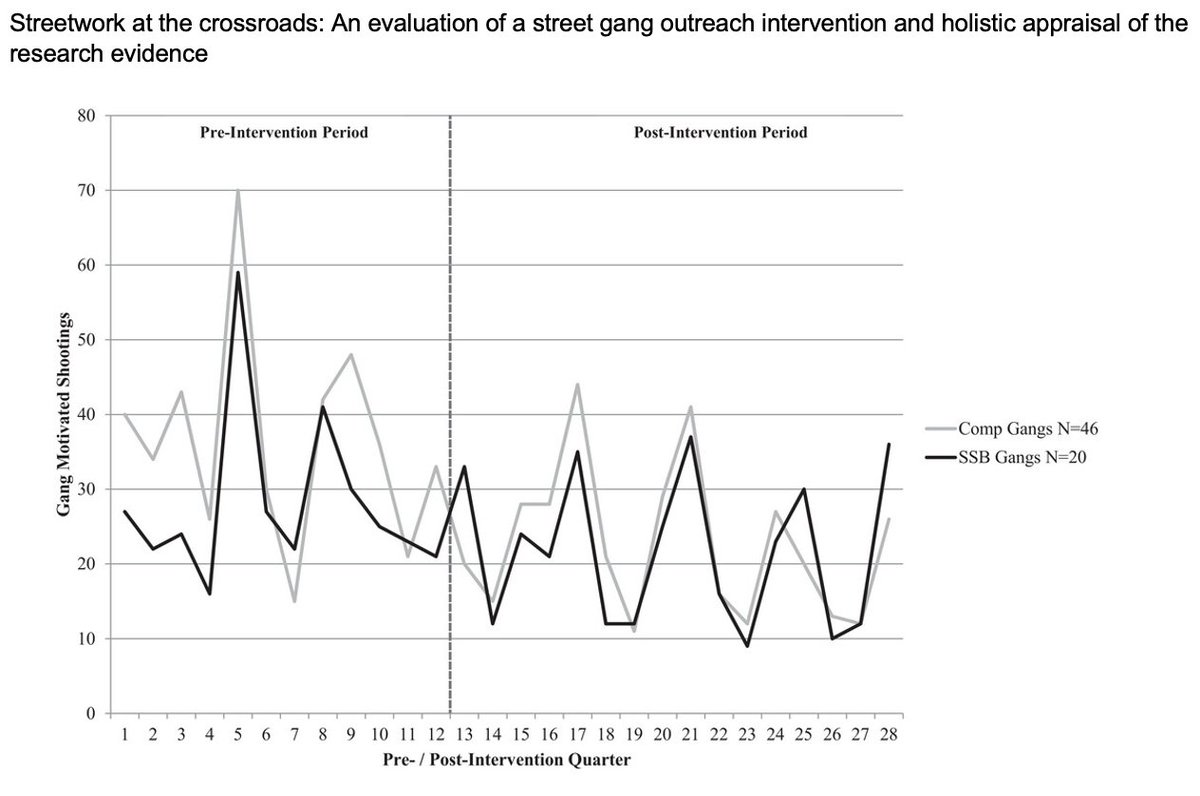
If you are interested in the field of street outreach in particular, or in violence reduction generally, this new @CPPJournal study will be required reading. https://t.co/PWAiOB6W4A
We’re very excited to share our work on harm reduction communication on darknet markets!
An examination of harm reduction strategies in Oxycodone and Adderall buyer feedback on AlphaBay - Logie - Criminology & Public Policy - Wiley Online Library https://t.co/mPwVqOqRW2
New article 🚨
Using a sample of 1055 stolen data products across 40 vendors on the Open & #DarkWeb, I examined whether different product & vendor behaviors predicted vendors’ trustworthiness as reflected in their price point. @CPPJournal@gmucriminology
https://t.co/ZOTzRaSWb2
Starting the week off with a new publication in @CPPJournal - “I knew it was a scam”: Understanding the triggers for recognizing romance fraud.
Open access so take a read!
Or see below 👇 for a short 🧵1/4
https://t.co/ccSAxddTzZ
cc @CrimeJusticeQUT
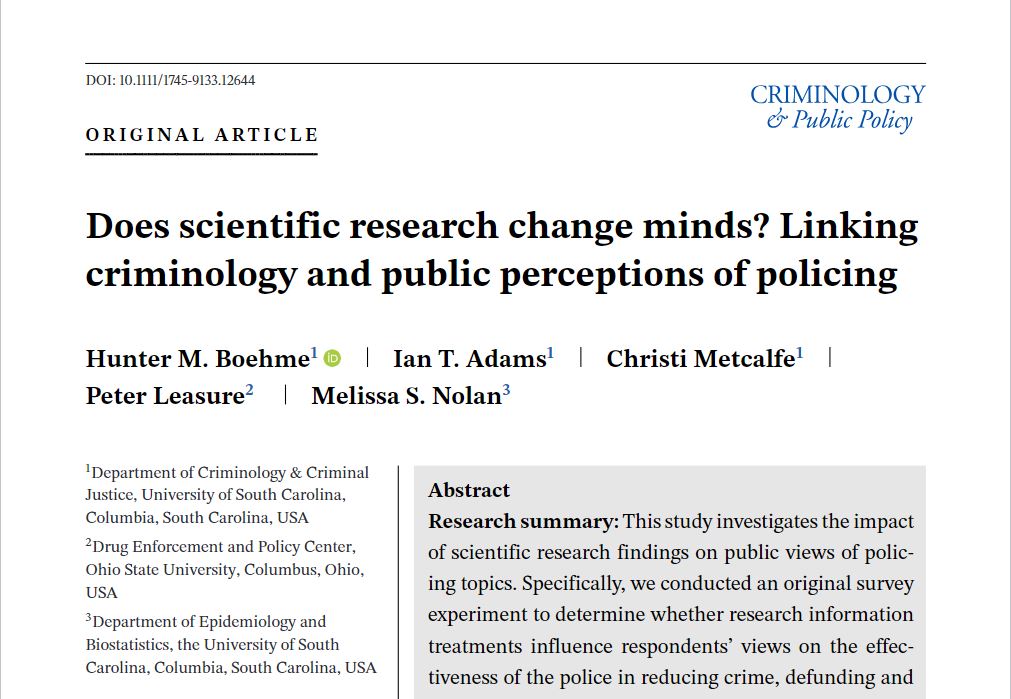
New research, coauthored by DEPC Senior Research Associate Peter Leasure, was recently published in @CPPJournal. The study investigates the impact of scientific research findings on public views of policing topics.
Read the paper: https://t.co/ziEz7gbTrW
Happy to see this paper with my colleagues and friends out in @CPPJournal. Quick takeaway: quick recaps of policing research can shift public opinion on policing topics. Opens more questions about what we want from “impactful” research.
https://t.co/97VTajtSi1
Experimental evidence suggests that presenting confirmatory ("positive") research information had a significant positive impact on perceptions of police effectiveness in reducing crime and BWCs @ian_t_adams@ChristiMetcalf3@melissanolanphd@CPPJournal
Congratulations to the award winners!
More information on the submission guidelines for Criminology & Public Policy, the premier, peer-reviewed, policy journal of the American Society of Criminology (@ASCRM41) can be found here: https://t.co/p3LtHZ80Rz (4/4)
Each year, the CPP editorial board presents two best paper awards, one given to authors earlier in their careers, and another for authors later in their careers, for papers published in the preceding year. We are pleased to announce this year's winners in the thread below! (1/4)
The winners of the Best Paper Award for Later-Career Scholars are Aki Roberts and John M. Roberts Jr. for their paper "Clearing crimes in the aftermath of police violence", which was first published in Vol. 21, Issue 3. (3/4)
New pub alert @CPPJournal w/ @behayes4 👇
#AAU Campus Climate Survey data = reporting sexual misconduct to Title IX coordinators is rare, especially for Black and Asian students. Invest in campus counseling b/c that is where students go for help.
https://t.co/OxOxpmAESy
🚨 New publication alert!
Check out the article “Minor‐focused sextortion by adult strangers: A crime script analysis of newspaper and court cases” in @CPPJournal co-authored by Assistant Professor @relomalley. ⬇️
https://t.co/Jma7BouRAJ
What sets extremists who use terrorist violence apart from those who do not? In our recent article in @CPPJournal, we find that involvement in terrorism is as much about the absence or decline of protective factors as the presence of risk factors.
https://t.co/fNu1HXuZ6b