Sector Unknown is officially out of Early Access.
Full release is live now with a 30% launch discount.
Seven months of iteration, feedback, fixes, and polish led to this moment. Grateful to everyone who played along the way!
Steam:
https://t.co/15it1r0hk9
This guy's chickens kept getting targeted by hawks, so he started feeding local crows. Now he has an army of crows that patrols his property and chases the hawks away.
There is a Stone Age tribal war happening in Colombia right now
The Misak and Nasa people are fighting over a section of land. Yes this is real, and yes they are using traditional weapons. Video is from May 21st, 2026.
Around 1,950 years ago in Pompeii, a weaver named Successus fell in love with a barmaid named Iris.
She did not love him back.
We know this because his rival, a man named Severus, decided to humiliate him publicly. He grabbed something sharp and carved this into a wall for the whole city to read:
"Successus the weaver loves the innkeeper's slave girl named Iris. She does not care about him at all. But he begs her to have pity on him. His rival wrote this. Goodbye."
Imagine walking to work and seeing that with your name on it.
Successus found it. And instead of letting it go, he carved his reply directly underneath:
"Envious one, why do you get in the way? Yield to a man who is better looking and being treated very unfairly."
Severus came back one more time to end it:
"I have spoken. I have written. You love Iris, but she does not love you."
Then, in 79 AD, Vesuvius erupted and buried the wall, the tavern, and the entire argument under 20 feet of ash. The thread was frozen mid-beef for almost two millennia until archaeologists dug it up and translated it.
We will never know who got the girl. We do not even know if any of the three survived.
Pompeii has over 11,000 of these inscriptions. Bar reviews. Bragging. Bad poetry. A bakery wall that says "Welcome, hungry people." Two guys fighting over a girl in the comments.
The technology changes. We do not.
In Jaws, Robert Shaw was drunk in the first take of this intense monologue.
He struggled with alcoholism and was a heavy drinker during Jaws production.
He suggested to Spielberg that, since the characters were drinking in the scene, he should have a few real drinks to get into character.
Spielberg agreed but then regretted it.
On the first take, Shaw got very drunk.
Crew members had to carry him onto the boat. He slurred lines, wandered off-script, and the filming was halted.
He had a blackout and didn’t remember much.
Early the next morning, Shaw called Spielberg to apologize and begged for a reshoot. He showed up sober, nailed it.
And that take was used.
That water clarity is an engineering decision, and the math behind it is wilder than the video.
Roman aqueducts ran on gravity alone. No pumps, no pressure systems. Engineers carved channels with a gradient so shallow it borders on absurd. The Pont du Gard in southern France drops 2.5 centimeters over 275 meters. That's roughly the thickness of a coin over the length of three football fields. They surveyed that accuracy with plumb lines and wooden leveling instruments.
The clarity you're seeing is a direct product of flow velocity. Too steep and the water erodes the channel walls, picks up sediment, turns brown. Too flat and it stagnates. Roman engineers targeted a slope of about 20 centimeters per kilometer, which kept the water moving fast enough to stay fresh but slow enough to stay clear. Before the water reached the city, it passed through multi-chamber settling tanks where velocity dropped near zero. Suspended particles sank. Clean water flowed out the top into the next chamber. Repeat three or four times.
Pliny specified the minimum slope in writing. Vitruvius published the exact mortar ratio for hydraulic cement: one part lime to two parts volcanic ash for underwater work. The pozzolana from Pozzuoli reacted with water to form a calcium-aluminum-silicate compound that actually gets stronger the longer it sits submerged. Modern concrete degrades in water. Roman concrete bonds with it.
Scale the whole system and it gets harder to process. Eleven aqueducts fed Rome at its peak. Combined output: roughly 1 million cubic meters of water per day. That works out to about 250 gallons per person for a city of one million. Modern New York delivers about 125 gallons per person per day. Ancient Rome had access to double the per capita water supply of the largest city in the United States, running entirely on slope and stone.
The Trevi Fountain in Rome is still fed by one of them. Two thousand years, same source, same gravity, same water.
Nothing defines a generation of school kids quite like the sudden, tragic loss of Ashton.
If you went to school in North America during the 80s or 90s, the hum of an Apple IIe and the distinct clatter of a 5.25-inch floppy disk meant one thing: it was time to brave the Oregon Trail.
It was supposed to be an educational game about history, geography, and resource management. Instead, it became a lesson in harsh realities. You didn’t just learn about the pioneer journey—you lived the stress of budget management at Matt’s General Store, debated how many wagon axles were enough, and meticulously rationed food to keep your party alive.
And yet, despite buying all the oxen and spare parts you could afford, the trail always had other plans. One minute you’re cruising past landmarks, and the next, a green screen casually informs you that your favorite wagon member has contracted typhoid. By August, it’s game over.
It remains one of the most brilliant pieces of educational software ever created, turning a history lesson into an unforgettable, collective childhood core memory.
What was your ultimate downfall on the trail? Did you ever actually make it to Oregon, or did dysentery get you every single time?
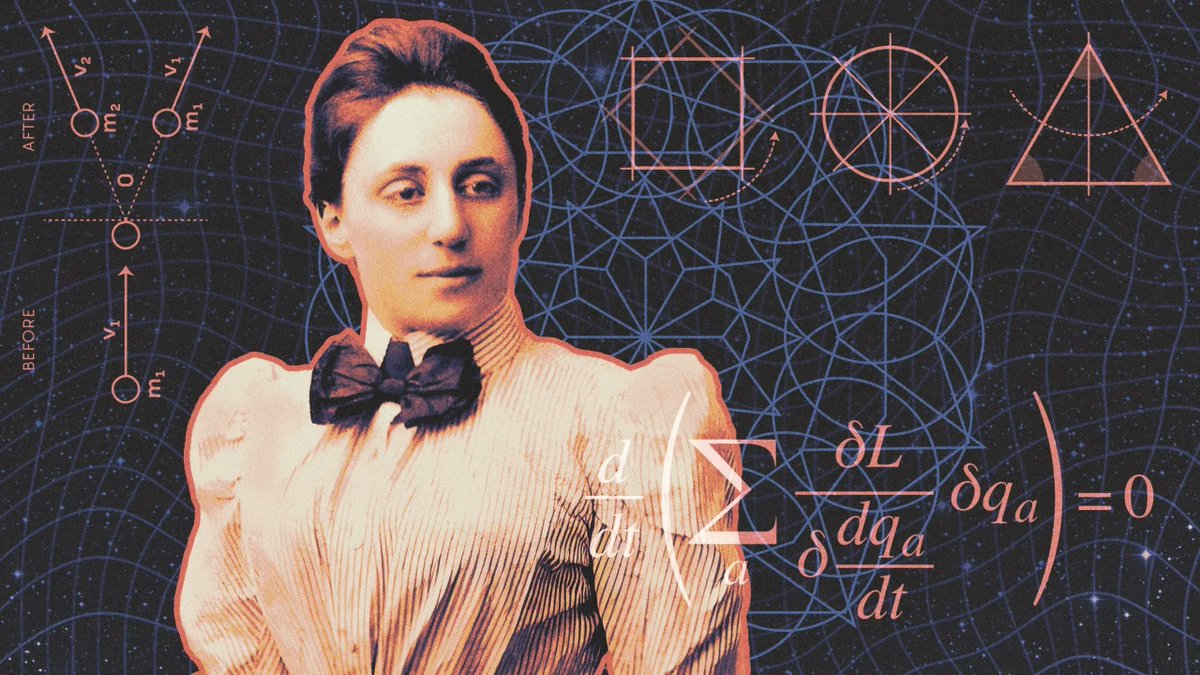
A German woman proved a single theorem in 1915 that quietly became the foundation of every law of physics on Earth. She taught for seven years without pay because the University of Göttingen refused to hire a woman. Then she fled the Nazis and died in Pennsylvania at 53.
I started reading about her and could not believe how much of modern physics traces back to one woman the world refused to pay for her work.
Her name was Emmy Noether. The theorem is called Noether's theorem.
Every law of physics ever discovered. Conservation of energy. Conservation of momentum. The Standard Model. General relativity. Quantum field theory. All of them are direct consequences of a single mathematical insight she proved 110 years ago. And most physics students will graduate without ever hearing her name once.
Emmy Noether was born in 1882 in Erlangen, Germany. Her father was a respected mathematician at the local university. The university would not allow women to enroll as students. So she audited classes from the back of the room and was not allowed to receive credit for anything she learned. She finished her PhD anyway in 1907.
Then she could not get a job.
For seven years she worked at the Mathematical Institute in Erlangen without a single paycheck. She supervised students. She published papers. She filled in for her aging father when he was too sick to teach. She did the work of a full professor and was paid nothing. There was no policy preventing her payment. There was simply no precedent for paying a woman.
In 1915 David Hilbert and Felix Klein invited her to Göttingen, the most important mathematics department in the world. Hilbert wanted her there because he was working on Einstein's new general relativity and there was a problem nobody could solve. The philosophy faculty blocked her hiring.
They argued returning soldiers should not learn from a woman. Hilbert stood up in the faculty meeting and said the line that has echoed for a century. He did not see how the sex of the candidate could be an argument against her admission, because the university senate was not a bathing establishment.
She still was not hired. So Hilbert listed her courses under his own name on the official schedule. She taught them under his title. This is how the most important mathematician of the 20th century was forced to operate for years inside one of the most prestigious universities in the world.
That same year she solved Hilbert and Einstein's problem.
The puzzle was technical. In general relativity, energy did not seem to be conserved the way classical physics required. Einstein could not figure out why. Hilbert could not figure out why. Noether figured out why in a few months. Then, instead of just solving their specific problem, she proved a much deeper theorem that solved every problem of that shape forever.
Her result was this. Every continuous symmetry in a physical system corresponds to a conservation law. If the laws of physics do not change over time, energy must be conserved. If they do not change with location, momentum must be conserved. The conservation laws were not separate facts. They were inevitable consequences of the symmetries underneath the universe.
This single theorem is the foundation of every law of physics ever discovered after her. The Standard Model is built on it. The Higgs boson Nobel Prize is built on it. Quantum field theory is built on it. Einstein read her paper and wrote to Hilbert that he was astonished. He had never met anyone with her capacity for abstract thought.
She finally got a paid teaching position in 1923. She was 41. She had been doing professor-level work for 16 years without compensation. While the German physicists kept getting credit for the consequences of her theorem, she quietly founded modern abstract algebra.
The structures we now call Noetherian rings are named after her. Modern algebraic geometry, the math that powers cryptography and parts of machine learning, runs on her foundations.
Then the Nazis came.
In 1933 she was fired for being Jewish. Bryn Mawr College in Pennsylvania offered her a position. She took it. She taught there for two years that were among the most productive of her life.
In April 1935 she went in for routine surgery to remove an ovarian cyst. Complications developed. She died four days later. She was 53.
Einstein wrote a public letter to the New York Times the day after her death. He said she was the most significant creative mathematical genius thus far produced since the higher education of women began. Almost nobody reading that letter knew her name.
She is buried in the courtyard of the library at Bryn Mawr College. The grave is small. Most students walk past it without noticing.
The woman who built the mathematical foundation of modern physics was paid almost nothing for almost all of it. The world she worked in told her every single day that she did not belong there.
She built it anyway.
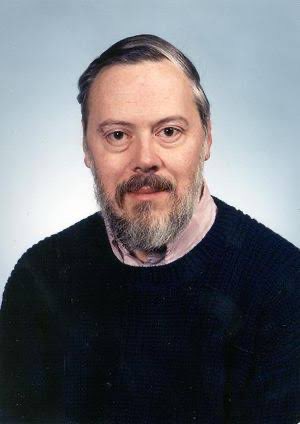
Dennis Ritchie created C in the early 1970s without Google, Stack Overflow, GitHub, or any AI ( Claude, Cursor, Codex) assistant.
- No VC funding.
- No viral launch.
- No TED talk.
- Just two engineers at Bell Labs. A terminal. And a problem to solve.
He built a language that fit in kilobytes.
50 years later, it runs everything.
Linux kernel. Windows. macOS.
Every iPhone. Every Android.
NASA’s deep space probes.
The International Space Station.
> Python borrowed from it.
> Java borrowed from it.
> JavaScript borrowed from it.
If you have ever written a single line of code in any language, you did it in Dennis Ritchie’s shadow.
He died in 2011.
The same week as Steve Jobs.
Jobs got the front pages.
Ritchie got silence.
This Legend deserves to be celebrated.
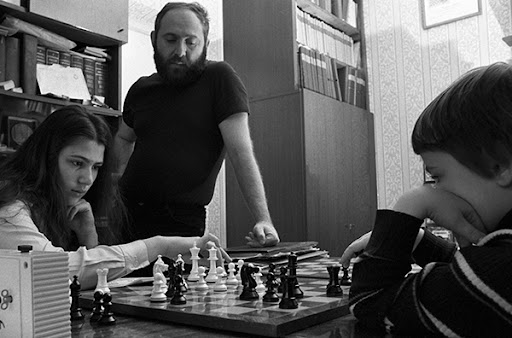
A Hungarian psychologist raised three daughters to prove that any child could become a chess grandmaster through early specialization. He succeeded. Two of them became grandmasters. One became the greatest female chess player who ever lived.
Then a sports scientist looked at the data and found something nobody wanted to hear.
His name is David Epstein. The book is called "Range."
The Polgar experiment is one of the most famous case studies in the history of deliberate practice. Laszlo Polgar wrote a book before his daughters were even born arguing that geniuses are made, not born. He homeschooled all three girls in chess from age four. By their teens, Susan, Sofia, and Judit were dominating tournaments against grown men. Judit became the youngest grandmaster in history at the time, breaking Bobby Fischer's record. The story became the gospel of early specialization. Pick a domain young, drill it hard, and you can manufacture excellence.
Epstein opens his book by telling that story honestly and then quietly demolishing the conclusion most people drew from it.
Chess works that way. Most things do not.
Here is the distinction that took him four years of research to articulate, and that almost nobody who quotes the 10,000 hour rule has ever read.
There are two kinds of environments in which humans develop expertise. Psychologists call them kind and wicked. A kind environment has clear rules, immediate feedback, and patterns that repeat reliably. Chess is the cleanest example. Every game ends with a winner and a loser. Every move is recorded. The board never changes shape. The pieces never invent new ways to move. A child who plays ten thousand games will see most of the patterns that exist in the game, and pattern recognition is exactly what chess mastery is built on.
A wicked environment is the opposite. Feedback is delayed or misleading. Rules shift. The patterns that worked yesterday may be exactly the wrong patterns to apply tomorrow. Most of the real world looks like this. Medicine is wicked. Investing is wicked. Building a company is wicked. Scientific research is wicked. Almost every job that involves a complex changing system with humans in it is wicked.
The Polgar sisters trained in the kindest environment any human can train in. Their success was real and the method was correct. The mistake was generalizing the method to fields where the underlying structure of the environment is completely different.
Epstein's research is what made the implication impossible to ignore.
He looked at the careers of elite athletes outside of chess and golf and found that the pattern was almost the inverse of what people assumed. The athletes who reached the very top of their sports were overwhelmingly people who had played multiple sports as children, specialized late, and often switched disciplines well into their teens. Roger Federer played squash, badminton, basketball, handball, tennis, table tennis, and soccer before tennis became his focus. The kids who specialized in tennis at age six and trained year-round for a decade mostly burned out, got injured, or topped out at lower levels of the sport.
The same pattern showed up everywhere he looked outside of kind environments. Inventors with the most patents had worked in multiple unrelated fields before their breakthrough work. Comic book creators with the longest careers had drawn for the most different genres before settling. Scientists who won Nobel Prizes were dramatically more likely than their peers to be serious amateur musicians, painters, sculptors, or writers.
The skill that mattered in wicked environments was not depth in one pattern. It was the ability to recognize when a pattern from one domain applied unexpectedly in another. That kind of thinking cannot be built by drilling a single subject. It can only be built by accumulating mental models from many subjects and learning to move between them.
The deeper finding is the one that should change how you think about your own career.
Specialists in wicked environments often get worse with experience, not better. Epstein cites studies of doctors, financial analysts, intelligence officers, and forecasters showing that years of experience in a narrow domain frequently produce more confident judgments without producing more accurate ones. The expert builds elaborate mental models that feel comprehensive and turn out to be increasingly disconnected from the actual structure of the problem. They stop noticing what does not fit their framework. They mistake fluency for understanding.
Generalists do better in wicked domains for a reason that sounds almost mystical until you understand the mechanism. They have less invested in any single mental model, so they abandon broken models faster. They are used to being a beginner, so they are not threatened by the discomfort of not knowing. They have seen enough different domains that they can usually find an analogy from one field that unlocks a problem in another. The technical name for this is analogical thinking, and the research on it is one of the most underrated bodies of work in cognitive science.
The single most useful sentence in the entire book is the one Epstein puts almost as a throwaway.
Match quality matters more than head start.
A person who tries six different fields in their twenties and finds the one that genuinely fits them will outperform a person who picked one field at fourteen and stuck to it on willpower alone. The lost years were not lost. They were the search process that produced the match. Every field they walked away from taught them something they later imported into the field they finally chose.
The reason this is so hard to accept is cultural, not empirical. We tell children to pick a path early. We reward the prodigy who knew at six. We treat the late bloomer as someone who failed to launch on time, when the data suggests they were running an entirely different and often more effective optimization process underneath.
The Polgar sisters were not wrong. The conclusion the world drew from them was.
If your environment is genuinely kind, specialize early and drill hard. If it is wicked, and almost every interesting human problem is, then the people who win are the ones who refused to specialize until they had seen enough to know what was actually worth specializing in.
You are not behind. You were running the right experiment all along.
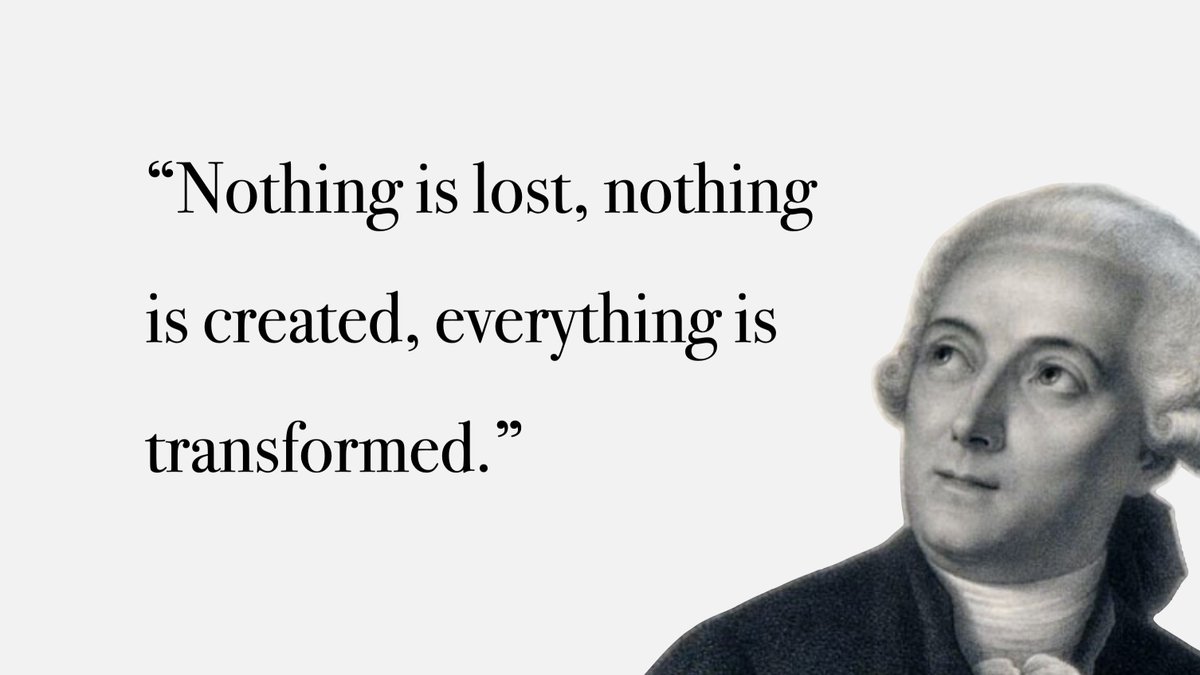
On this day in 1794 the French Republic guillotined Antoine Lavoisier. He had named oxygen, formulated the law of conservation of mass and founded modern chemistry.
Appeals were rejected with the line "the Republic has no need of scientists."
The next day Lagrange said: "It took only a moment to cause this head to fall, and a hundred years will not suffice to produce its like."
Well, it's a bummer I haven't been able to grow my YouTube channel enough to do it full time because I just got laid off after 16 years (along with a bunch of others in our IT department; we were gutted).
So, if anyone needs a remote software dev with 25 years experience in the C# .Net stack, Javascript/Jquery/Html/Sql, who likes solving problems and is a nerd with Excel, hit me up.
Bummer of a Friday, Hal.
There’s a famous Usenet story about a programmer (Mel) who refused higher level abstractions.
It was the late 1950s, and even in that era, Mel was…well today we’d call him a boomer.
Mel only wrote in raw hexadecimal. He didn’t approve of compilers, and refused to use optimizing assemblers.
"You never know where it's going to put things”, he said.
Everyone else in the company was moving on to FORTRAN, and they didn’t understand why Mel was so stubborn about using new tools. He *loved* self-modifying code.
“If a program can’t rewrite its own code”, he asked, “what good is it?”
Mel eventually left the company, and other engineers were tasked with understanding what was left.
Mel’s hand-optimized routines always beat the assemblers; but some of it looked absolutely bizarre.
One engineer took ~2 weeks to understand why there were loops with no exit condition…yet the program worked fine.
I won’t spoil all the details, you should really read it, it’s short. But it’s a fantastic piece on “what defines a real programmer?”…which is becoming increasingly relevant in this vibe-coded era.
I strive to understand computers as deeply as Mel! If we aren’t careful, we’re going to lose the “Mels” of this world to time.
That’s part of why I go so deep in my youtube videos. I hope that younger viewers are genuinely fascinated by the inner workings of our machines, instead of handing everything off to higher abstractions.
@ThatMoviePage There's a great quote from Lord of the Rings. In one night scene one of the actors asked, "Where is that light supposed to be coming from?" And one of the crew replied, "Same place as the music."
Movies aren't reality, they're something more.