@globalismslayer So what do we need to do to be included? We’re family owned. We make high end lighting. We also do historical restoration and replication.
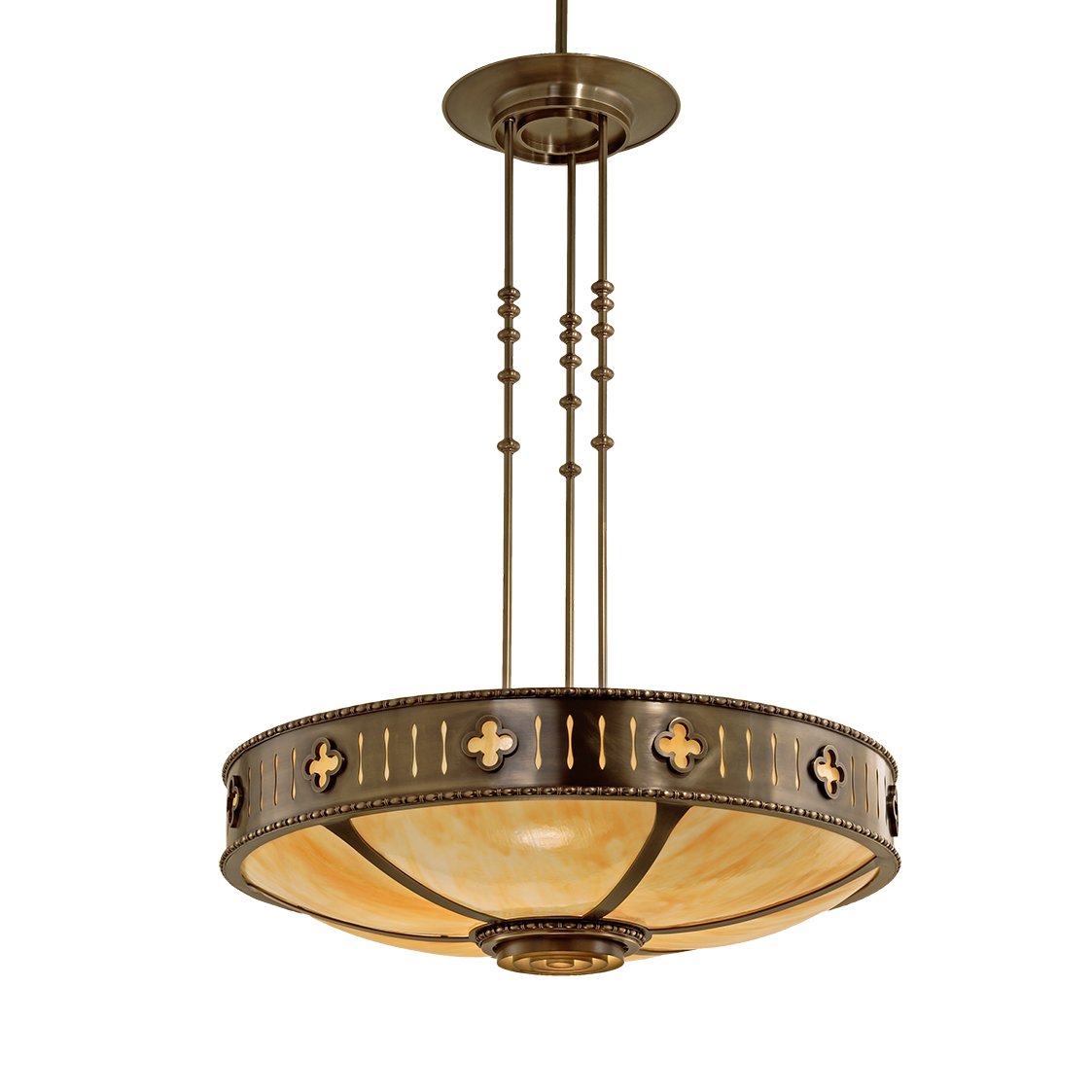
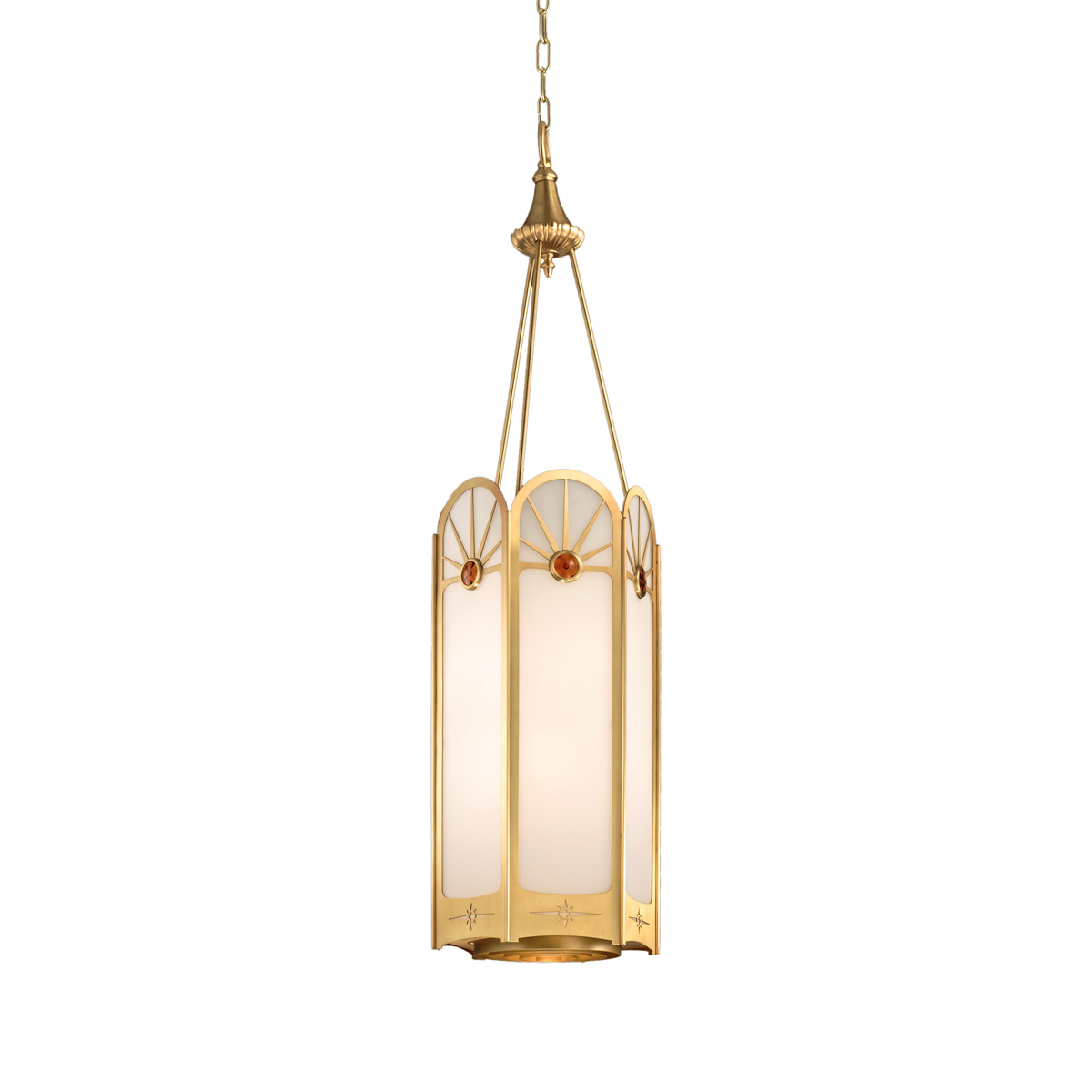
Exciting news from Crenshaw Lighting! We've just added over 70 new products to our website, expanding our most loved church and ecclesiastical collection with timeless, handcrafted fixtures perfect for houses of worship. These pieces are designed to illuminate sacred spaces beautifully and enduringly. Explore the new arrivals today and bring inspired lighting to your next project!
After watching the full episode, I actually agree with 95 % of what Dr. Jeffery laid out — sunlight and incandescent bulbs give us a big slug of deep-red + near-IR that modern environments have almost entirely lost. That part is undeniable and the data are compelling.
Where I think the conversation unintentionally paints with too broad a brush is the idea that “LEDs” themselves are the villain. They’re not.
LEDs can (and do) emit 670 nm, 810 nm, 850 nm, even 940 nm just as efficiently as they emit blue.
The reason your average Home Depot bulb doesn’t is purely an optimization choice: those wavelengths contribute almost nothing to government-regulated lumens/watt numbers, so manufacturers ruthlessly cut them to hit energy-efficiency targets and lower cost.
In other words, it’s an application problem, not a physics problem.
Incandescent bulbs gave us that healthy near-IR as a happy accident — 95 % of their energy was “waste” heat anyway. LEDs give us the opposite gift: we can now deliver exactly the wavelengths biology wants, at whatever dose we choose, while using 10–20 % of the electricity. We just… haven’t bothered to do it yet at scale.
The fix is almost comically simple: toss a couple of cheap 670 nm + 830/850 nm dies into every white LED package (or use an IR-extended phosphor) and balance the wavelengths. Power draw increase is trivial, cost at scale is pennies, and suddenly the modern world gets its missing mitochondrial sunlight back without burning the planet’s coal plants to do it.
So yes — most LEDs on the market today are biologically incomplete.
But if your takeaway from this research is “LEDs are bad and progress means going back to incandescent,” that’s the wrong conclusion.
The right conclusion is to motivate (or regulate) manufacturers to finish the job they started. The technology is already capable; it just needs to be pointed in the direction of human health instead of only energy-star stickers.
But the technology isn’t broken; the implementation is just lazy.
Housekeeping: they would both likely benefit quite a bit from talking to LED manufacturers. Sounds like they talk to plenty of lighting designers. Candidly shocking that they don’t seem know how LEDs are made. At one point around 1:30 the guest notes you can’t put diodes in series of different color temps as it would be complex and expensive- neither is true. You have likely already seen it with color tunable LEDs. You simply bed different diodes next to each other and control them independently. This is exactly how I presume this will be resolved.
Also, I am, and have been an advocate for “warm” light, I think incandescent are great and should be readily available. The problem is simply power consumption.
Best,
Patrick
P.S. I'm compelled to add-- All artificial light is inferior to sunlight. The goal is to make the artificial light as close as possible.
I’ve included a graph from a good LED. No blue peaks which address their too blue concern. NIR and IR could be supplemented with the modification I suggested above.
@hubermanlab High quality, warm color temp, high CRI LEDs exist.
We’ve been using them for years.
The medium isn’t the problem.
Like so many other things, quality is.
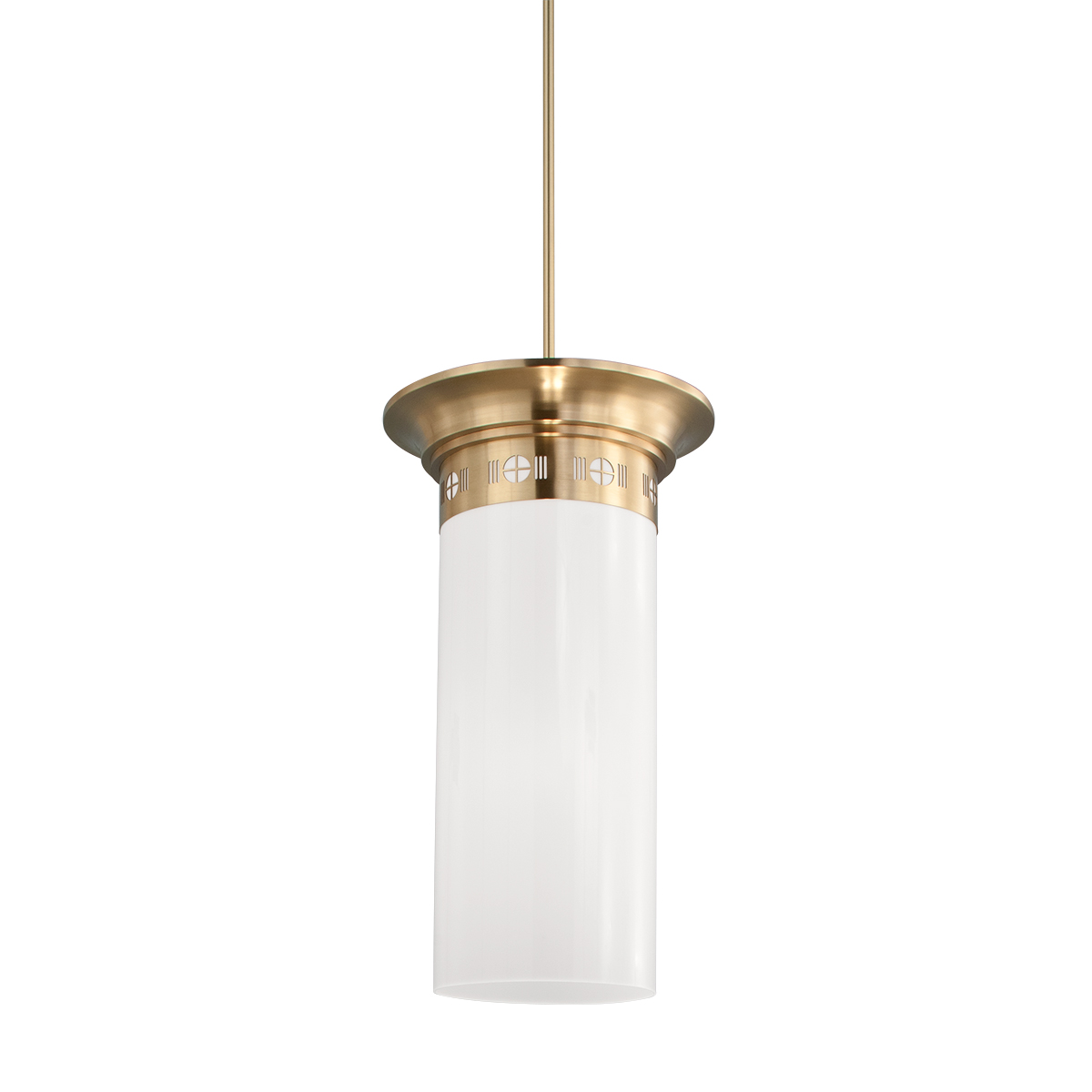
Brighten your home with the gorgeous Brass Fallwater Down Light Pendant and save $150! This deal is only here through Sunday, so don’t miss out. Just use code "FALLWATER" at checkout to bring home that warm, elegant glow you’ve been dreaming of.
https://t.co/ogtcvQZH3u
If cost is the primary factor in the goods you produce...
If you manufacture in a developing nation to bypass first-world labor and environmental laws...
Your products are inherently cheap, regardless of the price you charge.
Fair warning: If your communist knock off shop links to our website I will redirect traffic to the Chinese Embassy in the USA. Thank you for your attention to this matter.
Rooted in craftsmanship, collaboration, and innovation, makes Crenshaw Lighting a leader in custom lighting. We work closely with world-class lighting specifiers, architects, and designers to translate their visions into reality.
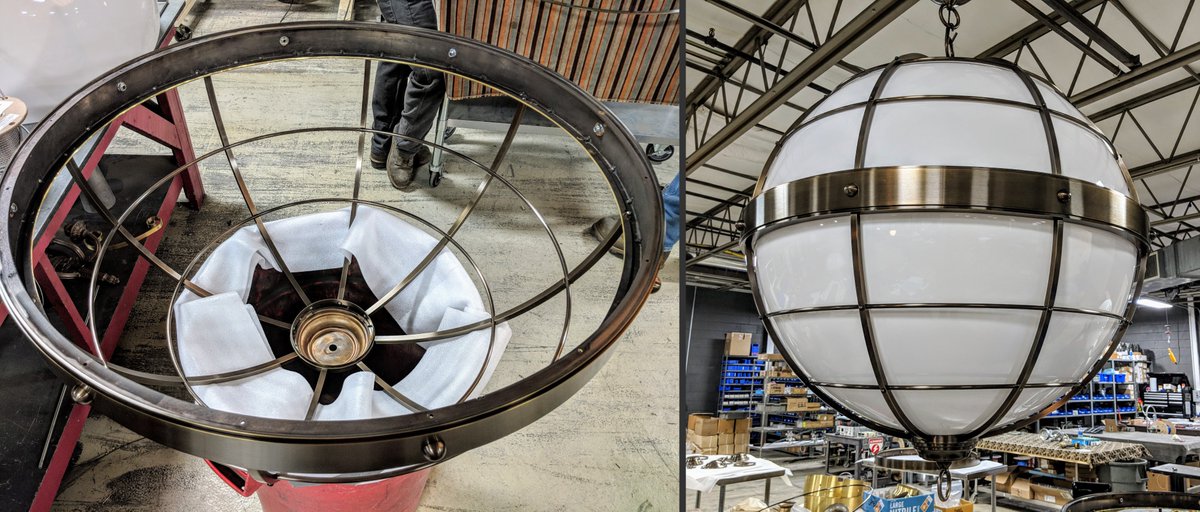
Test-fitting these brass pieces is like piecing together a 3D puzzle. You’ve got to notice how the shapes line up, to get that perfect fit, and picture the whole thing in your head before we weld it into a one-of-a-kind part.