🧵 LAND OWNERS & PROPERTY OWNERS IN ZIMBABWE — important update on subdividing, developing & titling your land! 🇿🇼🏡
The Government, through the Ministry of Lands and Rural Development together with local authorities and the Deeds Registry, has been pushing major reforms to formalise land ownership and unlock development. Here's what every landowner needs to know 👇
1️⃣ TITLE DEED COMPLIANCE — Under the Deeds Registries Regulations 2025 (SI 76 of 2025), all paper title deeds must be validated and replaced with secure, digital title deeds within a 24-month window [Global Law Experts](https://t.co/UY8CNmQ61T) . Locate your original deed and start the verification process with the Deeds Registry or a registered conveyancer now — old deeds will become unmarketable.
2️⃣ SUBDIVISION PERMIT — Before subdividing, you need a Subdivision Permit from your local authority (council/Rural District Council), as governed by the Regional, Town & Country Planning Act. This permit comes with conditions such as setting aside land for roads and public purposes, paying endowment fees, and developing roads, culverts and water installation [Studocu](https://t.co/SIY1oJxCmM) .
3️⃣ SURVEY DIAGRAM — A registered land surveyor must prepare a detailed survey diagram defining your new property boundaries [Studocu](https://t.co/SIY1oJxCmM) , which goes to the Surveyor-General for examination and approval before registration.
4️⃣ COMPLIANCE CERTIFICATE — Once development conditions are met, the local authority issues a Compliance Certificate confirming the works meet specified standards [Studocu](https://t.co/SIY1oJxCmM) — this is required before new title deeds can be issued for each subdivided portion.
5️⃣ FOR RURAL/AGRICULTURAL LAND — Holders of Offer Letters, 99-Year Leases, A1/A2 Permits and ALSA leases can use the One Stop Centre process (Ministry of Lands + Ministry of Justice) for title deed issuance. The process involves applying for land registration, the surveyor conducting deductions, the Deeds official generating the title, Registrar approval, and issuance of a Clearance Certificate confirming payment [Mondaq](https://t.co/VCFAbPOQXY) .
📋 PAPERWORK CHECKLIST: Original title deed/offer letter • ID & proof of ownership • Survey diagram (registered surveyor) • Subdivision permit application • Council approval/concept plans • Compliance certificate • Endowment fee payment proof • Conveyancer's transfer documents
⚠️ Don't delay — the 24-month digital title deed transition is already underway with the new Digital Land Administration Platform (DLAP).
💬 Need help navigating surveyors, council applications, permits or the new digital deeds process?
Get in touch with us ...
Crestwave Group
Email :
[email protected]
whatsapp +263 710 365 075
#ZimbabweRealEstate
#CrestwaveGroup
#Property Development
Follow us for more Exciting Updates.
Join Crestwave Group channel on : https://t.co/voFs4AHEBJ
Land, Law, and Timing: Securing Value on the Fringes of Zimbabwe’s Expanding Cities
Titled landowners on the fringes of Zimbabwe’s expanding cities are sitting on an asset whose value is rising precisely because it is under threat. The two forces — rising value and rising threat — are moving at the same speed. As Harare, Bulawayo, and the country’s secondary urban centres push their boundaries outward, land that was once comfortably rural finds itself reclassified, rezoned, or quietly absorbed into municipal planning schemes before its owner has had the chance to formalise a single document.
The landowners who suffer most in this process are rarely those without title. Rather, it is those who hold title but treated it as a finished achievement, instead of the opening move in a longer legal contest over how that land will ultimately be used, subdivided, and monetised.
The First Legal Step: The Certificate of No Present Interest
The starting point for any titled owner near an urbanising boundary is the Certificate of No Present Interest, commonly abbreviated CNPI. This is not a title document itself, but a clearance instrument issued under the Land Acquisition (Disposal of Rural Land) Regulations. These regulations give the Minister of Lands and Rural Resettlement a right of first refusal over rural land before an owner may lawfully dispose of, subdivide, or change the use of that land.
A person seeking to dispose of rural land is required to obtain a certificate of no present interest from the Minister of Lands, confirming that the state does not, at that moment, intend to exercise its right of first refusal over the property. Without it, subsequent transfers, subdivisions, or change-of-use applications can be challenged or stalled indefinitely, no matter how clean the underlying title deed appears.
Practically, the certificate functions as the government’s formal acknowledgment that your land, for now, is not on its list of interest. However, that acknowledgment is time-bound in effect, not in name, because circumstances on the ground move faster than any single certificate can anticipate.
This is where the anxiety of landowners near expanding cities is entirely rational rather than exaggerated. All land in Zimbabwe ultimately vests in the state, with government ministers exercising control on the President’s behalf. Agricultural land falls under the Minister of Agriculture, Lands, Water, Climate and Rural Resettlement, while communal and urban land falls under the Minister of Local Government, Rural and Urban Development.
As a city’s master plan expands, land that was once firmly agricultural can be drawn into an urban or peri-urban planning framework almost overnight. At that point, the rules governing its disposal, subdivision, and development shift along with it. An owner who delays acquiring a CNPI, or who assumes that holding title alone protects them, may find that by the time they apply, the land has already been earmarked within a local authority’s master or local plan for a designation they never intended — commercial, institutional, or state infrastructure. This can narrow or even foreclose the very options — residential, commercial, industrial, or agro-residential — that they hoped to develop.
Constitutional Context and the 2025 Clarity
There is a further complication worth understanding candidly. The Constitution itself grants the state considerable latitude over land. Section 72(2) of the Constitution empowers government to compulsorily acquire land, vesting it in the state with full title. It states that no compensation is payable apart from improvements made to the land, with............................ ( click the below link & follow CRESTWAVE GROUP WHATSAPP CHANNEL to get access to the full DETAILED article )
https://t.co/voFs4AHEBJ
Get intouch with us for Advisory Services
Crestwave Group
Email : [email protected]
+263 710 365 076
DIASPORA AND ENTREPRENEUR GUIDE: SECURING PROPERTY IN ZIMBABWE AND AVERTING THE SCAMS THAT ERODE WEALTH
Building Intergenerational Assets with Integrity, Transparency, and Legal Certainty
For Zimbabweans across the diaspora and for audacious entrepreneurs at home, real estate remains the quintessential crucible of wealth creation, capital formation, and generational legacy. Yet the very allure of land and bricks in Zimbabwe is counterbalanced by a landscape rife with opacity, jurisdictional complexity, and predatory intermediation. Distance, amplified by information asymmetry, converts opportunity into vulnerability — unless one operates through verifiable, government-sanctioned channels and a partner that functions as both fiduciary and sentinel.
### 1. PROPERTY AS THE CATALYST FOR ENTREPRENEURIAL SCALE
A title deed transcends mere ownership. In financial architecture, it metamorphoses into leverage. A registered immovable asset is accepted by banking institutions as prime collateral, thereby unlocking term loans, overdraft facilities, and supplier credit lines that are otherwise inaccessible to cash-based operators. It shifts the entrepreneur from tactical operator to strategic principal.
This is not abstract. The Deeds Registry , housed under the Ministry of Justice, Legal and Parliamentary Affairs, is the sole repository that confers indefeasible title in Zimbabwe. Entrepreneurs who secure title through this portal can approach institutions such as the Zimbabwe Revenue Authority - ZIMRA for compliance certificates and CBZ Bank, Stanbic, Ecobank for asset-backed financing, because lenders only recognize instruments validated by the Deeds Office.
Reference: Deeds Registries Act [Chapter 20:05] – Ministry of Justice
Beyond finance, titled property confers credibility in procurement. Government tenders and large corporate leases administered through TenderZim / Procurement Regulatory Authority of Zimbabwe - PRAZ routinely require proof of fixed assets. Thus, property becomes the fulcrum that converts a startup into an institution.
### 2. THE DIASPORA DILEMMA: TRANSMUTING REMITTANCES INTO PRODUCTIVE CAPITAL
The central paradox for the diaspora is this: you remit to build, but without oversight, remittances devolve into consumption. The antidote is institutionalized trust through remote verification, legal custodianship, and forensic reporting.
Execution from Afar Demands 3 Pillars:
1. Remote Video Verification – Conducted against official cadastral maps. The Surveyor-General’s Office under the Ministry of Lands provides beacon and survey diagrams that can be cross-checked.
2. Secure Power of Attorney – Executed and notarized, then lodged with a law firm registered with the Law Society of Zimbabwe to ensure enforceability.
3. Transparent Asset Reporting – Rental income, maintenance, and municipal rates must be reconcilable with City of Harare or relevant local authority billing systems.
When these mechanisms converge, your hard-earned foreign currency ceases to be ephemeral support and becomes income-generating, appreciating infrastructure back home.
### 3. THE QUADRIVIUM OF FRAUD: FOUR SCAMS THAT DECIMATE WEALTH
The Zimbabwean property market is not inherently hostile. It is, however, unforgiving to the uninformed. Vigilance must be surgical.
1. Forged Deeds
Sophisticated forgeries circulate with counterfeit stamps. Authenticity can only be confirmed via a Deeds Search at the Deeds Registry in Harare or Bulawayo, or through a registered conveyancer. No third-party “certificate” substitutes this.
2. Double Allocations on Peri-Urban and State Land
Peri-urban farms and resettlement schemes are ......[ CLICK THE CHANNEL LINK BELOW AND GET ACCESS TO THE FULL ARTICLE ]
Crestwave Group
Email : [email protected]
+263 710 365 076
Get access to more exciting articles in Crestwave Group whatsapp channel :
https://t.co/WvHsHDasBg…
Follow us @Crestwavegroup for more Exciting updates
Foreign Property Ownership in Zimbabwe and the Role of Crestwave Group
Zimbabwe’s property landscape is often misunderstood by foreign investors. Historical land reform has created a perception of risk and uncertainty. Yet, when viewed through the lens of the Constitution and current investment policy, the legal framework is considerably more open than many assume.
The starting point is Section 71 of the Constitution of Zimbabwe, which guarantees every person the right to acquire, hold, occupy, use, transfer, lease, or dispose of property anywhere in the country. This right applies individually or collectively. However, it is qualified by Section 72, which specifically addresses agricultural land. It is within this provision that the principal restriction for foreign nationals resides. Zimbabwe’s land tenure policies continue to prioritize local ownership of agricultural land, and foreign nationals are generally restricted from acquiring it.
Beyond agriculture, the environment for foreign investment becomes significantly more favorable. Foreign nationals are permitted to purchase freehold residential property, including houses, apartments, and vacant land within Zimbabwe’s urban centers. For larger institutional investments, the Zimbabwe Investment and Development Agency, ZIDA, provides a clear mandate. ZIDA affirms that foreign investors may invest and reinvest profits in any sector of the economy under the same conditions as Zimbabweans, with the exception of a small number of reserved sectors.
While the law is permissive, compliance remains critical. Significant acquisitions require exchange control clearance from the Reserve Bank of Zimbabwe. Additionally, where land use has any connection to agriculture, approval from the Ministry of Lands, Agriculture, Fisheries, Water, and Rural Resettlement is a prudent and often necessary step.
This is where precision matters most. The law may provide the architecture for ownership, but execution is where opportunities are either secured or lost. It is precisely this gap between legal possibility and practical complexity that Crestwave Group was built to address.
Crestwave Group functions as the intermediary between opportunity and ownership. Our work begins with exhaustive due diligence. We verify the chain of title at the Deeds Registry, confirm rates clearance with local authorities, and screen for double allocations and administrative irregularities that can undermine otherwise sound transactions. We maintain direct relationships with registered conveyancers and licensed surveyors to ensure that every document meets the exacting standards required by the Registrar of Deeds.
We also understand the value of time. Through pre-emptive document preparation and early engagement with ZIMRA, we are able to fast-track processes where legitimate opportunities exist, without ever compromising legality.
For investors seeking more than a single transaction, we provide strategic investment packaging. This includes structuring cluster developments, fuel-station leaseholds, mining-adjacent land interests, and inherited property partitions into vehicles designed for generational wealth, not short-term speculation.
In a market that rewards diligence and penalizes oversight, Crestwave Group stands as a trusted guide.
Get access to verified, title-deeded investment opportunities with Crestwave Group.
Crestwave Group — Property. Mining. Investment Advisory. Built on principle, built to last.
Crestwave Group
Email : [email protected]
+263 710 365 076
Get access to more exciting articles in Crestwave Group whatsapp channel :
https://t.co/voFs4AHEBJ
Get access to verified investment opportunities: residential, commercial, and industrial properties, farms, mines, construction, mining & development joint ventures, plus end-to-end advisory services.
TITLED LAND
Follow us @Crestwavegroup for more Exciting updates
The Kwangu-Ngakwami Presidential Title Deeds Programme: A New Framework for Land Use in Zimbabwe
_A Crestwave Group Essay_
Zimbabwe has undertaken a fundamental restructuring of land tenure through the Kwangu-Ngakwami Presidential Title Deeds Programme, converting Offer Letters, A1 permits, and 99-year leases into securitised, bankable, transferable title deeds. This right is not administrative generosity but constitutional entitlement: Sections 289, 293, and 295 of the Constitution of Zimbabwe guarantee citizens the right to acquire, hold, occupy, use, and transfer agricultural land. Over 7,700 surveyed farms have already moved through the programme's unified One-Stop Shop model.
The core benefit is capital liberation. A bankable title deed allows land to function as loan collateral, with institutions such as AFC, CBZ, POSB, FBC, and ZB Bank now extending concessionary mortgage finance at rates near 7.5%. This shifts land from a symbol of tenure into an active financial instrument. That said, Section 72 of the Constitution keeps ultimate title vested in the State, and the Zimbabwe Land Commission Act empowers the Commission, under Section 296, to conduct periodic land audits to prevent multiple allocations and unproductive holdings. Transferability, accordingly, remains restricted to indigenous Zimbabweans and subject to state approval.
For peri-urban farms, government is encouraging a deliberate pivot from primary agriculture toward agro-industrial use — processing hubs, millers, stockfeed production, and cold-chain storage — reinforced by Statutory Instrument 87 of 2025, which mandates that local processors source at least 40% of raw materials domestically. This transition remains regulated: any change from agricultural to commercial use requires formal approval through the Local Planning Authority under the Regional, Town and Country Planning Act [Chapter 29:12], failing which penalties and zoning violations apply.
Residential expansion is governed with even greater restraint, guided by the 50-Year Land-Use Masterplan. Horizontal sprawl onto productive farmland is discouraged in favour of vertical, mixed-use development. Critically, no farm owner, middleman, or traditional leader holds authority to informally subdivide agricultural land into residential stands — that power rests exclusively with the Ministry of Local Government and Public Works, working through accredited developers who meet town-planning compliance standards.
Three zoned pathways now define the programme's architecture: agro-industrial development under the Ministry of Lands and Agriculture, commercial development under Local Planning Authorities and municipal councils, and residential development under the Ministry of Local Government and Public Works. Each carries its own approving authority, its own compliance burden, and its own opportunity.
The Kwangu-Ngakwami Programme is, in the end, more than paperwork. It is the legal re-engineering of land as bankable capital — an attempt to reconcile the irreversibility of land reform with the discipline of formal finance.
Kwangu - Ngakwami Programme Official Website : https://t.co/nXAsGVMVFs
If you are a Zimbabwean or investor and have not yet followed the Crestwave Group WhatsApp channel or our Crestwave Group X @Crestwavegroup account, you are missing out on exciting updates, valuable insights, and the latest real estate news.
Crestwave Group provides advisory support to titled landowners navigating this new framework. If you are considering commercial, industrial, or residential development, we can guide you through the legal and regulatory steps from title confirmation to approved use.
Crestwave Group
Email : [email protected]
+263 710 365 076
Crestwave Group whatsapp channel : https://t.co/voFs4AIcrh
Crestwave Group — Property. Mining. Investment Advisory. Built on principle, built to last.
Should Married Couples Register Property in Both Names, or Just One?
_A Crestwave Group Essay_
For many couples in Zimbabwe, deciding whose name should appear on a title deed feels like a simple administrative choice. In reality, it is a legal question that goes to the heart of how marriage treats property in this country — and it is a question that most couples answer incorrectly.
Zimbabwe’s position is set out in the Married Persons Property Act [Chapter 5:12] . Under this Act, every marriage contracted after 1 January 1929 is deemed to be out of community of property unless the couple signed a notarial deed before the wedding to choose otherwise. The phrase "out of community of property" has one clear consequence: there is no automatic joint ownership between spouses. The law recognises only the person whose name appears on the title deed as the owner. That person may sell, mortgage, or bequeath the property without consulting the other spouse. Marriage itself confers no entitlement to property registered in your partner’s name. The only way to create community of property, where assets are owned equally, is to execute and register a notarial deed before marriage. Without that step, the default regime applies.
This is where many families become vulnerable. A common assumption is that listing a spouse as "next of kin" on society or estate documents, or having them sign as a witness to an agreement of sale, is enough to secure rights. It is not. In property law, only registration matters. The spouse whose name appears on the title deed holds real rights and can deal with the property. The spouse whose name is absent holds, at best, personal rights that can be enforced against the other spouse, but not against the property itself or against third parties. If a couple later decides that ownership should be shared, an informal understanding is insufficient. The law requires a formal deed of donation followed by a registered transfer to bring the other spouse onto title.
Registering both spouses on the title deed provides meaningful protection at three critical moments. First, on sale or mortgage, both signatures are required. This prevents one spouse from disposing of or encumbering the property without the other’s knowledge. Second, on divorce, the Matrimonial Causes Act [Chapter 5:13] gives courts the power to divide matrimonial property, and Zimbabwean courts have been willing to award up to half to a spouse regardless of direct financial contribution. Joint title removes the need to litigate that question, because ownership is already clear. Third, on death, joint title allows ownership to pass directly to the surviving spouse by right of survivorship. Without it, the property falls into the deceased estate and is administered under the Deceased Estates Succession Act, a process that can take months and often leads to disputes among heirs.
Given this framework, couples who want to protect their family assets should take deliberate steps. First, they should confirm which marital property regime applies to them before making any purchase. Second, they should ensure both names appear on the title deed from the outset, not just on estate agent forms or as witnesses. Third, if sole title already exists and the intention is to share ownership, the transfer must be done formally through a deed of donation. Fourth, a valid will — ideally a joint will — should accompany the property plan to avoid reliance on intestate succession. Finally, for couples with multiple properties, a family trust registered at the Deeds Registry can offer a more flexible way to hold assets for both spouses.
In Zimbabwe, property security is not created at the altar. It is created at the Deeds Registry. The difference between a home that provides stability and one that becomes a source of dispute often comes down to a single line on a title deed: whose name is there.
Crestwave Group Advisory
Email : [email protected]
From Title Deed to Portfolio: Unlocking Generational Wealth in Zimbabwe
For landowners with larger holdings in peri-urban areas, growth points, and along major corridors, the title deed is not the conclusion. It is the foundation. With proper planning, one stand can be transformed into a portfolio of assets across five pathways: residential, commercial, industrial, agro-residential, and mining. Each pathway turns dormant land into income, equity, and a legacy.
Residential Development :
Instead of leaving one indivisible house to heirs, a landowner can distribute several titled units, reducing the risk of family disputes. This is how many of Zimbabwe’s established property families built and preserved wealth.
Commercial Development: Creating Community Infrastructure
Land on arterial roads and near schools, hospitals, and expanding suburbs holds strong commercial potential. Here, the focus shifts from shelter to services.
A single stand can support a shopping center, office park, medical facility, school, or mixed-use development. Commercial property typically appreciates faster and attracts institutional interest due to its location and utility. It also positions the landowner as a developer of community assets — creating jobs and essential services while building long-term value.
Industrial Development: Growth Along Key Corridors
As manufacturing and logistics move out of city centers, demand for serviced industrial land is rising. Landowners with 1 hectare or more along the Harare-Bulawayo, Harare-Masvingo, and Harare-Mutare corridors are well positioned to benefit.
Large holdings can be subdivided into stands for warehouses, workshops, and logistics hubs. Development can be phased over time, and proximity to highways, rail, and power increases value. Industrial use offers scale and stability, making it a strong option for peri-urban titled land.
Agro-Residential Development: Farming and Housing Together
On the urban fringe, landowners no longer need to choose between agriculture and housing. Agro-residential estates combine both.
Residential clusters are paired with working plots for orchards, vegetables, poultry, or livestock. This preserves agricultural value while unlocking density and formal title. The model appeals to the diaspora and professionals seeking lifestyle, food security, and investment. It also diversifies income through property and produce. Landowners with 2 hectares or more can develop gated, serviced agro-estates to meet this demand.
Mining-Linked Development: Value Beneath the Surface
For land in mineral belts, there is additional potential. Zimbabwean law separates surface rights from mineral rights. This allows landowners to engage in mining partnerships while retaining the land for housing, farming, or commerce.
With proper legal and technical advice, surface use and mineral activity can coexist. For titled land with geological potential, this creates parallel wealth without selling the asset.
Conclusion
What unites these pathways is one principle: undeveloped titled land is Zimbabwe’s most underused form of generational capital. The regulatory requirements differ, but the outcome is the same. One deed becomes multiple assets that can be transferred, sold, or inherited.
Land that creates a legacy does so through guidance, proper documentation, and the right partnerships.
Crestwave Group works with titled landowners across Zimbabwe to navigate this process. We connect you with reputable developers and investors, and guide the process from title confirmation to compliance.
If your land could do more — as housing, commerce, industry, an agro-estate, or a mining project — you hold the same foundation thousands have used to build lasting wealth.
If your land has a story still waiting to be built, we would welcome the opportunity to walk that road with you.
Crestwave Group — Property. Mining. Investment Advisory. Built on principle, built to last.
Email : [email protected]
From Title Deed to Legacy: Why Zimbabwe's Titled Landowners Are Turning to Cluster Development
Crestwave Group Advisory
There is a particular kind of wealth that sits quietly on a single stand of land — a title deed folded away in a drawer, representing decades of sacrifice, a single dwelling occupying a fraction of what the land could bear, and a story that, for most families, ends there.
But across Harare's low-density suburbs, in Zimbabwe's growth points, and along the corridors radiating out from the capital, a different story is being written by a new generation of titled landowners. They are looking at that same deed not as a monument to what was built, but as the raw material for what could still be built — and, increasingly, they are choosing cluster development as the vehicle to get there.
This is not a fad. It is a structural shift in how serious money moves through Zimbabwean real estate, and it is reshaping the fortunes of property owners who understand that a title deed is not merely proof of ownership — it is dormant capital.
The Quiet Emergence of a Multi-Million-Dollar Portfolio Class
Ask any seasoned observer of Harare's property scene how the city's most notable moguls built their fortunes, and a pattern emerges with striking consistency: very few of them made their money by holding a single stand for a single house.
The real money — the kind that compounds across a lifetime and outlives its original owner — has been made by those who converted large, single-title stands into multiple, sellable, income-generating units through cluster and sectional title development.
Zimbabwe's densification agenda, actively pursued by Harare and other urban councils, has made this shift not just possible but favoured by policy. Where a single title deed once supported one house and, at best, a cottage, rezoning to multi-family status now allows that same piece of land to carry a cluster of townhouses or a sectional title scheme — each unit individually titled, individually sellable, and individually capable of producing rental income.
A single well-located stand, developed correctly, can be transformed from one asset into ten, twenty, or more — each one a discrete, transferable, mortgageable piece of property in its own right.
This is why cluster development has become the preferred instrument of Zimbabwe's property moguls. It does not merely preserve wealth — it multiplies it, and it does so in a form that can be divided, gifted, sold, or passed down without the family disputes and forced liquidations that so often accompany a single indivisible property.
A father who converts his stand into eight cluster units can leave four children four units each, rather than one impossible-to-divide house that becomes the seed of decades of litigation. In this sense, cluster development is not only an investment strategy — it is an inheritance strategy, engineered to outlive the person who initiated it and to give the next generation something they can build on rather than fight over.
Compare this to the alternatives available to the ordinary Zimbabwean investor — money market instruments eroded by inflation, informal trading ventures with no institutional backbone, or foreign currency held outside the country and outside the reach of local wealth creation. None of these carry title. None of these can be seen, walked upon, insured, leased, and left to one's children with a deed bearing their name.
Titled cluster development stands apart because it converts an appreciating physical asset into a diversified income stream, while remaining fundamentally rooted in the one form of wealth that has never gone out of fashion in Zimbabwe: land.
The Documentation Pathway
~~Get access to the full article in the Crestwave Group Channel : Link attached below : https://t.co/voFs4AHEBJ
Crestwave Group — Property. Mining. Investment Advisory. Built on principle, built to last.
Email : [email protected]
Fuelling the Future: A Guide to Investing in Zimbabwe’s Service Station Industry — Leasing versus Owning
Introduction
Zimbabwe’s fuel retail sector remains one of the most resilient and capital-attractive segments of the national economy. A growing vehicle fleet, an expanding mining and agricultural base, and constant demand from transport and logistics operators create steady cash flow and long-term asset value. Yet it is also one of the most tightly regulated industries in the country, governed by a complex web of statutes, licences, and inspection regimes designed to protect consumers, the environment, and the integrity of the national fuel supply chain.
For a prospective investor — whether a first-time entrepreneur mobilizing working capital or an established group like Crestwave seeking territorial expansion — the critical question is not simply “should I enter fuel retail?” It is more precise: “should I lease an existing site and operate it, or should I build or purchase a station outright?” This essay outlines the full documentation and regulatory pathway required to enter the industry, then weighs the comparative merits and demerits of leasing against ownership. The analysis pays particular attention to why leasing is often the more prudent route for entrepreneurs operating with constrained capital.
Part One: The Regulatory and Documentary Pathway
Operating a fuel service station in Zimbabwe — whether leased or owned — requires clearing several regulatory gates before a single litre of fuel can be legally sold. Failure to comply with any single requirement exposes an operator to closure, fines, or prosecution under the Petroleum Act [Chapter 13:22].
1. Company Registration
The foundational step is incorporating a Private Limited Company through the Zimbabwe Companies and Intellectual Property Commission, ZimCIPC. This generates the Certificate of Incorporation together with CR2, CR6, and CR14 forms detailing directors, shareholders, and the registered office. Certified copies of these documents are later required by all regulators.
2. Tax and Banking Compliance
A corporate bank account must be opened, followed by registration with the Zimbabwe Revenue Authority, ZIMRA, for a tax clearance certificate and VAT registration. Fuel retail turnover routinely exceeds the VAT threshold, making this registration mandatory rather than optional.
3. Site Documentation — Title Deed or Lease Agreement
This document determines the entire trajectory of the venture. Applicants must provide either a certified copy of the Title Deed proving freehold ownership, or a certified copy of a Lease Agreement proving the right to occupy and operate from the premises. For licensing purposes, the Zimbabwe Energy Regulatory Authority, ZERA, treats these as functionally interchangeable. A leased site is therefore a perfectly legitimate basis for building a fuel retail business.
4. Zimbabwe Energy Regulatory Authority Licensing
ZERA, established under the Energy Regulatory Authority Act [Chapter 13:23], is the principal sector regulator. Core requirements include:
Completion of the ER2 application form.
Submission of company registration documents, certified IDs of directors, and the title deed or lease agreement.
A Petroleum Retail Licence, which is site-specific and non-transferable.
Compliance with technical standards for fuel dispensing and storage, including calibrated pumps and installations meeting ZWS 970 and ZWS 913 Part 2 standards.
Payment of the annual licence fee. For 2026 this is approximately ............................................
JOIN THE CRESTWAVE GROUP WHATSAPP CHANNEL BELOW AND GET ACCESS TO THE FULL ARTICLE
Follow the Crestwave Group channel on WhatsApp: https://t.co/voFs4AHEBJ
Are you looking for Leasing service station sites / commercial properties to build your own fuel stations ?
Contact
Crestwave Group
Email : [email protected]
+263 710 365 076
Investing in Zimbabwe: Navigating the Legal and Institutional Pathways to Mining, Agriculture, and Industrial Development
Introduction
Zimbabwe’s economic trajectory is anchored by the government’s declared ambition to become a Prosperous Upper Middle Income Nation by 2030. This vision has placed the country’s investment architecture under sustained reform. For any investor, whether domestic or foreign, contemplating entry into mining, agriculture, or industrial production, the entry point is no longer a fragmented collection of ministries. Instead, Zimbabwe now operates within an increasingly centralized legal and institutional framework built around four core bodies: the Zimbabwe Investment and Development Agency (ZIDA), the Ministry of Mines and Mining Development, the Ministry of Lands, Agriculture, Fisheries, Water and Rural Development, and the Ministry of Industry and Commerce. Understanding how these institutions interact, and what the underlying statutes actually permit an investor to own, is not optional due diligence — it is essential before any capital is committed.
1. The Gateway: ZIDA and the One-Stop Investment Framework
The Zimbabwe Investment and Development Agency Act, Chapter 14:38, represents the most significant structural reform to date. It consolidated three previously separate authorities — the Zimbabwe Investment Authority, the Zimbabwe Special Economic Zones Authority, and the Joint Ventures Unit — into a single agency. ZIDA now operates a One Stop Investment Services Centre that integrates services ranging from investment analysis and company registration to tax registration and clearance, licensing, utility connections, and post-establishment aftercare. This marks a deliberate departure from the older model, where investors were required to navigate multiple departments scattered across different ministries.
Legally, all investments must be established in accordance with Zimbabwean law. Foreign investors may invest in and reinvest profits from any sector of the economy under the same conditions applicable to Zimbabwean nationals, except in sectors explicitly reserved for local ownership. An investor may also appoint qualified individuals, regardless of nationality, as senior managers, technical experts, or advisors. This flexibility is critical for mining and industrial projects that depend heavily on foreign technical expertise.
Formal licensing through ZIDA is not compulsory for every business. However, it becomes mandatory where the proposed activity falls within a sector reserved for Zimbabwean nationals. In such cases, investors must obtain specific approval from ZIDA and the minister responsible for indigenisation. For investors proceeding through the formal General Investment Licence route, the process currently requires a non-refundable application fee of USD 577.50, a completed ZIDA 1 form, company registration documents, and a list of shareholders and directors. Upon approval, a licence fee of USD 4,620 is payable.
Crucially, the investment licence is not a mere formality. It serves as the key that unlocks downstream permits: residence and work permits, mining permits, power generation permits, land acquisition approvals, and equipment importation clearances. Many of these permits are processed by other agencies and ministries co-located within ZIDA’s one-stop centre, which reduces bureaucratic duplication.
A time-sensitive protection deserves special attention from foreign investors: investments established after the ZIDA Act came into force must be registered with the Agency within 90 days to benefit from bilateral investment treaty protection. Failure to register within this period is ..............[ The full article is in the Crestwave Group whatsapp channel below ]
Follow the Crestwave Group channel on WhatsApp: https://t.co/voFs4AHEBJ
Get in touch with us for assistance and guidance
Crestwave Group
Email : [email protected]
+263 710 365 076
Mining on Titled Land Without Consent Is Unlawful in Zimbabwe: What Landowners Must Know :
Holding title deeds to a farm in Zimbabwe gives you legal ownership of the surface — your homestead, fields, dams, and every structure you have built. What title deeds do not give you, and do not give anyone else, is an automatic right to the minerals beneath that surface. Under the Mines and Minerals Act [Chapter 21:05], the dominium in all minerals, mineral oils, and natural gas is vested in the State, regardless of who owns the land above them. This single principle is the foundation of everything that follows: any person who enters your titled land to prospect, peg, or mine without following the law, or without your required consent, is acting unlawfully.
Surface Rights and Mineral Rights Are Legally Separate
Because land ownership and mineral rights sit in different legal categories, owning the surface does not entitle you — or anyone else — to start digging. Before any prospecting or mining may lawfully begin, a person must be registered with the Ministry of Mines and Mining Development and hold the correct title: an ordinary Prospecting Licence first, followed by pegging and registration of a mining location, and ultimately a Mining Lease or Special Grant if the deposit proves commercially viable. This pathway applies to every permanent resident of Zimbabwe over the age of 18, and it applies whether the land in question is titled private land, communal land, or State land. Mining without these titles is illegal mining outright; mining on someone else’s titled land without their consent compounds that illegality.
Your Consent as a Landowner Matters
Section 31 of the Mines and Minerals Act is explicit that no one may exercise prospecting or mining rights on private land except with the written consent of the owner or an authorised representative. This is reinforced by specific physical buffers: prospecting and mining activity may not take place within a set distance of a principal homestead — whether already built or under construction — or of registered homestead sites, farm worker housing, or other permanent improvements above a prescribed value. Land that is under cultivation or prepared for cultivation enjoys similar protection. A miner who ignores these boundaries is not exercising a lawful right; they are committing an unlawful intrusion, regardless of what licence they may hold elsewhere on your property.
Industry legal guidance on the Act notes a further layer of protection specifically for smaller holdings: where private land is under 100 hectares, the written consent of the owner or occupier is required before any prospecting right may be exercised on it at all, not merely near the homestead. This gives smallholder and peri-urban landowners a stronger starting position than the general homestead-and-cultivation buffers alone would suggest — though the underlying Act does not draw as sharp a line by hectarage as some summaries imply, and any specific dispute is best tested against the exact wording of Section 31 and confirmed with a mining commissioner or legal practitioner.
Even a Valid Mining Lease Has Limits
Holding a Mining Lease does not give a miner unlimited licence over your surface. The Act’s homestead, water source, and cultivated-land protections continue to apply, and a miner who damages your home, contaminates your water, or destroys cultivated land in the course of otherwise lawful mining can still be held accountable for that harm. Subsurface rights do not override your basic right to live and farm undisturbed on the surface.
The Personal-Use Exemption Is Narrow
Zimbabwean mining law allows a landowner to ---.....................[ Click the below Link and Get access to the full article in detail ]
Follow the Crestwave Group channel on WhatsApp: https://t.co/voFs4AHEBJ
Crestwave Group
Email : [email protected]
+263 710 365 076
#Follow us for more exciting updates
CRESTWAVE GROUP | STRATEGIC PARTNERSHIP ANNOUNCEMENT
Service Station Acquisitions & Bulk Fuel Supply — Zimbabwe, 2026
To Zimbabwe’s business community — landowners, entrepreneurs, logistics operators, and infrastructure holders — this is for you.
Crestwave Group is expanding with intent. Through our fully licensed and compliant sister company in the fuel sector, we are executing a structured, nationwide expansion. We are not testing the market. We are already operating in it.
With two active, high-visibility service station sites running in Harare, the operational foundation is set. Now we scale.
This is a formal call for serious engagement.
Service Station Acquisitions — Lease, Rent, or Partnership
If you own a service station — operational, temporarily dormant, or sitting on underutilized land with infrastructure intact — we need to speak.
Crestwave Group is acquiring sites to lease or rent as we expand our national footprint. We structure long-term leases, management agreements, and partnership models that protect your ownership and turn your asset into revenue.
Dormant infrastructure is not a problem. Idle stations drain capital every month they sit unused. We hold the licenses, the operational systems, and the fuel supply chain to activate underperforming assets and convert them into profitable sites. The terms are fair. The asset remains yours.
If you hold land suitable for fuel retail development, the same invitation stands. The conversation costs you nothing. The opportunity can be substantial.
Bulk Fuel Supply — Nationwide, Compliant, Consistent
Our sister company is fully registered, fully documented, and authorized to supply fuel in every province in Zimbabwe. This is not a plan. It is our current reality.
We already service logistics companies, bus and transport operators, mining houses, commercial farmers, and development contractors. These are structured, long-term supply relationships built on reliability, documentation, and full regulatory compliance.
Whether you require diesel, petrol, or specialized bulk fuel delivered directly to your depot, farm, mine site, or construction project — we deliver consistently, legally, and at scale. Harare is our base. Zimbabwe is our territory.
In a market where fuel sourcing is often unpredictable and undocumented, we offer what operators actually need: a compliant partner you can contract with and depend on.
Who We Engage With
We are not soliciting casual enquiries. We are seeking principals only. Station owners with clear title. Landowners with viable sites. Fleet managers with consistent fuel demand. Procurement officers who understand the cost of non-compliance.
If that is you, the next step is direct. Share your details. Outline your position. We will respond with substance, not promises.
Why This Moment Matters
Zimbabwe’s fuel and logistics sector is at an inflection point. Infrastructure gaps persist. Compliant operators are scarce relative to demand. The window for legally sound, long-term partnerships is open now.
Crestwave Group is building for durability, not quick turnover. We identify the right partners, structure the right agreements, and create operations that generate value for years.
If you own a station, hold land, run a fleet, or manage significant fuel demand — and you’ve been looking for a partner with credibility, documentation, and a proven operational record — this is your moment to engage.
Join the official Crestwave Group channel on WhatsApp for the complete article posted in detail, plus mining updates, claim listings, and compliance alerts you won’t get on X: https://t.co/voFs4AHEBJ
Contact
Crestwave Group :
Email : [email protected]
+263 710 365 076
" Your vision , our mission. "
@LCNsalesteam
#Land & Capital Nexus
#Crestwave Group
How to Mine Legally in Zimbabwe in 2026 — Everything You Need to Know
Zimbabwe’s mining sector isn’t just an industry. It’s the foundation of the country’s export economy. The sector accounts for over 70% of national export earnings and employs hundreds of thousands of Zimbabweans directly and indirectly. Gold, platinum, chrome, lithium, and diamonds are driving the current momentum.
But here’s the reality investors miss: capital alone does not open a mine in Zimbabwe. Compliance does. The law is detailed, layered, and completely unforgiving to anyone who tries to cut corners.
The Legal Foundation You’re Operating Under
All mining activity in Zimbabwe sits on the Mines and Minerals Act [Chapter 21:05]. This Act sets the rules for prospecting rights, mineral claims, and operational licensing. For gold and silver, the Precious Metals Act [Chapter 37:03] dictates how they must be traded and refined. Before you break ground, the Environmental Management Act [Chapter 20:27] must be satisfied — EMA compliance is not optional, it’s a prerequisite and criminal liability applies if you ignore it. Large-scale operators must also structure around the Indigenisation and Economic Empowerment Act for local ownership thresholds.
The Ministry of Mines and Mining Development and the Mining Affairs Board are the two state organs with authority over all mineral wealth. Every license, permit, and approval flows through them.
Securing Land and Mineral Rights the Right Way
The process starts with rights, not machinery. First, apply for a Prospecting License at the Provincial Mining Director’s office. This authorizes exploration for two years and is renewable. For large-scale exploration across defined corridors, you need an Exclusive Prospecting Order from the Mining Affairs Board.
Once a viable deposit is identified, you must peg the ground and formally register the claim at the Mines and Minerals office. Registration is not a formality. It’s what grants you exclusive legal rights to that area. The Certificate of Registration, issued by the Mining Commissioner after fees are paid, is what transforms a discovery into a legally protected asset. Leave a claim unregistered and anyone can legally peg it out from under you.
Operational Permits Before Any Ground Is Disturbed
No soil should be moved until operational permits are in place. The Environmental Impact Assessment Certificate from EMA is mandatory. This takes 3-6 months because it requires public consultation, technical assessments, and credible environmental mitigation plus rehabilitation plans. Without an EIA, no mining license will be issued.
For large-scale operations, you must secure a Mining Lease through the Mining Affairs Board. These run for 50 years and are renewable, but you’ll need to prove capital adequacy, submit a technical operations plan, and lodge a rehabilitation bond. Certain categories like alluvial diamond operations require a Special Grant instead of a standard lease. Finally, the Provincial Mining Director issues a Working Permit that confirms your workings and site safety plans are approved for production.
Business Registration and Fiscal Compliance
The operating company must be properly registered through the Zimbabwe Companies and Deeds Office with a Certificate of Incorporation, CR6, and CR14 on file. With ZIMRA, you must register for tax clearance and pay mining royalties monthly by the 10th — 1% for platinum up to 5% for gold and diamonds.
Gold producers have one non-negotiable rule: all gold must be sold through a Fidelity Printers and Refiners account. Selling outside this channel is a criminal offense ............................................
Join the official Crestwave Group channel on WhatsApp for the complete article posted in detail, plus mining updates, claim listings, and compliance alerts you won’t get on X: https://t.co/voFs4AHEBJ
Crestwave Group :
Email : [email protected]
+263 710 365 076
The Certificate of No Present Interest: The Document That Can Make or Break Your Farm Deal
Most Zimbabwean landowners don’t know this document exists. Yet without it, you cannot legally sell your farm. In fact, the State can move to acquire it even while you’re holding the title deed.
That document is the Certificate of No Present Interest, or CNPI.
What It Is and Why It Matters
The CNPI is an official document issued by the Ministry of Lands, Agriculture, Fisheries, Water and Rural Development. It confirms that the Government of Zimbabwe has been formally offered your rural or agricultural land and has declined to acquire it. Only after the CNPI is issued can you legally sell to a third party.
The legal basis sits in the Land Acquisition Act [Chapter 20:10] and the Land Acquisition (Disposal of Rural Land) Regulations, 1999. Under these laws, the Minister of Lands holds the right of first refusal on all rural land disposals. Translation: before you sell to family, investors, developers, or joint-venture partners, the Government must first be offered the land. The CNPI is the State’s written response: “We are not interested. You may proceed.”
The Constitutional Power Behind It
This isn’t just paperwork. Section 72(2) of the Constitution of Zimbabwe, 2013 empowers Government to compulsorily acquire land, with title vesting in the State and compensation payable only for improvements, not the land itself.
Without a CNPI, the State’s interest in your land remains unresolved. An unresolved State interest means your title deed is not fully transferable. Your deal can be voided, your investor can lose money, and you can lose both.
Where It Applies
1. Farming and Joint Ventures
Planning to bring in a partner for irrigation, tobacco, or any agricultural project? Before any transaction involving rural land, the Ministry must be offered the land first. No CNPI, no legal transaction.
2. Residential Subdivision
If you want to subdivide your farm into residential stands, the CNPI is required before your subdivision permit is processed. In a landmark case, a landowner secured the CNPI first, then obtained the subdivision permit. Skip the sequence and your entire project becomes legally exposed.
3. Commercial Development
Retail parks, filling stations, warehouses, industrial parks — any commercial development on rural/agricultural land that involves change of use, sale, or external partnership requires the CNPI as a foundational clearance. Without it, the State retains a legal claim that can freeze your project even after construction.
4. Agro-Residential Estates
Agro-residential estates are booming in Zimbabwe. This model blends rural land, which requires a CNPI, with residential subdivision, which requires subdivision permits. Both pipelines converge at the Ministry of Lands. Miss the CNPI and the whole estate stalls.
The Real Risk: It’s Not Theoretical
The Minister of Lands made three separate attempts to compulsorily acquire Hope Farm, a 1,113-hectare farm in Mashonaland West, even after a CNPI had been issued. The matter reached the Supreme Court in 2025/2026.
The lesson: the CNPI is your shield, but you must hold it firmly and keep your legal position updated.
How to Apply: Step by Step
Prepare documents: Title deed, identity documents, and a formal letter of intent to sell or develop the land.
Submit application: Take these to the Ministry of Lands, Agriculture, Fisheries, Water and Rural Development. In Harare, the Ministry is at Ngungunyana Building, 1 Borrowdale Road. Submit to the Chief Lands Officer at your provincial land office.
Ministry review: The Ministry assesses whether the State has any present acquisition interest in your land.
Outcome: If the State declines, the CNPI is issued. If the State has interest, a formal acquisition process is triggered instead.
Follow Crestwave Group whatsapp Channel for real estate enlightenment
https://t.co/voFs4AHEBJ
Email : [email protected]
Generational Wealth from Titled Land in Zimbabwe
Most Zimbabwean landowners still treat titled land as quick cash. They subdivide into stands or agro plots, sell everything fast, and walk away. That gives one payout but kills long-term value. Within ten years the roads collapse, water and power fail, drainage clogs, and the estate loses appeal. Investors leave. The land becomes a liability because it was built to sell, not to last.
The smarter approach is to treat land as a self-sustaining system, not just real estate. Zimbabwe’s power cuts, waste problems, security fears, and poor maintenance create the opportunity. Solve these and your development earns premium value plus income for life. Build infrastructure first, then let it pay you monthly.
Solar power creates lifetime cashflow. With 300+ sunny days, land above ten hectares can host a solar micro-grid. Set aside 2-5 hectares for a 1-5MW plant with batteries, register with ZERA as an Independent Power Producer, and sell power to residents below ZESA rates but above your cost. Five hundred households paying forty dollars a month equals two hundred and forty thousand dollars a year. The asset lasts twenty-five years and can expand. Own the grid and you own the community’s most critical service.
Waste becomes wealth through biogas. Normal estates drown councils in sewage and rubbish. Install central biogas digesters to process waste. You get cooking gas for homes, organic fertilizer for farmers, and power for streetlights. Residents pay a small monthly levy, but gas and fertilizer sales recover costs in three to five years. After that it’s profit, with no landfill waste. Market it as Zimbabwe’s first zero-waste community and eco-investors take notice.
Security should be community-led to cut costs and raise values. Outside firms are expensive and detached. Train residents under a Residents Association to handle security with solar fencing, CCTV, and controlled gates. It costs forty percent less and works better. Lower crime pushes property values up twenty to thirty percent and makes banks more willing to lend. Over time your estate becomes known as the safest address.
The killer of most developments is no maintenance plan. Roads, lights, drains, and pipes always fail without funding. Fix it with a small monthly levy from every stand owner into an audited Infrastructure Maintenance Trust. Fifteen to twenty-five dollars per stand sounds minor, but a thousand stands create two hundred and forty thousand dollars a year. That money only repairs roads, lights, drains, and water systems. As founder you keep a board seat for oversight.
High standards pull serious money. Cheap estates attract cheap builders. Enforce strict building codes through title deeds: minimum house size, setbacks, design rules, greening. Reserve twenty percent of land for malls, schools, clinics, and sports facilities to create anchors. Pension funds, REITs, and diaspora investors don’t buy agro plots. They invest in serviced, bankable projects. One hectare to a Stanbic pension fund can beat twenty individual stand sales.
Quick cash sells every stand, stops income after the last sale, and leaves a slum in ten years. Generational wealth sells thirty percent of stands early to fund infrastructure, keeps the rest, and shifts income to power, waste services, levies, and rent.
Smart owners stop asking how many stands they can sell and start asking what systems can pay them for life and still belong to their grandchildren.
Zimbabwe’s titled land can create real generational wealth if owners think past subdivision. Solar gives lifetime energy income. Biogas turns waste into money. Community security cuts costs and lifts value. Maintenance levies stop depreciation. High standards attract top investors. Fast money fades. Systems compound. Build systems, not just stands.
Contact
Email : [email protected]
: +263 710 365 076
Crestwave Group whatsapp channel https://t.co/voFs4AHEBJ
𝐁𝐄𝐅𝐎𝐑𝐄 𝐘𝐎𝐔 𝐁𝐔𝐘 𝐋𝐀𝐍𝐃 𝐈𝐍 𝐙𝐈𝐌𝐁𝐀𝐁𝐖𝐄… 𝐒𝐓𝐎𝐏 🚨
𝐃𝐨 𝐘𝐨𝐮 𝐊𝐧𝐨𝐰 𝐖𝐡𝐚𝐭 𝐘𝐨𝐮’𝐫𝐞 𝐀𝐥𝐨𝐰𝐞𝐝 𝐓𝐨 𝐁𝐮𝐢𝐥𝐝?
Here’s the truth most buyers learn too late:
You plan for flats… land says “low-density only”.
You buy for business… zoning says “residential only”.
One wrong move = wasted money, stalled projects, legal headaches.
Zoning + land use policies can make OR break your investment.
𝐈𝐍 𝐓𝐇𝐈𝐒 𝐆𝐔𝐈𝐃𝐄, 𝐘𝐎𝐔’𝐋 𝐃𝐈𝐒𝐂𝐎𝐕𝐄𝐑:
• How zoning controls property value + development potential
• Why some areas boom at 12–18% growth per year while others stall
• Hidden costs of approvals, permits, compliance you must budget for
• How rezoning can trap your project for 3–9 months+
• The 5 checks every smart buyer & developer must do BEFORE paying
𝐓𝐡𝐞 𝐒𝐦𝐚𝐫𝐭𝐞𝐬𝐭 𝐈𝐧𝐯𝐞𝐬𝐭𝐨𝐫𝐬 𝐃𝐨𝐧’𝐭 𝐉𝐮𝐬𝐭 𝐀𝐬𝐤 “𝐇𝐨𝐰 𝐌𝐮𝐜𝐡?”
𝐓𝐡𝐞𝐲 𝐀𝐬𝐤 “𝐖𝐡𝐚𝐭 𝐂𝐚𝐧 𝐈 𝐀𝐜𝐭𝐮𝐚𝐥𝐲 𝐃𝐨 𝐇𝐞𝐫𝐞?”
Read this before you commit. It could save you millions.
Get in touch with Crestwave Group for help :
Email : [email protected]
+263 710 365 076
Follow the Crestwave Group channel on WhatsApp: https://t.co/voFs4AIcrh
@LCNsalesteam
#Land and Capital Nexus
#Real Estate Services
THE DRY STAND TRAP: Why Thousands of Zimbabweans Pay for Water, Roads & ZESA That Never Come
1/ THE DREAM VS REALITY
You found the stand. Price was fair. Location had potential.
Agent said: “Services are coming soon.”
You paid your deposit. Paid a “development levy” on top. Then you waited.
2 years later:
Bucket water. Wrecked suspension from a gravel track that was “about to be tarred.”
ZESA poles standing empty on the boundary — a promise nobody plans to keep.
This isn’t the exception. It’s the norm for thousands of buyers in Harare’s dormitory towns, Ruwa, Chitungwiza extensions, and every “new development” on Facebook Marketplace.
2/ HOW BIG IS THIS PROBLEM?
Beitbridge: 3,000+ residential stands sold in 7 years. Many still have no water, sewer, or roads. Councils are now chasing developers whose servicing contracts expired with zero work done. Some are begging for extensions.
Meanwhile, residents improvise: Boreholes, septic tanks, or buying water from bowsers at $6 per 1000L.
Harare & surrounds: Property guides now warn buyers outright — “Many developers promise services ‘soon’ but take years. That ‘cheap’ unserviced stand will cost you more long-term.”
3/ WHO’S TO BLAME? DEVELOPER OR COUNCIL?
Every angry buyer asks this too late. Answer: Both. But at different stages. And that gap is where you lose money.
Council’s job – on paper:
Before any land is subdivided, developers need a subdivision permit from the local council or Dept of Physical Planning. Under the Regional Town & Country Planning Act, that permit is supposed to lock in engineering designs, service timelines, and conditions BEFORE stands are sold. Urban Councils Act gives them power to regulate sewers, water pipes, roads.
Developer’s job – in practice:
Once permitted, the developer must actually install:
Trunk water + sewer lines
Graded + surfaced roads
Electrical reticulation for ZESA/ZETDC
That “development levy” you paid? It’s meant to fund this work.
Where it collapses:
Councils approve plans, then lack staff + political will to enforce deadlines
Developers treat levies as “working capital” instead of ring-fenced construction funds
No fixed expiry on development permits = “in progress” forever is legal
Sell now. Build later. Refund nobody.
4/ SIX THINGS TO DEMAND BEFORE YOU PAY $1
A listing that says “ZESA nearby, council water closeby, good roads” is selling you distance and hope. Not services.
Before you sign or send deposit:
Subdivision permit + approved layout plan – Not just an offer letter. The permit lists conditions council can enforce.
Engineering designs for YOUR stand number – Where exactly will water/sewer/power run? Not “for the development.”
Council Certificate of Compliance – Proof infrastructure was inspected + passed. If not done, get a dated written commitment.
Walk the ground – Photos of trenches vs pipes still on pallets. Tar vs gravel. 5 mins on site > 50 pages of brochure.
Talk to existing buyers – If people who bought 3 years ago still use boreholes + buckets, that’s your future too.
Add a deadline + penalty clause – Put “services by or refund + interest” in your sale agreement. Don’t trust “soon.”[date]
5/ WHY A SITE VISIT BEATS EVERY BROCHURE
Every check above needs one thing: boots on the ground.
Dated photos of trenches, poles, actual road condition matched to the engineering plan turns “I was told it’s coming” into proof you can use to:
Negotiate a lower price for an unserviced stand
Hold a developer to a legal deadline
Walk away from a scam before it costs you years of savings
Bottom line: A dry stand isn’t cheaper. It’s a loan you didn’t agree to — and the interest is your time, money, and sanity.
Evaluating a stand in Zim right now? Get ground-truth verification before you pay a cent. The right due diligence today saves you demolition notices + heartbreak tomorrow.
Follow Crestwave Group whatsapp channel :
https://t.co/voFs4AHEBJ
Email : [email protected]
+263 710 365 076
TOPIC: Agricultural Land → Residential Stands on Harare’s Outskirts
How to avoid buying a demolition risk
1. THE HARSH REALITY
A bulldozer at your gate. A 48-hour notice on a tree.
Council says the land you paid for was never yours to buy.
This is happening right now across Harare. 🧵
2. WHY IS THIS HAPPENING
Housing demand in Harare has exploded
Farms on the edge are being subdivided faster than the government can regulate
Some deals are legal. Many are not.
Below: How to tell the difference.
3. THE LEGAL PROCESS — 4 NON-NEGOTIABLES
For a farm to legally become stands, the developer MUST have:
Certificate of No Present Interest – Ministry of Lands confirms government won’t acquire it
Approved Layout Plan – Stamped by local authority Spatial Planning
Subdivision/Development Permit – Official approval to subdivide
Certificate of Compliance – Issued after services + roads meet standards
Miss one = your “stand” has no legal foundation.
4. WHAT ILLEGAL DEALS LOOK LIKE
Land barons + fake “cooperatives” sell with just:
Offer letter
Receipt
No layout plan. No permit. No certificate.
You think it’s a bargain. It’s actually a risk.
5. REAL CASES — NOT THEORY
Belvedere: 20+ houses demolished. “Developer” forged docs for land approved for only 52 stands in 2002.
Budiriro: 30+ unregistered cooperatives flagged
Chitungwiza: ∼4,000 illegally developed plots historically
6. 2026 UPDATE — IT’S GETTING WORSE
June 2026: Govt warned the public about fraudulent land deals
May 2026: Minister ordered illegal settlers off Gilstone Farm
Now: Harare Council in biggest demolition drive since 2005
Pattern: Buy blind → Build → Lose everything.
7. 🚩 6 RED FLAGS
Stop the deal if you see:
Only “offer letter” — no title/permit
No council-stamped layout plan
No Certificate of No Present Interest
Cash-only, no council receipt
“Cooperative” can’t show a development permit
Price is too good for the area
8. ✅ 4 STEPS TO VERIFY BEFORE PAYING
Harare City Council, Cleveland Building – Confirm subdivision permit + Certificate of Compliance
Deeds Registry – Check parent title + legal owner
Ministry of Lands – Verify Certificate of No Present Interest
Gazetted Layout Plan – If not gazetted, it’s not approved
9. THE BOTTOM LINE
A stand without paperwork isn’t “cheap��.
It’s a loan you didn’t agree to — and the interest is your home.
Verify first. Always.
10. SHARE THIS
Know someone looking at a “farm offer”? Send them this before they sign. 🔁
Sources: Ministry of Lands + Local Govt statements May/June 2026; Harare City Council Spatial Planning; The Standard, NewsDay, The Herald, PropertyBook 2024-2026; research on land barons in Harare/Chitungwiza.
Get in touch with the Crestwave Group on :
Email : [email protected]
+263 710 365 076
Follow Crestwave Group Channel for more exciting updates
https://t.co/voFs4AHEBJ
ZIMBABWE’S HIDDEN GOLDMINE: YOUR LAND = YOUR WEALTH 🇿🇼🏡
STOP letting your land sit idle while others get rich.
For years, thousands of Zimbabweans have been sitting on farms, stands & cluster plots… but zero income to show for it.
Why? No info. No guidance. No clear roadmap.
That ends TODAY.
💥 TRUTH BOMB:
That “idle” land you inherited or bought years ago?
It could be your biggest wealth generator. If you develop it right.
🔥 4 PROVEN WAYS TO TURN LAND INTO CASH FLOW:
1. 🏘️ CLUSTER HOUSING = MAX RETURNS
High demand in Borrowdale, Chisipite, Mt Pleasant, Highlands, Helensvale, Marlborough.
Subdivide 1 stand → 6-8 cluster homes. Earn 3x more per m² than selling bare land.
2. 🌾 AGRO PLOTS = PASSIVE INCOME
Turn underused farms into 1-5 hectare commercial plots for poultry, horticulture, piggery.
Urban investors are DESPERATE for food security + steady returns.
3. 🏡 GATED ESTATES = FASTEST-SELLING
Secure, fenced, serviced estates in Harare, Bulawayo, Norton, Ruwa.
Land value jumps 3-5x once zoned + serviced. Early movers win big.
4. 🧱 MIXED-USE PLOTS = LOCATION = MONEY
Land near Mbudzi, Beatrice Road, Eastlea extensions?
Prime for shops, warehousing, rentals. Traffic = tenants = cash.
❌ WHY MOST PEOPLE GET STUCK:
No feasibility study
Title/zoning delays
No development partner
No funding/JV strategy
Fear: “What if it doesn’t sell?”
✅ THE WINNING FORMULA:
Get surveys + zoning approvals FAST
Work with town planners for smart layouts
Joint Venture: You bring land, we bring capital + expertise
Pre-sell off-plan → Zero risk
Professional valuation → Price right from day 1
Your land is NOT just soil. It’s LIQUIDITY waiting to be unlocked.
Suburbs are expanding. Demand for housing + agro-plots is exploding.
Early movers are locking in serious returns NOW.
⏰ If you’ve been waiting for “someday”… SOMEDAY IS TODAY.
Get in touch with us now for FREE consultation + development partnership options.
Crestwave Group
Email : [email protected]
: whatsapp +263 710 365 076
Follow the Crestwave Group channel on WhatsApp: https://t.co/voFs4AIcrh



![Crestwavegroup's tweet photo. Mining on Titled Land Without Consent Is Unlawful in Zimbabwe: What Landowners Must Know :
Holding title deeds to a farm in Zimbabwe gives you legal ownership of the surface — your homestead, fields, dams, and every structure you have built. What title deeds do not give you, and do not give anyone else, is an automatic right to the minerals beneath that surface. Under the Mines and Minerals Act [Chapter 21:05], the dominium in all minerals, mineral oils, and natural gas is vested in the State, regardless of who owns the land above them. This single principle is the foundation of everything that follows: any person who enters your titled land to prospect, peg, or mine without following the law, or without your required consent, is acting unlawfully.
Surface Rights and Mineral Rights Are Legally Separate
Because land ownership and mineral rights sit in different legal categories, owning the surface does not entitle you — or anyone else — to start digging. Before any prospecting or mining may lawfully begin, a person must be registered with the Ministry of Mines and Mining Development and hold the correct title: an ordinary Prospecting Licence first, followed by pegging and registration of a mining location, and ultimately a Mining Lease or Special Grant if the deposit proves commercially viable. This pathway applies to every permanent resident of Zimbabwe over the age of 18, and it applies whether the land in question is titled private land, communal land, or State land. Mining without these titles is illegal mining outright; mining on someone else’s titled land without their consent compounds that illegality.
Your Consent as a Landowner Matters
Section 31 of the Mines and Minerals Act is explicit that no one may exercise prospecting or mining rights on private land except with the written consent of the owner or an authorised representative. This is reinforced by specific physical buffers: prospecting and mining activity may not take place within a set distance of a principal homestead — whether already built or under construction — or of registered homestead sites, farm worker housing, or other permanent improvements above a prescribed value. Land that is under cultivation or prepared for cultivation enjoys similar protection. A miner who ignores these boundaries is not exercising a lawful right; they are committing an unlawful intrusion, regardless of what licence they may hold elsewhere on your property.
Industry legal guidance on the Act notes a further layer of protection specifically for smaller holdings: where private land is under 100 hectares, the written consent of the owner or occupier is required before any prospecting right may be exercised on it at all, not merely near the homestead. This gives smallholder and peri-urban landowners a stronger starting position than the general homestead-and-cultivation buffers alone would suggest — though the underlying Act does not draw as sharp a line by hectarage as some summaries imply, and any specific dispute is best tested against the exact wording of Section 31 and confirmed with a mining commissioner or legal practitioner.
Even a Valid Mining Lease Has Limits
Holding a Mining Lease does not give a miner unlimited licence over your surface. The Act’s homestead, water source, and cultivated-land protections continue to apply, and a miner who damages your home, contaminates your water, or destroys cultivated land in the course of otherwise lawful mining can still be held accountable for that harm. Subsurface rights do not override your basic right to live and farm undisturbed on the surface.
The Personal-Use Exemption Is Narrow
Zimbabwean mining law allows a landowner to ---.....................[ Click the below Link and Get access to the full article in detail ]
Follow the Crestwave Group channel on WhatsApp: https://t.co/voFs4AHEBJ
Crestwave Group
Email : crestwavegroup@gmail.com
+263 710 365 076
#Follow us for more exciting updates](https://pbs.twimg.com/media/HMY1u3YWwAAVZJt.jpg)
![Crestwavegroup's tweet photo. Mining on Titled Land Without Consent Is Unlawful in Zimbabwe: What Landowners Must Know :
Holding title deeds to a farm in Zimbabwe gives you legal ownership of the surface — your homestead, fields, dams, and every structure you have built. What title deeds do not give you, and do not give anyone else, is an automatic right to the minerals beneath that surface. Under the Mines and Minerals Act [Chapter 21:05], the dominium in all minerals, mineral oils, and natural gas is vested in the State, regardless of who owns the land above them. This single principle is the foundation of everything that follows: any person who enters your titled land to prospect, peg, or mine without following the law, or without your required consent, is acting unlawfully.
Surface Rights and Mineral Rights Are Legally Separate
Because land ownership and mineral rights sit in different legal categories, owning the surface does not entitle you — or anyone else — to start digging. Before any prospecting or mining may lawfully begin, a person must be registered with the Ministry of Mines and Mining Development and hold the correct title: an ordinary Prospecting Licence first, followed by pegging and registration of a mining location, and ultimately a Mining Lease or Special Grant if the deposit proves commercially viable. This pathway applies to every permanent resident of Zimbabwe over the age of 18, and it applies whether the land in question is titled private land, communal land, or State land. Mining without these titles is illegal mining outright; mining on someone else’s titled land without their consent compounds that illegality.
Your Consent as a Landowner Matters
Section 31 of the Mines and Minerals Act is explicit that no one may exercise prospecting or mining rights on private land except with the written consent of the owner or an authorised representative. This is reinforced by specific physical buffers: prospecting and mining activity may not take place within a set distance of a principal homestead — whether already built or under construction — or of registered homestead sites, farm worker housing, or other permanent improvements above a prescribed value. Land that is under cultivation or prepared for cultivation enjoys similar protection. A miner who ignores these boundaries is not exercising a lawful right; they are committing an unlawful intrusion, regardless of what licence they may hold elsewhere on your property.
Industry legal guidance on the Act notes a further layer of protection specifically for smaller holdings: where private land is under 100 hectares, the written consent of the owner or occupier is required before any prospecting right may be exercised on it at all, not merely near the homestead. This gives smallholder and peri-urban landowners a stronger starting position than the general homestead-and-cultivation buffers alone would suggest — though the underlying Act does not draw as sharp a line by hectarage as some summaries imply, and any specific dispute is best tested against the exact wording of Section 31 and confirmed with a mining commissioner or legal practitioner.
Even a Valid Mining Lease Has Limits
Holding a Mining Lease does not give a miner unlimited licence over your surface. The Act’s homestead, water source, and cultivated-land protections continue to apply, and a miner who damages your home, contaminates your water, or destroys cultivated land in the course of otherwise lawful mining can still be held accountable for that harm. Subsurface rights do not override your basic right to live and farm undisturbed on the surface.
The Personal-Use Exemption Is Narrow
Zimbabwean mining law allows a landowner to ---.....................[ Click the below Link and Get access to the full article in detail ]
Follow the Crestwave Group channel on WhatsApp: https://t.co/voFs4AHEBJ
Crestwave Group
Email : crestwavegroup@gmail.com
+263 710 365 076
#Follow us for more exciting updates](https://pbs.twimg.com/media/HMY1uZKWEAA9jUX.jpg)
![Crestwavegroup's tweet photo. Mining on Titled Land Without Consent Is Unlawful in Zimbabwe: What Landowners Must Know :
Holding title deeds to a farm in Zimbabwe gives you legal ownership of the surface — your homestead, fields, dams, and every structure you have built. What title deeds do not give you, and do not give anyone else, is an automatic right to the minerals beneath that surface. Under the Mines and Minerals Act [Chapter 21:05], the dominium in all minerals, mineral oils, and natural gas is vested in the State, regardless of who owns the land above them. This single principle is the foundation of everything that follows: any person who enters your titled land to prospect, peg, or mine without following the law, or without your required consent, is acting unlawfully.
Surface Rights and Mineral Rights Are Legally Separate
Because land ownership and mineral rights sit in different legal categories, owning the surface does not entitle you — or anyone else — to start digging. Before any prospecting or mining may lawfully begin, a person must be registered with the Ministry of Mines and Mining Development and hold the correct title: an ordinary Prospecting Licence first, followed by pegging and registration of a mining location, and ultimately a Mining Lease or Special Grant if the deposit proves commercially viable. This pathway applies to every permanent resident of Zimbabwe over the age of 18, and it applies whether the land in question is titled private land, communal land, or State land. Mining without these titles is illegal mining outright; mining on someone else’s titled land without their consent compounds that illegality.
Your Consent as a Landowner Matters
Section 31 of the Mines and Minerals Act is explicit that no one may exercise prospecting or mining rights on private land except with the written consent of the owner or an authorised representative. This is reinforced by specific physical buffers: prospecting and mining activity may not take place within a set distance of a principal homestead — whether already built or under construction — or of registered homestead sites, farm worker housing, or other permanent improvements above a prescribed value. Land that is under cultivation or prepared for cultivation enjoys similar protection. A miner who ignores these boundaries is not exercising a lawful right; they are committing an unlawful intrusion, regardless of what licence they may hold elsewhere on your property.
Industry legal guidance on the Act notes a further layer of protection specifically for smaller holdings: where private land is under 100 hectares, the written consent of the owner or occupier is required before any prospecting right may be exercised on it at all, not merely near the homestead. This gives smallholder and peri-urban landowners a stronger starting position than the general homestead-and-cultivation buffers alone would suggest — though the underlying Act does not draw as sharp a line by hectarage as some summaries imply, and any specific dispute is best tested against the exact wording of Section 31 and confirmed with a mining commissioner or legal practitioner.
Even a Valid Mining Lease Has Limits
Holding a Mining Lease does not give a miner unlimited licence over your surface. The Act’s homestead, water source, and cultivated-land protections continue to apply, and a miner who damages your home, contaminates your water, or destroys cultivated land in the course of otherwise lawful mining can still be held accountable for that harm. Subsurface rights do not override your basic right to live and farm undisturbed on the surface.
The Personal-Use Exemption Is Narrow
Zimbabwean mining law allows a landowner to ---.....................[ Click the below Link and Get access to the full article in detail ]
Follow the Crestwave Group channel on WhatsApp: https://t.co/voFs4AHEBJ
Crestwave Group
Email : crestwavegroup@gmail.com
+263 710 365 076
#Follow us for more exciting updates](https://pbs.twimg.com/media/HMY1t2EXEAAHl0t.jpg)


 . Locate your original deed and start the verification process with the Deeds Registry or a registered conveyancer now — old deeds will become unmarketable.
2️⃣ SUBDIVISION PERMIT — Before subdividing, you need a Subdivision Permit from your local authority (council/Rural District Council), as governed by the Regional, Town & Country Planning Act. This permit comes with conditions such as setting aside land for roads and public purposes, paying endowment fees, and developing roads, culverts and water installation [Studocu](https://t.co/SIY1oJxCmM) .
3️⃣ SURVEY DIAGRAM — A registered land surveyor must prepare a detailed survey diagram defining your new property boundaries [Studocu](https://t.co/SIY1oJxCmM) , which goes to the Surveyor-General for examination and approval before registration.
4️⃣ COMPLIANCE CERTIFICATE — Once development conditions are met, the local authority issues a Compliance Certificate confirming the works meet specified standards [Studocu](https://t.co/SIY1oJxCmM) — this is required before new title deeds can be issued for each subdivided portion.
5️⃣ FOR RURAL/AGRICULTURAL LAND — Holders of Offer Letters, 99-Year Leases, A1/A2 Permits and ALSA leases can use the One Stop Centre process (Ministry of Lands + Ministry of Justice) for title deed issuance. The process involves applying for land registration, the surveyor conducting deductions, the Deeds official generating the title, Registrar approval, and issuance of a Clearance Certificate confirming payment [Mondaq](https://t.co/VCFAbPOQXY) .
📋 PAPERWORK CHECKLIST: Original title deed/offer letter • ID & proof of ownership • Survey diagram (registered surveyor) • Subdivision permit application • Council approval/concept plans • Compliance certificate • Endowment fee payment proof • Conveyancer's transfer documents
⚠️ Don't delay — the 24-month digital title deed transition is already underway with the new Digital Land Administration Platform (DLAP).
💬 Need help navigating surveyors, council applications, permits or the new digital deeds process?
Get in touch with us ...
Crestwave Group
Email :
crestwavegroup@gmail.com
whatsapp +263 710 365 075
#ZimbabweRealEstate
#CrestwaveGroup
#Property Development
Follow us for more Exciting Updates.
Join Crestwave Group channel on : https://t.co/voFs4AHEBJ](https://pbs.twimg.com/media/HKysdQBXEAAw1l8.jpg)

![Crestwavegroup's tweet photo. DIASPORA AND ENTREPRENEUR GUIDE: SECURING PROPERTY IN ZIMBABWE AND AVERTING THE SCAMS THAT ERODE WEALTH
Building Intergenerational Assets with Integrity, Transparency, and Legal Certainty
For Zimbabweans across the diaspora and for audacious entrepreneurs at home, real estate remains the quintessential crucible of wealth creation, capital formation, and generational legacy. Yet the very allure of land and bricks in Zimbabwe is counterbalanced by a landscape rife with opacity, jurisdictional complexity, and predatory intermediation. Distance, amplified by information asymmetry, converts opportunity into vulnerability — unless one operates through verifiable, government-sanctioned channels and a partner that functions as both fiduciary and sentinel.
### 1. PROPERTY AS THE CATALYST FOR ENTREPRENEURIAL SCALE
A title deed transcends mere ownership. In financial architecture, it metamorphoses into leverage. A registered immovable asset is accepted by banking institutions as prime collateral, thereby unlocking term loans, overdraft facilities, and supplier credit lines that are otherwise inaccessible to cash-based operators. It shifts the entrepreneur from tactical operator to strategic principal.
This is not abstract. The Deeds Registry , housed under the Ministry of Justice, Legal and Parliamentary Affairs, is the sole repository that confers indefeasible title in Zimbabwe. Entrepreneurs who secure title through this portal can approach institutions such as the Zimbabwe Revenue Authority - ZIMRA for compliance certificates and CBZ Bank, Stanbic, Ecobank for asset-backed financing, because lenders only recognize instruments validated by the Deeds Office.
Reference: Deeds Registries Act [Chapter 20:05] – Ministry of Justice
Beyond finance, titled property confers credibility in procurement. Government tenders and large corporate leases administered through TenderZim / Procurement Regulatory Authority of Zimbabwe - PRAZ routinely require proof of fixed assets. Thus, property becomes the fulcrum that converts a startup into an institution.
### 2. THE DIASPORA DILEMMA: TRANSMUTING REMITTANCES INTO PRODUCTIVE CAPITAL
The central paradox for the diaspora is this: you remit to build, but without oversight, remittances devolve into consumption. The antidote is institutionalized trust through remote verification, legal custodianship, and forensic reporting.
Execution from Afar Demands 3 Pillars:
1. Remote Video Verification – Conducted against official cadastral maps. The Surveyor-General’s Office under the Ministry of Lands provides beacon and survey diagrams that can be cross-checked.
2. Secure Power of Attorney – Executed and notarized, then lodged with a law firm registered with the Law Society of Zimbabwe to ensure enforceability.
3. Transparent Asset Reporting – Rental income, maintenance, and municipal rates must be reconcilable with City of Harare or relevant local authority billing systems.
When these mechanisms converge, your hard-earned foreign currency ceases to be ephemeral support and becomes income-generating, appreciating infrastructure back home.
### 3. THE QUADRIVIUM OF FRAUD: FOUR SCAMS THAT DECIMATE WEALTH
The Zimbabwean property market is not inherently hostile. It is, however, unforgiving to the uninformed. Vigilance must be surgical.
1. Forged Deeds
Sophisticated forgeries circulate with counterfeit stamps. Authenticity can only be confirmed via a Deeds Search at the Deeds Registry in Harare or Bulawayo, or through a registered conveyancer. No third-party “certificate” substitutes this.
2. Double Allocations on Peri-Urban and State Land
Peri-urban farms and resettlement schemes are ......[ CLICK THE CHANNEL LINK BELOW AND GET ACCESS TO THE FULL ARTICLE ]
Crestwave Group
Email : crestwavegroup@gmail.com
+263 710 365 076
Get access to more exciting articles in Crestwave Group whatsapp channel :
https://t.co/WvHsHDasBg…
Follow us @Crestwavegroup for more Exciting updates](https://pbs.twimg.com/media/HNIIbrmW8AA4KZ5.jpg)

![Crestwavegroup's tweet photo. The Kwangu-Ngakwami Presidential Title Deeds Programme: A New Framework for Land Use in Zimbabwe
_A Crestwave Group Essay_
Zimbabwe has undertaken a fundamental restructuring of land tenure through the Kwangu-Ngakwami Presidential Title Deeds Programme, converting Offer Letters, A1 permits, and 99-year leases into securitised, bankable, transferable title deeds. This right is not administrative generosity but constitutional entitlement: Sections 289, 293, and 295 of the Constitution of Zimbabwe guarantee citizens the right to acquire, hold, occupy, use, and transfer agricultural land. Over 7,700 surveyed farms have already moved through the programme's unified One-Stop Shop model.
The core benefit is capital liberation. A bankable title deed allows land to function as loan collateral, with institutions such as AFC, CBZ, POSB, FBC, and ZB Bank now extending concessionary mortgage finance at rates near 7.5%. This shifts land from a symbol of tenure into an active financial instrument. That said, Section 72 of the Constitution keeps ultimate title vested in the State, and the Zimbabwe Land Commission Act empowers the Commission, under Section 296, to conduct periodic land audits to prevent multiple allocations and unproductive holdings. Transferability, accordingly, remains restricted to indigenous Zimbabweans and subject to state approval.
For peri-urban farms, government is encouraging a deliberate pivot from primary agriculture toward agro-industrial use — processing hubs, millers, stockfeed production, and cold-chain storage — reinforced by Statutory Instrument 87 of 2025, which mandates that local processors source at least 40% of raw materials domestically. This transition remains regulated: any change from agricultural to commercial use requires formal approval through the Local Planning Authority under the Regional, Town and Country Planning Act [Chapter 29:12], failing which penalties and zoning violations apply.
Residential expansion is governed with even greater restraint, guided by the 50-Year Land-Use Masterplan. Horizontal sprawl onto productive farmland is discouraged in favour of vertical, mixed-use development. Critically, no farm owner, middleman, or traditional leader holds authority to informally subdivide agricultural land into residential stands — that power rests exclusively with the Ministry of Local Government and Public Works, working through accredited developers who meet town-planning compliance standards.
Three zoned pathways now define the programme's architecture: agro-industrial development under the Ministry of Lands and Agriculture, commercial development under Local Planning Authorities and municipal councils, and residential development under the Ministry of Local Government and Public Works. Each carries its own approving authority, its own compliance burden, and its own opportunity.
The Kwangu-Ngakwami Programme is, in the end, more than paperwork. It is the legal re-engineering of land as bankable capital — an attempt to reconcile the irreversibility of land reform with the discipline of formal finance.
Kwangu - Ngakwami Programme Official Website : https://t.co/nXAsGVMVFs
If you are a Zimbabwean or investor and have not yet followed the Crestwave Group WhatsApp channel or our Crestwave Group X @Crestwavegroup account, you are missing out on exciting updates, valuable insights, and the latest real estate news.
Crestwave Group provides advisory support to titled landowners navigating this new framework. If you are considering commercial, industrial, or residential development, we can guide you through the legal and regulatory steps from title confirmation to approved use.
Crestwave Group
Email : crestwavegroup@gmail.com
+263 710 365 076
Crestwave Group whatsapp channel : https://t.co/voFs4AIcrh
Crestwave Group — Property. Mining. Investment Advisory. Built on principle, built to last.](https://pbs.twimg.com/media/HM-A2fdXYAAv-QZ.jpg)
![Crestwavegroup's tweet photo. Should Married Couples Register Property in Both Names, or Just One?
_A Crestwave Group Essay_
For many couples in Zimbabwe, deciding whose name should appear on a title deed feels like a simple administrative choice. In reality, it is a legal question that goes to the heart of how marriage treats property in this country — and it is a question that most couples answer incorrectly.
Zimbabwe’s position is set out in the Married Persons Property Act [Chapter 5:12] . Under this Act, every marriage contracted after 1 January 1929 is deemed to be out of community of property unless the couple signed a notarial deed before the wedding to choose otherwise. The phrase "out of community of property" has one clear consequence: there is no automatic joint ownership between spouses. The law recognises only the person whose name appears on the title deed as the owner. That person may sell, mortgage, or bequeath the property without consulting the other spouse. Marriage itself confers no entitlement to property registered in your partner’s name. The only way to create community of property, where assets are owned equally, is to execute and register a notarial deed before marriage. Without that step, the default regime applies.
This is where many families become vulnerable. A common assumption is that listing a spouse as "next of kin" on society or estate documents, or having them sign as a witness to an agreement of sale, is enough to secure rights. It is not. In property law, only registration matters. The spouse whose name appears on the title deed holds real rights and can deal with the property. The spouse whose name is absent holds, at best, personal rights that can be enforced against the other spouse, but not against the property itself or against third parties. If a couple later decides that ownership should be shared, an informal understanding is insufficient. The law requires a formal deed of donation followed by a registered transfer to bring the other spouse onto title.
Registering both spouses on the title deed provides meaningful protection at three critical moments. First, on sale or mortgage, both signatures are required. This prevents one spouse from disposing of or encumbering the property without the other’s knowledge. Second, on divorce, the Matrimonial Causes Act [Chapter 5:13] gives courts the power to divide matrimonial property, and Zimbabwean courts have been willing to award up to half to a spouse regardless of direct financial contribution. Joint title removes the need to litigate that question, because ownership is already clear. Third, on death, joint title allows ownership to pass directly to the surviving spouse by right of survivorship. Without it, the property falls into the deceased estate and is administered under the Deceased Estates Succession Act, a process that can take months and often leads to disputes among heirs.
Given this framework, couples who want to protect their family assets should take deliberate steps. First, they should confirm which marital property regime applies to them before making any purchase. Second, they should ensure both names appear on the title deed from the outset, not just on estate agent forms or as witnesses. Third, if sole title already exists and the intention is to share ownership, the transfer must be done formally through a deed of donation. Fourth, a valid will — ideally a joint will — should accompany the property plan to avoid reliance on intestate succession. Finally, for couples with multiple properties, a family trust registered at the Deeds Registry can offer a more flexible way to hold assets for both spouses.
In Zimbabwe, property security is not created at the altar. It is created at the Deeds Registry. The difference between a home that provides stability and one that becomes a source of dispute often comes down to a single line on a title deed: whose name is there.
Crestwave Group Advisory
Email : crestwavegroup@gmail.com](https://pbs.twimg.com/media/HM5Gdw3WUAArpxz.jpg)
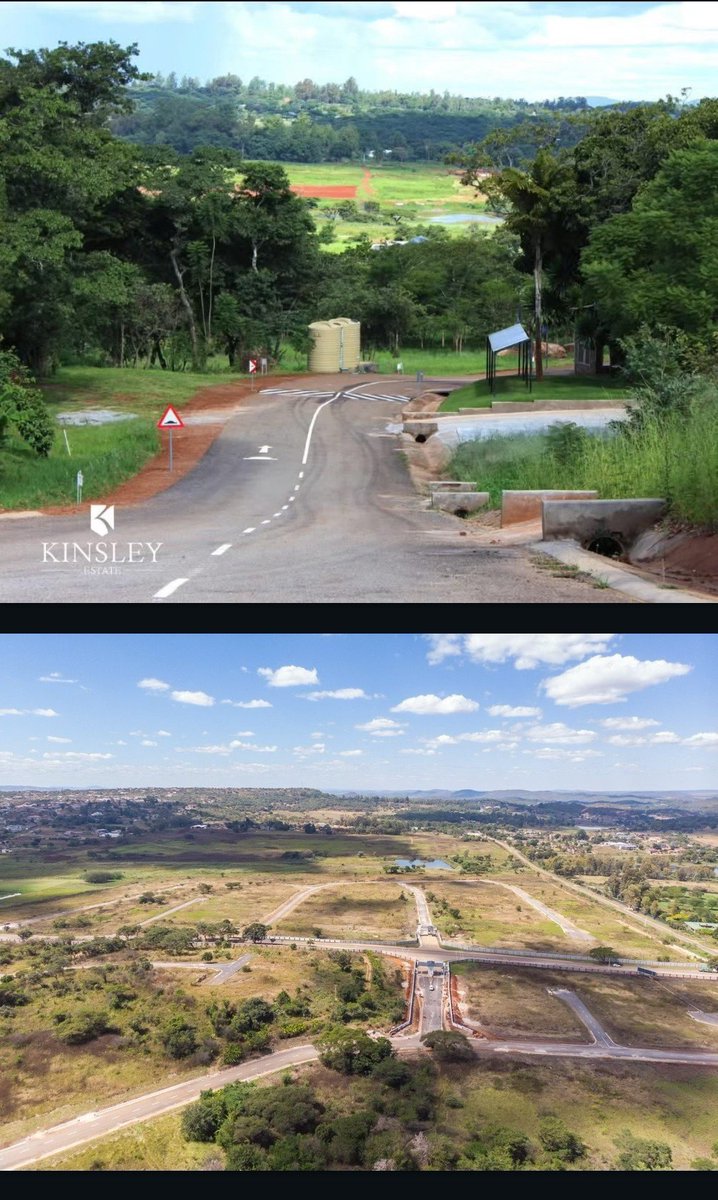

![Crestwavegroup's tweet photo. Fuelling the Future: A Guide to Investing in Zimbabwe’s Service Station Industry — Leasing versus Owning
Introduction
Zimbabwe’s fuel retail sector remains one of the most resilient and capital-attractive segments of the national economy. A growing vehicle fleet, an expanding mining and agricultural base, and constant demand from transport and logistics operators create steady cash flow and long-term asset value. Yet it is also one of the most tightly regulated industries in the country, governed by a complex web of statutes, licences, and inspection regimes designed to protect consumers, the environment, and the integrity of the national fuel supply chain.
For a prospective investor — whether a first-time entrepreneur mobilizing working capital or an established group like Crestwave seeking territorial expansion — the critical question is not simply “should I enter fuel retail?” It is more precise: “should I lease an existing site and operate it, or should I build or purchase a station outright?” This essay outlines the full documentation and regulatory pathway required to enter the industry, then weighs the comparative merits and demerits of leasing against ownership. The analysis pays particular attention to why leasing is often the more prudent route for entrepreneurs operating with constrained capital.
Part One: The Regulatory and Documentary Pathway
Operating a fuel service station in Zimbabwe — whether leased or owned — requires clearing several regulatory gates before a single litre of fuel can be legally sold. Failure to comply with any single requirement exposes an operator to closure, fines, or prosecution under the Petroleum Act [Chapter 13:22].
1. Company Registration
The foundational step is incorporating a Private Limited Company through the Zimbabwe Companies and Intellectual Property Commission, ZimCIPC. This generates the Certificate of Incorporation together with CR2, CR6, and CR14 forms detailing directors, shareholders, and the registered office. Certified copies of these documents are later required by all regulators.
2. Tax and Banking Compliance
A corporate bank account must be opened, followed by registration with the Zimbabwe Revenue Authority, ZIMRA, for a tax clearance certificate and VAT registration. Fuel retail turnover routinely exceeds the VAT threshold, making this registration mandatory rather than optional.
3. Site Documentation — Title Deed or Lease Agreement
This document determines the entire trajectory of the venture. Applicants must provide either a certified copy of the Title Deed proving freehold ownership, or a certified copy of a Lease Agreement proving the right to occupy and operate from the premises. For licensing purposes, the Zimbabwe Energy Regulatory Authority, ZERA, treats these as functionally interchangeable. A leased site is therefore a perfectly legitimate basis for building a fuel retail business.
4. Zimbabwe Energy Regulatory Authority Licensing
ZERA, established under the Energy Regulatory Authority Act [Chapter 13:23], is the principal sector regulator. Core requirements include:
Completion of the ER2 application form.
Submission of company registration documents, certified IDs of directors, and the title deed or lease agreement.
A Petroleum Retail Licence, which is site-specific and non-transferable.
Compliance with technical standards for fuel dispensing and storage, including calibrated pumps and installations meeting ZWS 970 and ZWS 913 Part 2 standards.
Payment of the annual licence fee. For 2026 this is approximately ............................................
JOIN THE CRESTWAVE GROUP WHATSAPP CHANNEL BELOW AND GET ACCESS TO THE FULL ARTICLE
Follow the Crestwave Group channel on WhatsApp: https://t.co/voFs4AHEBJ
Are you looking for Leasing service station sites / commercial properties to build your own fuel stations ?
Contact
Crestwave Group
Email : crestwavegroup@gmail.com
+263 710 365 076](https://pbs.twimg.com/media/HMnY4ZHXwAAyI0b.jpg)
![Crestwavegroup's tweet photo. Investing in Zimbabwe: Navigating the Legal and Institutional Pathways to Mining, Agriculture, and Industrial Development
Introduction
Zimbabwe’s economic trajectory is anchored by the government’s declared ambition to become a Prosperous Upper Middle Income Nation by 2030. This vision has placed the country’s investment architecture under sustained reform. For any investor, whether domestic or foreign, contemplating entry into mining, agriculture, or industrial production, the entry point is no longer a fragmented collection of ministries. Instead, Zimbabwe now operates within an increasingly centralized legal and institutional framework built around four core bodies: the Zimbabwe Investment and Development Agency (ZIDA), the Ministry of Mines and Mining Development, the Ministry of Lands, Agriculture, Fisheries, Water and Rural Development, and the Ministry of Industry and Commerce. Understanding how these institutions interact, and what the underlying statutes actually permit an investor to own, is not optional due diligence — it is essential before any capital is committed.
1. The Gateway: ZIDA and the One-Stop Investment Framework
The Zimbabwe Investment and Development Agency Act, Chapter 14:38, represents the most significant structural reform to date. It consolidated three previously separate authorities — the Zimbabwe Investment Authority, the Zimbabwe Special Economic Zones Authority, and the Joint Ventures Unit — into a single agency. ZIDA now operates a One Stop Investment Services Centre that integrates services ranging from investment analysis and company registration to tax registration and clearance, licensing, utility connections, and post-establishment aftercare. This marks a deliberate departure from the older model, where investors were required to navigate multiple departments scattered across different ministries.
Legally, all investments must be established in accordance with Zimbabwean law. Foreign investors may invest in and reinvest profits from any sector of the economy under the same conditions applicable to Zimbabwean nationals, except in sectors explicitly reserved for local ownership. An investor may also appoint qualified individuals, regardless of nationality, as senior managers, technical experts, or advisors. This flexibility is critical for mining and industrial projects that depend heavily on foreign technical expertise.
Formal licensing through ZIDA is not compulsory for every business. However, it becomes mandatory where the proposed activity falls within a sector reserved for Zimbabwean nationals. In such cases, investors must obtain specific approval from ZIDA and the minister responsible for indigenisation. For investors proceeding through the formal General Investment Licence route, the process currently requires a non-refundable application fee of USD 577.50, a completed ZIDA 1 form, company registration documents, and a list of shareholders and directors. Upon approval, a licence fee of USD 4,620 is payable.
Crucially, the investment licence is not a mere formality. It serves as the key that unlocks downstream permits: residence and work permits, mining permits, power generation permits, land acquisition approvals, and equipment importation clearances. Many of these permits are processed by other agencies and ministries co-located within ZIDA’s one-stop centre, which reduces bureaucratic duplication.
A time-sensitive protection deserves special attention from foreign investors: investments established after the ZIDA Act came into force must be registered with the Agency within 90 days to benefit from bilateral investment treaty protection. Failure to register within this period is ..............[ The full article is in the Crestwave Group whatsapp channel below ]
Follow the Crestwave Group channel on WhatsApp: https://t.co/voFs4AHEBJ
Get in touch with us for assistance and guidance
Crestwave Group
Email : crestwavegroup@gmail.com
+263 710 365 076](https://pbs.twimg.com/media/HMhnQetWEAARszk.jpg)
![Crestwavegroup's tweet photo. Mining on Titled Land Without Consent Is Unlawful in Zimbabwe: What Landowners Must Know :
Holding title deeds to a farm in Zimbabwe gives you legal ownership of the surface — your homestead, fields, dams, and every structure you have built. What title deeds do not give you, and do not give anyone else, is an automatic right to the minerals beneath that surface. Under the Mines and Minerals Act [Chapter 21:05], the dominium in all minerals, mineral oils, and natural gas is vested in the State, regardless of who owns the land above them. This single principle is the foundation of everything that follows: any person who enters your titled land to prospect, peg, or mine without following the law, or without your required consent, is acting unlawfully.
Surface Rights and Mineral Rights Are Legally Separate
Because land ownership and mineral rights sit in different legal categories, owning the surface does not entitle you — or anyone else — to start digging. Before any prospecting or mining may lawfully begin, a person must be registered with the Ministry of Mines and Mining Development and hold the correct title: an ordinary Prospecting Licence first, followed by pegging and registration of a mining location, and ultimately a Mining Lease or Special Grant if the deposit proves commercially viable. This pathway applies to every permanent resident of Zimbabwe over the age of 18, and it applies whether the land in question is titled private land, communal land, or State land. Mining without these titles is illegal mining outright; mining on someone else’s titled land without their consent compounds that illegality.
Your Consent as a Landowner Matters
Section 31 of the Mines and Minerals Act is explicit that no one may exercise prospecting or mining rights on private land except with the written consent of the owner or an authorised representative. This is reinforced by specific physical buffers: prospecting and mining activity may not take place within a set distance of a principal homestead — whether already built or under construction — or of registered homestead sites, farm worker housing, or other permanent improvements above a prescribed value. Land that is under cultivation or prepared for cultivation enjoys similar protection. A miner who ignores these boundaries is not exercising a lawful right; they are committing an unlawful intrusion, regardless of what licence they may hold elsewhere on your property.
Industry legal guidance on the Act notes a further layer of protection specifically for smaller holdings: where private land is under 100 hectares, the written consent of the owner or occupier is required before any prospecting right may be exercised on it at all, not merely near the homestead. This gives smallholder and peri-urban landowners a stronger starting position than the general homestead-and-cultivation buffers alone would suggest — though the underlying Act does not draw as sharp a line by hectarage as some summaries imply, and any specific dispute is best tested against the exact wording of Section 31 and confirmed with a mining commissioner or legal practitioner.
Even a Valid Mining Lease Has Limits
Holding a Mining Lease does not give a miner unlimited licence over your surface. The Act’s homestead, water source, and cultivated-land protections continue to apply, and a miner who damages your home, contaminates your water, or destroys cultivated land in the course of otherwise lawful mining can still be held accountable for that harm. Subsurface rights do not override your basic right to live and farm undisturbed on the surface.
The Personal-Use Exemption Is Narrow
Zimbabwean mining law allows a landowner to ---.....................[ Click the below Link and Get access to the full article in detail ]
Follow the Crestwave Group channel on WhatsApp: https://t.co/voFs4AHEBJ
Crestwave Group
Email : crestwavegroup@gmail.com
+263 710 365 076
#Follow us for more exciting updates](https://pbs.twimg.com/media/HMY1vV7XoAAyhhS.jpg)

![Crestwavegroup's tweet photo. How to Mine Legally in Zimbabwe in 2026 — Everything You Need to Know
Zimbabwe’s mining sector isn’t just an industry. It’s the foundation of the country’s export economy. The sector accounts for over 70% of national export earnings and employs hundreds of thousands of Zimbabweans directly and indirectly. Gold, platinum, chrome, lithium, and diamonds are driving the current momentum.
But here’s the reality investors miss: capital alone does not open a mine in Zimbabwe. Compliance does. The law is detailed, layered, and completely unforgiving to anyone who tries to cut corners.
The Legal Foundation You’re Operating Under
All mining activity in Zimbabwe sits on the Mines and Minerals Act [Chapter 21:05]. This Act sets the rules for prospecting rights, mineral claims, and operational licensing. For gold and silver, the Precious Metals Act [Chapter 37:03] dictates how they must be traded and refined. Before you break ground, the Environmental Management Act [Chapter 20:27] must be satisfied — EMA compliance is not optional, it’s a prerequisite and criminal liability applies if you ignore it. Large-scale operators must also structure around the Indigenisation and Economic Empowerment Act for local ownership thresholds.
The Ministry of Mines and Mining Development and the Mining Affairs Board are the two state organs with authority over all mineral wealth. Every license, permit, and approval flows through them.
Securing Land and Mineral Rights the Right Way
The process starts with rights, not machinery. First, apply for a Prospecting License at the Provincial Mining Director’s office. This authorizes exploration for two years and is renewable. For large-scale exploration across defined corridors, you need an Exclusive Prospecting Order from the Mining Affairs Board.
Once a viable deposit is identified, you must peg the ground and formally register the claim at the Mines and Minerals office. Registration is not a formality. It’s what grants you exclusive legal rights to that area. The Certificate of Registration, issued by the Mining Commissioner after fees are paid, is what transforms a discovery into a legally protected asset. Leave a claim unregistered and anyone can legally peg it out from under you.
Operational Permits Before Any Ground Is Disturbed
No soil should be moved until operational permits are in place. The Environmental Impact Assessment Certificate from EMA is mandatory. This takes 3-6 months because it requires public consultation, technical assessments, and credible environmental mitigation plus rehabilitation plans. Without an EIA, no mining license will be issued.
For large-scale operations, you must secure a Mining Lease through the Mining Affairs Board. These run for 50 years and are renewable, but you’ll need to prove capital adequacy, submit a technical operations plan, and lodge a rehabilitation bond. Certain categories like alluvial diamond operations require a Special Grant instead of a standard lease. Finally, the Provincial Mining Director issues a Working Permit that confirms your workings and site safety plans are approved for production.
Business Registration and Fiscal Compliance
The operating company must be properly registered through the Zimbabwe Companies and Deeds Office with a Certificate of Incorporation, CR6, and CR14 on file. With ZIMRA, you must register for tax clearance and pay mining royalties monthly by the 10th — 1% for platinum up to 5% for gold and diamonds.
Gold producers have one non-negotiable rule: all gold must be sold through a Fidelity Printers and Refiners account. Selling outside this channel is a criminal offense ............................................
Join the official Crestwave Group channel on WhatsApp for the complete article posted in detail, plus mining updates, claim listings, and compliance alerts you won’t get on X: https://t.co/voFs4AHEBJ
Crestwave Group :
Email : crestwavegroup@gmail.com
+263 710 365 076](https://pbs.twimg.com/media/HL6h5FmXYAAw4f_.jpg)
![Crestwavegroup's tweet photo. The Certificate of No Present Interest: The Document That Can Make or Break Your Farm Deal
Most Zimbabwean landowners don’t know this document exists. Yet without it, you cannot legally sell your farm. In fact, the State can move to acquire it even while you’re holding the title deed.
That document is the Certificate of No Present Interest, or CNPI.
What It Is and Why It Matters
The CNPI is an official document issued by the Ministry of Lands, Agriculture, Fisheries, Water and Rural Development. It confirms that the Government of Zimbabwe has been formally offered your rural or agricultural land and has declined to acquire it. Only after the CNPI is issued can you legally sell to a third party.
The legal basis sits in the Land Acquisition Act [Chapter 20:10] and the Land Acquisition (Disposal of Rural Land) Regulations, 1999. Under these laws, the Minister of Lands holds the right of first refusal on all rural land disposals. Translation: before you sell to family, investors, developers, or joint-venture partners, the Government must first be offered the land. The CNPI is the State’s written response: “We are not interested. You may proceed.”
The Constitutional Power Behind It
This isn’t just paperwork. Section 72(2) of the Constitution of Zimbabwe, 2013 empowers Government to compulsorily acquire land, with title vesting in the State and compensation payable only for improvements, not the land itself.
Without a CNPI, the State’s interest in your land remains unresolved. An unresolved State interest means your title deed is not fully transferable. Your deal can be voided, your investor can lose money, and you can lose both.
Where It Applies
1. Farming and Joint Ventures
Planning to bring in a partner for irrigation, tobacco, or any agricultural project? Before any transaction involving rural land, the Ministry must be offered the land first. No CNPI, no legal transaction.
2. Residential Subdivision
If you want to subdivide your farm into residential stands, the CNPI is required before your subdivision permit is processed. In a landmark case, a landowner secured the CNPI first, then obtained the subdivision permit. Skip the sequence and your entire project becomes legally exposed.
3. Commercial Development
Retail parks, filling stations, warehouses, industrial parks — any commercial development on rural/agricultural land that involves change of use, sale, or external partnership requires the CNPI as a foundational clearance. Without it, the State retains a legal claim that can freeze your project even after construction.
4. Agro-Residential Estates
Agro-residential estates are booming in Zimbabwe. This model blends rural land, which requires a CNPI, with residential subdivision, which requires subdivision permits. Both pipelines converge at the Ministry of Lands. Miss the CNPI and the whole estate stalls.
The Real Risk: It’s Not Theoretical
The Minister of Lands made three separate attempts to compulsorily acquire Hope Farm, a 1,113-hectare farm in Mashonaland West, even after a CNPI had been issued. The matter reached the Supreme Court in 2025/2026.
The lesson: the CNPI is your shield, but you must hold it firmly and keep your legal position updated.
How to Apply: Step by Step
Prepare documents: Title deed, identity documents, and a formal letter of intent to sell or develop the land.
Submit application: Take these to the Ministry of Lands, Agriculture, Fisheries, Water and Rural Development. In Harare, the Ministry is at Ngungunyana Building, 1 Borrowdale Road. Submit to the Chief Lands Officer at your provincial land office.
Ministry review: The Ministry assesses whether the State has any present acquisition interest in your land.
Outcome: If the State declines, the CNPI is issued. If the State has interest, a formal acquisition process is triggered instead.
Follow Crestwave Group whatsapp Channel for real estate enlightenment
https://t.co/voFs4AHEBJ
Email : crestwavegroup@gmail.com](https://pbs.twimg.com/media/HL0RVpRXMAAlWp_.jpg)
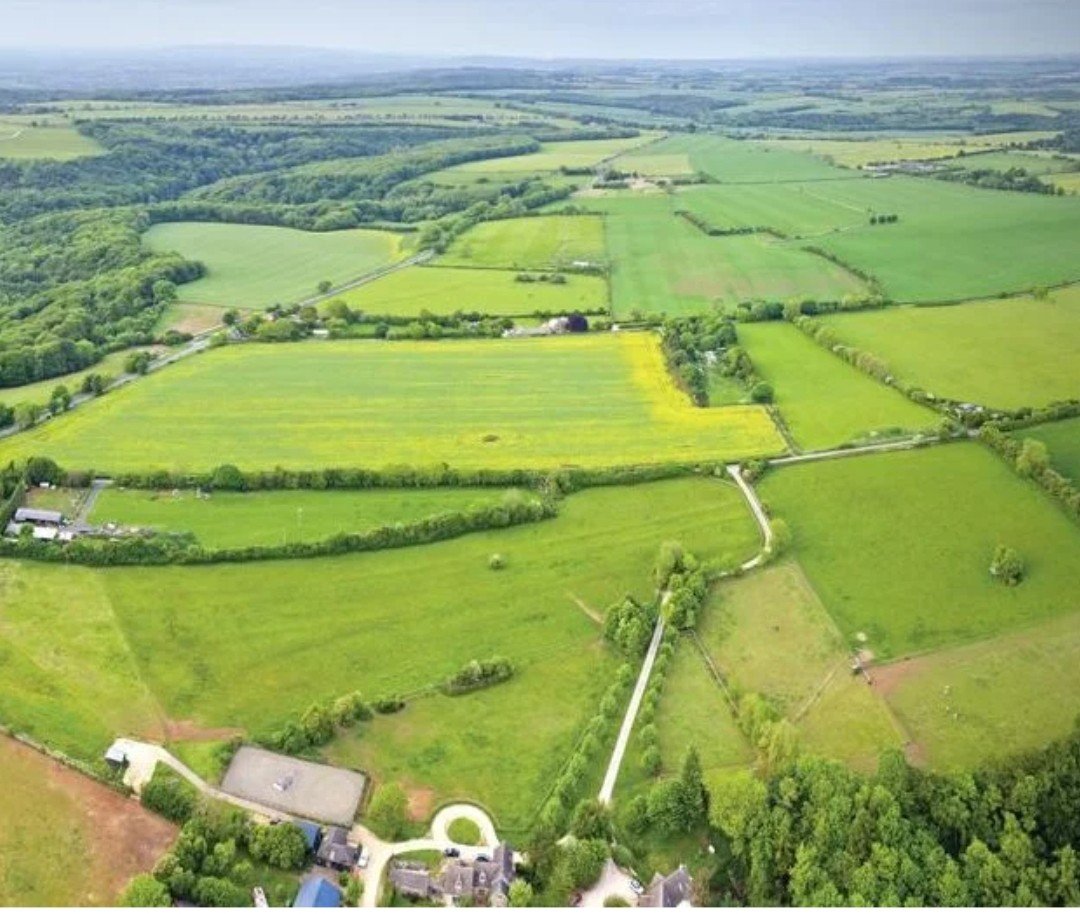

![Crestwavegroup's tweet photo. THE DRY STAND TRAP: Why Thousands of Zimbabweans Pay for Water, Roads & ZESA That Never Come
1/ THE DREAM VS REALITY
You found the stand. Price was fair. Location had potential.
Agent said: “Services are coming soon.”
You paid your deposit. Paid a “development levy” on top. Then you waited.
2 years later:
Bucket water. Wrecked suspension from a gravel track that was “about to be tarred.”
ZESA poles standing empty on the boundary — a promise nobody plans to keep.
This isn’t the exception. It’s the norm for thousands of buyers in Harare’s dormitory towns, Ruwa, Chitungwiza extensions, and every “new development” on Facebook Marketplace.
2/ HOW BIG IS THIS PROBLEM?
Beitbridge: 3,000+ residential stands sold in 7 years. Many still have no water, sewer, or roads. Councils are now chasing developers whose servicing contracts expired with zero work done. Some are begging for extensions.
Meanwhile, residents improvise: Boreholes, septic tanks, or buying water from bowsers at $6 per 1000L.
Harare & surrounds: Property guides now warn buyers outright — “Many developers promise services ‘soon’ but take years. That ‘cheap’ unserviced stand will cost you more long-term.”
3/ WHO’S TO BLAME? DEVELOPER OR COUNCIL?
Every angry buyer asks this too late. Answer: Both. But at different stages. And that gap is where you lose money.
Council’s job – on paper:
Before any land is subdivided, developers need a subdivision permit from the local council or Dept of Physical Planning. Under the Regional Town & Country Planning Act, that permit is supposed to lock in engineering designs, service timelines, and conditions BEFORE stands are sold. Urban Councils Act gives them power to regulate sewers, water pipes, roads.
Developer’s job – in practice:
Once permitted, the developer must actually install:
Trunk water + sewer lines
Graded + surfaced roads
Electrical reticulation for ZESA/ZETDC
That “development levy” you paid? It’s meant to fund this work.
Where it collapses:
Councils approve plans, then lack staff + political will to enforce deadlines
Developers treat levies as “working capital” instead of ring-fenced construction funds
No fixed expiry on development permits = “in progress” forever is legal
Sell now. Build later. Refund nobody.
4/ SIX THINGS TO DEMAND BEFORE YOU PAY $1
A listing that says “ZESA nearby, council water closeby, good roads” is selling you distance and hope. Not services.
Before you sign or send deposit:
Subdivision permit + approved layout plan – Not just an offer letter. The permit lists conditions council can enforce.
Engineering designs for YOUR stand number – Where exactly will water/sewer/power run? Not “for the development.”
Council Certificate of Compliance – Proof infrastructure was inspected + passed. If not done, get a dated written commitment.
Walk the ground – Photos of trenches vs pipes still on pallets. Tar vs gravel. 5 mins on site > 50 pages of brochure.
Talk to existing buyers – If people who bought 3 years ago still use boreholes + buckets, that’s your future too.
Add a deadline + penalty clause – Put “services by or refund + interest” in your sale agreement. Don’t trust “soon.”[date]
5/ WHY A SITE VISIT BEATS EVERY BROCHURE
Every check above needs one thing: boots on the ground.
Dated photos of trenches, poles, actual road condition matched to the engineering plan turns “I was told it’s coming” into proof you can use to:
Negotiate a lower price for an unserviced stand
Hold a developer to a legal deadline
Walk away from a scam before it costs you years of savings
Bottom line: A dry stand isn’t cheaper. It’s a loan you didn’t agree to — and the interest is your time, money, and sanity.
Evaluating a stand in Zim right now? Get ground-truth verification before you pay a cent. The right due diligence today saves you demolition notices + heartbreak tomorrow.
Follow Crestwave Group whatsapp channel :
https://t.co/voFs4AHEBJ
Email : crestwavegroup@gmail.com
+263 710 365 076](https://pbs.twimg.com/media/HLB-dIaXkAIpECB.jpg)