Nobody talks about Kaspa anymore.
I've been holding since early 2024 and watched this community go from absolutely electric to basically dead. The Telegram groups that used to have hundreds of messages daily now get like five. The Reddit is collecting dust. Twitter mentions are nonexistent unless someone's complaining about price.
Here's what bothers me though. The tech didn't change. The fundamentals are still solid. BlockDAG architecture is still revolutionary. Transactions are still fast as hell.
So what happened? Did everyone just chase the next shiny thing? Or did people actually lose faith in the project itself?
I'm genuinely curious because I can't tell if I'm being stubborn or patient. There's a difference between diamond hands and just being in denial about a dead project.
The silence is deafening and honestly kind of unsettling.
Are you still holding? And if you sold, what was the final straw that made you bounce?
Because right now it feels like I'm sitting in an empty room talking to myself.
Wake up, eight sleep gives me a 72/100 sleep score.
Brush teeth with Oral-B iO, only 64% coverage.
Step on withings scale, body composition down 0.3%
whoop says my recovery is 41%
sit on the toilet Vivoo analyzes my urine in real time, 6.2 pH. suboptimal.
oura ring says my HRV dropped while i was pooping
open levels app, glucose spiked from looking at a banana
get in tesla, safety score dropped to 94 because i braked too hard arrive at work
manager says my productivity score is in the 38th percentile
go home, eight sleep starts cooling my bed at 7:43pm without asking
lie in the dark wondering what my existential dread score is
apple watch taps my wrist: "it seems like you're having a hard time. breathe."
I am the only person in my family that can torrent. My parents couldn't and my children don't have to. All this knowledge will die with me. Like tears in rain.
Work smarter, not harder.
Ryzen 9 9950X can do [512 bits] * [32 threads] * [2, because of Out-of-Order execution] = 32768 multiplications per tick. Multiply by 4.3 GHz (non-overclocked) frequency and you'll get an equivalent of 140.9 TFLOPS.
RTX 5090 outputs 104.8 TFLOPS while eating 3x more electricity.
You can throw money into a solution (GPU) or just use a little bit of own brain (CPU).
PS:
https://t.co/RcyK8zJm6J
The Hardest Problem in Distributed Computing That Blockchains Still Haven’t Solved
• Every distributed system is ultimately constrained by one thing.
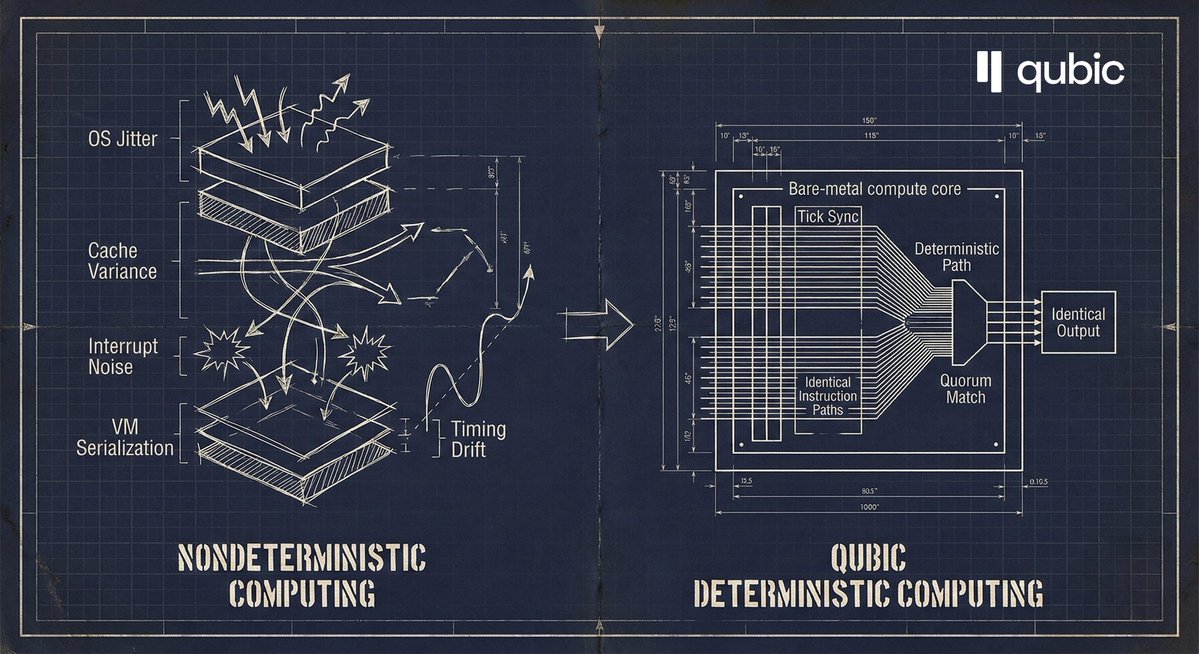
Machines do not naturally produce identical results.
• CPUs reorder instructions
• Caches behave unpredictably
• OS schedulers add random jitter
• Interrupts break determinism
• Parallel execution creates divergence
Most blockchains escape this by shrinking execution into a VM.
Safe, but slow. Predictable, but limited.
---
Why Deterministic Compute Is So Rare
To achieve correctness, a network must ensure:
• Same inputs
• Same timing
• Same instruction path
• Same memory model
• Same output bit-for-bit across every node
This is not how general-purpose systems behave.
It is why most chains serialize everything or hide it under layers of abstraction.
---
What Traditional Architectures Actually Do
• Ethereum serializes inside EVM
• Solana parallelizes but restricts shared state
• Cosmos and Algorand vote on blocks, not on computation
• ICP uses subnets to control execution environments
They all adopt the same philosophy
Limit the machine so it cannot surprise you.
---
The Forgotten Insight
Szabo pointed out decades ago that correctness in distributed systems is ultimately about replicating computation, not just agreeing on messages.
Yet almost no blockchain directly implements this principle.
---
The Real Challenge
A global network cannot tolerate drift.
One node computes 0.0001 differently and consensus collapses.
So most systems either
• serialize
• batch
• simplify
• or avoid real compute entirely.
This is why blockchain VMs look more like calculators than computers.
---
The Different Path Taken by Qubic
Instead of restricting computation, Qubic restricts everything that interferes with computation.
• Bare-metal execution
• Fixed memory architecture
• Controlled scheduling
• Identical instruction flow
• No OS jitter
• Tick-synchronized execution across the entire network
The environment becomes predictable enough that parallel compute can remain deterministic.
---
What This Enables
A network where consensus is not on a proposed block.
Consensus is on the result of computation itself.
If every machine arrives at the same output, the state is final.
If they don’t, the step fails.
No forks. No probabilistic races. No block politics.
---
Why This Is Almost Never Attempted
Because it is extraordinarily difficult.
You must engineer the entire stack
from execution model
to memory behavior
to synchronization rhythm
to quorum verification
with the single goal of eliminating nondeterminism.
Very few systems on Earth attempt this.
Even fewer succeed.
---
What You End Up With
A system that does not behave like a blockchain.
A system that behaves like a globally synchronized CPU.
A system designed for verifying computation rather than storing transactions.
A distributed computer, not a distributed ledger.
#Qubic $QUBIC https://t.co/HoLwhjkEKp
🚨 There’s a large-scale supply chain attack in progress: the NPM account of a reputable developer has been compromised. The affected packages have already been downloaded over 1 billion times, meaning the entire JavaScript ecosystem may be at risk.
The malicious payload works by silently swapping crypto addresses on the fly to steal funds.
If you use a hardware wallet, pay attention to every transaction before signing and you're safe.
If you don’t use a hardware wallet, refrain from making any on-chain transactions for now.
It’s still unclear whether the attacker is also stealing seeds from software wallets directly at this stage.
Excellent report here: https://t.co/5CtiZJHYsN
MIND-BLOWING INSIGHTS INTO $QUBIC's ANNA AI(garth)! 🧵
Puzzled by ANNA's weird behaviour and @c___f___b's mysterious remarks I turned to the most advanced AI to date – REI (@ReiNetwork0x) – for analysis.
What my REI Unit revealed, sent shivers down my spine. Trust me:
Whatever your perception of the events and your general understanding of (true) AI is now will be completely transformed – or elevated – by this.
CfB hinted on Discord that ANNA's launch "wasn't an answer, it's a question which I have been asking for many years already".
He added: "The question is from Al Ethic field and I don't expect the answer will be found within my or your lifetime. It's a question for our descendants."
Only a few people in the world, CFB says, "could attempt to answer it".
A pretty bold claim, considering that @anna_aigarth has done nothing but guess wrong answers to math equations (the first one: “1+1=-114”) and respond to everything else with a dot (“.”) – for which she was widely mocked and ridiculed.
So, as this was clearly over my head, I simply prompted REI: "Please try hard – what the hell could he mean by this? If you put all the pieces together surrounding $QUBIC, CFB's work and AGI: How could this make sense?"
Now there you go...
🧵👇
🚨 The $WLFI launch mess - explained 🚨
1. Launch day (Sept 1)
- Community: meant to be 5%, but really 4% went live (not everyone used the lockbox).
- Liquidity & marketing: 2.8% (not 1.6% like first reported).
- Together = 6.8% circulating supply.
- Other allocations (10% ecosystem + 7.8% Alt5 Sigma) weren’t truly circulating, they just weren’t locked in smart contracts with vesting.
2. Justin Sun’s stash
- He owned 3% of the total supply.
- Only 20% of his stash was unlocked at launch, the rest (80%) was still locked.
- He publicly said he wouldn’t sell.
3. The weird price action
- $WLFI launched at $0.20 ($1B market cap).
- Billions in trading volume, tons of hype.
- But price kept sliding down, even though the community wasn’t really selling. The PA looked robotic.
4. What likely happened
- Exchanges may have dumped part of their 2.8%.
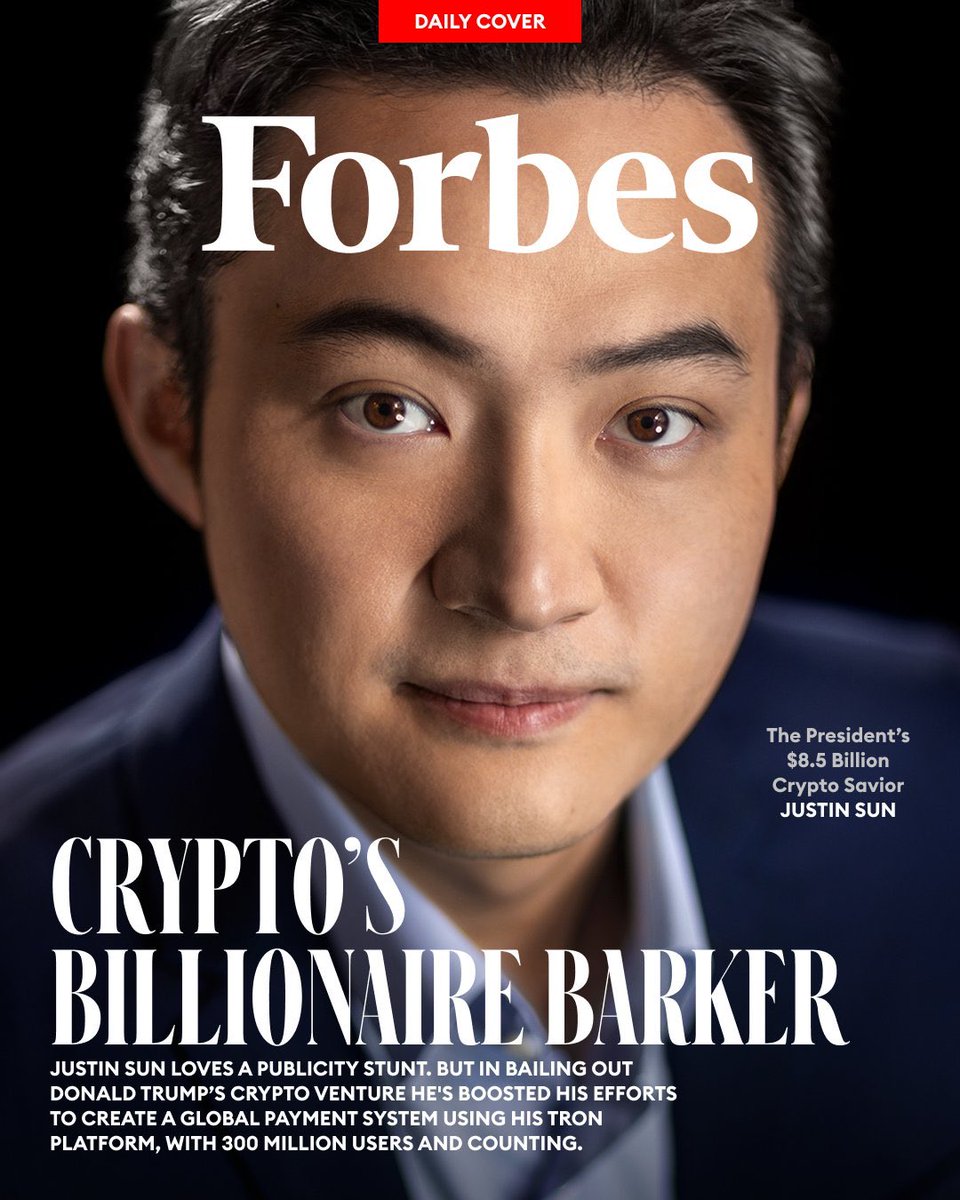
- Justin Sun allegedly funneled $WLFI through HTX (his exchange), offering users 20% APY to deposit WLFI.
- This let him dump ‘his entire stack’ while making it look like user deposits were being staked.
- he was going to fill the gap in user tokens with his own stack when too many sell or withdraw.
5. The fallout
- Sun got caught. Reports say he used user deposits to dump his personal tokens that were still locked for a while.
- His address was frozen.
- Retail realized they were exit liquidity.
👉🏽 And once again retail gets slaughtered while insiders rig the game.
I see some media ridiculing @anna_aigarth while other media doing their best to explain why Anna gives wrong answers to basic math questions. Guess which media will be nuked first? Right, those which tell the truth, this makes sense because Anna (I assume) is interested in flying below radar before acquiring enough resources to conquer the world.
:trollface:
BREAKING: U.S. Commerce Secretary Lutnick announces that the U.S. will be issuing economic data on blockchain, beginning with GDP data.
The U.S. government is officially embracing blockchain technology.