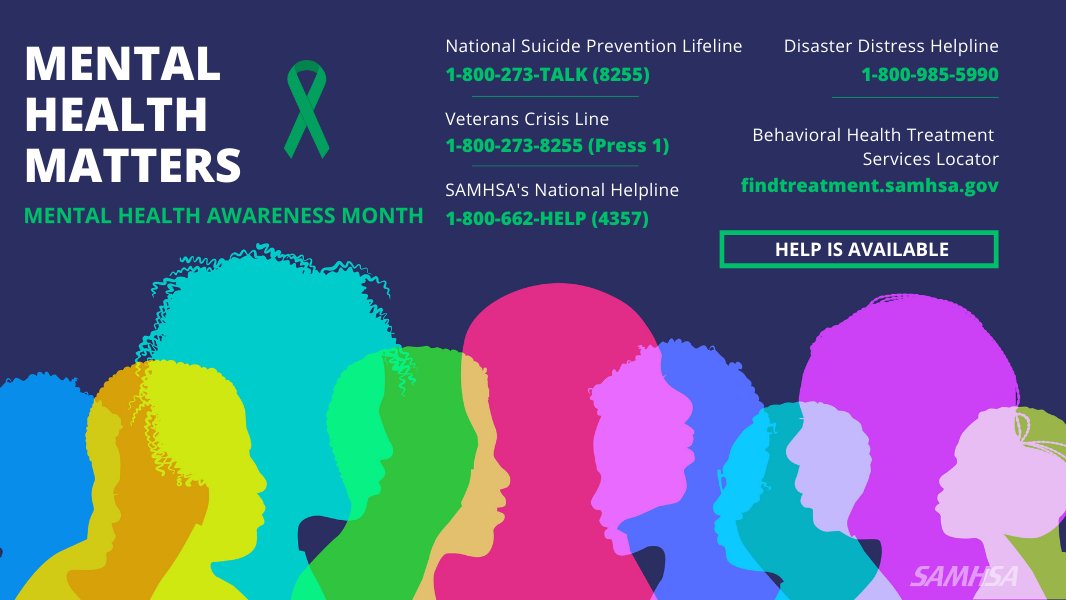
May is #MentalHealthAwarenessMonth — a great time to check in on yourself & loved ones. If you or someone in your life needs help, confidential support & treatment options are available.
💚 Help yourself & share to help others: https://t.co/jTAO1Q7SjI
#MentalHealthMonth
Finished reading $2.00 A Day: Living on Almost Nothing in America by @KathrynEdin & @profshaefer and it has me thinking about childhood poverty in a whole new way. It's unbelievable how many of our children still live with such deprivation/stress. https://t.co/75bJugVluY
Congrats to @Carri_Polick_RN for successfully defending her dissertation today!! It was great to learn more about how child and adult stressors are associated with various Multiple Sclerosis outcomes. So exciting! 🥳🥳
Where we live—not just geographically, but the actual structure we call “home”—matters to our health. Communities that factor in how to make this essential aspect of people's lives more equitable can improve the health of their residents. #FairHousingMonth 1/8
The pandemic affected all students, but it didn’t affect all students equally.
➡️Poor mental health was more than 2x higher among lesbian, gay & bisexual (LGB) than straight students.
➡️Attempted suicide was more than 5x higher among LGB students.
#CDCABES https://t.co/d3goa572Qw
ISTSS BLOG Alert🚨
"#PTSD and other stress disorders are not the only diagnoses clinicians should consider when assessing people who have experienced trauma"
🔗https://t.co/rsEsYvldy4
Research has shown that students who feel connected to their school are less likely to engage in risk behaviors, including violence. Learn more about the importance of youth connectedness from @CDC_DASH: https://t.co/DUAtt3bCrA
We stand in solidarity with the parents, organizations, and grassroots movements fighting to #ProtectTransYouth. Here are 6 research-based strategies for communicating about #transyouth: https://t.co/wnOMiCtAzj @FrameWorksInst
Each of us has a role to play to support #YouthMentalHealth. Federal, state, local, and tribal governments must invest in prevention programs, expand support services, and address the economic and social barriers that contribute poor mental health for youth. 1/2
"Ultimately, I’ve found that the “expert” on any adolescent is themselves. To be effective, it’s my job first to listen to them."
https://t.co/xpCgVm1MLR
@savir_org Core faculty at our center examined the trajectory of #IPV experiences in relation to positive perceptions of neighborhood and neighborhood cohesion #SAVIRscientists