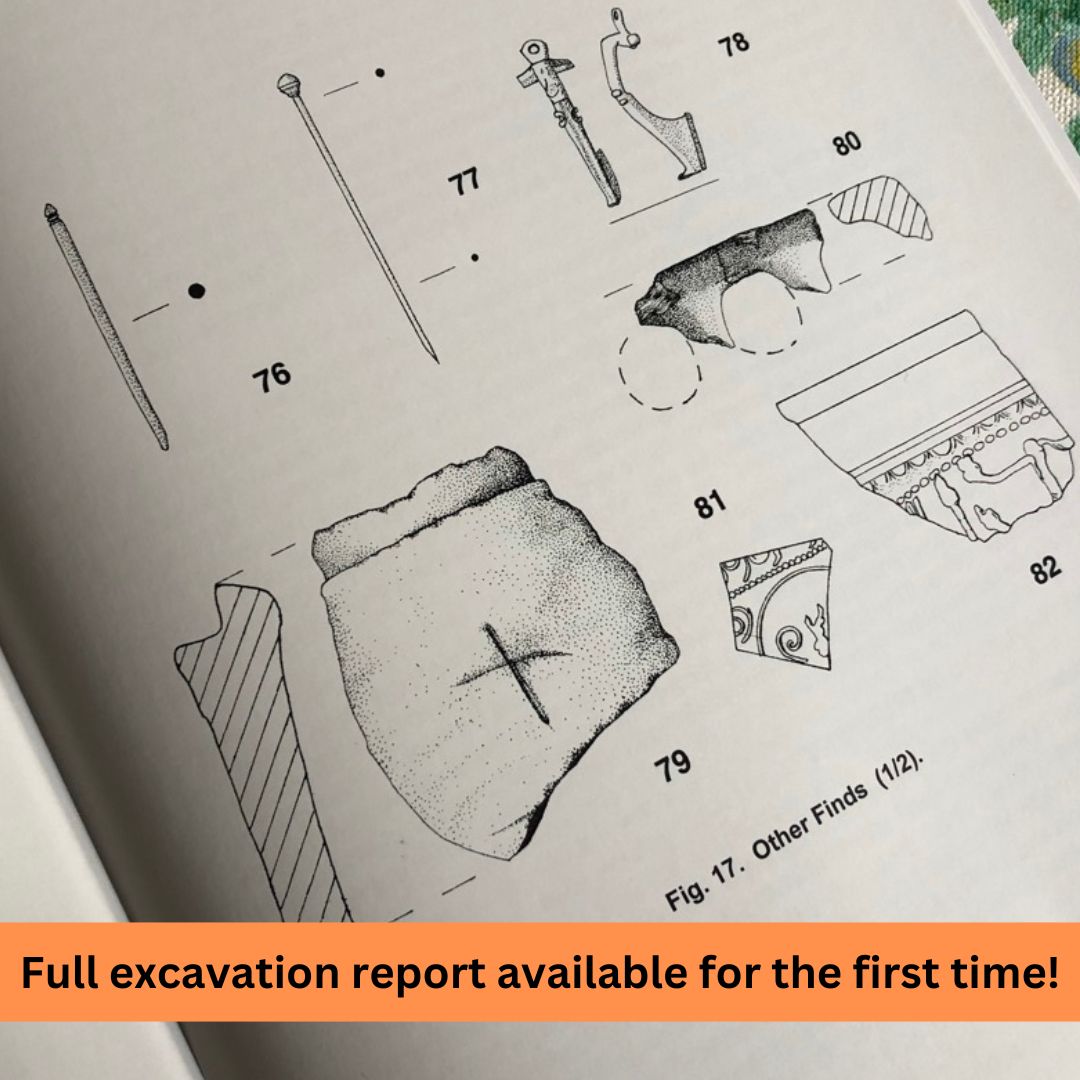
This much awaited book is a second edition covering the first fifty years recorded in the first edition, but adding another twenty years of events and sites up until 2022. To order, send a cheque of £24 to Kent Archaeological Rescue Unit, 18 Highfield Avenue, Orpington, BR6 6LF.
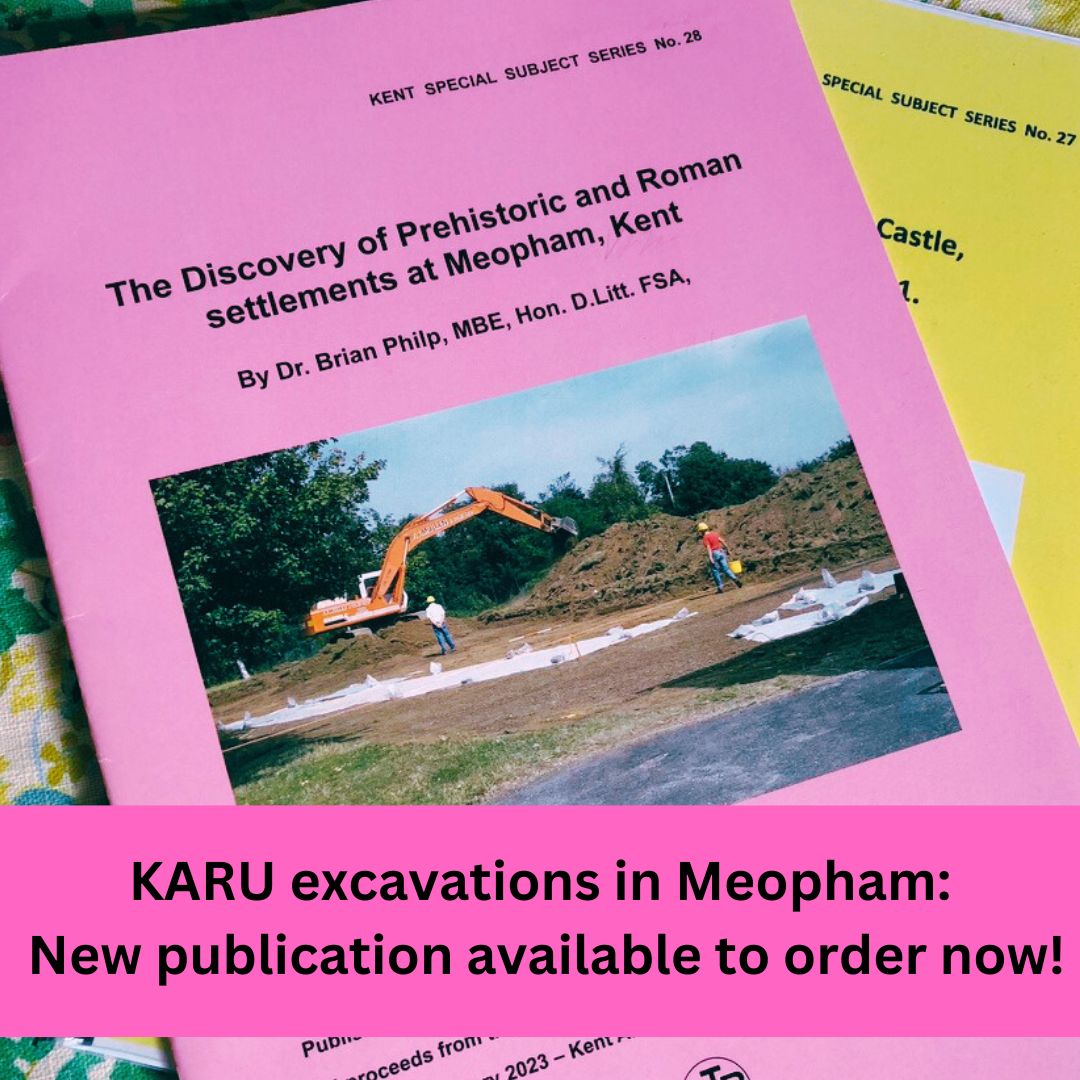
Find out how KARU’s excavations in 1979 pushed back the history of Gravesend by 1,000 and 5,000 years respectively in our new publication. Neolithic and Roman settlements were discovered under the existing car parks prior to the construction of St George's shopping centre.
What’s better than chocolate Easter eggs? A shiny, new (pink!) archaeological report from KARU! Unusually for an area of heavy soils, this report concludes that Meopham, Kent, attracted settlement during the late-Neolithic, the late-Iron Age, early-Roman and late Saxon periods.
Do you have a Crofton Roman Villa-shaped hole in your heart this spring? Although our villa is not open due to renovations, the Kent Archaeological Rescue Unit have released new reports, including: 'Excavations at Allington Castle, near Maidstone, 2013-21' by Dr Brian Philp.
@romanarchaeouk Yes! Or alternatively you can email [email protected]. I love that book too, I have a whole shelf dedicated to Brian's books at home :)
Io Saturnalia!
Today marks the beginning of Saturnalia, a mid-winter celebration held in honour of the god Saturn. It was a time of "letting go" and feasting. The Roman poet Catullus described it as "optime dierum" - the "best of days" - in one of his poems.
@CroftonVilla@romanarchaeouk Phil Mills @Tileman_and_son has calculated that a teg/imbrex pair would have cost the equivalent of £50 in today's money - that's £1/4M just for the materials at Crofton!
Fallen roof tiles which was unearthed on the west side of Crofton Roman Villa. It has been calculated that as many as 5,000 tegulae would have been needed to cover the entire villa and perhaps as many imbrices!
From this plan, you can see that Crofton Roman Villa began as a basic rectangular structure. Room 7 was later created by dividing the West Corridor. Amazingly, the complete skeleton of a sheep/ goat was found carefully tucked into a pit in a corner of the room!
This is a photograph of the grand open-day of the excavation site of Crofton Roman Villa, taken in 1988! The villa was due to be destroyed to build a new car park. Luckily, the Kent Archaeological Rescue Unit was given 10 weeks to fully excavate the site.
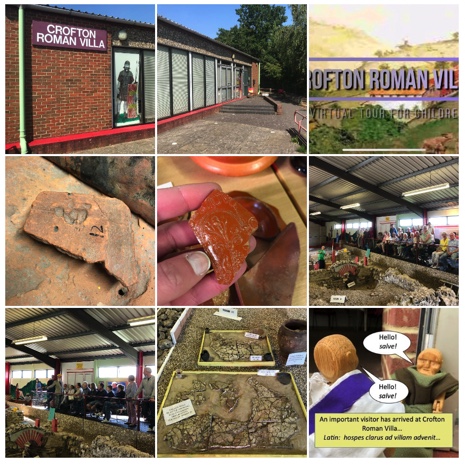
Crofton Roman Villa is now closed for the winter. Thank you to everyone who has supported us through visiting us, a group or school visit, watching our virtual tours or following us on social media!
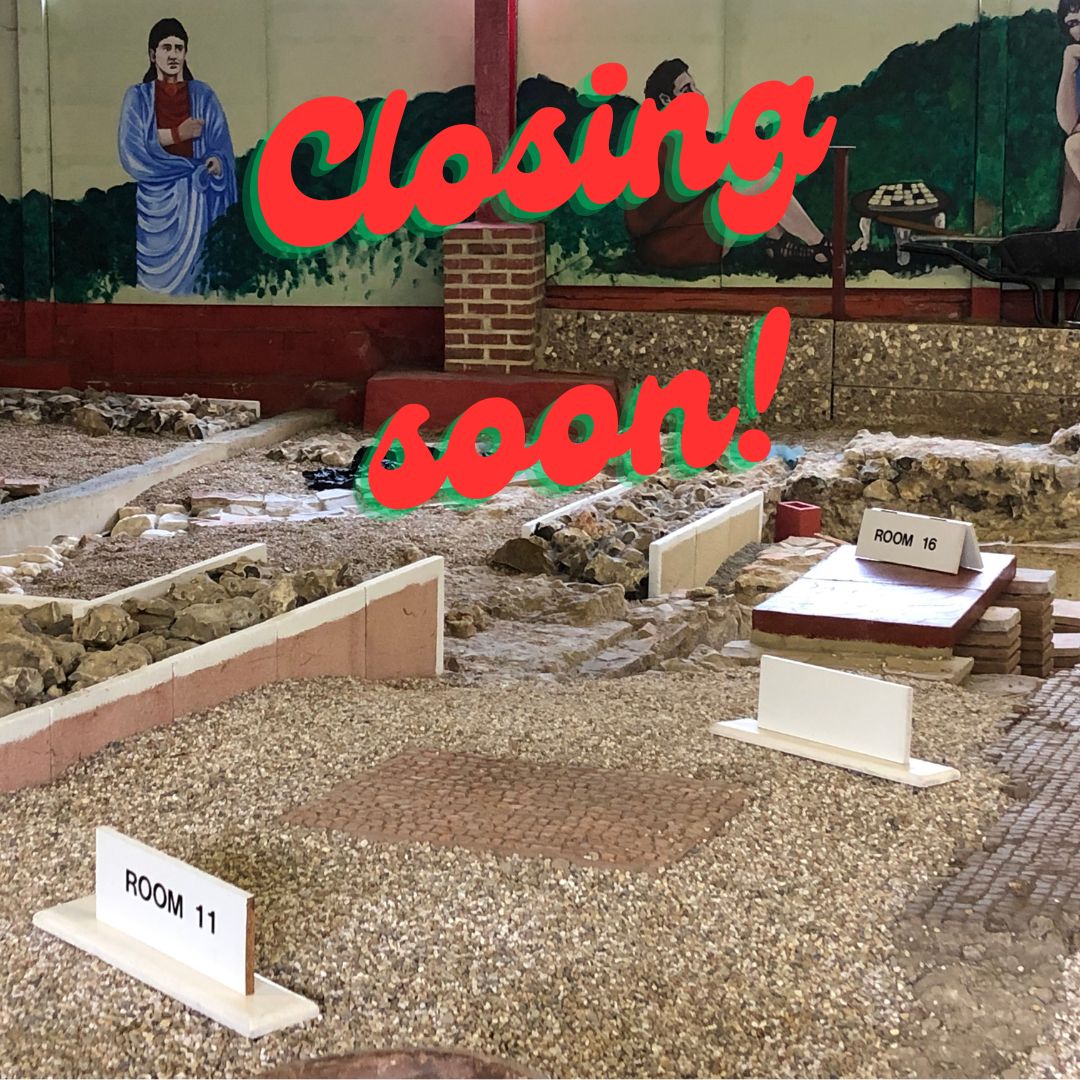
Tomorrow is your last chance to visit Crofton Roman Villa, a unique part of Bromley's heritage and the only Roman villa open to the public in Greater London, before we close for the winter!
A number of oysters shells were recovered during the excavation of Crofton Roman Villa, suggesting that the inhabitants enjoyed consuming oysters. Although Crofton Roman Villa is not located near to the sea, we know that they were fished from oyster beds in the Thames Estuary.