Prof Cathy Herbrand talks on the BBC World Service about the news that sperm from a donor with a gene mutation has been used to produce nearly 200 children, some with childhood cancer. Available for 25 days, listen from 26m 50s into the recording. https://t.co/dFrhqgYek3
Outgoing CRR Director Prof Nicky Hudson provides expert comment on the tragic news that sperm from a donor who unknowingly carried the gene variant for Li-Fraumeni syndrome was used to create almost 200 children. Some have since had childhood cancer. https://t.co/Sd6OV8OHCY
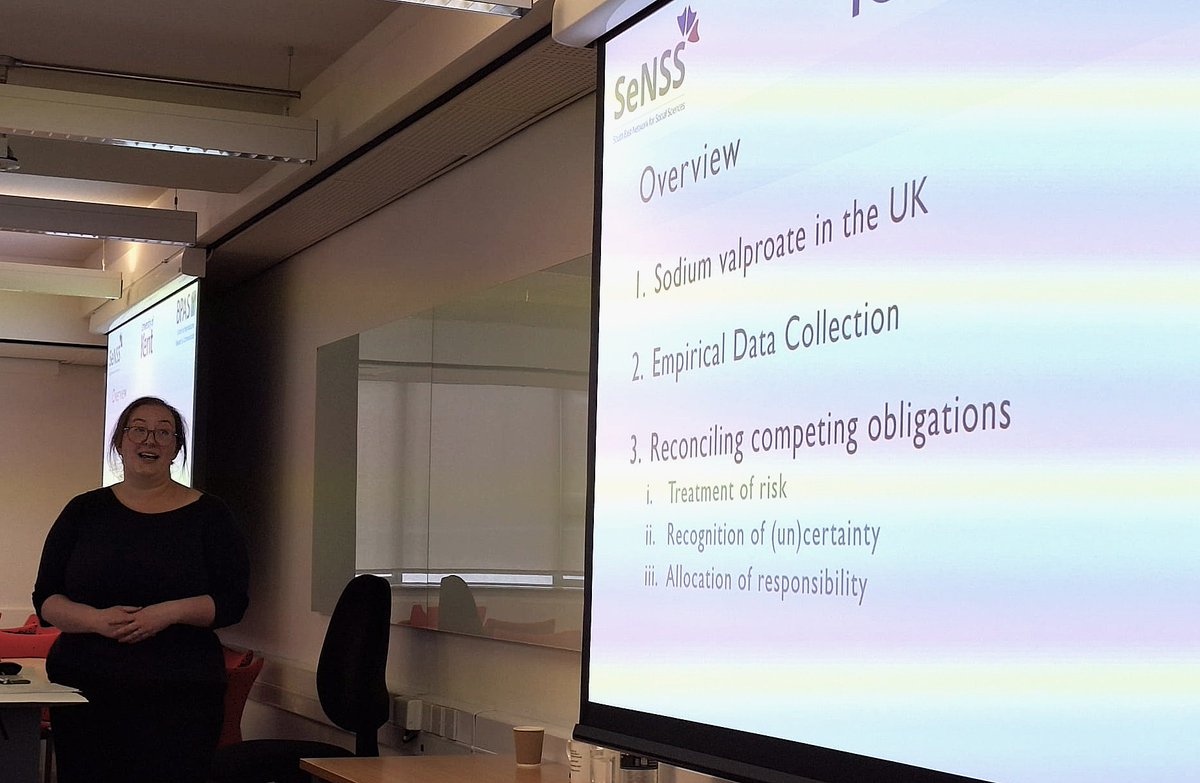
Today we're delighted to welcome @R_Arkell to talk about her research on sodium valproate and pregnancy. SV is a potentially lifesaving medication for epilepsy and BPD. Its association with foetal risk raises questions of consent, autonomy and risk in pregnancy prevention.
Delighted to announce that the PRECAS Project PI, Prof @CathyHerbrand, is giving her inaugural lecture on Tuesday 25th March (in person only). This is to celebrate her promotion to professor. There will be a drinks reception afterwards, all welcome. https://t.co/LrqsKobWSr
Shana Riethof visited the @CRRDMU while writing up her thesis. This blog is on Noninvasive prenatal testing in Belgium: how to make technologies reliable #nipt https://t.co/EJ9jJjK5d3
Looking to do a post-doc in social studies relating to reproduction? Recently completed your PhD in the UK? We are taking expressions of interest. Email [email protected] before 1 Feb for a discussion in the first instance. More info on the scheme: https://t.co/jEn1Rz8Ow8.
Fantastic piece from CRR member @conceivablefer1 using her expertise to review the new ESHRE POI guidelines - exploring what is new in the guidelines and the context in which practitioners will be trying to deliver them.
Looking to do a post-doc in social studies relating to reproduction? Recently completed your PhD in the UK? We are taking expressions of interest. Email [email protected] before 1 Feb for a discussion in the first instance. More info on the scheme: https://t.co/jEn1Rz8Ow8.
- patients did not have a good understanding of risk. Errors in results were put down to human interpretation rather than errors with the test itself. Gynaecologists felt they could be more reliable and give more consistent advice.