Full-Stack Software Developer | I build modern websites, scalable web apps, custom software, APIs, automation tools, data dashboards, and AI-powered solutions.
SmartBallot : Towards credible and Transparent Ballot
I have consistently believed that technology, combined with the creativity and resourcefulness of young Nigerians, can help reinforce our democracy and advance free, fair, and credible elections.
I am pleased to endorse SmartBallot (https://t.co/YgbAq2cLxE), a platform developed to facilitate grassroots mobilization, civic engagement, and election monitoring.
I urge our supporters and NDC candidates to register on SmartBallot and examine how its tools can assist them in organizing their communities, coordinating voters and polling unit agents, expanding grassroots engagement, and supporting transparent election monitoring.
Through the effective use of technology and collective action, we can reinforce our democratic institutions and help ensure that every vote is counted.
Credible elections require preparation, active participation, and peaceful vigilance. Let us make full use of every available resource to create a more organized, engaged, and empowered electorate.
A New Nigeria is Possible. -PO
NIGERIANS, GO AND VERIFY (7)
LIFTING THE VULNERABLE : ANAMBRA’S BLUEPRINT FOR POVERTY ALLEVIATION AND SUSTAINABLE EMPOWERMENT (2006–2014)
Economic growth that does not translate into improved living conditions for ordinary citizens is incomplete. This is one of our fundamental concerns with President Bola Ahmed Tinubu's government. Development must ultimately be measured by its impact on human lives, particularly those of the poor and vulnerable. This was underpinned by the Anambra Integrated Development Strategy (ANIDS). We believed that infrastructure, education, healthcare, agriculture, and social protection must reinforce one another. Poverty was not merely a shortage of money; it was also a lack of access to opportunities, productive resources, and the basic conditions necessary for a decent life.
Our poverty alleviation strategy, therefore, went beyond temporary handouts. It focused on restoring dignity, creating economic opportunities, and equipping vulnerable citizens with the means to become self-reliant.
Our approach attracted recognition beyond Anambra. In May 2010, Magnus Kpakol, then National Coordinator of the National Poverty Eradication Programme (NAPEP), commended our commitment to poverty reduction, declaring: “We are prepared to support you in the excellent work you are doing in Anambra State.”
1. POVERTY MAPPING: KNOWING WHERE POVERTY LIVES
We recognised that poverty could not be effectively addressed without knowing where it was concentrated and what caused it. We, therefore, undertook a poverty-mapping exercise to identify the most deprived local government areas and communities.
The exercise revealed that some of our poorest communities were also important food-producing areas. Their challenges included poor access to markets, agricultural inputs, electricity, water, and other economic opportunities.
Areas including Anambra West, Orumba South, Awka North, and Ogbaru required particular attention. The findings informed our development priorities, enabling us to direct roads, agricultural support, and social interventions toward neglected communities.
2. EMPOWERING WOMEN, WIDOWS, AND COOPERATIVES
We recognised that rural women, widows, and indigent households bore a disproportionate burden of poverty. Across the 21 local government areas, we provided financial assistance and productive support to thousands of beneficiaries.
Our administration provided financial assistance to support the establishment and expansion of small businesses and farming activities. We also introduced revolving loan schemes to promote enterprise development, economic self-reliance, and improved livelihoods.
We distributed productive equipment, including sewing machines, generators, ovens, cookers, hair dryers, shoe-making machines, and welding equipment. The objective was to help beneficiaries establish sustainable livelihoods rather than remain dependent on government assistance.
We also promoted access to microcredit and cooperative financing to enable small entrepreneurs to expand their businesses, improve their incomes, and create employment.
Our philosophy was simple: rather than merely giving people money to survive today, the government should help them acquire the means to earn a living tomorrow.
3. AGRICULTURE AND FADAMA: MAKING RURAL COMMUNITIES PRODUCTIVE
Agriculture was central to our poverty-reduction strategy because many rural households depended on farming.
Through partnerships with the Federal Government, the World Bank, and other development partners, particularly under the FADAMA programme, we supported farmers with finance and productive assets.
In November 2009, our administration disbursed millions to FADAMA Community Associations across the state. By October 2010, the National FADAMA office was commending Anambra’s commitment. Its National Project Coordinator, Buka Tijjani, represented by Charles Ugwuona, described Anambra as the leading state in the programme.
NIGERIANS, GO AND VERIFY (6)
SECURING LIVES AND PROPERTY: PARTNERSHIP WITH SECURITY AGENCIES
Peter Obi
In the preceding instalments, I explained how we approached governance under the Anambra Integrated Development Strategy (ANIDS), beginning with strengthening state institutions and investing in education and other critical sectors. Our conviction was that development must rest on strong institutions, capable human beings, and a secure environment.
No meaningful development can take place where lives and property are constantly under threat. Education, commerce, investment, and other productive activities can only flourish when people feel safe. This informed our approach to security. We understood that the responsibility of protecting lives and property could not be discharged through speeches and declarations alone. It required deliberate investment, effective coordination, and sustained partnership with the security agencies.
When we assumed office, Anambra faced serious security challenges. Armed robbery, bank attacks, kidnapping, and other violent criminal activities had created an atmosphere of fear. In 2006, I personally approached the then Inspector-General of Police, Mr Sunday Gabriel Ehindero, to seek urgent intervention. Following our appeal, the police authorities constituted a special team comprising experienced officers, including the late Haruna John, Alhaji Amusa Bello, and others, to confront the security challenges in the state.
We therefore made security a major priority of our administration, recognising that government must provide both the leadership and the resources required to enable security agencies to perform their duties.
EQUIPPING THE SECURITY AGENCIES
We believed that those entrusted with protecting our people must be adequately equipped. Accordingly, our administration, using funds from the security votes, provided over 600 patrol vehicles to various security agencies, including the Police, Army, Civil Defence, Customs, Immigration, NDLEA, Road Safety, Prisons, SSS, Navy, and community vigilante organisations.
Our support went beyond vehicles. We provided Armoured Personnel Carriers (APCs), armoured Hilux patrol vans, communication gadgets, repeater and linker stations, base stations, mobile vehicular radios, walkie-talkies, generators, and other logistical requirements. We also used the same security votes to provide financial support for their operations, including fuel, weekly allowances, and other essential needs of security personnel.
We paid particular attention to community security because we understood that effective policing must have a strong local presence. Again, using funds from the security votes, we provided billions of naira to the 177 communities in Anambra State to strengthen security in their respective areas. We directed traditional rulers and town union presidents to establish vigilante groups under police supervision, with the police providing uniforms for proper identification. We also contributed towards the payment of their salaries.
Additionally, we provided 250 patrol vehicles to communities across Anambra State. These vehicles were manufactured by Innoson Vehicle Manufacturing Company in Nnewi. Some towns received more than one, depending on their size and security needs. This initiative was also extended to universities and other large institutions in the state.
We also recognised that markets were particularly vulnerable because of the volume of commercial activities and the large number of people who visited them daily. Thus, in March 2014, we presented security vehicles to major markets in Onitsha and its environs. The beneficiaries included Bridge Head Market, Ogboefere Market, Building Materials Market, Ogidi, Onitsha Main Market, Marine Modern Market, Ogbaru Main Market, Ose Okwodu Market, Electronics Market, and the Amalgamated Market Traders Association.
NIGERIANS, GO AND VERIFY (5)
CONNECTING COMMUNITIES, UNLOCKING PROSPERITY: OUR ROAD INFRASTRUCTURE RECORD
Peter Obi
Another critical foundation of development is infrastructure, particularly road construction and maintenance.
Infrastructure is not just about constructing roads, bridges, and buildings. It is about connecting people, opening up economic opportunities, reducing poverty, and enhancing the well-being of ordinary citizens. A road that connects a farmer to a market, a patient to a hospital, a child to a school, or a manufacturer to a distribution centre is an investment in economic and human development.
This thinking informed our approach under the Anambra Integrated Development Strategy (ANIDS). We set out to connect all 177 communities in the State with motorable roads, paying particular attention to rural communities that had suffered years of neglect. Our objective was to build an interconnected road network that served the entire State, rather than concentrate projects in major cities or politically important locations.
I. The Road Revolution: Over 900 Kilometres of Road Projects
Between March 2006 and March 2014, during my two-term tenure in office, my administration asphalted over 900 kilometers of roads. These projects were deliberately distributed across the three senatorial zones of Anambra State to connect communities, facilitate commerce, and enhance transportation.
I acknowledge that Dr. Chris Ngige started the road revolution in Anambra State, and I commend the efforts his administration made in initiating several road projects. When we assumed office in 2006, we recognised the importance of continuing worthwhile projects rather than abandoning them simply because they had been initiated by a previous administration.
Among the roads we inherited from Ngige and completed were the Owerri–Ezukala–Umunze–Umuchu–Amesi–Uga–Igboukwu Road, where his administration stopped around Umuchu and we continued through Amesi, Uga, and onward to Igboukwu; the Iseke–Orsumoghu–Ukpor–Utu–Nnewi–Awka-Etiti Road, where his administration stopped at Ukpor and we continued towards Awka-Etiti; and the Ideani-Otuocha where work stopped around Awkuzu before our administration continued the project from Nteje to Otuocha.
There were also roads, such as Mmili John and Nkwelle Ezunaka bypass, which had been awarded before we took over, but on which no payment had been made by the time we assumed office. We took over these projects, assessed their status, and proceeded with the work. This was our approach to continuity in governance: acknowledging what had been started, distinguishing between projects merely awarded and those on which work and payment had actually commenced, and ensuring that important infrastructure projects were carried forward.
Some of the major roads and corridors included Amansea���Ebenebe Road; Aguleri–Umueze Anam–Mmiata Road; Nnewi–Ozubulu–Okija Road; and the Old Onitsha–Awka Road.
Other important projects included:
Awka and its Environs: Zik’s Avenue, Awka; Adazi-Nnukwu–Obeledu–Neni Road; 33 Junction–Nwafor Orizu College of Education Road; roads within the Awka Government Reserved Area (GRA); and the Old Nkpor–Amawbia Road.
Nnewi and Surrounding Communities: Nnobi–Nnewi Road; roads within Nnewi town; Akwaeze–Oraeri–Igboukwu Road; and Ekwulobia–Nkpologwu–Akpo–Achina–Umuchu Road.
Onitsha and its Environs: Bridge Head–Umunya Road; over 30 roads in other parts of Onitsha; more than 25 roads within the Onitsha GRA; over 20 stone-based roads within Harbour Industrial Estate, Onitsha; and the Nkwele Ezunaka Bypass.
Other Communities and Strategic Corridors: Awgbu–Amaokpala Road, with the Odor Bridge; Aguluezechukwu–Ogboji–Ajalli Road; Awkuzu–Igbariam Road, passing through the university; Owerri–Ezukala–Umuchukwu Road; Ugwuoba–Obosi Road; and Lilu Road.
WASHINGTON, DC : PRESENTING NIGERIA’S DEVELOPMENT AND DEMOCRATIC FUTURE ON THE GLOBAL STAGE.
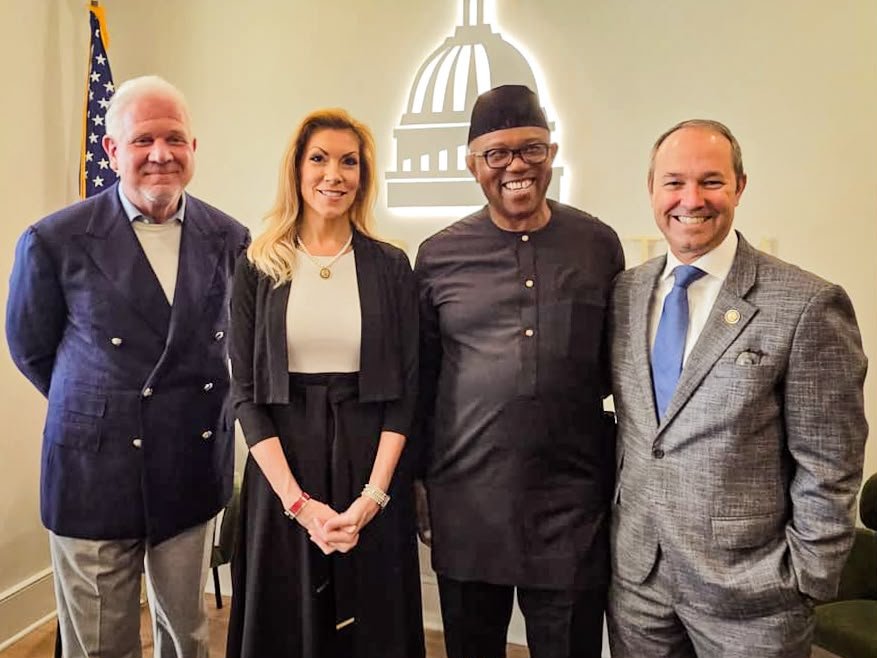
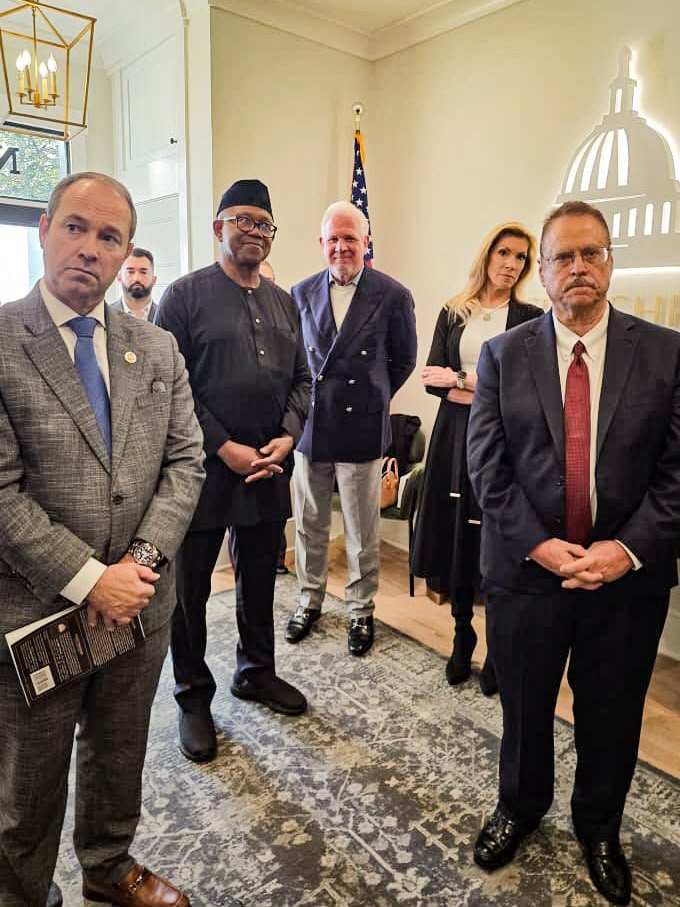
Yesterday, Monday, November 16, I arrived in Washington, DC, for a series of significant meetings and engagements with congressional leaders from both the U.S. House of Representatives and the Senate, as well as other influential American figures. These discussions focused on vital matters affecting Nigeria’s development, the well-being of our people, and the future of our democracy.
I began the day with a substantive interview with renowned American television commentator Glenn Beck. Our conversation addressed Nigeria’s challenges, the pressing need for accountable leadership, the responsible management of our vast human and natural resources, and the opportunities to establish Nigeria among the world’s leading nations.
I also met with prominent American leaders, including Congressman Marlin Stutzman, Congresswoman Beth Van Duyne, Congressman Todd Tiahrt, Suzanne Bock Grisham, retired U.S. Army Colonel Albert V. Short, and other esteemed stakeholders.
One of the day’s principal highlights was my address on Capitol Hill, during which I underscored the urgent importance of international cooperation and support for Nigeria’s advancement, particularly in the areas of national unity, security, economic prosperity, and the welfare of our citizens.
Our conversations also addressed the protection of Nigeria’s emerging democracy and the strengthening of democratic institutions to ensure elections are free, fair, transparent, and credible, accurately reflecting the will of the Nigerian people.
Nigeria has immense potential to emerge as a leading nation within the global community. What is urgently required is accountable leadership, responsible stewardship of our resources, resilient institutions, and an authentic commitment to the security, unity, and well-being of every Nigerian.
Throughout these engagements, my message remained unequivocal: Nigerians must determine Nigeria’s future. Every vote must be counted, the rights of every citizen must be safeguarded, and the people’s will must consistently prevail.
I remain encouraged by these engagements and firmly committed to working with Nigerians at home and in the diaspora, alongside our international partners, to build a peaceful, secure, united, and prosperous Nigeria.
Our journey continues. Our determination remains steadfast.
A New Nigeria is POssible! -PO
1. Jews aren't Christians
2. Jews don't like Christians
3. Jews usually make their money through exploitation
4. Most of the porn sites in the world are owned by Jews
5. Jews don't pay tithe to any Christian church
6. The richest man in the world is neither a jew nor a Christian. He is actually an atheist
7. Using material gains to get people to part with their money is exactly the kind of things Jesus Christ condemned
Netherlands, Germany, Italy, Spain, Sweden, Australia, New Zealand, Portugal, France and Japan - they offer fully funded scholarships
I spent my entire day working on this. Here are 300+ universities offering fully funded Master’s scholarships for 2027.
In this drive, you’ll find universities offering:
• Fully funded scholarships without IELTS requirements, where officially permitted.
• Fully funded scholarships accepting Third Class or Second Class Lower degrees, where applicable.
• Fully funded scholarships that accept applicants without extensive work experience.
I put this together to help more people discover Master’s opportunities they can apply for in 2026 - 2027.
https://t.co/2o9QFO7Ec3
BAYELSA STATE: WARM CONGRATULATIONS TO SENATOR HENRY SERIAKE DICKSON
Yesterday, 30th October 2026, I travelled from Enugu to Yenagoa, Bayelsa State, to attend the homecoming ceremony honouring my dear brother and our Party’s National Leader, His Excellency, Senator Henry Seriake Dickson, while continuing our engagement with the people.
During the grand event, I reminded the good people of Bayelsa State that, after more than three years in office, President Bola Ahmed Tinubu has not considered it appropriate to spend even one night in Bayelsa State, despite spending over 260 days abroad.
I assured our numerous supporters and the people of Bayelsa State that this will not happen under my leadership. I will visit Bayelsa to hear directly from our people and respond to their concerns.
In Bayelsa, I pledged that we would begin efforts to upgrade ports throughout the Niger Delta, including those in Warri, Port Harcourt, and Calabar. We will also begin construction of the long-delayed Ibaka seaport in Akwa Ibom State and establish a new port in Bayelsa State to serve our riverine communities and the broader Niger Delta more effectively.
I reaffirmed our commitment to unite and secure the country, fight corruption, and make substantial investments in healthcare and education while lifting our people out of poverty.
The visit concluded with my joining Senator Seriake Dickson, for a traditional canoe war game and boat regatta in his hometown of Toru-Orua, Sagbama Local Government Area.
I congratulate my dear brother, Senator Henry Seriake Dickson, on his successful return home. I appreciate our party’s national and state leadership, members as well as the good people of Bayelsa for good organisation, warm reception and successful event.
A New Nigeria is POssible, and Nigeria will be OK!. -PO
Pope Leo XIV: A Prayer of Gratitude and Hope
Yesterday, I kept Pope Leo XIV, the head of the Catholic Church and Sovereign of Vatican City, in my earnest prayers as he underwent surgery.
I am grateful for the encouraging reports of his successful surgery and recovery. I thank God for seeing the Holy Father through this procedure and pray for his complete recovery, renewed strength and good health.
May God continue to guide his medical team, sustain him in this period of recovery and grant him the grace to return fully to his pastoral duties.
A New Nigeria is POssible. -PO
My Visit to the Nigerian Air Force Facility
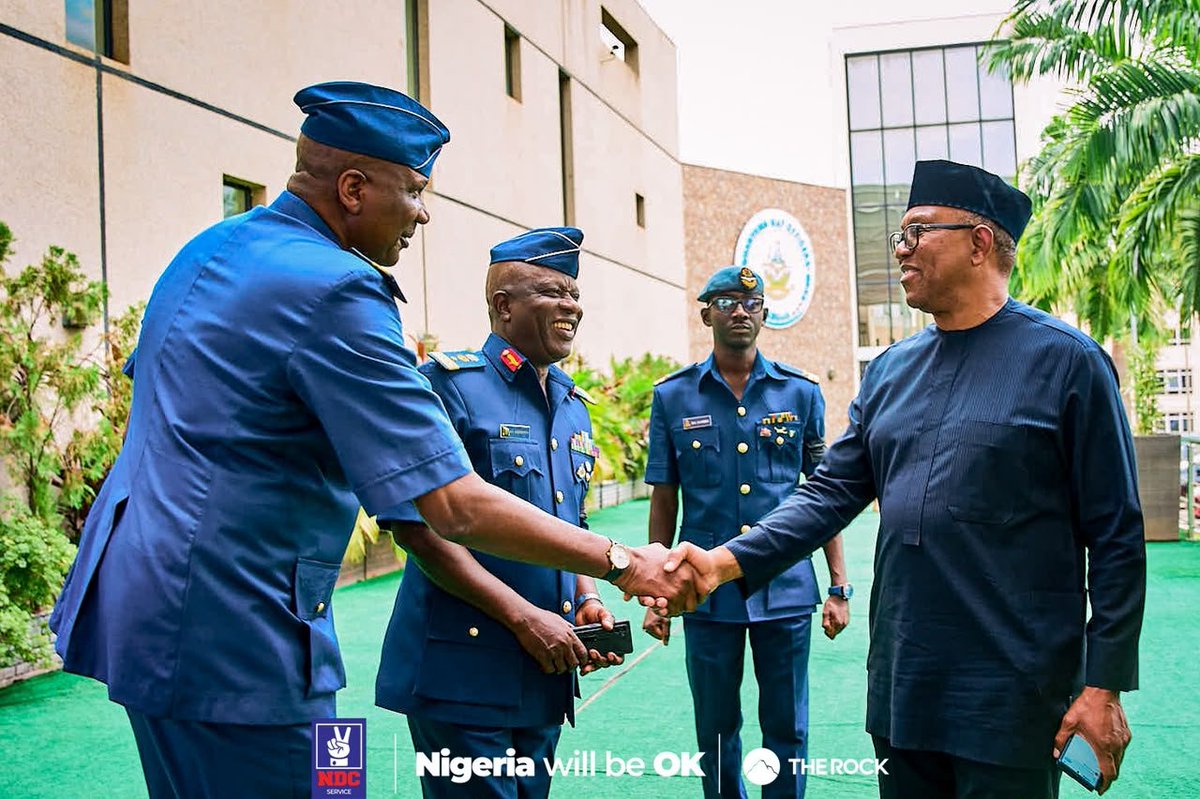
Further to my message yesterday, I visited the Nigerian Air Force facility in Abuja today to formally sign the condolence register following the unfortunate aircraft crash.
The visit gave me another opportunity to reflect on the sacrifices made daily by the men and women of our Armed Forces and other security agencies in the line of duty. These courageous Nigerians put their lives on the line to defend our nation and protect our people. We must never take their service and sacrifice for granted.
I extend my deepest condolences to the Nigerian Air Force and to the families, colleagues, and loved ones of those who lost their lives.
May God grant eternal rest to the departed and give their families the strength and fortitude to bear this painful loss.
May God continue to protect all those who serve our country. -PO
Our stand is still resolute.
Peter Obi is coming.
In our lifetime, we will feel what it is like to be governed by an actual human being that's not a thief.
Yes, Obi is our saviour.
Yes, Obi is a saint.
Saint Obi for 2027 ~ Nigeria will be OK. ✌🏾
Building a Better Nigeria Through Service.
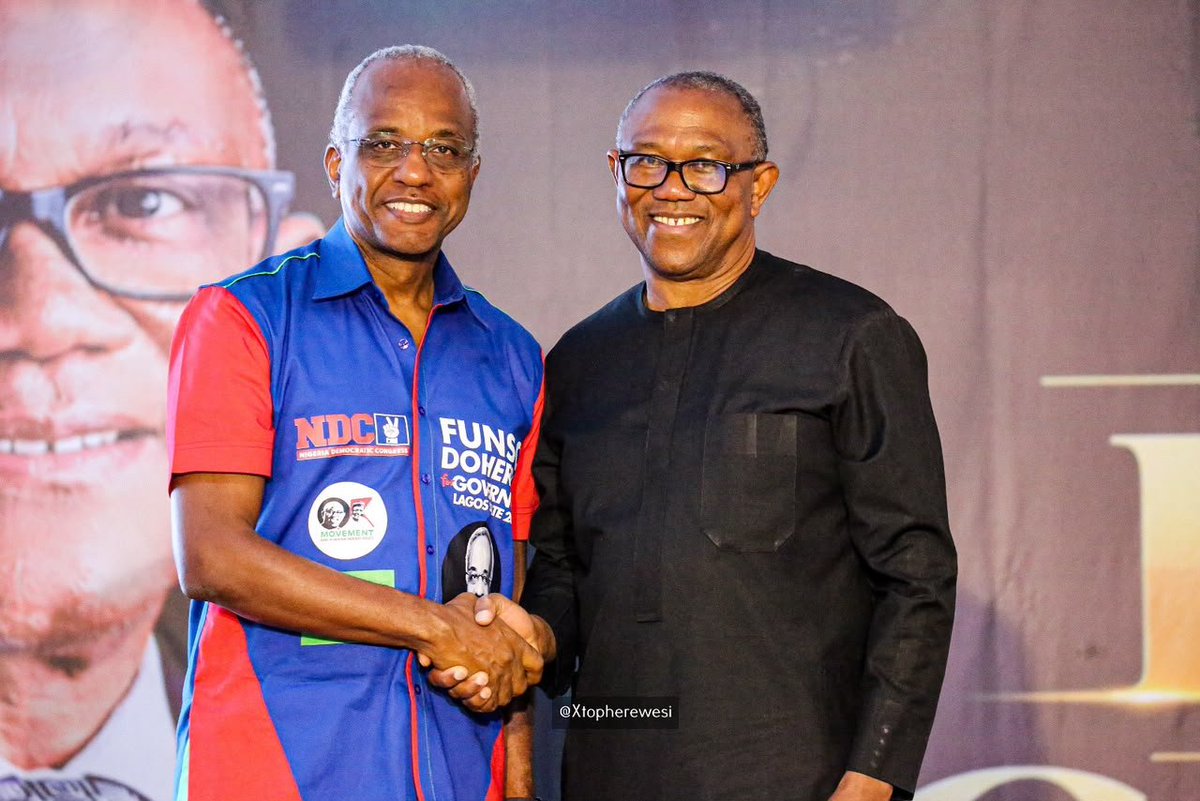
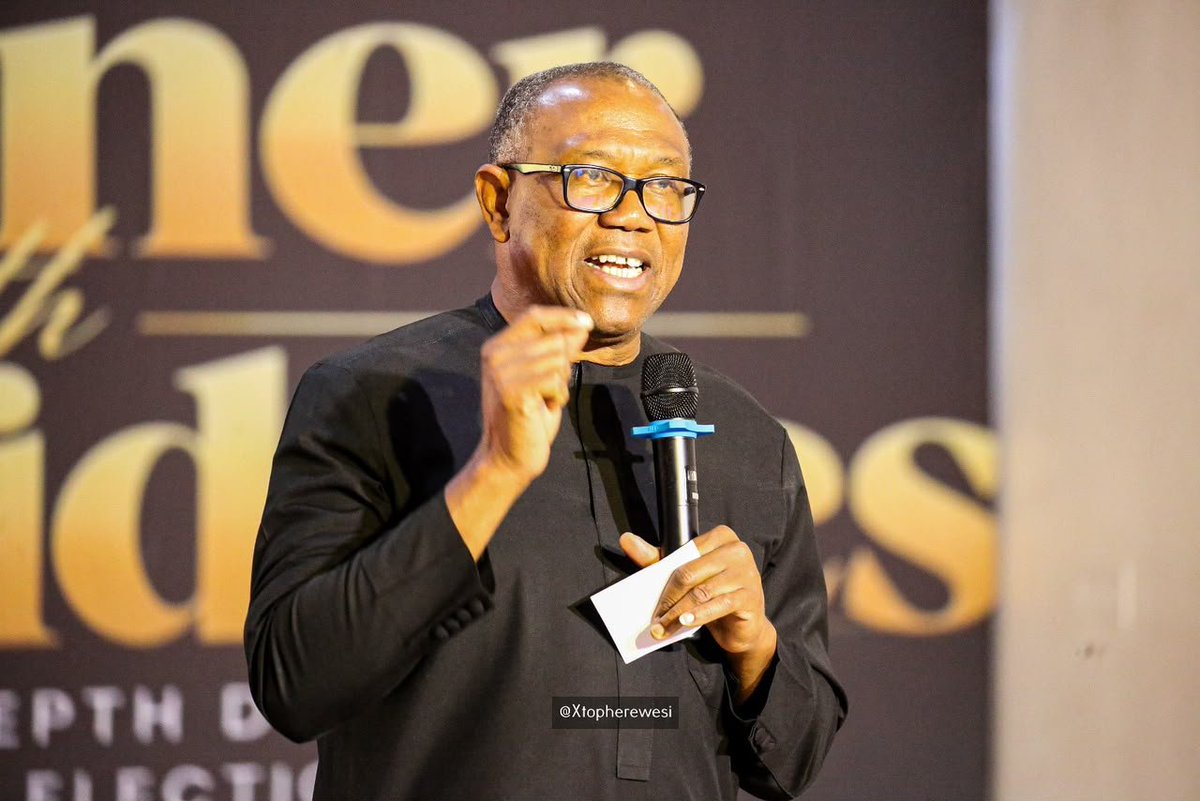
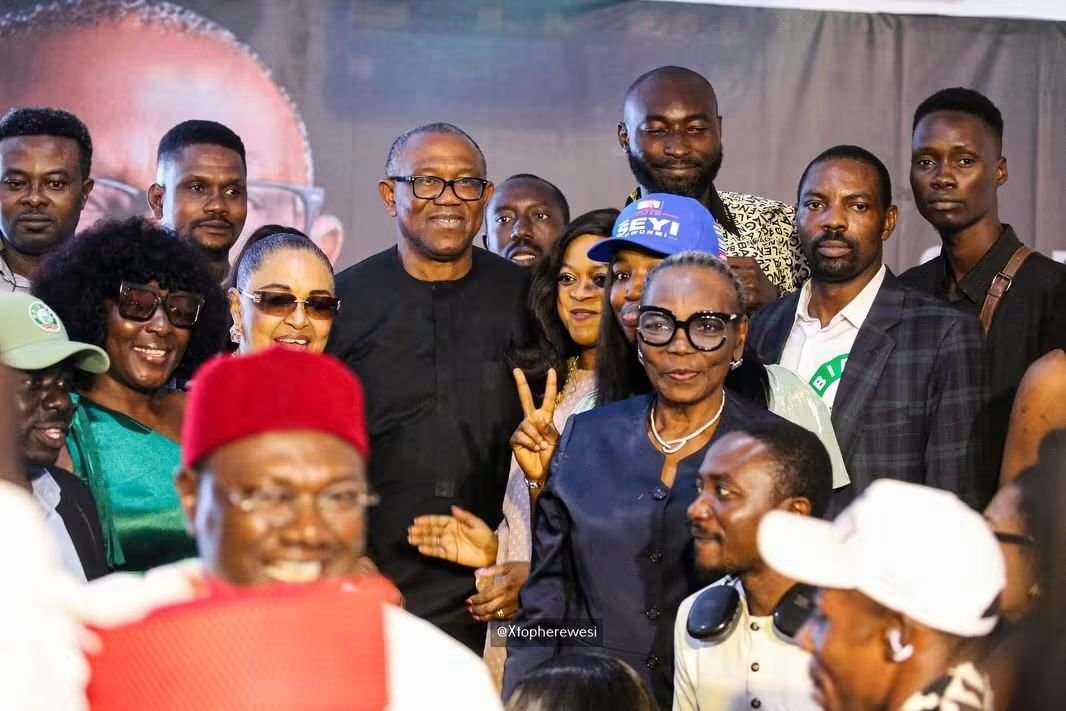
Yesterday in Lagos, I attended a dinner organised for Lagos NDC candidates and hosted by the Lagos Obidient Movement.
I used the occasion to remind the candidates that seeking public office is not about titles, positions, or the privileges associated with them. It is about accepting the responsibility to serve and committing ourselves to building a better Nigeria.
Having witnessed the suffering and hardship that our people continue to endure, we must remain conscious of the tremendous responsibility placed in our hands. Nigerians deserve leaders who are accessible, actively engaged, accountable, and willing to lead by example.
Our politics must establish a standard for others to follow. It must therefore be founded on competence, character, capacity, compassion, and a genuine commitment to the common good.
A better Nigeria is within reach, but achieving it requires leaders who are prepared to lead by example and remain accessible.
A New Nigeria is POssible. -PO
I dont know why all these APC hiree are using burner accounts to tweet. You dey shame to use your real account?
I know you're new to this. But I'll help you, because I know you're doing it to eat.
First thing, ensure you're getting well paid. Don't be the N5k guy. The budget is big, no let dem cheat you. Gather enough and run to UK to love Nigeria from there. Your predecessors did same.
But then, e no go still better for you because the fact you're using Burner already tells me you're paid peanut. The person who assembled you is the one eating good. You're not the first, don't worry. It's a 4 year cycle and we know how it goes.
If you are a Nigerian 🇳🇬, you don't need to bribe anybody to get police character report for immigration.
Go to this website:https://t.co/LokNxnbOg9
Fill out the form, then pay.
They will send you a form to do your thumbprint, and you will get the certificate in 1-2 weeks.
Confirmed!!
RT
I have normalized not talking to Him at all, and my life has been far more peaceful ever since.
I don't believe in prayer. In my opinion, it doesn't work, and I've written extensively on this platform over the years explaining why I hold that view.
I believe God exists, but I'm convinced He doesn't intervene in what happens here on earth. He simply watches. My worldview aligns more with the principles of deism, and I've made peace with that.
If you're sick, go to the hospital. If you're broke, work. Most of the things people want can only be achieved through their own actions. Relying on divine intervention often leads to disappointment.
Ten people can board a bus for the same journey. Every one of them may pray individually before leaving home and then pray together before the bus sets off. Yet, if an accident happens, eight may die while two survive. The survivors often conclude that prayer saved them or that they were somehow specially favored. I don't see it that way.
You can pray against death, poverty, sickness, or any other misfortune from now until the end of the year, and those things can still happen. That's one of the reasons I don't believe prayer changes the outcome of events.
My Vision for a Productive and Prosperous Nigeria
Today, being the 1st of July, 2026, I wish to humbly recall that when I decided to contest for the office of President of Nigeria, I pledged to place Nigeria on the path of unity and national transformation. Now, as the Nigeria Democratic Congress (NDC) candidate, I will, in the coming weeks and months, provide insights into the roadmap that I am confident will help curb abuse in government, halt the decline in the quality of life of Nigerians at all levels, and usher in an era of unity, peace, sustained progress, and prosperity.
This vision is anchored on a commitment to unity, inclusion, social justice, equity, and the freedom of every citizen to pursue lawful dreams.
Central to this proposed roadmap are significant reforms in education and healthcare, which are at the core of human capital development.
Robust human capital is indispensable infrastructure for national progress. It serves as the fundamental capital upon which daily life, economic expansion, and the delivery of essential public services depend.
These are foundational areas that we must reform with energy and determination if we are to reap the demographic dividend of our youthful population.
From the outset of my presidency, we will establish a task force dedicated to drastically reducing the menace of out-of-school children. We will place greater emphasis on Technical and Vocational Education and Training (TVET) to support our drive for massive industrialisation, anchored on our agricultural endowments and value addition across value chains organised around industrial parks to be located in development zones across the geopolitical regions of the country.
Funding and improving the equipment of TVET institutions, through partnerships among government, the private sector, and social entrepreneurs such as faith-based educators, will facilitate apprenticeship opportunities in the private sector, similar to the German dual education system.
The situation in which unemployment remains high while Nigerian entrepreneurs establish businesses elsewhere because skilled labour is scarce must be confronted decisively. Doing so is essential for the common good and for facilitating our transition from a consumption-driven economy to a production-driven one.
Character and civic education, emphasising the values that foster trust - an essential ingredient for enterprise and leadership - as well as shared national values, will receive significant attention within the tripartite approach to governance that we propose.
A New Nigeria is POssible. -PO
Here’s the full story of how one of those bandits naturally liked me.
I swear with my life, everything I’m telling you guys is 100% true. 💯
The bandits that abducted me were seven in number, but there was one among them they called “Bororojo.” He was the only one who understood Yoruba very well and could speak it fluently too.