Merchants often mix these up. The simplest way to remember it:
👤 KYC: verifies a person
Used when an individual is the customer, payer, or recipient. Goal: confirm identity and assess personal risk.
🏢 KYB: verifies a business
Used when a company wants to process payments. Goal: confirm legal entity details, ownership, and who controls financial actions.
What teams usually prepare:
KYC: name, DOB, ID document, selfie or liveness check (when required), address details.
KYB: company registration, business address, directors/authorized signers, ownership structure, and supporting documents.
Why it matters?
The right checks keep approvals faster and reduce interruptions later.
A practical rule
If the account represents a company, start with KYB. Add KYC only where the flow requires it❗️
Payment delays are often not the real problem. Unclear checkout messaging is. The goal is operational. Reduce support tickets, protect conversion, and keep cash flow predictable. Here is what matters most at checkout:
🕒 Set expectations upfront
Show typical confirmation time and a visible timer. “Processing…” is not guidance.
🔁 Explain what the buyer should do (and not do)
Do not resend. Do not switch networks. Keep the screen open. Simple instructions prevent duplicates.
📍 Make the status human-readable
Received → Confirming → Completed. Each step must mean something.
🧾 Provide proof instantly
Receipt + reference/tx ID that a buyer can save and share with finance or support.
🆘 Make help one tap away
Chat/WhatsApp/email visible on the delay screen, not buried in FAQs.
Clear delays feel shorter. Confusing delays kill trust❗️
Fast settlement isn’t just about speed, it’s about when the money becomes usable.
If you want faster settlements, focus on three things:
���️ Clear cut-offs: what time counts as “today” vs “tomorrow” (weekends and holidays included).
📊 Predictable status updates: “processing / confirmed / credited” should match what your finance team sees in reports.
🧩 Fewer exceptions: most delays come from edge cases - wrong network, underpayments, missing references, manual reviews.
When cut-offs are transparent, statuses are consistent, and exceptions are rare, settlements feel fast, and your cash flow gets smoother❗️
Crypto compliance in 2026 is part of day-to-day operations!
#KYC, #AML, and #MiCA now shape onboarding, payments, refunds, and payouts, so compliance has to live inside the payment flow.
We break down what this looks like in practice and how crypto payment processing helps you stay compliant without slowing down.
👉 Read the full article on the Cryptix blog https://t.co/PSStlTSktu❗️
Most payment drop-offs aren’t about price, they’re about uncertainty. These are some of the most common checkout issues in crypto payment flows:
1. No clear total: the exact amount + network fee isn’t visible upfront.
2. Weak status updates: “Processing…” with no steps, timer, or confirmation guidance.
3. Network confusion: wrong chain / wrong asset choices without guardrails or auto-detection.
4. No fallback path: if a payment expires or fails, users must start from scratch.
5. Poor proof of payment: missing receipt/tx reference slows support and erodes trust.
Fix these and conversion usually follows❗️
Crypto payments are no longer about experimentation.
In 2026, the focus shifts to reliability, usability, and scale.
Stablecoins, embedded payment flows, smarter routing, and automation are reshaping how businesses accept crypto payments and manage operations globally.
In our new article, we look at the key trends that will define crypto payments in 2026 and what they mean for companies building real payment infrastructure.
👉 Read the full article on the Cryptix blog https://t.co/NJIzngaQL3❗️
Anti-fraud in crypto isn’t one magic tool - it’s a checklist built into every step of the flow❗️
🔎 Know who you work with
Run KYB/KYC, verify company data, owners, and key signers. Block risky geos and keep a separate policies for high-risk verticals.
🧠 Screen wallets, not just people
Use address screening (sanctions/PEP, mixers, hacked funds), flag first-time wallets, and require extra checks for large or unusual payouts.
📡 Watch behavior, not only single payments
Velocity limits per user/wallet, caps by region or asset, alerts for repeated failed attempts and sudden spikes in volume.
✅ Approvals where it matters
Second approver for big payouts or sensitive changes (limits, new wallets, new API keys).
🧾 Log everything
Tx hash, who was it created by, by whom approved, when was it settled, why was it overridden. If you can’t reconstruct a payout from logs, you have a blind spot.
With Cryptix https://t.co/gq5bndnz5R these controls live inside the crypto payment and payout flow❗️
You don’t need a website to start accepting crypto payments❗️
Many businesses close deals in chats, emails, or even offline. Payment links, QR codes, and invoices make it possible to accept crypto exactly where the sale happens, without building a checkout or running a site.
In our latest article, we break down the simplest ways to accept crypto payments without a website and explain which option works best for different business scenarios.
👉 Read the full article on the Cryptix blog https://t.co/IofSmc8Ggj❗️
🎄 Merry Christmas from the Cryptix team!
This year, more and more merchants have been looking for payment flows that are faster, clearer, and less dependent on card rails and bank hours. Thank you to all our clients, partners, and friends who trusted Cryptix to help them accept crypto payments and run stablecoin payouts in a more predictable way.
In 2026 we’ll keep doing what we do best: building compliant, transparent rails for digital payments - so your team can focus on the business, not on moving funds between wallets, platforms, and accounts.
✨ Wishing you a calm year-end, smooth settlements, and confident launches in the new year!
❌ Myth: Crypto is anonymous and untraceable.
✅ Reality: On-chain flows are more traceable than cash. Tools flag risky wallets, geos, and patterns before funds move 🛡
❌ Myth: Volatility makes it unusable.
✅ Reality: Stablecoins (USDT/USDC) keep amounts predictable; instant swap locks value on arrival 📏
❌ Myth: No chargebacks = no customer protection.
✅ Reality: Protection moves to policy: refunds via controlled payouts, approvals, and audit logs. Clearer than card disputes 🧾
❌ Myth: Compliance is impossible for high-risk.
✅ Reality: KYB/KYC, sanctions/PEP screening, geofencing, velocity alerts, and role-based limits live inside the flow 📋
❌ Myth: Fees are opaque.
✅ Reality: Network fees are visible upfront; per-order economics are easier to model than card + FX + reserves 🧮
Сrypto rails don’t remove risk, they make it measurable and controllable when operated with the right policies and tooling❗️
❗️Crypto is volatile❗️ True for some assets — not for fiat-pegged stablecoins!
What “stable” means
USDT/USDC track a fiat currency (usually USD). One unit ≈ 1 dollar. That peg is maintained by reserves and issuance/redemption. Day to day, your invoice total doesn’t drift. 📏
At checkout
Set the amount in your currency. The gateway quotes the stablecoin total. Buyer pays; you see the same value you expected 💸
For finance
You can auto-convert incoming funds to your operating currency (stay in USDT/USDC or settle to fiat) 🧾
For payouts
Send USDT/USDC to partners, creators, or vendors. Amounts stay predictable, fees are visible upfront, and confirmations arrive in minutes — across time zones and bank holidays ⏱️
Risk policy
Keep BTC/ETH for marketing moments or crypto-native buyers; use stablecoins for predictable revenues and payouts 🛡
If the goal is stable value and smooth operations, stablecoins behave like digital dollars — without card rails or rolling reserves❗️
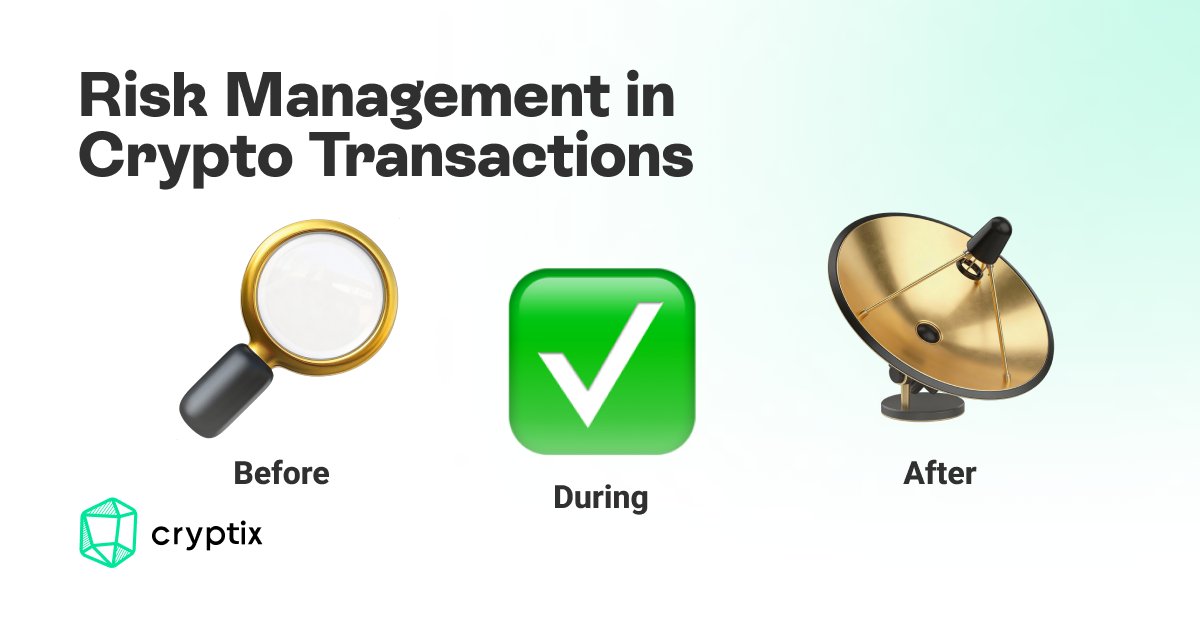
Think of risk as a habit, not a feature. It lives inside your payment flow — before, during, and after every transaction.
🔎 Before — Know who you pay and who pays you. Run KYB/KYC where needed, screen wallet addresses, block risky geos. If a payment looks odd, add checks, not hope.
✅ During — Enforce rules by default: limits, second approver for sensitive actions, clear reasons for overrides. If amount, asset, or destination changes, policy should react in real time.
📡 After — Log tx hash, memo, approver, settlement time. Set alerts for spikes or first-time destinations.
🧪 Quick self-test — Can you prove, in 2 minutes, who approved the last high-value payout and why it passed checks? If not, you have a document, not a control.
Latin America runs on cross-border commerce and everyday remittances. Card fees, FX spreads, and settlement delays chip away at margin - which is why many merchants add stablecoins (USDT/USDC) to checkout and payouts 🌎
What buyers want: predictable totals, fewer decline loops, and a way to pay with “digital dollars” they already hold. Fewer surprises → more completed checkouts 💳
What merchants need: faster access to funds, transparent costs, and clean reconciliation. Stablecoin payments land in minutes, expose the network fee upfront, and generate exportable logs for finance ⏱️
How teams start: launch Payment Links for invoices, chat, and support; add Payment Buttons on high-intent pages as traffic grows; use auto-conversion to keep treasury in fiat 🧰
👉 Visit https://t.co/gq5bndo6Vp and request a demo, we’ll review your flow and show how to accept crypto payments and automate stablecoin payouts with clear fees❗️
Your buyers don’t all pay the same way — your checkout shouldn’t force them to. With multi-currency support, you can accept BTC, ETH, USDT, and USDC (and more) in one flow and keep finance predictable❗️
🪙 Buyer choice, better conversion
Offer the asset customers already hold. Fewer detours, fewer drop-offs.
🧭 Per-asset routing
Pick the optimal network for cost and finality. Set rules per market or product.
⚡️ Instant swap & settlement options
Auto-convert incoming BTC/ETH to USDT/USDC on arrival, or keep native assets when you need them.
📊 Clean reporting
One dashboard for all assets: transaction IDs, memos, hashes, and exports that tie to invoices.
🛡 Policy & controls
Role-based approvals, address screening, limits by amount/region — built into the flow.
Where it shines: iGaming winners, Cross-border E-commerce, Marketplaces, Affiliates/Partners — anywhere choice and speed matter!
Refunds are the part of payments that almost no one thinks about until things start going wrong.
Slow confirmations, confused users, missing status updates. This is where problems appear, support load grows, and trust drops.
But in crypto, the refund flow can feel completely different!
A well-designed process turns a stressful moment into something fast, clear, and almost effortless.
Users feel the difference immediately, and so does the support team.
In our new article, we break down what truly makes crypto refunds effective and why improving just one flow can significantly reduce support requests.
👉 Read the full breakdown on the Cryptix blog https://t.co/klu62L5lxf❗️
Think of it like a card processor, but for crypto!
It lets a business accept digital assets (USDT, USDC, BTC, etc.), confirm the payment, and settle funds where finance needs them. No new bank accounts for every country!
What it does, in plain words:
✅ Shows a checkout or a link to pay
✅ Checks the payment on-chain
✅ Notifies your system when funds arrive
✅ Helps with refunds and payouts
✅ Keeps logs for finance and compliance
Why teams use it: fewer card declines, faster cross-border settlement, and clear reporting. Start with hosted checkout or Payment Links, then add buttons/APIs when traffic grows❗️
Wires look simple… until the line items add up.
🏦 Bank wire → transfer fee + correspondent fee + FX spread + inbound fee + “cut-off” delays. Result: slower cash, harder forecasting, and reconciliation across time zones.
🪙 Crypto payout → visible network fee, near-instant finality, no rolling reserves, no “bank hours.” Easier to schedule batches and prove delivery with a transaction hash.
What finance teams care about:
✅ Predictable unit economics
✅ On-time partner/vendor payments
✅ Audit-ready records tied to invoices
Tip: model the all-in cost per $1000 for both methods (fees + time value). The “cheap” wire often isn’t.
🚀 Want to run crypto payouts with transparent fees?
👉 Visit https://t.co/gq5bndo6Vp and request a demo — our team will contact you and explain how to execute and automate crypto payouts❗️
Crypto payments look simple — but the infrastructure behind them isn’t
A QR code, a lightning-fast checkout, a “Pay with Bitcoin” button - all of it works because a full crypto payment gateway runs behind the scenes.
In our new article, we break down:
🔐 What a crypto payment gateway actually is
⚙️ How cryptocurrency payment processing works end-to-end
🧩 How businesses integrate it through a crypto payment API
🌍 Why these rails matter for speed, stability, and global reach
👉 Read the full guide on the Cryptix blog https://t.co/Fe7qwgVmDX❗️
In payouts, “fast” means predictable, finance-friendly, low-touch. That’s why many teams move recurring partner and vendor payouts to stablecoins 👇
📊 Predictable amounts
USDT/USDC track fiat, so invoices and payouts don’t drift. Easier cash-flow planning.
⏱️ Faster availability
Funds arrive in minutes, not days. Partners and contractors get paid on time.
🌍 Cross-border
No new bank accounts per market. Send to wallets and track confirmations in real time.
🧮 Transparent costs
Network fees are visible upfront. No rolling reserves and fewer intermediaries.
🧾 Cleaner reconciliation
Each payout has an ID and on-chain hash. Exports match invoices and ledgers.
🛡 Control & compliance
Approvals, limits, whitelists, and screening sit inside the payout flow.
🎯 Where it fits
Affiliates, marketplaces, creators, vendors, iGaming — any flow that can’t wait for bank hours.
Prefer fiat? #Cryptix can auto-convert stablecoin funding to your chosen fiat and settle on-demand or on a schedule❗️
Quick idea: Buttons live on your site; Links live anywhere a URL fits. Keep it simple and ship what reduces friction fastest.
��� Buttons: Add “Pay with crypto” to product or checkout pages. You keep the on-site UX, tracking, and A/B tests. Best when you already have steady traffic and a bit of dev time to place and style the component.
🔗 Payment Links: Open a hosted checkout via URL or QR in email, chat, invoices, or support tickets. Go live in minutes with no code. Ideal for B2B invoices, pilot markets, and channels where you don’t want to touch the site yet.
🧰 Ops facts: Both support USDT/USDC/BTC, refunds, and risk checks. Links can expire or be single-use for cleaner approvals. Buttons give tighter analytics continuity on your domain.
🧭 Rollout plan: Start with Links to validate demand and fix ops. Add Buttons on high-intent pages once you see conversion. Layer APIs and auto-conversion as volume grows.
✅ https://t.co/gq5bndnz5R supports both Payment Links and Payment Buttons out of the box❗️