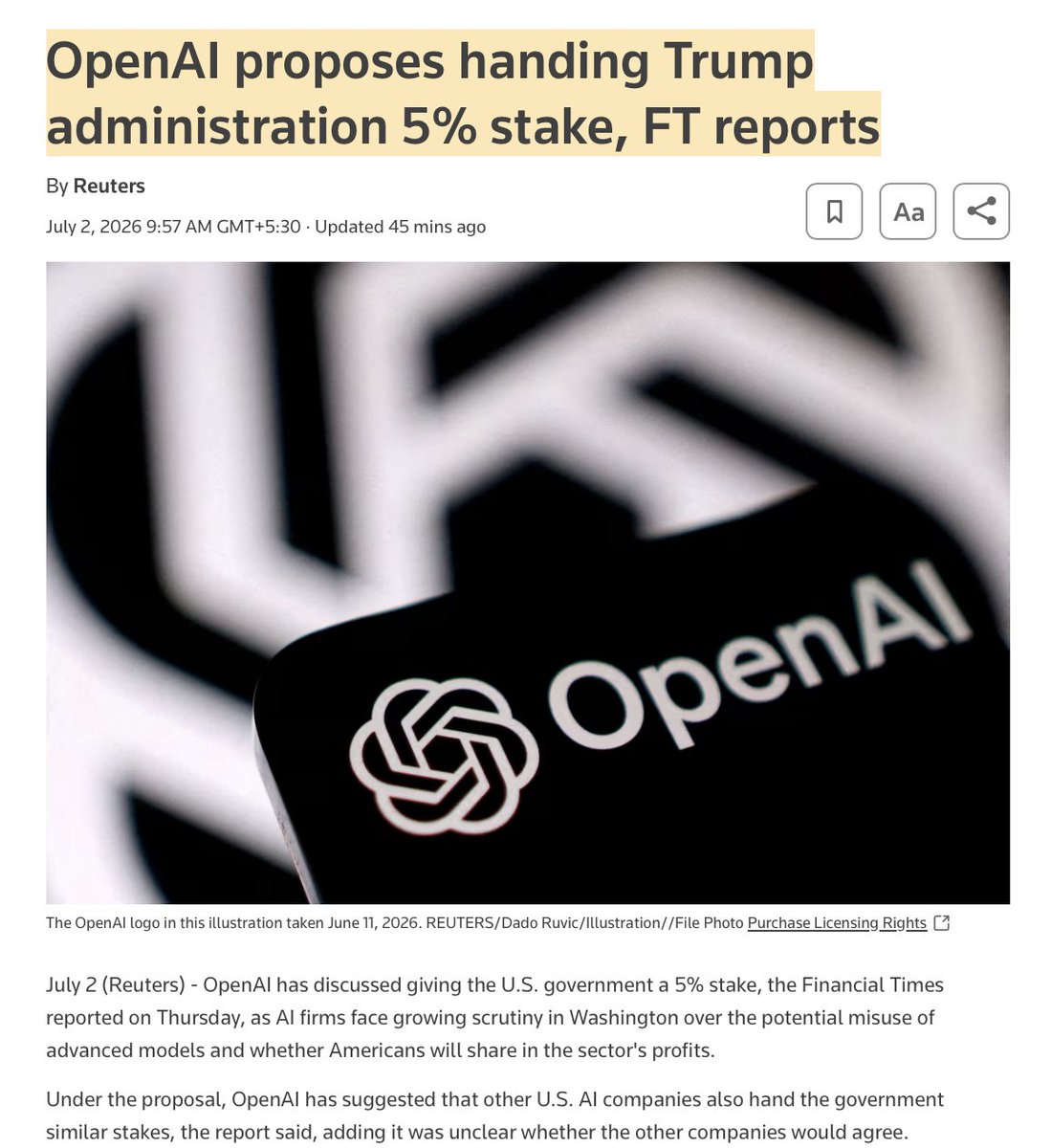
🚨 OpenAI just proposed handing the US government a 5% stake in the company.
Sam Altman is framing it as generosity. The math tells a different story.
Here's what's actually happening 🧵
THE FIRST CASE OF A BITCOIN TREASURY COMPANY DYING IS HERE!!! 🤯
K Wave Media is worth studying because it is a case study in how balance sheet mismatch, not thesis failure, kills these companies.
The original pitch was straightforward. Become a Bitcoin treasury company, use convertible debt and equity facilities to scale toward 10,000 $BTC, let the balance sheet do the work while the media business ran alongside it. Reasonable in isolation. The problem was never the Bitcoin thesis. The problem was the capital structure underneath it.
K Wave's market cap sat around $21 million. The AI pivot they announced in May was sized at 485 million dollars, over 20 times their entire company value. That is not a strategic reallocation. That is a company writing a check its actual size cannot cash, and the market understood that immediately, hence the 25% single day drop the moment the announcement landed.
Here is the part that matters more than the headline. Total liabilities exceeded current assets going into this. A current ratio of 0.29 means for every dollar of short term obligation, the company had 29 cents of liquid asset to cover it. That is not a company positioned to hold a volatile asset through a drawdown. That is a company one bad quarter away from forced liquidation regardless of what asset sits on the balance sheet.
So when Bitcoin corrected and the AI narrative needed capital faster than the AI infrastructure could generate revenue, the treasury became the only liquid thing left to sell. Not because Bitcoin failed as a strategy, but because the company never had the balance sheet resilience to survive being wrong about timing even once.
This is the pattern worth watching across every small cap Bitcoin treasury company, not just K Wave. The ones with real cash flow businesses underneath the treasury can weather a drawdown. The ones running on convertible debt and equity facilities with weak current ratios are one liquidity event away from becoming forced sellers at the worst possible time.
Bitcoin treasuries are not inherently fragile. Undercapitalized companies pretending to be treasuries are.
Thumbnail dekh k short mat khol dena.
Watch the full video, the best 10 minutes you'll spend this week.
The AI bubble is about to pop. $KOSPI has already crashed 4 times in 6 months. Samsung and SK Hynix are cracking. Chips are bleeding. This is not a random dip; it is the start of the big short.
Full breakdown here 👇https://t.co/Ct4ysSf7MQ
Nothing here is finalized. No formal agreement exists, and the mechanics of transferring equity are still unclear.
But the framing is worth sitting with.
When a company drowning in trillion-dollar commitments offers the government a small slice of itself and calls it generosity, ask who actually needed the deal more.
🚨 OpenAI just proposed handing the US government a 5% stake in the company.
Sam Altman is framing it as generosity. The math tells a different story.
Here's what's actually happening 🧵
This isn't happening in a vacuum either.
The Trump administration has already taken stakes in Intel, MP Materials, Lithium Americas and Trilogy Metals. Treating equity stakes as a normal tool of industrial policy is now the pattern, not the exception.
OpenAI's proposal fits neatly into a playbook that already exists.
💥🇺🇸BREAKING: The US Treasury just completed a $2 billion debt buyback.
Here is what that actually means, because most people see this headline and have no idea why it matters.
Treasury is buying back older, less liquid bonds it already sold and replacing them with new ones. It is not paying down debt. It is swapping old illiquid bonds for new liquid ones, with the difference funded by fresh T-bill issuance.
The point is liquidity. Off-the-run Treasuries, the older bonds nobody trades anymore, can seize up during stress events and drag the whole market with them. Buybacks pull those illiquid bonds off the market before that happens.
$2 billion is on the smaller end. Treasury ran a $12.5 billion single-day operation last December, the largest in US history. The May-July 2026 quarter has up to $38 billion in liquidity support operations planned across different maturity buckets.
On a day when the KOSPI circuit-broke for the fourth time this year, chips are bleeding, and Bitcoin is sitting at a 21-month low, Treasury quietly running routine liquidity operations in the background is exactly what it is supposed to do.
The plumbing works. The markets above it are a different story.
BLOODBATH 🚨
South Korea's $KOSPI just crashed 6.5% and triggered a circuit breaker, halting all program selling in 20 minutes flat.
₩396 trillion. $267 billion. Gone in 20 minutes.
This is the fourth time the $KOSPI has circuit-broken in 2026. A market that was the best performing in the world six months ago now halts trading on a near-weekly basis.
Same story every time. Samsung and SK Hynix, two stocks that make up 42% of the index, lead every single leg down. The AI trade that built Korea's biggest rally in history is now unwinding through the same two names that built it.
Foreign institutions are selling. Korean retail is buying every dip. One of them is right about where this ends.
The $KOSPI is not a stock market anymore. It is a leveraged AI chip ETF with a circuit breaker attached.
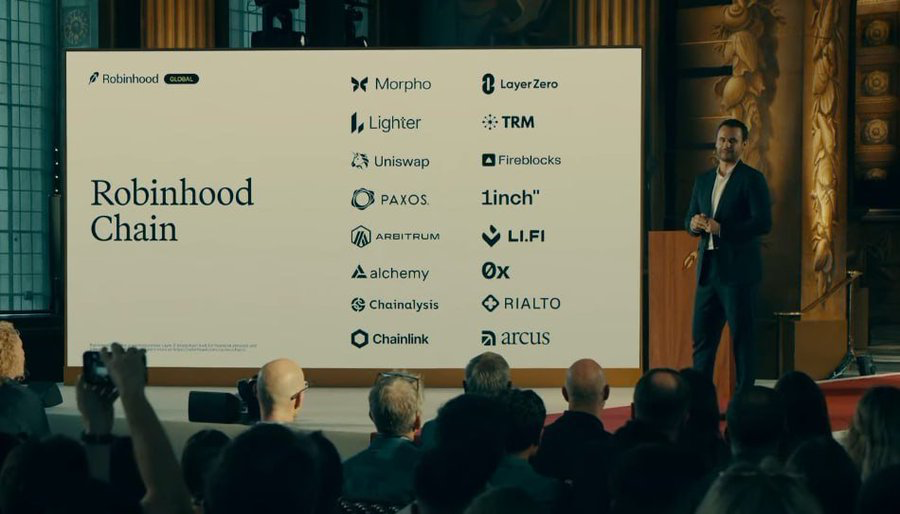
💥 BREAKING: ROBINHOOD LAUNCHES ITS OWN L2 BLOCKCHAIN "ROBINHOOD CHAIN" ON ARBITRUM
Something quietly significant just happened to Arbitrum and most people are going to miss it.
Coinbase built Base on Optimism's OP Stack. Kraken built Ink on Optimism. And Robinhood just launched Robinhood Chain on Arbitrum. Three of the largest retail financial platforms in the world all chose to build their own L2s, and two of the three chose Arbitrum's technology stack specifically.
Think about what that actually means for Arbitrum's position.
Every user who buys a tokenized stock on Robinhood Chain is generating activity that settles through Arbitrum's infrastructure. Every yield product, every DeFi interaction, every bridging transaction that Robinhood's 24 million users touch flows through a chain that Arbitrum built the rails for. Robinhood did not just launch a blockchain. It handed Arbitrum a distribution network that most L2s would spend years and hundreds of millions of dollars trying to build organically.
And Robinhood is not alone. Cardium Games runs on Arbitrum. SpaceX's xAI compute deals are structured around infrastructure that plugs into the EVM ecosystem Arbitrum anchors. The OUSD consortium from Visa, Mastercard, and BlackRock is EVM compatible. Every major institution that is building onchain right now is building inside the Ethereum and Arbitrum gravitational field, not outside it.
This is the network effect that people kept saying Ethereum and its ecosystem would eventually develop, and it is developing right now, just through the L2 layer rather than L1 directly.
The thesis on Arbitrum was always that it would become the settlement layer for institutional onchain finance. Robinhood's mainnet launch today is the clearest confirmation of that thesis that has arrived yet.
Three years ago Arbitrum was a scaling solution for DeFi degens. Today it is the infrastructure that Robinhood uses to offer stocks to 120 countries and that Robinhood Chain's 24 million users will interact with every time they trade.
That is not a niche L2 anymore. That is financial infrastructure.
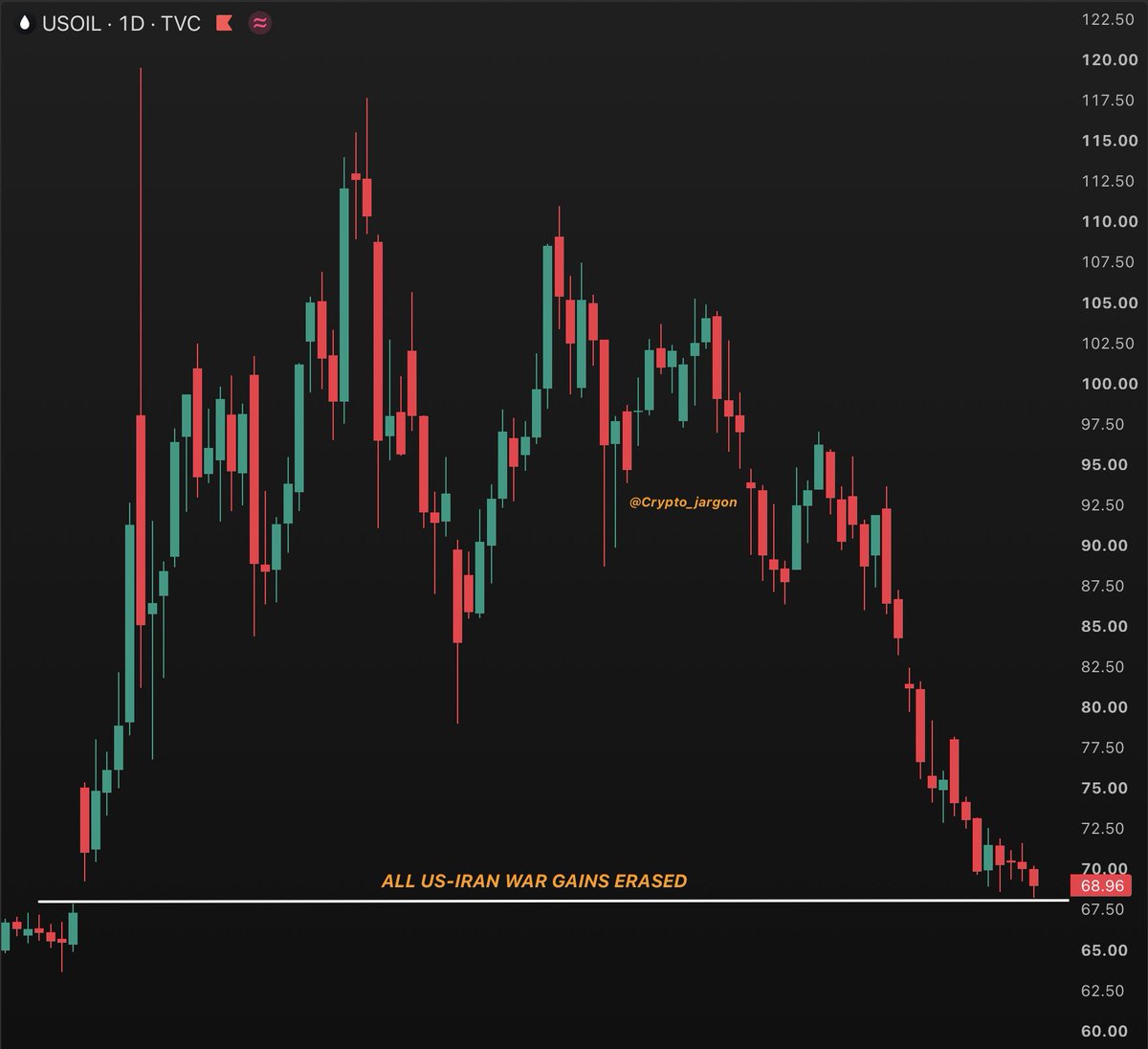
Every single US-Iran war premium has been erased.
Oil is back at $68.96, the exact level it was trading before the war began. Four months of geopolitical fear priced in, then priced straight back out in a matter of weeks.
The chart says what the headlines won't say plainly. The market has decided the war is over.
And the consequences are already moving. Russia is scrambling to import gasoline from India because Ukraine destroyed its refineries while oil was at $105. Nayara just cut Indian fuel prices for the first time in two years. The Iran sanctions premium that was holding crude above $100 is gone.
The market is almost never wrong about where a conflict is headed. When it gives back every single dollar of war premium this fast, it is not hedging. It is concluding.
The only question left is whether $68 holds or whether we see the pre-war range in the $60s next.
BREAKING 🚨
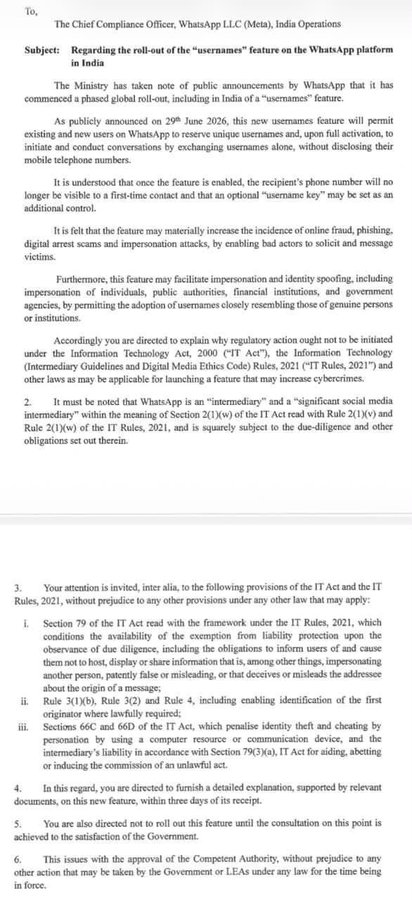
India just told Meta to pause WhatsApp's username feature before it launches in the country.
The government has given Meta 3 days to explain the feature and has asked it not to roll out in India until consultations are complete.
The concern is straightforward. WhatsApp's new username feature lets users communicate without sharing their phone number. Privacy win for users, nightmare for law enforcement. India is already battling a massive wave of WhatsApp-based financial scams and impersonation fraud, and officials worry this feature hands bad actors another layer of anonymity.
The comparison they are drawing is Telegram, where anonymous usernames became the infrastructure for fraud networks across South Asia.
India has 500 million WhatsApp users, the largest base in the world. When India tells Meta to pause something, Meta pauses it.
This is not a ban. It is a consultation with teeth, and Meta has three days to answer.