Stablecoin payments will not win because they are “onchain.”
They will win when businesses can accept, settle, reconcile, and operate them without stitching together half a dozen tools.
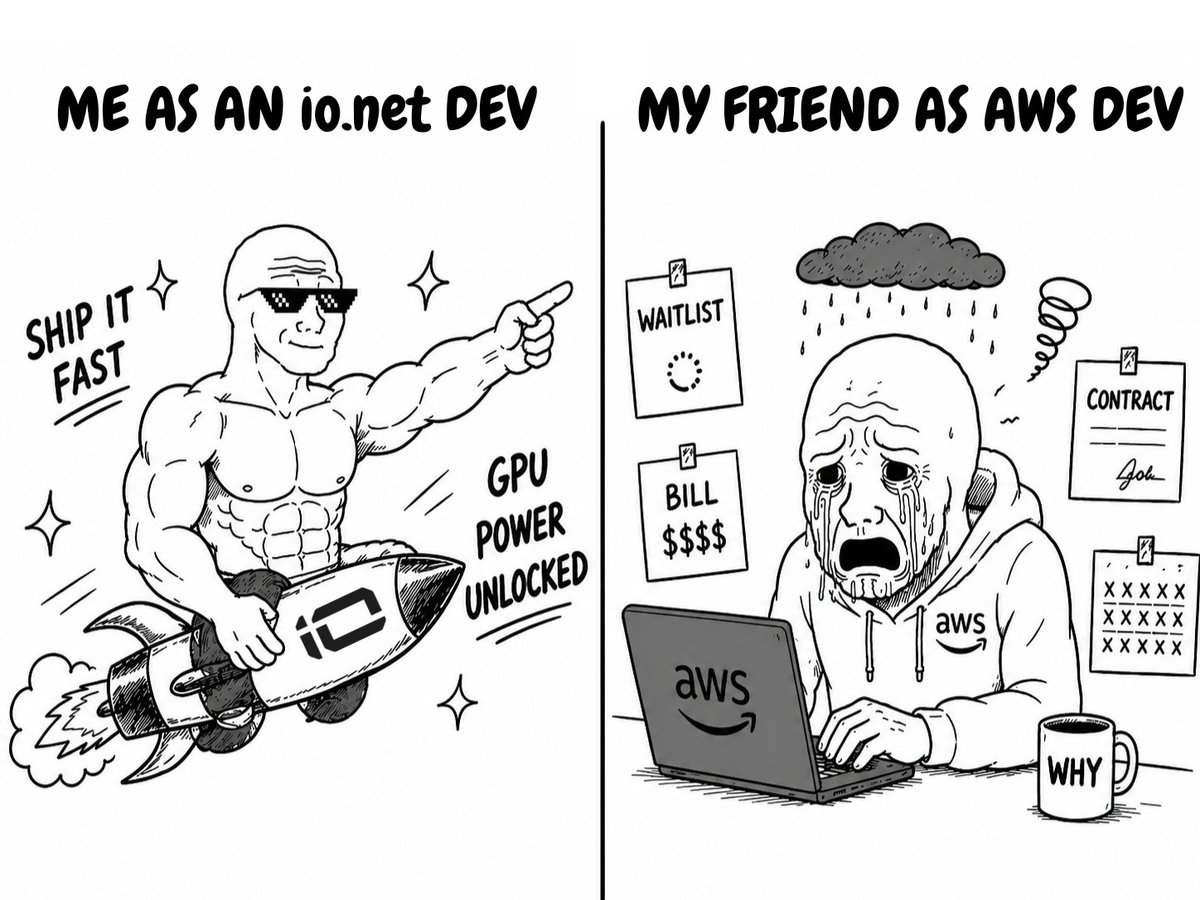
Centralized clouds were not built for AI startups.
High costs, long contracts, limited flexibility.
@ionet offers GPU compute at up to 70% lower costs with instant access and no lock-ins.
Build faster. Spend less.
👉 See why builders are switching: https://t.co/ZmmNlJriYB
I used to think cloud bills were just part of building AI.
Then I saw the actual breakdown.
AWS charges $229 to fine-tune a 13B model.
You know what @ionet charges for the exact same job?
👉 $6.71
And AWS forces you to rent 8 GPUs when you only need 1.
AI agents are moving from recommendations to transactions.
The next question is not whether agents can buy. It is what payment infrastructure they will use when they do, and what our predictions reveal about the next phase.
Introducing the Agentic Economy Report ↓
Morph recently attended Proof of Talk 🇫🇷
Wesley Rios led a masterclass on stablecoins and the new economics of global payments.
Key takeaway: stablecoins are becoming a new layer for global money movement.
Reality is bringing U.S. stocks onchain on Morph.
Through @Realityfi_xyz, tokenized U.S. stock exposure becomes directly accessible through Bitget, with onchain infrastructure built to support a more flexible portfolio experience.
What this unlocks ↓
AI should belong to builders, not platforms.
That is why @LLMTUNE_IO stands out with confidential AI, open LLMs, fine-tuning, inference and AI agents—all in one platform 🔥
Your Models - Your Data - Your Future
👇
When centralized clouds start draining budgets…
There’s always that one question everyone ends up asking:
“So what’s the alternative?”
And the answer is getting pretty obvious now.
@ionet 🚀
$IO just got listed on Upbit's KRW market.
For those who don't know - Upbit is the largest crypto exchange in South Korea.
KRW market means direct Korean Won trading pairs.
What makes this timing interesting is everything happening at @ionet right now simultaneously.
The CLARITY Act is about more than market structure.
For payment companies, clearer rules around digital assets can shape how stablecoins, wallets, processors, and financial institutions build around real payment flows.
Why this matters ↓
The winners won’t just build another payment tool.
They’ll build the full experience around stablecoins - simpler onboarding, smoother operations, and less complexity behind the scenes.
"Stablecoins are real. Integration is still siloed.”
The next phase of adoption will not be won by another isolated tool. It will be won by the stack that makes stablecoin payments easier to launch, operate, and scale.
This is exactly why so many businesses stay stuck in “we’re exploring crypto payments” mode.
The actual payment part is easy.
A smoother stack changes everything.
Crypto payment integration is broken by design.
Most businesses do not fail because they lack interest. They fail because the path to launch still runs through too many vendors, tools, and technical decisions.
Where the stack breaks ↓
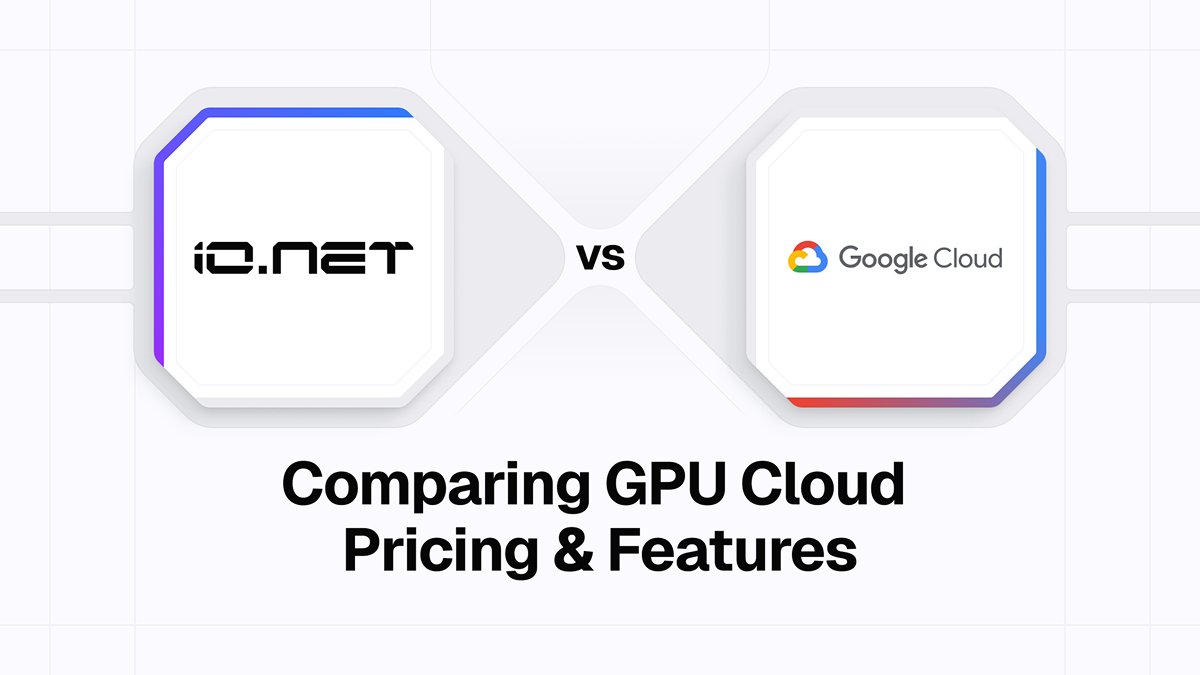
Over $100,000.
That's the extra cost of running 10 GPUs on @googlecloud every year vs @ionet.
There are also the quota approvals, regional shortages, egress fees, and TPU lock-in.
Or you can deploy in 2 minutes, skip the bureaucracy, keep the savings.
The choice is easy. Here's the full breakdown:
https://t.co/clfUpOmvat