Recently, the cryptocurrency market has rebounded, with Bitcoin climbing back above $65,000. The rally has been driven mainly by renewed inflows into U.S. spot Bitcoin ETFs and improving risk appetite amid easing tensions in the Middle East.
particularly AI and semiconductor stocks. Capital has increasingly flowed into tech stocks and high-profile IPOs, draining liquidity from the crypto market. At the same time, large-scale liquidations of leveraged long positions further amplified the decline.
Bitcoin has seen a sharp decline recently, briefly falling below $60000 and hitting a multi-month low. The sell-off was mainly driven by continued outflows from spot Bitcoin ETFs, Strategy's rare reduction of its Bitcoin holdings, and record highs in U.S. equities,
The initiative aims to create a blockchain-based representation of the yen, reflecting Japan’s strategy to integrate digital currencies into its financial system through a regulated framework.
On May 13, the Japan Blockchain Foundation announced plans to introduce a yen-pegged stablecoin called EJPY on the Ethereum network. This represents another step in Japan’s gradual expansion of its regulated digital currency infrastructure.
The case shows that Web3 gaming valuation is no longer driven only by gameplay narratives or community hype, but increasingly by token unlocks, liquidity, player retention, NFT trading activity, and real in-game spending sinks.
Gods Unchained has become a notable GameFi finance case this week. Its GODS token is scheduled for an unlock of about 2.6 million tokens on June 10, creating potential supply pressure.
However, U.S. spot Bitcoin ETFs continued to see capital outflows, with May recording the largest monthly net outflow of the year, leaving the market outlook uncertain.
This initiative signals that BlackRock is continuing to advance the on-chain tokenization of traditional financial assets including U.S. Treasuries and money market funds, while bridging stablecoins with the real-world assets (RWA) ecosystem.
On May 9, BlackRock — the world’s largest asset manager — announced plans to launch two tokenized money market funds tailored for stablecoin holders, a move that underscores its growing bet on the long-term growth trajectory of the “digital dollar economy”.
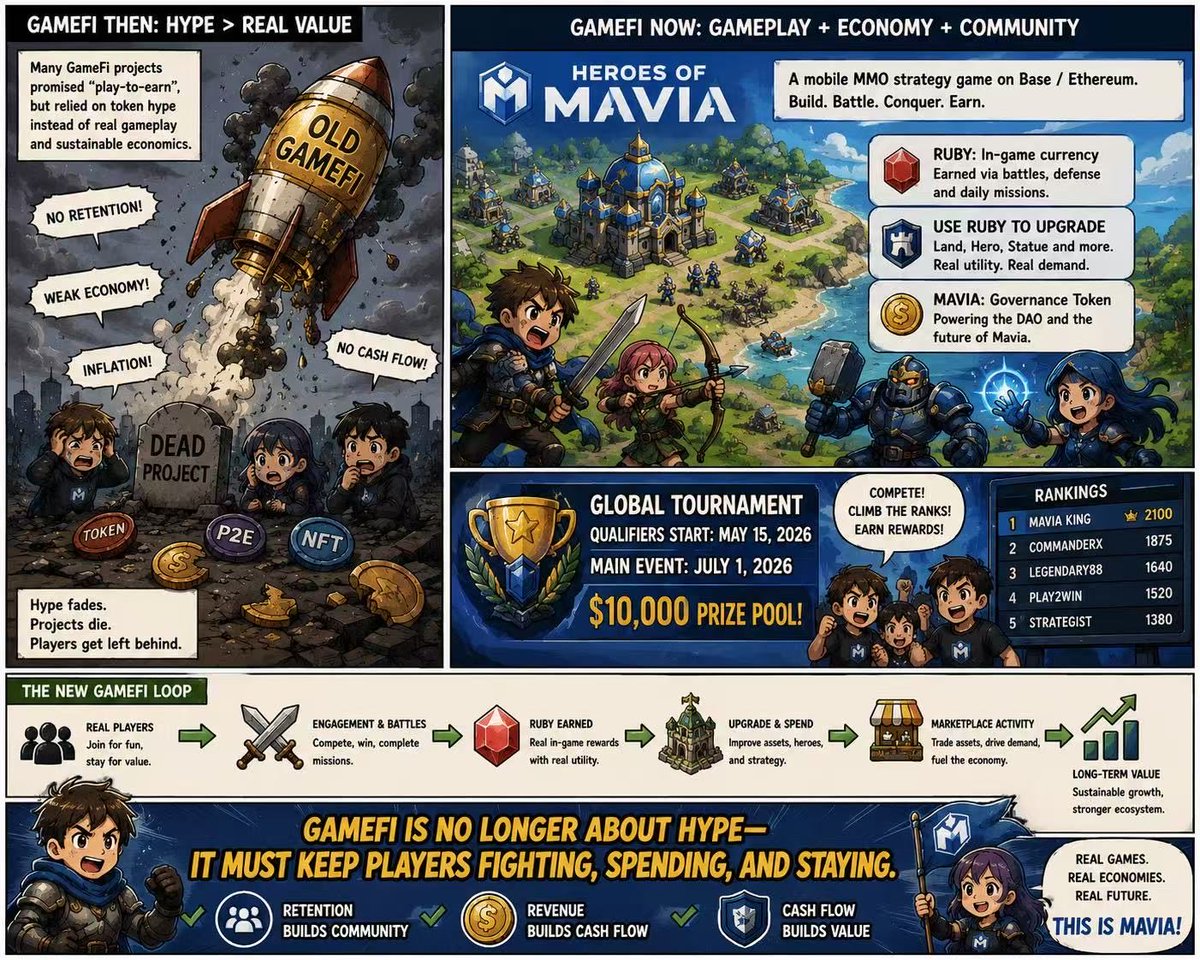
Its Ruby-based in-game economy links battles, upgrades, NFT assets, and marketplace trading, showing how GameFi is shifting from pure token speculation toward retention, engagement, and real utility.
Heroes of Mavia has become a notable GameFi case this week. The project launched qualifiers for its first Global Tournament in May, using PvP competition and prize incentives to drive player activity.