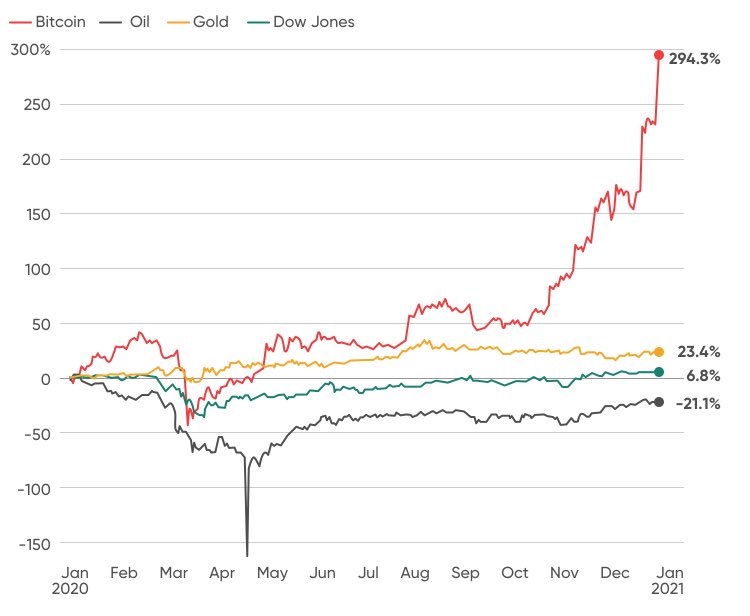
The point is not whether BTC goes below $10K this month or not,
the point is will it buy ‘more Gold’ next year and every year thereafter…
The answer is simple & obvious, graph attached.
If #Bitcoin breaks decisively below $30K it seems highly likely that it will crash below $10K. That means anyone who owns Bitcoin now has a very important decision to make. What will you do? You had better decide now so you don't panic and make a rash spur-of-the-moment decision.
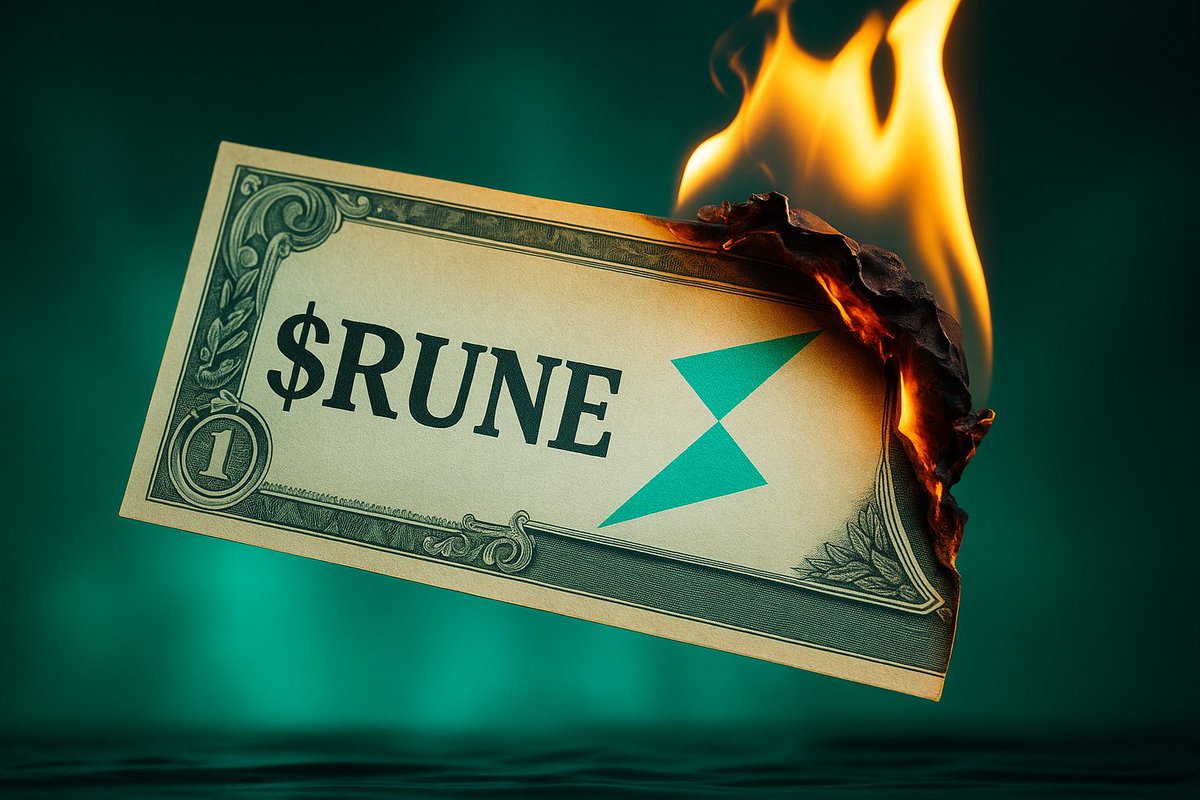
Thorchain is now stacking $RUNE.
The Nodes are now routing 20% of all protocol income straight into Protocol Owned Liquidity (POL)
- 2.2 million $RUNE already deposited into liquidity pools
- Over all $1.26M in protocol owned positions in $XRP $TRON $ZEC + more
POL now sits at 2.4% of total Thorchain pool depth
Every time you swap on Thorchain, the protocol is buying your asset and the equivalent amount of $RUNE to deepen the pools.
That’s buy pressure + permanent RUNE removal from circulating supply, funded by actual fees and NO token emissions.
Liquidity gets deeper, spreads get tighter and $RUNE gets scarcer.
You keep swapping and the @THORChain keeps buying. https://t.co/47TITrxuCN
find the analytics https://t.co/0j8SIGIgUA
thanks to @BooneW
On Nov 2, SEC staff updated the FAQ for the Application of the Federal Securities Laws to Certain Types of Crypto Assets. They say “a crypto system is ‘decentralized’ if it functions and operates autonomously with no person, entity, or group of persons or entities having operational, economic, or voting control of the crypto system.”
The staff looks for anyone who can act alone, outside the network's governance: to limit access, change how upgrades get voted on, pick who runs nodes, change the code or reverse transactions.
Here's how THORChain works on each point.
Operational - Funds sit in vaults run by groups of nodes, and every transaction needs a supermajority of nodes to authorize it. No single node can move funds or undo a swap. If the protocol detects an insolvency, it will automatically halt a whole chain, to protect the network. It can't target a single user. Operational mimirs exist to protect the network from attack or failure. These require a minimum of 3 node votes, but 4 nodes can then vote to reverse, 5 can counter the 4, and so on.
Economic - Fees are automatically charged on all swaps and automatically distributed on the network to the various stakeholders. Changes to fees, tokenomics, etc. are called economic mimirs and need 2/3 of active nodes.
Voting - Anyone can run a node if they bond enough RUNE to be churned into the network. No person picks the nodes. Parameters change only through on-chain node votes. Same with a protocol upgrade. No team or company can change a parameter on its own. Every node vote is recorded on-chain, and anyone can check it.
$RUNE is 100% unlocked.
The supply has only moved one way. 1B at launch, then 500M, then 360M after ADR-023 burned 64.4M RUNE from the Reserve in May.
RUNE also earns. Nodes bond it to secure THORChain and receive 59% of system income. That income comes from swap fees paid by people using the protocol cross-chain swapping cryptos.
Another 20% now goes to Protocol-Owned Liquidity. Every 3 days, the protocol deposits RUNE into the pool that earned the most fees relative to its depth. Half of it stays as $RUNE, owned by THORChain.
⚡ This Saturday on the THORChain Podcast | Ecosystem Spotlight.
@Mr_Kwibs from @zano_project joins @KentonC137 and @patriotsounds live at 10AM EDT / 2PM UTC.
Jump on stage and ask your questions live: https://t.co/phkxsU6sdy
Trading is live again on THORChain.
After more than a month offline, the network is fully back. Signing, churning, secured and trade assets, LP actions, and swaps are all up and running. The world's leading Bitcoin DEX is open for business once again.
This recovery was never about speed, it was about doing it right. Every vault verified, every keyshare checked, every step taken with security and stability as the only priority. That patience paid off, and the network came back stronger than before.
None of this happens without the people behind it. Huge thanks to the node operators who stayed online through every vote and upgrade, the devs who worked relentlessly to ship the fixes, the Maya Protocol team for keeping the lights on, and a community that didn't flinch once.
The pipeline's stacked. $XMR is coming, with native Monero swaps already working end to end in testing and a live launch on the horizon. $ZEC follows close behind. Dynamic fees, and deeper liquidity are all on the way.
THORChain got hit, held the line, and kept shipping. Same chain, same ethos, same mission.
Welcome back, Chads. Let's trade.⚡️
I spent 100 hours over the past week researching, writing and editing the piece we just put out.
It’s a scenario, not a prediction like most of our work. But it was rigorously constructed, dismissing it outright requires the kind of intellectual laziness that tends to get expensive.
And we’ve released it for free. Hopefully you enjoy it.
https://t.co/YK8E11GcDU
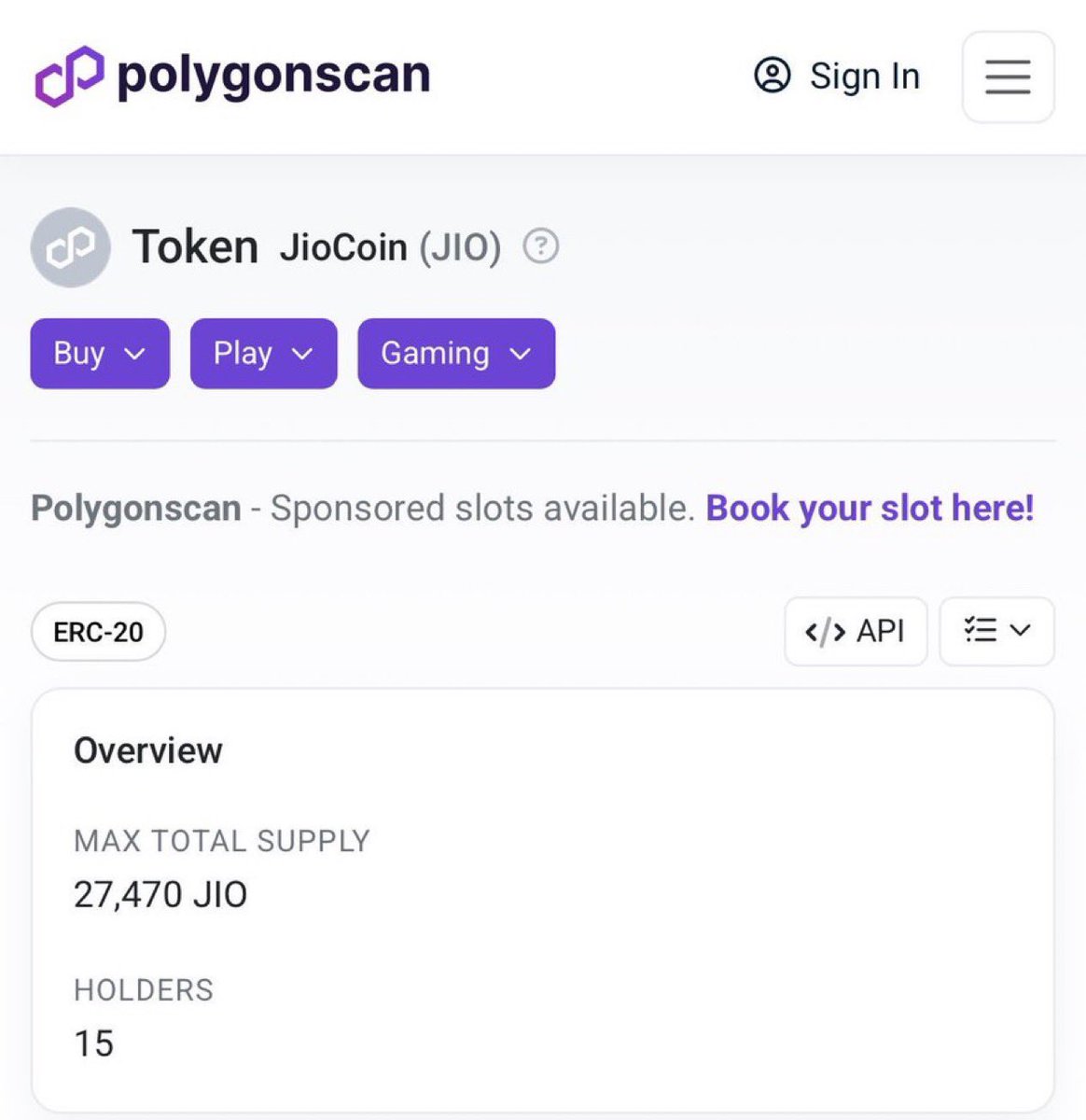
🚨 BREAKING: 🇮🇳 Reports suggest Reliance Jio may be developing “JioCoin” on Polygon.
If true, this could be one of the biggest Web3 moves by an Indian tech giant 👀🔥
#BREAKING#JioCoin#Polygon#CryptoNews
CZ killed it in proving what makes Bitcoin unique with this demonstration.
The real next question:
If the $BTC you "own" are only numbers on a CEX account, is it real $BTC? 🤔
Your Keys, Your Coins 🧠
Join me on Aave App to start earning 6.00% APY or more on your savings! Enter the referral code A07A0E during sign up to earn an additional 1.00%. https://t.co/L5eLvXlPO6