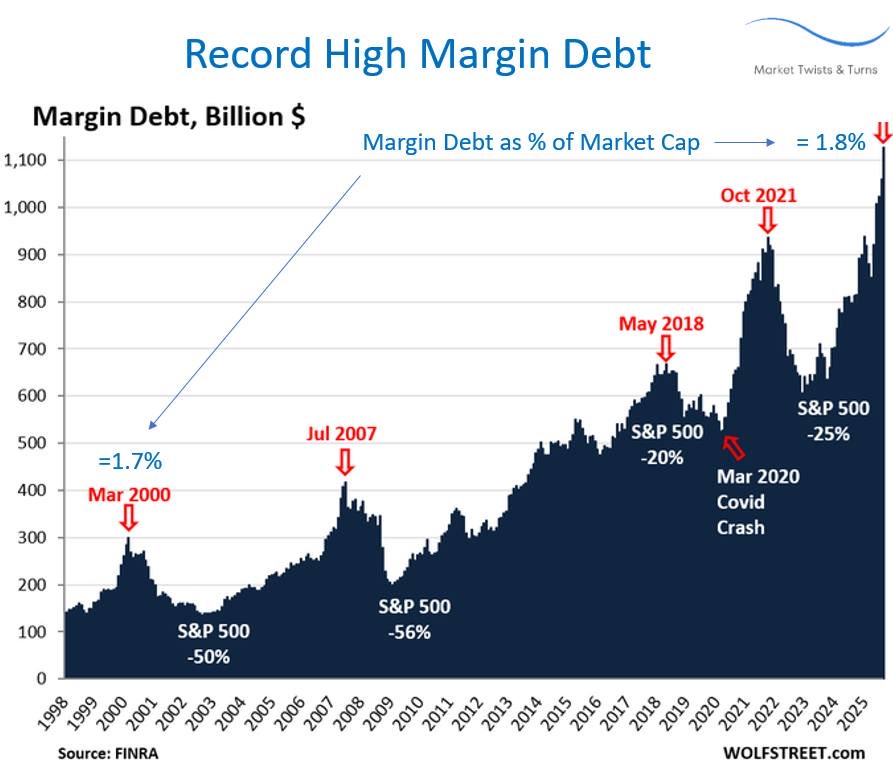
Margin debt has hit a record $1.23 trillion.
It’s now higher than at the peak of the dot-com bubble in 2000.
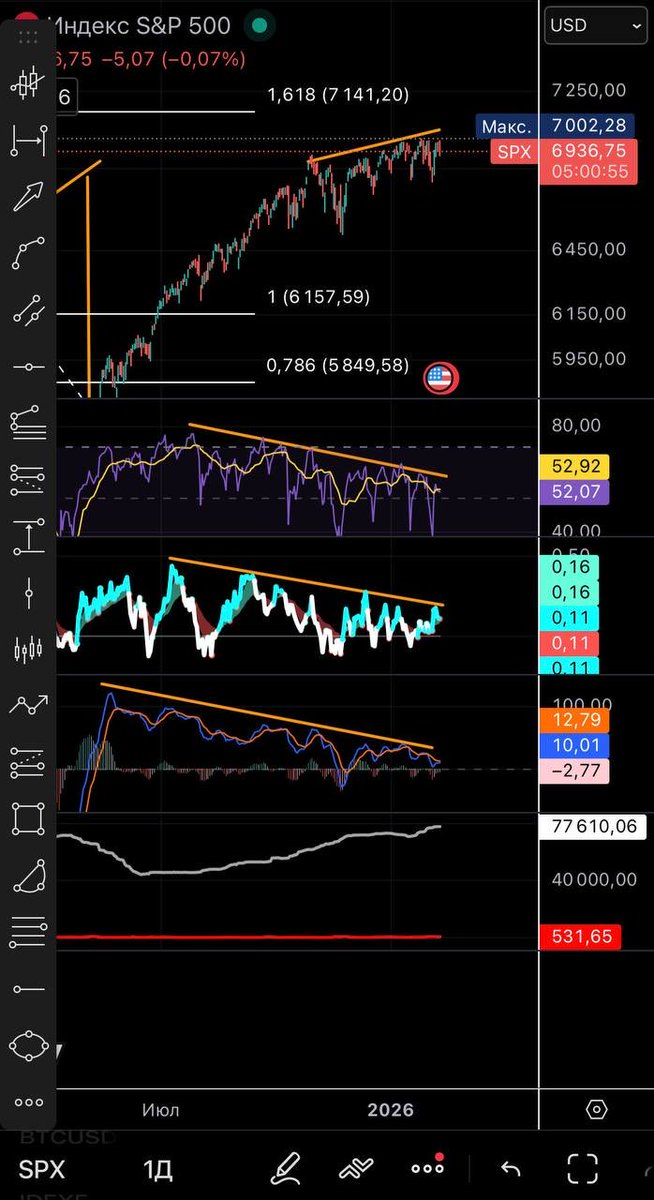
Historically, extremes in margin leverage tend to precede major market corrections.
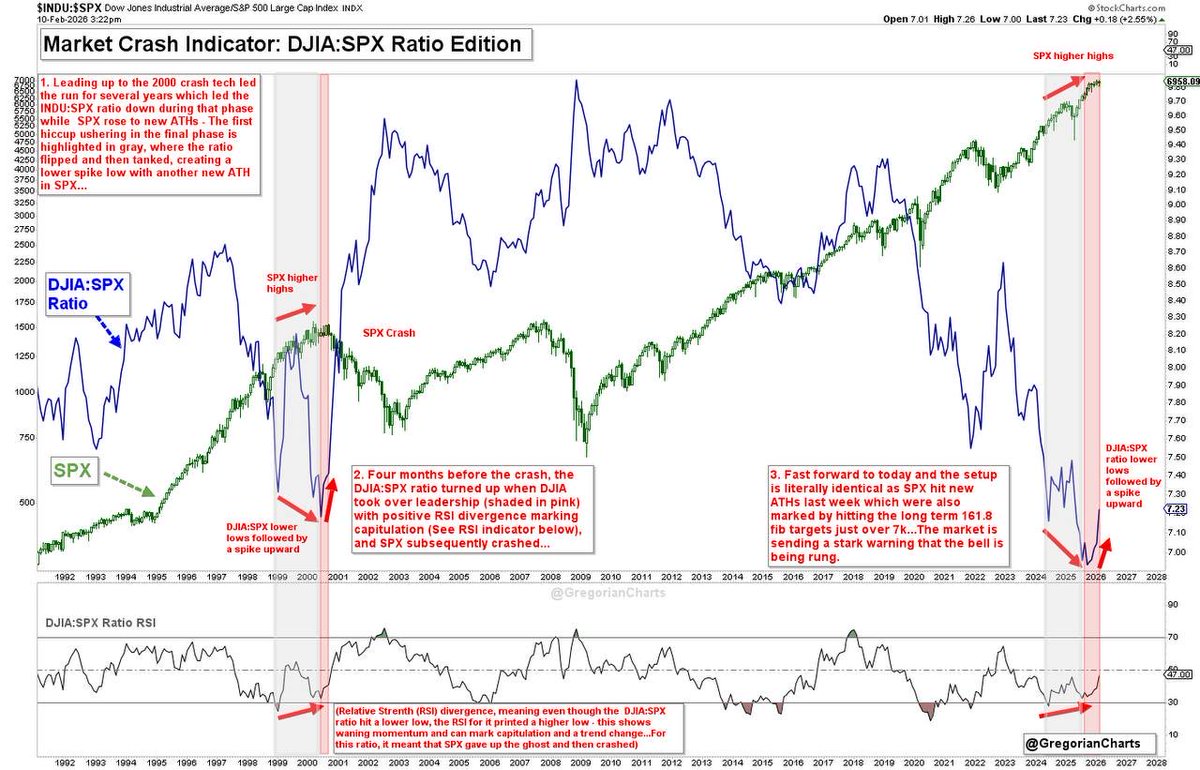
Market crash indicator: DJIA/SPX version
When the Dow (DJIA) starts outperforming the S&P 500 late in the cycle — especially at historically elevated levels — it often signals exhaustion rather than strength.
This is exactly what happened in 2000 right before the crash.
15/
That’s how “free money” eras end.
Not with a crash.
With slow structural deflation of liquidity.
The arbitrage era is over.
But the consequences are still playing out in real time.
The “Wall of Money” Mirage
There is no institutional floor under Bitcoin.
What the market called the greatest wave of institutional adoption turned out to be far more fragile than it looked.
Here’s what really happened:
14/
When funds unwind:
They SELL ETFs → direct spot pressure
They BUY back shorts → weaker offset
Net effect:
Asymmetric downside
Pro-cyclical selling
Further basis compression
More exits
A self-reinforcing loop.