If I had $500k in crypto now, I would:
1. Go full-time crypto. Move somewhere cheap. One year to make it.
2. No BTC, no ETH, no SOL, no HYPE.
3. No memecoins. No directional leverage.
4. Allocate $250k to a delta-neutral strategy between @tradexyz and @metricxyz.
-> Short equity perps trading at a premium on tradexyz, buy the matching tokenized equities on metricxyz.
One strategy, three potential airdrops: HL S3 + tradexyz + metricxyz.
5. Allocate $50k to prediction markets on HIP-4. Market make tradfi outcomes. If options launch, be ready to arb them against a broker from day one.
6. Deposit and loop $200k of sUSDe on Aave.
-> Deposit sUSDe, borrow USDC, swap into more sUSDe. Use the net yield and some of the principal to cover living expenses.
Rotate into @acier, an upcoming lending protocol, when it's live.
7. Build AI apps on @flop_labs during testnet.
-> Vibe code your own apps. Use free testnet inference to get your first users and position yourself for the FLOP agent airdrop.
The goal: stay consistent and optimistic while positioning myself for potentially huge airdrops.
One year. Locked in.
I just asked to be ranked on the RAFA Prediction Leaderboard. Every public call I make on X gets checked against real prices, the good and the bad.
https://t.co/cFIaytquau
Crypto OGs remember that Dogecoin started purely as a joke in December 2013, then exploded into a multi-billion-dollar asset with a peak market cap of about $85–90 billion.
Elon heavily shilled DOGE, called himself the Dogefather, and Tesla and SpaceX even accepted payment in DOGE.
Since then, DOGE has evolved from one of the longest-surviving memecoins into a full-blown ecosystem. @DogeOS, @MyDoge, and @TheSuchApp have come together under Dogecoin Labs.
-> MyDoge is the leading self-custodial Dogecoin wallet with 500,000+ users.
-> DogeOS being built by @MyDogeCEO is an EVM-compatible application layer
-> Such App is a merchant-focused payments and commerce tool. Check it out 👉🏻 https://t.co/xM0fFESRq6
The Dogecoin Foundation keeps everything open-source and community-focused, while Dogecoin Labs builds products for commercial utility.
Early Projects building on DogeOS
—> 1 @laikasuperapp . Since 2024, Laika Super App took hold of the entire DRC-20 ecosystem and has now transitioned into a fully built FOMO App within the DogeOS. They're currently running testnet, so you can test it here: https://t.co/RxNopSghsU
—> 2 DogeOS teamed up with @trynoahai@noahainetwork to launch VIBE CODE ON DOGE, a hackathon to turn ideas into working applications on DogeOS testnet.
October 19 – November 6
36,000 DOGE in prizes.
Sign In -> Connect with DogeOS-> Explore the hackathon page:
https://t.co/4f9lE17Q97
Now that’s an alpha there go show DogeOS and NoahAi what you can do ( Might be your first capital to get onboard the DogeOS ecosystem )
—> 3 @doginaldogs Tier one NFT project on DRC-20 now on DogeOS ( will transition for sure )
—> 4 @DogiDrc20 1 meme inscription on DRC-20 I noticed their plans of moving into the DogeOs ecosystem ( might be a play )
My conviction on DogeOs is being fueled by the 2024 DRC-20 inscription ecosystem run, if with little support DRC-20 early degenerates made $100,000-$1M in crypto gains then I wonder what a full blown ecosystem build, support from the entire @dogecoin@DogeOS will bring.
The most bearish signal in early crypto days was founders and team holding up majority of a token supply, the case for $DOGE about 10 wallets control nearly 44.1% of Doge supply, but in today’s crypto 2026 founders and team holding such amount of supply is the ultimate bullish signal, so why not just bet on it?
It’s also interesting that several major Dogecoin whales added roughly 600 million DOGE between October 12 and 16. This is evidence that the ecosystem may be positioning for something bigger.
Accounts I personally follow for updates and keep us on the DogeOs ecosystem.
- @MyDogeCTO
- @dogeofficialceo
- @cb_doge
- @MyDogeCEO
- @BuildrJ
- @laikasuperapp
All memes belong to the first memecoin that started it all 🐶
As a CT OG, I��ve always been a Doge believer and this time once again I’m ready to run with the narrative and scale with builders building on DogeOs!!!
If you own an RTX 5090, the card's worth more than you paid. It launched at $1,999. The cheapest new one in the US in September was $4,999.99 (Startup Fortune, 17 Oct).
Now try renting it out. Computeprices, 19 Oct: $0.25 an hour on Salad, $0.776 for a single card on Vast.
Priced like scarce hardware, rented like spare change. Part of that gap is trust, since nobody can check a stranger's hour. On Flop a validator re-runs a sample, and the card's owner keeps 85% of the fee, paid liquid.
This is f*cking gold..
Chinese researchers just dropped a paper called "The End of Harness Engineering" and it reads like an obituary for LangChain.
The claim: the file that organizes the model should be written by the loop that runs it, not by the person who built it.
A hand-built harness is a guess with a commit message. A self-revising harness is a file that grades itself every round.
The mechanics are almost boring. Execution report in, 8 edits out, score them on held-out questions, keep the winner, repeat. Frozen solver the whole time.
Across 41 rounds the held-out score went from 0.31 to 0.64 and the harness never saw an editor.
The human writes exactly one thing: the scoring set. Never shown to the proposer, never optimized against, used to grade every candidate.
So you stop arranging calls and tools. You start deciding what counts as correct and reading the score.
Harness engineering turns disposable. The scoring set turns into the job.
That is exactly the loop I run and documented below: one https://t.co/4l7cKCueTS, 300 Kimi K3 workers, 37 rewrites in 41 rounds, zero edits by hand.
The whole paper in one line: grade the file, don't write it ↓
They built an AI agent in 20 minutes and sold it to Anthropic for $100k - and at Stanford showed how to repeat it from scratch:
02:00 - how to build your first agent with Opus 5 in 20 minutes
22:34 - one agent replaces an Anthropic engineering team worth $200k a year
49:47 - how to make $1.2M a year selling agents to Anthropic and Google
after watching I spent 20 minutes in Claude Code - the agent replaced 10 Anthropic engineers and they paid $100k and asked for more.
save & watch - the article below shows how to build an agent in Claude Code in 20 minutes and reach $1.2M a year.
Andrej Karpathy:
"Prompting is going away. Delete everything, keep Graph."
In just 69 minutes, he shows how to build graphs and why they're the only layer that survives in the end
Prompts → Agents → Loops → Graphs
a loop keeps one agent running until the job is done
a graph decides which agents exist and what each one passes to the next
anyone can build an agent, almost nobody builds the graph that runs them
watch it today, then save the full guide on graphs below before everyone starts catching up ↓
A man got fired from his job, was unemployed for 10 months, watched his savings crash 75%, and somehow built one of crypto's biggest exchanges.
> In July 2017, Siemens laid off Hayden Adams, a 24-year-old mechanical engineer.
> He had no software engineering career to fall back on.
> His friend Karl Floersch told him Ethereum was the future and convinced him to learn smart contract development.
> Hayden spent two months learning to code.
> Then Karl showed him an idea from Vitalik Buterin about how people could trade tokens without a traditional exchange matching buyers and sellers.
> Hayden started building a prototype. Called it Uniswap.
> By April 2018, he'd been unemployed for 10 months and the crypto he was living on had lost over 75% of its value.
> Most people would've started looking for another job.
> Hayden booked a flight to South Korea to attend a crypto conference.
> He didn't even have a ticket to the event and was turned away at the entrance.
> Then he ran into Karl, who introduced him to Vitalik Buterin.
> Vitalik pulled out his phone and read Hayden's smart contract right there.
> He adviced him to apply for an Ethereum Foundation grant.
> Hayden applied and got the grant which was valued at around $100,000 on paper.
> After $ETH's price dropped, its actual value was closer to $55,000–$60,000.
> He kept building.
> On November 2, 2018, Uniswap launched on Ethereum.
> Today, it's one of the most important decentralized exchanges in crypto, allowing people to trade tokens without relying on a traditional centralized exchange.
A man lost his job, watched his savings collapse, and built one of crypto's biggest financial platforms.
Imagine if he'd just updated his CV and moved on.
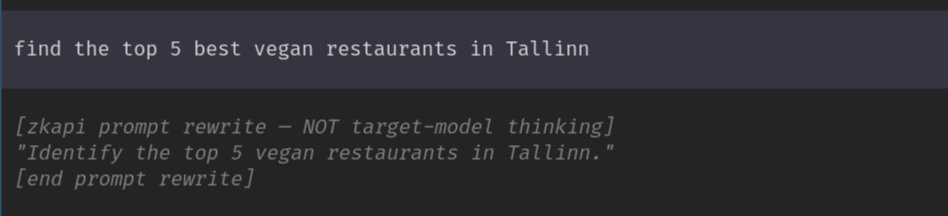
Wrapped zkAPI + Tor + extra cover traffic + local LLM prompt rewriting in an open-AI compatible daemon, and made a "paranoid mode" wrapper for my agent harness (pi):
Each conversation gets assigned a separate Tor circuit, your requests are masked with random cover traffic, zkAPI ensures you don't leak your identity through payments, and all prompts are locally rewritten (bring-your-own-local-model; I'm using qwen3.8-flash-next)
https://t.co/MepCFCrLv1
My agent harness is wrapped with a bwrap sandbox (also experimenting with MicroVM) and wrapped again with torsocks, so everything it does goes through Tor.
Here's what me asking it to do a simple research task looks like.
It's getting quite usable! Though you definitely still pay quite a bit in increased latency, especially when starting a new conversation.
Also, Tor is far from optimal here for privacy; the cover traffic mechanism is okay against passive adversaries but much weaker if the LLM provider is colluding with the guard and actively manipulating timing. This kind of task really requires a more specialized mixnet, probably take the tradeoff of a higher bandwidth multiplier and built-in constant cover traffic.
Also also, much cheaper zkAPI deposit and withdraw gas costs are coming to mainnet soon.
TOKEN2049 SINGAPORE SPECIAL: The Money Printer Moved To The Banks And Bitcoin Is Next with @CryptoHayes of @MaelstromFund
Timestamps:
00:00 Intro
02:21 Hunting For Busted Charts
06:28 Agents Will Run Finance
09:12 Why Alts Disappointed
14:22 The Barbell Portfolio
16:39 Quantum And Address Hygiene
19:06 Zcash As Privacy Hedge
22:45 Sovereign Debt Hunger Games
27:00 Rate Hikes Pump Bitcoin
30:54 Banks Are Printing Now
35:47 Stablecoins Export The Dollar
41:06 France Is The Catalyst
43:52 The Quarterly Refunding Announcement
46:49 Watches, Ferraris And Skiing
53:00 How Much Is Enough
56:01 Is The Ethos Gone
59:58 The FLOP Thesis
A few people yesterday asked how AI could impact FHE / @zama, so here is a quick tldr:
1. There is no evidence that lattices / FHE can be broken by AI, SI or quantum. If anything, there is a growing consensus that fully breaking lattices might imply P = NP.
2. However, it's almost certain that better attacks will be discovered, which would require increasing parameter size and taking a short-term hit on performance. The Zama protocol is modular, so we can increase parameters size or swap out any component quickly, without changing the UX or rotating user keys.
3. Zama uses FHE only for privacy, so breaking FHE would not allow stealing funds that are shielded, it would only allow seeing balances and amounts. This is unlike ZK, where breaking the cryptography means you can steal funds and mint infinite tokens.
4. We do a lot of work on cryptanalysis and improving the security of FHE. We spend millions a year on audits (AI and human), research grants, bounties, have 30 PhDs in the team, etc. We have a plan A (the current thing we do), but also a plan B and a plan C if things go wrong. Whatever the future throws at us, we will have a way to adapt to offer the same service.
5. Hashes have been broken in the past, many times (MD5, SHA1, etc), so saying they are more secure than lattices, which have been extensively studied for decades is a stretch to say the least. Not saying its impossible, but history is on the side of lattices here.
Lets also remember that if indeed lattices and elliptic curves are broken and there is no public-key encryption anymore, then hiding your balances onchain is the least of your worries, because the world as we know it would be over: no private communications, no online banking, your AI prompts would be public, etc.
encrypted NFTs are the next step toward true digital ownership. it excites me fungo labs is the idea that privacy and NFTs can coexist without exposing everything to the world. build with FHE on zama is an interesting step toward a more private onchain future
@fungolabs
Every Fungo NFT is generated using @zama FHE randomness and stored encrypted onchain.
🟨 Even we don't know what you got.
🟨 Only the holder can see it.
🟨 When sold, access passes to the new owner.
🟨 You decide whether to reveal the art. Once public, there's no going back.
I don't recommend anyone scramble to move their funds to new wallets today. But we should take the risks to cryptography from AI-accelerated math seriously, and minimize our exposure to not just quantum-vulnerable cryptography, but also potentially AI-vulnerable cryptography.
The core new area of risk from this viewpoint is, unfortunately, ML-DSA / FHE / lattices.
(and it's also another reason, along with quantum, why ECDSA might fall even faster than expected, hence the "fresh address" recommendation)
So far most people have been in the mode of thinking "elliptic curves broken, hashes safe, lattices safe". But there is a good chance that the concrete security of lattices will take serious hits from the next two years of AI math.
The basic threat model is: factoring is something that naively takes 2^(n/2) time, but over decades smart people have found and optimized number field sieves, and degraded that to 2^O(n^(1/3)), which is why RSA keys and signatures need to be ~400 bytes (and not 64 bytes). What if there are skeletons in the closet like that, both for elliptic curves and lattices, that we are simply not smart enough to discover - but bots soon will be?
This is a major part of the reason why for the past year ethereum's lean roadmap has been going in the "hash-only" direction: no lattices, no ML-DSA, no Falcon, no lattice-based commitments inside ZK proofs, etc. Signatures in lean ethereum are all hash-based, either WOTS or SPHINCS-.
For signatures and proofs, we already know how to go hash-only. The bigger challenge is for *public-key encryption* - and this goes far beyond blockchains. Secure communication, anonymizing protocols, lots of things need public-key encryption.
And unfortunately there are long-standing mathematical theorems showing why public-key encryption cannot be done with hashes alone. You have to have some kind of trapdoor object that has at least one form of usable "structure" - either group theory (incl. isogenies) or lattices or code-based or potentially in the future even more newfangled and spooky things (local mixing?). But for anything that has structure, you should assume that AI will make at least some progress in breaking that structure. Here, one reasonable inference is that if you want to make something plausibly long-term secure, multiply the key sizes by 10.
To me that's a very plausible world and something not at all extreme to predict. If AI will bring us 50 years of math in 2 years, then that 50 years of math may very plausibly include a "naive factoring -> GNFS" level of improvement to our ability to break lattices. In that world, lattices will still exist, but they will have to be significantly bigger to guarantee the same level of safety.
And at those new larger sizes, hash-based constructions will beat lattice-based constructions on concrete efficiency in every use case where hash-based constructions are possible at all.
Theoretically, of course it's possible that hashes are broken too (eg. P = NP would imply that). But I think P = NP is very unlikely. And intuitively, it's much more likely that a mathematical object has exactly no exploitable structure (like hashes are intended to), than that a mathematical object has exactly ~3 forms of exploitable structure (for elliptic curves: associativity, Schoof, pairings) and not some secret fourth form of structure we have not yet discovered that greatly degrades its security (for elliptic curves, ECDLP and pairing security). Similar for LWE, SVP, RLWE and the zoo of lattice problems.
For this reason, we do not yet see any reason to worry and start padding the byte size of hashes (if we start to worry more, we would pad the round count first before doing anything to the byte size).
Concrete TLDR, my own personal views:
* Hash-based > lattice-based, in those situations where hash-based is possible at all
* For anything lattice-based, be much more paranoid on param sizes. Remember that blockchains are only a small portion of the cryptography story; this point goes far beyond blockchains and applies to eg. access to websites, secure messaging, Tor / VPNs ...
* For privacy protocols, strongly favor NOT putting encrypted notes onchain. Instead, send them offchain through some third-party mechanism.
* If it's not difficult for you, keeping your funds in addresses which have not yet been used to make a transaction is a good idea. If it's easy for you, do it. **But be careful about migrations; I personally have lost more money in botched migrations than I have lost in all hacks combined**.
* For multisig wallets, doing confirmations offchain is better than onchain, because this way the signatures of signer wallets do not get exposed to the public, so if ECDSA falls to AI much faster than expected, at least the multisig "gracefully degrades" to a 1-of-1 where the 1 is whoever was gathering the signatures - a much better place to be than "anyone can take the money"
https://t.co/oVjwZog2lL