@ShinyWilder@WilderWorld@365sma11@SharkyWilder Not yet. It must require some skill and practice. I like the music. People don’t necessarily realize that it’s set in an open world, which is a game changer.
Everybody wants the view, but the climb depends on the problem you’re solving. You can walk, take a lift if the mountain is in China, ask someone to snap your photo, fly a drone, prompt Grok to create a video, or—soon—jump into Wiami.
Ethereum’s two-layer design is a masterclass in this thinking. Layer 1 tackles the hardest problems—security, decentralization, settlement—while Layer 2 solutions handle scalability. The rise of Base and growing institutional adoption prove the model: use Ethereum as the decentralized settlement layer, let L2s do the rest.
In that spirit of breaking convention, the founder of Ethereum is like a living CryptoPunk. And I expect many CryptoPunks will one day call Wiami home.
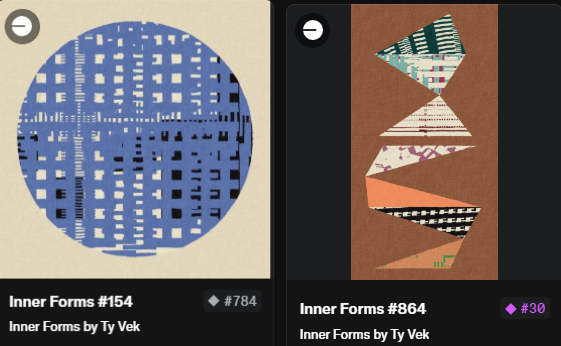
@D_VISION7@ty__vek Open form sparks rapid iteration.
Without rigid constraints, ideas evolve organically, adapt quickly, and uncover breakthroughs through real-time feedback.
Amazing!
@dcinvestor It is time.
They overcame energy waste, high fees & mining centralization—while staying true to decentralization.
3 years on, most institutions issue stablecoins on Ethereum.
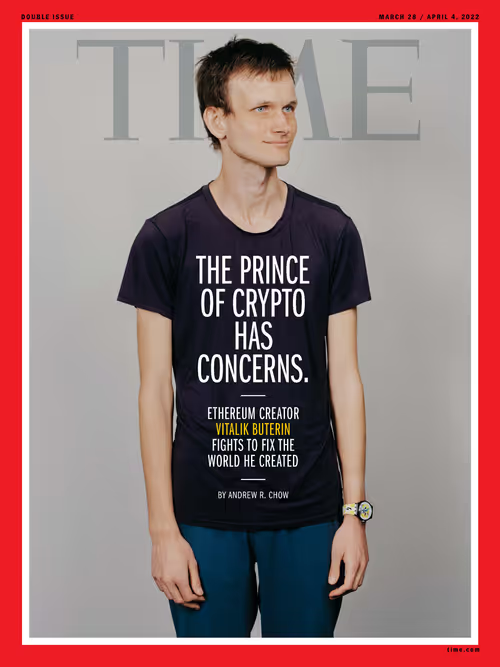
This TIME NFT magazine from 3 years ago is a symbol of that value.
@TIMEPieces@andrewrchow@VitalikButerin It’s time. As the first-ever NFT magazine, a 1 ETH floor reflects its cultural and historical significance. It’s more than value—it’s a symbol.
@RaoulGMI Ethereum is the settlement layer.
NFTs are the representation layer.
As real-world assets get tokenized, they seek distinction.
Generative art offers that expression—like labels on wine.
If it scaled cost-effectively, more assets would wear it.
NFTs representing generative art are a breakthrough, but using crypto coins to represent their value takes it further—turning art into a liquid, tradable asset class. This mirrors the broader tokenization of real-world assets. Artists talking about coins today is like talking about patronage or galleries a century ago—it’s about rethinking how art and value intertwine.
@beeple Generative art follows the S-curve of innovation:
Slow adoption → Rapid growth → Maturity & plateau.
When one tech plateaus, it opens the door for the next breakthrough—
each riding its own S-curve.
Innovation stacks, one curve at a time.
@real_n3o Using the metaverse to solve real-world business problems is certainly directionally correct — whether it's a car launch, fashion show, or movie premiere. Wilder World is taking the lead.
15/
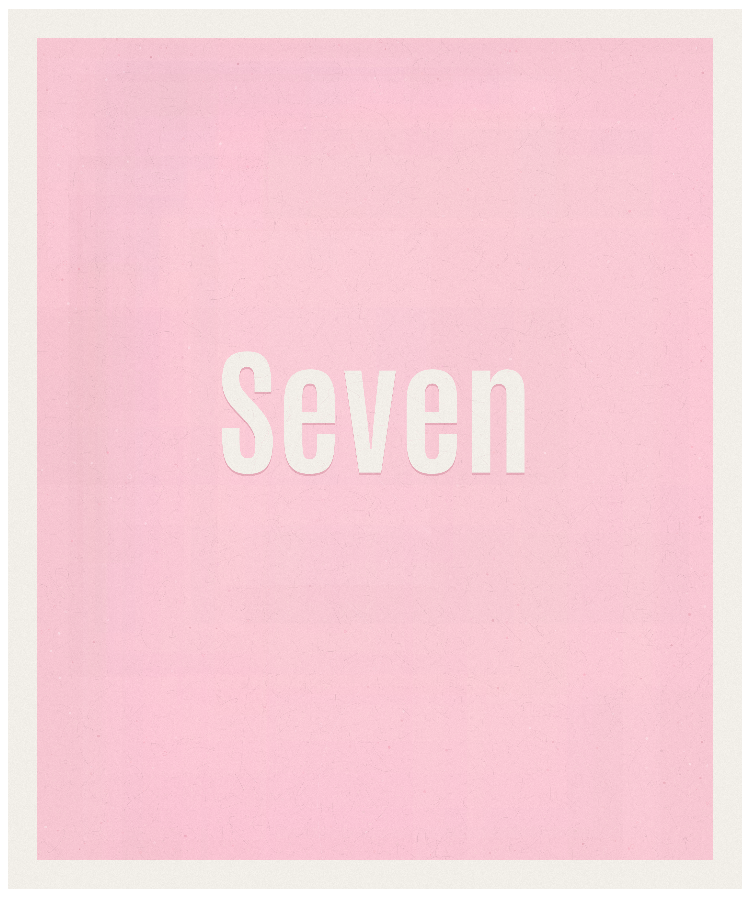
In the far future, travelers may return to Earth after centuries.
They’ll want to remember that visit.
They’ll want to mint it.
They’ll want it to count.
Earth. Count. Chain. Immutable. Forever.
(NFA. DYOR.)
1/ On The Invention of Numbers and the Wonders Within Them
Numbers don’t exist in nature.
We invented them.
They are abstractions — symbols to measure, compare, and predict.
But in that invention, we unlocked a new lens on reality.
Let’s explore.
14/
Count is not random.
It’s on Fxhash for a reason.
Fxhash has pushed generative art forward — code as canvas.
Count builds on that legacy.
A step deeper into numeric truth.