AI agents are getting smarter. The systems around them need to keep up.
Payments they can use. Data they can trust. Boundaries they can’t cross.
Five takeaways from Sui Basecamp on the infrastructure the agentic economy needs 👉 https://t.co/9sZKbdtxB6
Erebor Bank, the US national bank that had $4.05B in deposits by July, lets customers deposit and withdraw stablecoins on Sui.
Founded by Palmer Luckey, Erebor supports only a handful of blockchains.
@SuiNetwork
This is what trading looks like when liquidity is spread across separate protocols
DeepBook is one order book
15+ apps route through it
$20B+ traded already
Your trade gets the same depth that the rest of the ecosystem contributes to
Your choice: chaos or an order book
Brief intermission, the show goes on.
Predict trading is live again and so is the 20% fee discount!
Your 1-minute markets are waiting.
→ https://t.co/bOFp1N9zMW
i believe people all over the world will use #Sui to move money every day. that's what we've been building for from the start. and that's what makes the partnership with samsung such a huge milestone
but this is only the beginning. we are collaborating on much much more
super pumped about what we can do from here
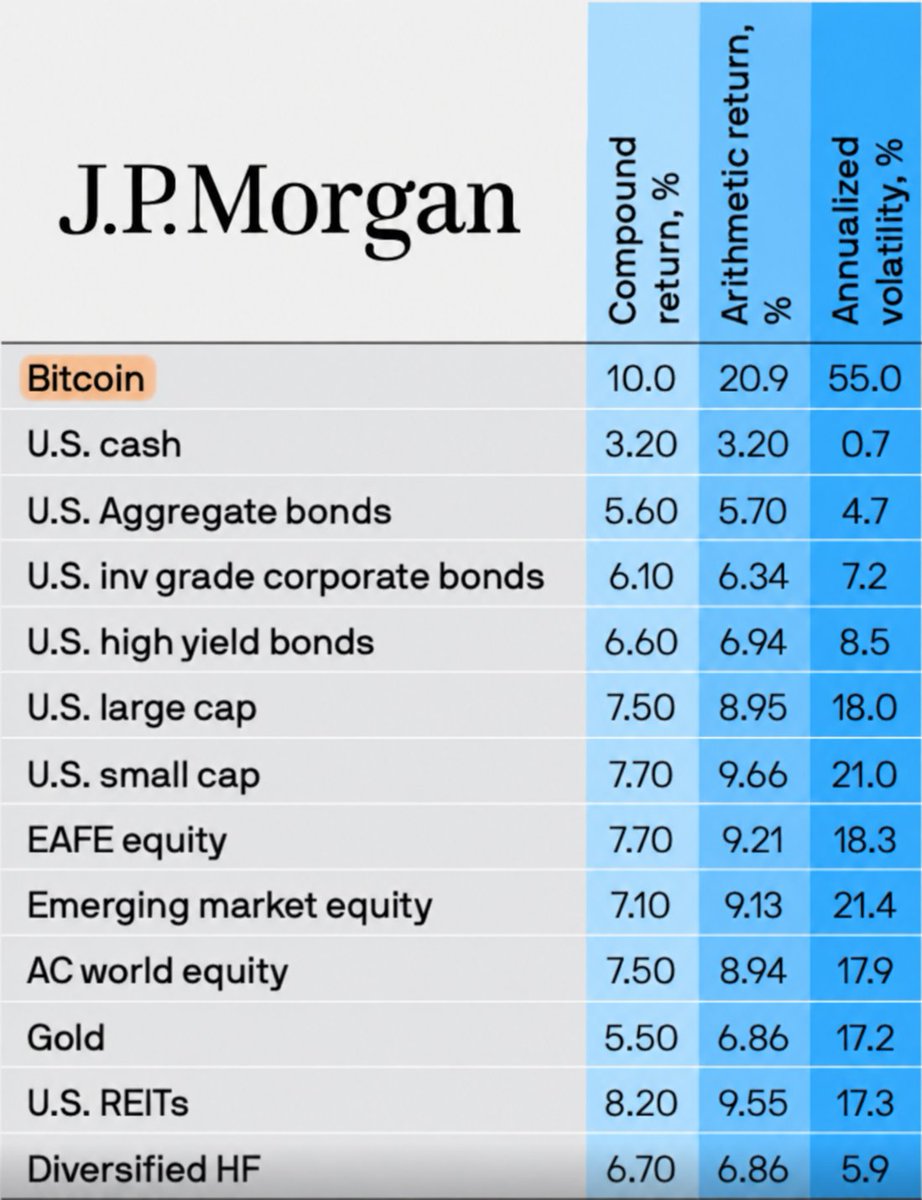
JUST IN: The largest bank in the U.S. JPMorgan is forecasting Bitcoin to outperform every major asset over the next decade.
You are not bullish enough 🚀
History of crypto agility. It started 10y ago.
With all the recent AI and quantum computing fears, everyone suddenly seems to be talking about cryptographic agility.
If you ever want to explore the history of cryptographic agility in decentralized ledgers and blockchains, arrange an interview with my team. We have some fascinating stories to share.
Back in 2016–2017, my team pioneered cryptographic agility as a fundamental design principle for blockchains, starting with R3 Corda.
We supported ECDSA (both secp256k1 and secp256r1), EdDSA, RSA, and SPHINCS, marking the first-ever support for a stateless post-quantum signature scheme in the history of blockchains and decentralized ledgers. This wasn’t just about supporting different algorithms. We were already preparing blockchain infrastructure for a post-quantum future.
And there’s a great story behind why some of the world’s largest banks and financial institutions were asking us for these capabilities a decade ago.
When I moved from London (R3 Corda) to Silicon Valley (Facebook’s Libra), I brought the same philosophy with me. I took cryptographic agility further, including the important architectural distinction between account addresses and authentication keys.
This separation, which makes key rotation and cryptographic upgrades much easier, subsequently became a design pattern adopted by several other blockchains. There’s also an interesting story behind why we considered it essential.
We carried these principles forward into Sui, which was designed with cryptographic agility from day one.
That foundation enabled us to introduce native social authentication through zkLogin, support multiple signature schemes, accommodate key aliases and post-quantum cryptography, and offer native multisig without additional gas overhead. Sui’s modular design from scratch allows magical things to happen.
Today, the broader blockchain community is finally recognizing how critical cryptographic agility will be in the age of AI and quantum. And while I’m genuinely happy to see this happening, I can’t help but smile.
Imagine watching an architectural principle you led almost 10 years ago suddenly become one of the industry’s hottest topics.
Sometimes the most important innovations aren’t the ones that make headlines when they’re introduced. They’re the ones that quietly prepare the infrastructure for a future nobody else is thinking about yet.
Hire good cryptographers, the top of the world if you can, and you will be 10y ahead waving 👋 to the future.
Raised by Satoshi 😉
Building a trading platform from scratch means building a:
> matching engine
> bootstrapping liquidity
> and hoping volume shows up
Or you just build on DeepBook and skip all three 📘
#SuiBasecamp 2026 was one of the proudest moments we've had since we launched @suinetwork
now we're entering THE MOST EXCITING CHAPTER in sui's history
Robinhood is trying to teach traders about $SUI
@RobinhoodApp is offering $5 worth of $SUI for users who spend just a few minutes learning about the @SuiNetwork L1 blockchain.
Though certainly not an endorsement, it certainly seems interesting that @vladtenev's $HOOD is using resources to educate investors about this L1 in particular.
New research by Citizen Lab reveals zero-click spyware delivered through targeted ads. They call it "AdFection."
Just viewing an ad can be enough to infect a device.