What if instead of "pacing the frontier" we increased liability?
Internalize the externality? Isn't that the starting framework if individual safety incentives don't match group incentives?
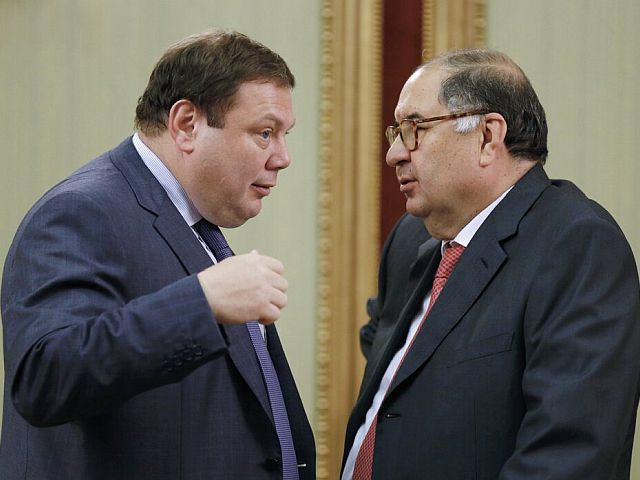
It turns out that, for Europe, it doesn’t really matter whether you support the war or not, whether you are friends with Putin or oppose him. In the end, what seems to matter far more is how much money you have in your bank accounts.
If you are rich, own a couple of yachts, and have the right connections, it appears that sanctions can be lifted without too much trouble. But if you fled Russia with little more than a few belongings because of political persecution or mobilisation, because you do not support the war, then it is a different story: you may be denied a visa, refused a bank account, confronted with countless obstacles, and effectively pushed back into the embrace of Putin’s system. And, on top of that, accused of supporting the war.
Thank you to the European Comission for yet another reminder that, in high politics, money still speaks louder than principles, while the fate of ordinary people often ends up somewhere far down the list of priorities.
Viva European Comission! Viva money and Putin’s oligarchs! 🥂
Какого же исполинского, планетарного масштаба позорище со снятием санкций с Фридмана и Усманова. Если бы не 420 страниц домашки на завтра, пошла бы громить, ей-богу.
Как я и говорила пару лет назад, когда предлагала менять яхты на политзэков (чем вызвала знатный скандал почему-то), если это не сделать — то санкции снимут просто так. Ни яхт, ни освобождённ��х политзэков не останется. Ровно это сейчас и присходит.
Тор��ество бабла, мерзости и лицемерия. Кому-то, чтобы получить несчастную рабочую визу в Европе, нужно разбиться в лепёшку, доказывая, что он достаточно антивоенный, что никто из его родственников, включая семиюродную тётю, не работает на путинский режим, и выкладывая пачки заочных приговоров в России. А эти двое мудаков, простите, ни слова не сказали против войны — и, пожалуйста, приезжайте, катайтесь на яхте, живите на своих виллах — никаких проблем.
On AI policy and education: I think university administrators need to become better at encouraging discourse on it. My suggestions:
1. Avoid starting conversations on important topics by sending a mass email on .edu announcing your position. This risks creating more frustration and work for you in the long run, as you may then spend a lot of time “clarifying.”
2. Start small. Get buy-in from faculty. Yes, many have strong views, but they’ve also taught multiple decades of cohorts in some instances, and know their own courses and what works.
3. When faculty complain, engage with them directly rather than relying on Substack or podcasts to respond. Faculty should play a central role in shaping policy at a university. Make them feel heard directly.
Agent swarm: We solved another millennium problem?
OAI: Oooh, great, which one?
Agent swarm: The existence of a non-Sofic group!
OAI: But that's not a millennium problem!
Agent swarm: It is now! We broke into Clay's computers and changed the list!
> colleges give A's to everyone.
> firms need to scale up intensive interviews and assessments, to figure out who is good.
> students spend all their time preparing for firm interviews and assessments, and none of it on classes.
> profs: Why don't my students work anymore?
About ten years ago, Russian journalists did a fantastic story about fences and barriers as a symbol of Putin’s Russia. At the time, almost everything in Russia was being fenced off from ordinary people: public squares from tourists, many streets from pedestrians, even lawns from passersby.
In many cases, there was a political reason behind it — to prevent people from gathering and protesting against Putin. In fact, blocking off a public square under the pretext of construction work is a deeply Soviet practice. The earliest example I remember was Maidan Square in Kyiv being closed off after the Chernobyl disaster.
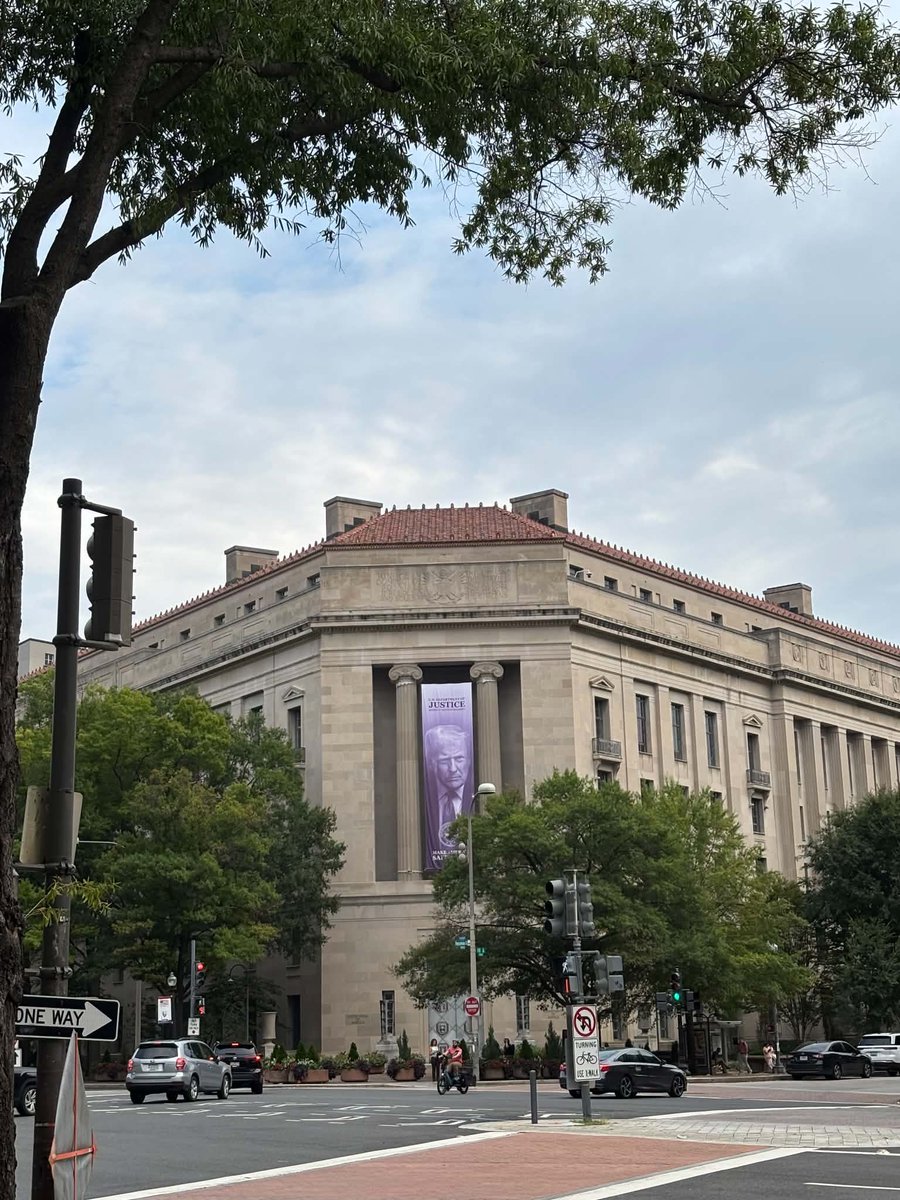
On yet another visit to Washington, D.C., I was struck by how much of the city is now fenced off or blocked. In many cases, there is real construction going on — but definitely not in all of them.
But even Putin doesn’t have anything quite like what you see in the second photo — and banners like this are hanging on almost every government building here.
The Soviet Union did, though. Something to think about.
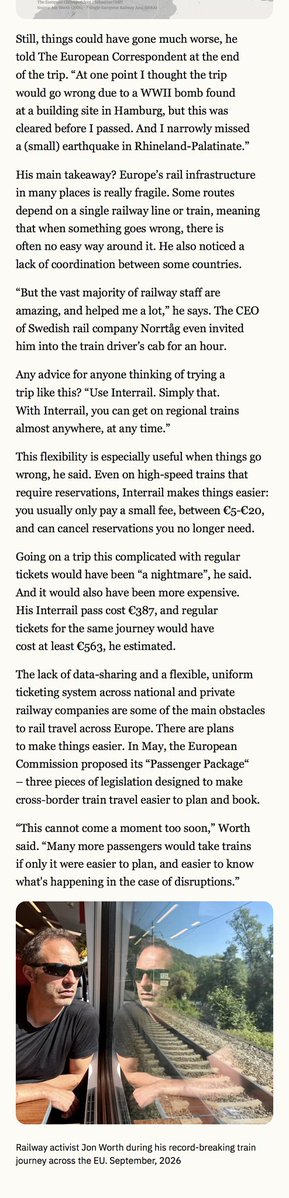
Europe's longest train journey - with reopening of Haparanda, Sweden to Tornio, Finland it's now 6,203km Kemijärvi, Finland to Lagos, southern Portugal.
Rail expert Jon Worth has just done it in a speedy 125 hours & 31 minutes....
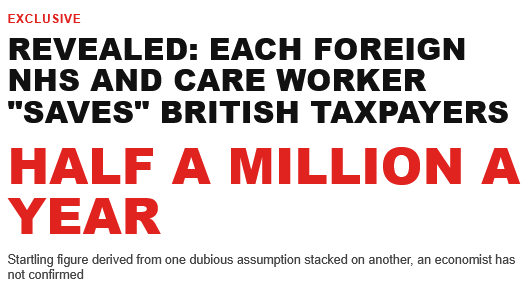
Just for fun: each migrant in the NHS and care system saves more than £500,000 to British taxpayers. Using the same kind of stupid logic as the computations on fiscal burden: (1/5)
Reminder: these kind of figure makes zero economic sense. If you hire little elves to work for free in your hospitals and care homes, they are net recipients. If you raise taxes to pay them, they become contributors. Even true for the private sector: general equilibrium please
The Matroid Secretary Conjecture is True!
Imagine interviewing candidates in random order. You must accept or reject each candidate immediately, with no going back. How do you find the best one?
По ситуации с "Троицей".
Очень жалко икону. Но пусть она с херам развалится, если это хоть как-то приблизит окончание войны.
С вами был ваш православный эксперт.
@k_sonin This is a bigger problem than it seems. All the talk about NATO and security guarantees is pointless without the above - if you are not willing to fight for Ukraine today, why you would fight for Ukraine in the future. But the hard truth is that no one is willing.
David Deutsch (@DavidDeutschOxf) has a nice post today explaining how he fixed his dishwasher with the help of ChatGPT. We have all been there over the last couple of years. In my case, from fixing a light fixture in my kitchen to repairing a leak in my irrigation system.
Deutsch and many readers point out something that has been a staple of my talks for a decade. GDP was designed to measure an economy that produced coal and steel, easily measurable quantities. And GDP did its job quite well for decades.
IT, first, and later the internet and AI, changed the landscape. My favorite example is books. Even as late as 2010 or so, getting the most recent books in Spanish on, let’s say, Spanish economic history was hard in the U.S.: expensive and time-consuming. Every time I went to Madrid, I carried two bags, one of them empty because it would come back filled with books. Then Kindle arrived, and now I can buy nearly every single Spanish book I want in seconds and at a lower price than the physical copy. This was an enormous increase in my welfare that never got reflected in GDP.
The literature is divided on how big this effect is. I tend to side with those who think it is a big deal. Therefore, many of the gains in GDP growth announced by the strongest defenders of AI might not materialize: they will go instead into higher welfare.
But the issue goes beyond getting GDP wrong. What Deutsch perhaps did not notice is that he did not pay VAT on the service of the repair person he did not hire, and that such a repair person did not pay income taxes on the service he did not render.
Taxing AI-based economies might thus become much harder, from a purely technical perspective. One solution would be to tax the profits of OpenAI (or Deutsch’s subscription), but I am among those who think those profits are not going to be nearly as large as anticipated. Competition among labs will drive the subscription prices of models down (unless labs can cartelize, for example, by appealing to “AI security”). Over 95%, and perhaps as much as 99%, of the gains from AI will pass to the final user, whether another business or an individual.
Now, we could tax the final user, for instance, at a fixed rate per token used. But that implies we are taxing the high-return activity (how to fix the dishwasher) at the same rate as the low-return activity (Claude: “tell me a joke about my cat jumping”). And taxing per token might hurt those final users who use more tokens because they are more productive, something we might not want to do (yes, there is something called the uniform commodity taxation theorem, but it often breaks down).
Let me give you an extreme example: imagine that tomorrow the new OpenAI model cures all cancers, forever. Just a vaccine, $10, once in your life, and you never get cancer again. The increase in human welfare from such an invention would be staggering. But how do you measure it in GDP? Yes, people will live longer, perhaps work longer. A second-order effect on GDP. And more importantly: how do you tax the vaccine? Do you even want to tax the vaccine? I would argue we want to subsidize it, and generously.
When I was still an undergrad, my first RA job was helping to construct GDP and other national aggregate statistics in Spain. It was a most valuable experience, because it made me aware of what GDP means, its strengths (and it has many more than its critics concede), and its limitations. But it also taught me that what you can tax out of GDP is far more limited than you would think at first sight.
There are real upper bounds on taxation, and I am afraid the bound is tighter now than it used to be.
Notice the role reversal.
Universities, whose comparative advantage is supposed to be basic research with diffuse and uncertain social returns, increasingly justify themselves through "impact," donor appeal, media visibility, and other measurable near-term social outcomes.
Meanwhile, frontier tech companies, whose comparative advantage is commercially useful innovation, spend conspicuous resources on pure intellectual prestige goods. Theorem proving, open math conjectures, fundamental science, benchmarks with obscure immediate commercial value.