New Podcast Episode Coming Tomorrow!
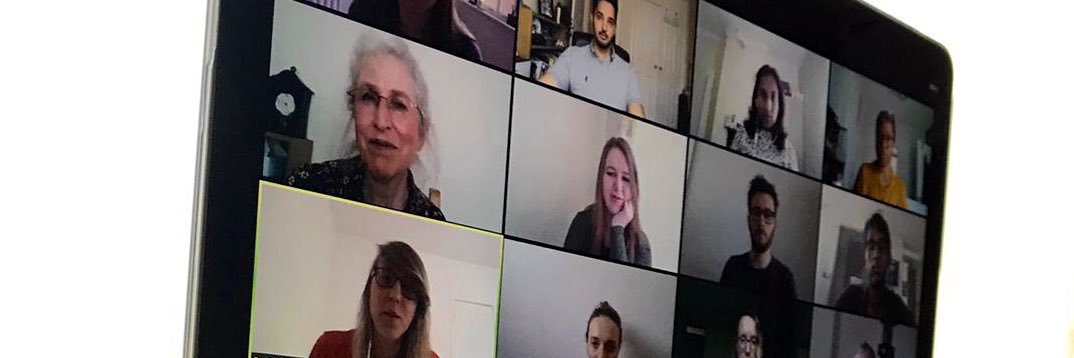
Join us for our latest instalment of the TASME TiME podcast with Dr Mark Lilicrap where we discuss Developing Clinical Reasoning!
The real measure of academic excellence is mastering the strategic use of conjunctive adverbs: "moreover", "however", "therefore", "hence", "thus", "furthermore", "accordingly", "consequently", and "henceforth".
Not just “I don’t know” but “let’s work together to find out”
Understanding a patient’s anxieties for an answer but being honest about our uncertainty is a step towards working in partnership in a shared-decision making process.
#ClinicalReasoning#Empathy@Empathy_Centre
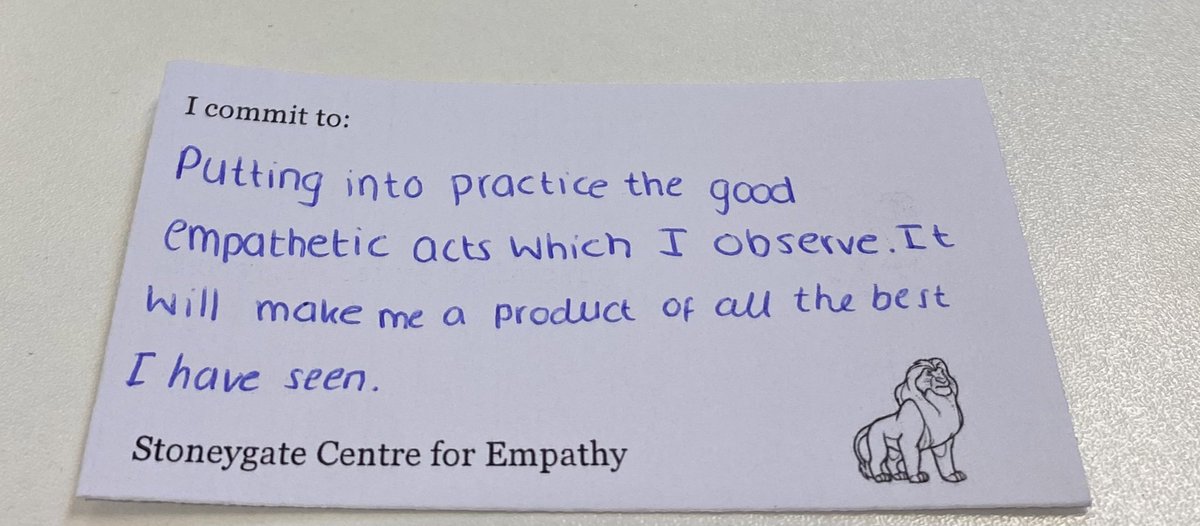
Lovely to see… but remember that learning and re-enacting by vicarious reinforcement (Bandura) does not necessarily equate to empathy, and that imitation can appear contrived.
It has to come from a place of feeling by relating to own experiences. #Empathy@Empathy_Centre
Really enjoyed discussing how we can use role models to combat the decline in medical student empathy. Thanks to Y3 @LeMedSchool for making a commitment to ID positive role models in clinical practice. @Empathy_Centre#empathy#MedEd#safari
💬 Think Aloud…
Asking medical students for a problem representation before their differential diagnosis is like a maths teacher asking students to show their working out, not just give a final answer.
You can see exactly where the pitfall may be.
@UK_CReME
…and hence the imperative need for explicit clinical reasoning teaching in our curricula.
Ideally, as a longitudinal theme based on educational pedagogy and evidence-based literature, mapped to this consensus statement by @UK_CReME
https://t.co/qhUtRu3Vpt
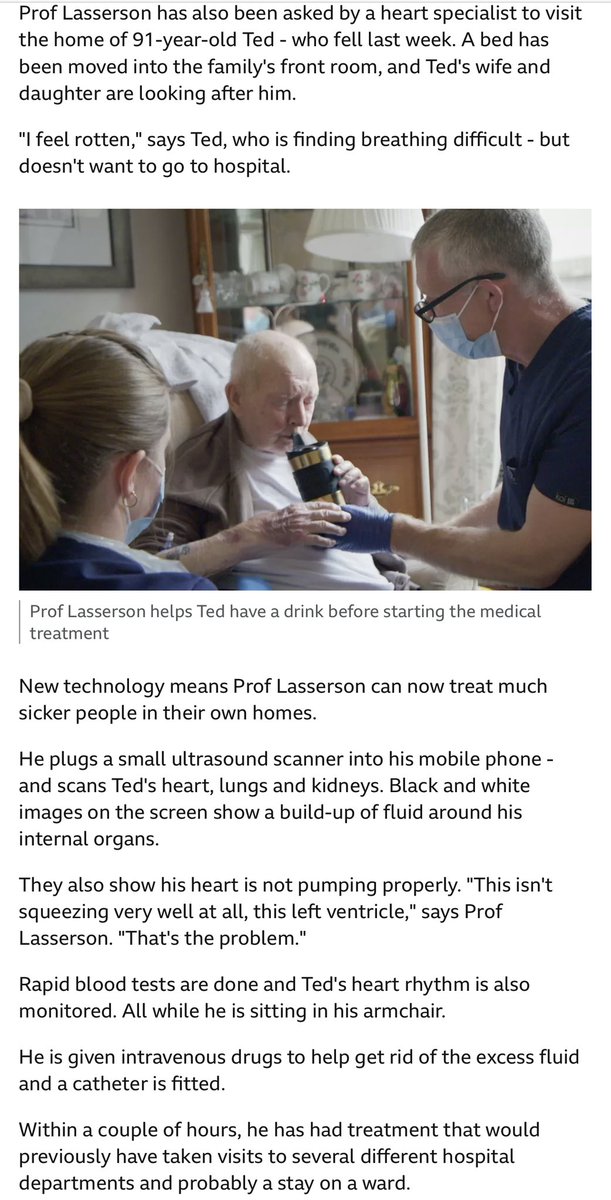
The key here is effective diagnostics and targeted treatment.
That’s what keeps a huge number of patients in hospital beyond the issue of community support services.
Combo of an astute diagnostician and the supportive technology and allows rapid delivery of therapies @ home.
Careers talk - A special thank you to Dr. Alastair Sandilands, a Consultant Cardiac Electrophysiologist. We learnt some fascinating facts about heart surgery and the procedures to repair and maintain the human heart. @satrust_@meltontimes
@RichardBiram @Cooper00Nicola Just looked at inpatient referrals in dermatology and 59% diagnostic error for common conditions ( in MRCP curriculum) : failure in CR is the cause . @Cooper00Nicola @drcolinm @HealthySkin4All
Enjoyed this. Not a part of the undergraduate course back in my day. Interesting to read about modern theories pertaining to clinical decision-making. Gave me a lot to think about @Cooper00Nicola
…and now have a go with this similar presentation!
⚖️ Comparing and contrasting illness scripts, as opposed to revising disease in isolation, is key to developing your #clinicalreasoning
A 31-year-old man p/w a headache that is throbbing and affecting the left-side of his head along with nausea and vomiting. Prior to symptom onset, he saw a bright light that progressively expanded, making it difficult for him to see. What is the likely diagnosis? #medEd
👨🏫 Example…
Problem Representation (INTERNAL synthesis):
💭 A YOUNG man, with no stated PMH, presents with a SUBACUTE Hx of RECURRENT bouts of UNILATERAL periorbital pain, ASSOCIATED with IPSILATERAL cranial autonomic features.
Prioritised DDx:
⤴️ Cluster
⤵️ Migraine
⚠️ SOL
Did you know you can harness every clinical case in groupwork to deliberately practice CHDD #clinicalreasoning concepts?
Exhibit A:
🔍 What semantic qualifiers can you identify or generate from this description?
🔍 How do they help you prioritise your differential diagnosis?
Did you know you can harness every clinical case in groupwork to deliberately practice CHDD #clinicalreasoning concepts?
Exhibit A:
🔍 What semantic qualifiers can you identify or generate from this description?
🔍 How do they help you prioritise your differential diagnosis?
A 36-year-old man p/w recurrent bouts of left-sided severe lancinating periorbital pain, occurring daily for the past several weeks. During his episodes, he constantly tears, and has a “runny nose.” Exam w/ mitosis, ptosis, & conjunctival injection. What is the likely diagnosis?
…and wisdom is not just knowing you can investigate and treat, but if and when it is appropriate, as part of a shared-decision making process.
#clinicalreasoning
Education is the acquisition of knowledge, while intelligence is the ability to use that knowledge to think and reason. One can be highly educated but not necessarily intelligent, and vice versa.
New year, same reminder: listen to patients. Anchoring on a diagnosis like “acid reflux” in a 50 year old female just because she has been “healthy”, can result in missing obstructive CAD.