Winnipeg clothing designer Kevin Takatch has figured out something pretty cool: fashion can make a statement without the statement being all about fashion.
Takatch is the guy behind BeLove, a local line of clothes with a funky, retro vibe and plenty of our community woven into it. He's a proud Winnipegger and doesn't hide it. In fact, he leans into it, using our city's history, art and culture in his designs, including images from the early days of the Winnipeg Folk Festival.
But what really caught my attention is who he's asking to model his clothes.
Takatch has been hitting the streets, approaching people, often people experiencing homelessness, and asking if they'll try on one of his jackets or shirts and pose for a few photos.
Then he gives them the clothing.
Yes, it's clever marketing. The pictures are terrific. But watch the videos on Instagram and TikTok and you realize pretty quickly this is about more than sales.
You see people smile. You see confidence. You see someone who may normally be walked past suddenly being noticed, complimented and treated with dignity.
As Takatch told me, everybody has a story...families, dreams, successes and failures...and any one of us could find ourselves struggling if a few things went wrong.
He's not pretending a jacket will solve homelessness.
But kindness matters.
Sometimes looking good makes you feel good.
And sometimes a small gesture really can make a big difference.
That's a Winnipeg clothing line I can get behind.
There is a version of this story that is easy to romanticize. A famous man stays loyal to his wife. People applaud. The end.
But the real version is much harder, much quieter, and far more honest than that.
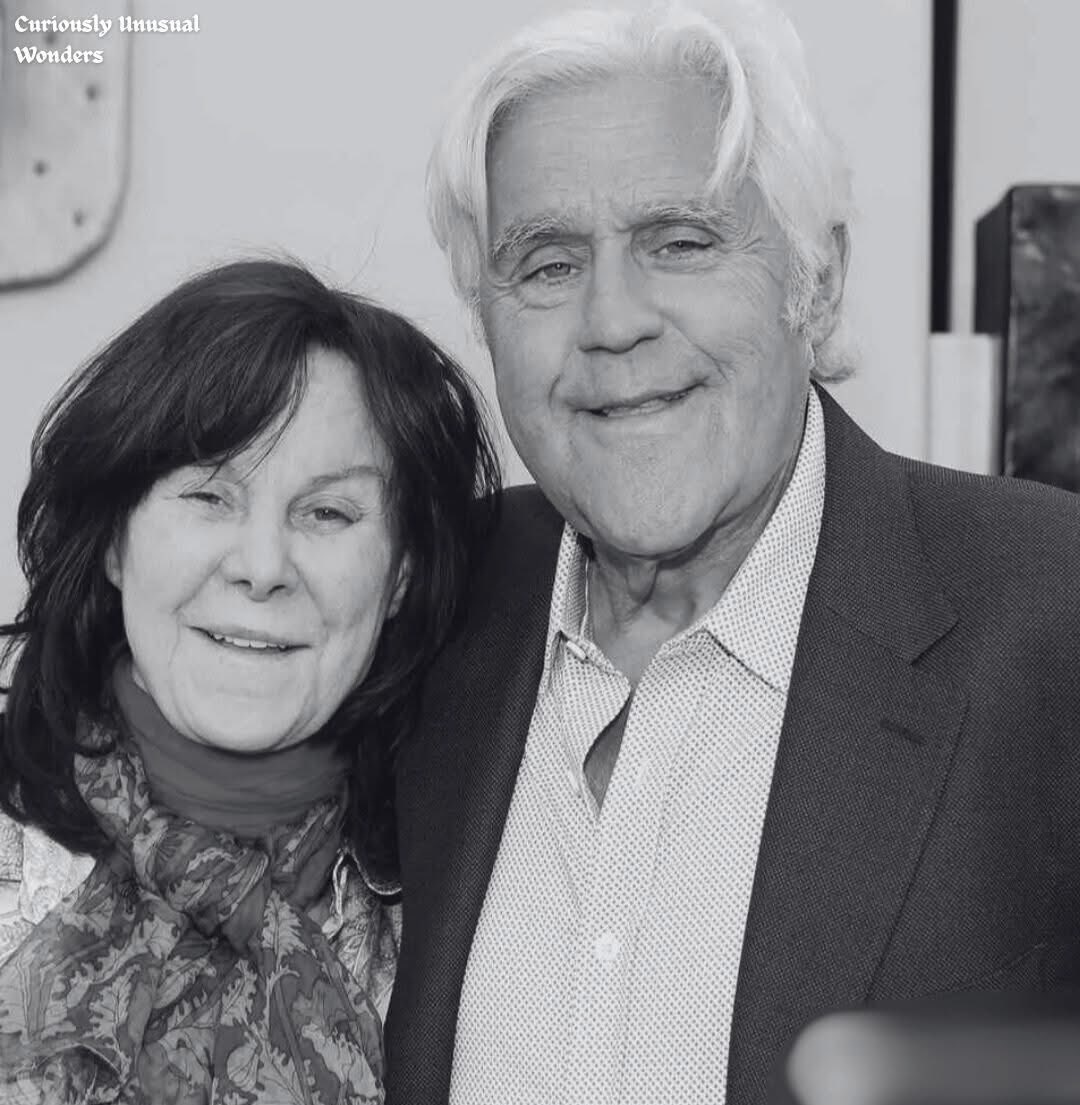
Jay Leno, 75, spent more than two decades as one of the most recognized faces on American television, hosting The Tonight Show night after night for millions of viewers. His wife, Mavis, stood beside him throughout all of it — not as a background figure, but as a woman of genuine accomplishment in her own right. She was nominated for the Nobel Peace Prize in 2002 for her advocacy work supporting women living under Taliban rule in Afghanistan. She was fiercely independent, deeply curious, and someone who loved to travel and explore the world.
Then, in 2024, Jay filed for conservatorship over her estate. The reason was that Mavis had been diagnosed with advanced dementia and was progressively losing capacity and orientation.
Their life changed completely.
The restaurants they once visited together are now off the menu. The travel Mavis always loved is no longer possible. The conversations they used to have in the evenings have narrowed and shifted in ways that are hard to fully explain to someone who has not lived it. Dementia does not just take memory. It slowly changes the shape of every moment two people share.
Jay has spoken publicly about the hardest part of the journey, and it is not what most people would expect. For years, every single morning, Mavis would wake up believing she had just received news that her mother had died. She experienced that grief fresh, as if hearing it for the first time, every day. Her mother went through that process of dying over and over again, for about three years. Each time, Mavis cried. Each time, Jay held her through it. He described it as truly tricky, and genuinely hard.
But he did not leave.
He rearranged his life around her needs. He only takes work that allows him to be home the same day or at most one night away. He comes home every evening and cooks her dinner. They watch television together, animal shows and travel documentaries on YouTube since real travel is no longer an option. When he carries her to the bathroom, he has a name for it. He calls it Jay and Mavis at the prom, the two of them dancing back and forth down the hallway, and she thinks it is funny. She still laughs. He still makes her laugh on purpose, every single day.
She still knows who he is. She looks at him and smiles. She tells him she loves him.
When someone asked Jay if he was going to get a girlfriend now, he was genuinely surprised by the question. He told them he already had one. He was married. Forty-five years. That was not something he considered walking away from.
What he said next is the part that has stayed with people.
He said that when you get married, you take vows. You say for better or worse. And most people, he noted, never really expect to be called upon to actually act on those words. They say them and hope the worse never arrives.
For Jay, it arrived.
And he is passing the test.
He has said he hopes his situation draws attention not just to his own story, but to the 50 or 60 million people in America who are quietly doing the same thing for a parent, a spouse, a sibling, and doing it completely without recognition. Nobody sees them. Nobody is interviewing them. They are just showing up every single day for someone who needs them, because that is what love actually looks like when it is no longer a feeling but a choice you make again every morning.
Jay Leno still makes his wife laugh. She still has the fire, he says. She still growls at the television when something offends her. She still smiles when he walks into the room.
For better or worse is not a promise you make on a beautiful day in a beautiful place with everyone watching.
It is what you do on a Tuesday evening when you carry the person you love to the bathroom and call it the prom, just to make her smile.
That is the whole story.
Blue Babe is a Steppe Bison found completely by chance in Alaska in 1979. The animal died some 50,000 years ago and was so well preserved that researchers were able to cook and eat a part of its neck muscle. The meat was described as "tough," and the taste was said to be "earthy and delicious."
In 1979, a gold miner named Ronald Soelberg stumbled upon a set of large bones protruding from the permafrost near Fairbanks, Alaska. He contacted local paleontologist Dale Guthrie, who conducted the excavation of Blue Babe.
The unearthed remains revealed an amazingly well-preserved ancient Steppe Bison, and it was given the nickname "Blue Babe" due to the bluish tinge of its bones. The find was a fascinating specimen from the Ice Age. Blue Babe represented an ancient species of bison that inhabited the grasslands of Eurasia and North America during the Pleistocene epoch, which lasted from about 2.6 million to 11,700 years ago.
Estimated to be around 50,000 years old, Blue Babe would have stood over six feet tall at the shoulder and weighed around 2,000 pounds. Its skeleton was remarkably complete, and even fragments of its skin, hair, and organs were preserved, offering valuable insights into its appearance and physiology. Blue Babe most likely met its end in the jaws of an ancient lion.
So why was it eaten? An unusual dinner party would play out at the Alaska home of the paleontologist Guthrie. Blue Babe froze quickly, which meant that its muscle tissue was preserved similarly to beef jerky, along with fat and bone marrow. The research team got curious and decided to follow in the footsteps of Russian scientists who had done the same before them, introducing part of the animal into an evening meal.
Guthrie wrote about the event: "To climax and celebrate Erik Granqvist's [the taxidermist] work with Blue Babe, we had a bison stew dinner. A small part of the Babe's neck was diced and simmered in a pot of stock and vegetables. The meat was well-aged but still a little tough, and it gave the stew a strong Pleistocene aroma, but nobody there would have dared to miss it."
@TedBlades @CityofStJohns @EddieSheerr@a_brauweiler usually associate sundogs with frigid winter weather, but sundogs are sometimes seen on a hot August day. Sundogs are caused by a layer of ice crystals between your eyes and the sun.
Canada's 10 seasons:
Winter
Fool's spring
Second winter
Mud, potholes and allergies
Hope
Summer
False Fall
Second summer
Fall (you are here)
Hello darkness my old friend
#MeanwhileInCanada








![historyinmemes's tweet photo. Blue Babe is a Steppe Bison found completely by chance in Alaska in 1979. The animal died some 50,000 years ago and was so well preserved that researchers were able to cook and eat a part of its neck muscle. The meat was described as "tough," and the taste was said to be "earthy and delicious."
In 1979, a gold miner named Ronald Soelberg stumbled upon a set of large bones protruding from the permafrost near Fairbanks, Alaska. He contacted local paleontologist Dale Guthrie, who conducted the excavation of Blue Babe.
The unearthed remains revealed an amazingly well-preserved ancient Steppe Bison, and it was given the nickname "Blue Babe" due to the bluish tinge of its bones. The find was a fascinating specimen from the Ice Age. Blue Babe represented an ancient species of bison that inhabited the grasslands of Eurasia and North America during the Pleistocene epoch, which lasted from about 2.6 million to 11,700 years ago.
Estimated to be around 50,000 years old, Blue Babe would have stood over six feet tall at the shoulder and weighed around 2,000 pounds. Its skeleton was remarkably complete, and even fragments of its skin, hair, and organs were preserved, offering valuable insights into its appearance and physiology. Blue Babe most likely met its end in the jaws of an ancient lion.
So why was it eaten? An unusual dinner party would play out at the Alaska home of the paleontologist Guthrie. Blue Babe froze quickly, which meant that its muscle tissue was preserved similarly to beef jerky, along with fat and bone marrow. The research team got curious and decided to follow in the footsteps of Russian scientists who had done the same before them, introducing part of the animal into an evening meal.
Guthrie wrote about the event: "To climax and celebrate Erik Granqvist's [the taxidermist] work with Blue Babe, we had a bison stew dinner. A small part of the Babe's neck was diced and simmered in a pot of stock and vegetables. The meat was well-aged but still a little tough, and it gave the stew a strong Pleistocene aroma, but nobody there would have dared to miss it."](https://pbs.twimg.com/media/FyWh4cEWIAA6bPH.jpg)