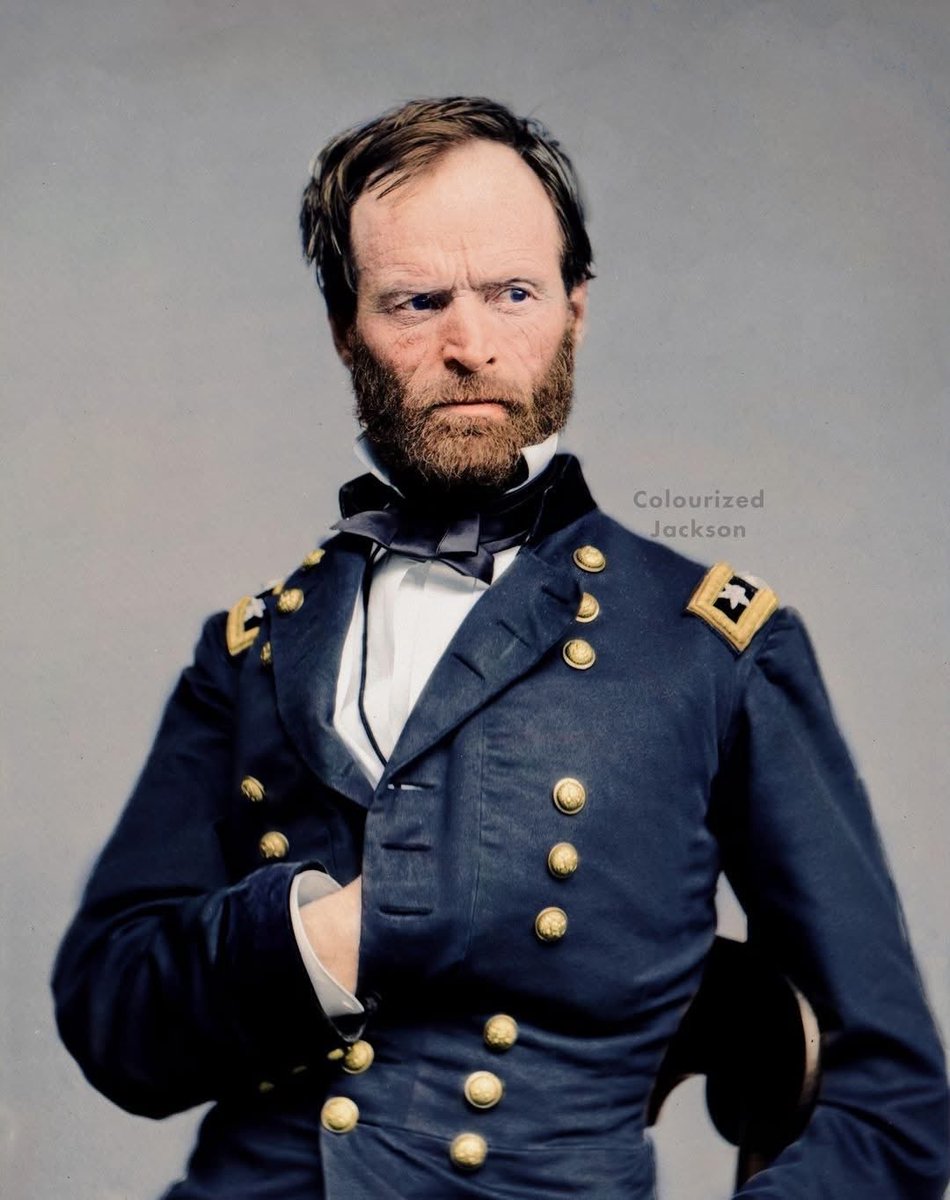
Less known fact. Sherman granted freed slaves land and a mule. Eventually politicians would tragically reverse it.
### The Savannah Meeting
In January 1865, having just completed his March to the Sea and captured Savannah, Georgia.
On January 12, Stanton and Sherman met with a delegation of 20 local Black ministers and community leaders, led by a Baptist minister named Garrison Frazier.
Stanton asked the men what they needed to secure their freedom. Frazier’s response was clear:
> *"The way we can best take care of ourselves is to have land, and turn it and till it by our own labor... and we want to be placed on land until we are able to buy it and make it our own."*
>
### The Terms of the Order
Four days after that meeting, with President Lincoln's approval, Sherman issued Special Field Orders No. 15. The directive was sweeping:
* **The Territory:** It confiscated a 30-mile-wide strip of coastline stretching from Charleston, South Carolina, down to the St. Johns River in Florida, including Georgia’s Sea Islands.
* **The Plots:** The land was reserved exclusively for newly freed families, to be broken up into parcels of **"not more than forty acres of tillable ground."**
* **The Mules:** Sherman's original order didn't actually mention mules. A few months later, as the settlements got underway, he authorized the Army to loan broken-down or surplus army mules to the new farmers to help them clear the land.
By June 1865, roughly **40,000 freed people** were settled on 400,000 acres of this "Sherman Land," successfully planting crops and building self-governing communities.
### The Reversal
The promise of permanent land ownership was incredibly short-lived. Sherman’s order was a wartime measure, meaning its long-term survival depended on political backing in Washington.
Following the assassination of Abraham Lincoln in April 1865, the newly inaugurated President Andrew Johnson—a Southern Democrat with deep white supremacist convictions—completely reversed the policy. In the fall of 1865, Johnson issued an amnesty proclamation that ordered the Freedmen’s Bureau to return almost all of the confiscated coastal land back to the original Confederate planters who had owned it.
Union troops were eventually sent in to forcibly evict the Black families who had settled there, stripping them of the economic foundation they had just begun to build and forcing many into the exploitative system of sharecropping.
You are thinking of **Special Field Orders No. 15**, issued by Union General William Tecumseh Sherman on January 16, 1865. This order is the direct historical origin of the famous phrase **"forty acres and a mule."**
The backstory of how this happened—and why it ultimately failed—reveals a mix of wartime logistics, a historic meeting with Black leaders, and a bitter political reversal.
### The Savannah Meeting
In January 1865, having just completed his March to the Sea.
On January 12, Stanton and Sherman met with a delegation of 20 local Black ministers and community leaders, led by a Baptist minister named Garrison Frazier.
Stanton asked the men what they needed to secure their freedom. Frazier’s response was clear:
> *"The way we can best take care of ourselves is to have land, and turn it and till it by our own labor... and we want to be placed on land until we are able to buy it and make it our own."*
>
### The Terms of the Order
Four days after that meeting, with President Lincoln's approval, Sherman issued Special Field Orders No. 15. The directive was sweeping:
* **The Territory:** It confiscated a 30-mile-wide strip of coastline stretching from Charleston, South Carolina, down to the St. Johns River in Florida, including Georgia’s Sea Islands.
* **The Plots:** The land was reserved exclusively for newly freed families, to be broken up into parcels of **"not more than forty acres of tillable ground."**
* **The Mules:** Sherman's original order didn't actually mention mules. A few months later, as the settlements got underway, he authorized the Army to loan broken-down or surplus army mules to the new farmers to help them clear the land.
By June 1865, roughly **40,000 freed people** were settled on 400,000 acres of this "Sherman Land," successfully planting crops and building self-governing communities.
### The Reversal
The promise of permanent land ownership was incredibly short-lived. Sherman’s order was a wartime measure, meaning its long-term survival depended on political backing in Washington.
Following the assassination of Abraham Lincoln in April 1865, the newly inaugurated President Andrew Johnson—a Southern Democrat with deep white supremacist convictions—completely reversed the policy. In the fall of 1865, Johnson issued an amnesty proclamation that ordered the Freedmen’s Bureau to return almost all of the confiscated coastal land back to the original Confederate planters who had owned it.
Union troops were eventually sent in to forcibly evict the Black families who had settled there, stripping them of the economic foundation they had just begun to build and forcing many into the exploitative system of sharecropping.
Day 7 of asking Paramount+ to make full UFC events available for rewatch. We want to rewatch the entire White House event—not just the fights. Come on guys. It’s been a week. #UFCFreedom250#UFCWhiteHouse@UFConParamount@paramountplus