The Twitter account for news and updates from @CUBoulder’s College of Engineering and Applied Science | one of the top-ranked programs in the nation. #BeBoulder
From flight simulations to Apollo 13-inspired challenges, @CUBoulder aerospace engineering students are gaining hands-on experience while building skills in AI, computational thinking and real-world problem-solving.
https://t.co/IfriAUNi8P
#CUEngineering#AerospaceEngineering
Two @CUBoulder materials science PhD students have earned 2026 NDSEG Fellowships.
🔹 Sinica Guo is advancing acoustic devices for communications.
🔹 Austin Shoemaker is developing materials to improve solar cells and electronics.
https://t.co/J6BccQrBkp
#CUEngineering
.@CUBoulder iis launching three new research centers: AIKI, ASCENT and CQC. These new centers will unite researchers, students and industry partners to advance AI systems, study societal impacts, and accelerate quantum computing research.
https://t.co/czCVll8GZZ
#CUEngineering
.@CUBoulder’s Hi-SNR Lab is making radar research more accessible with ORCA, an open-source platform for environmental monitoring.
ORCA helps scientists spend less time building radar systems and more time answering big questions.
https://t.co/4djFa1hdUM
#CUEngineering
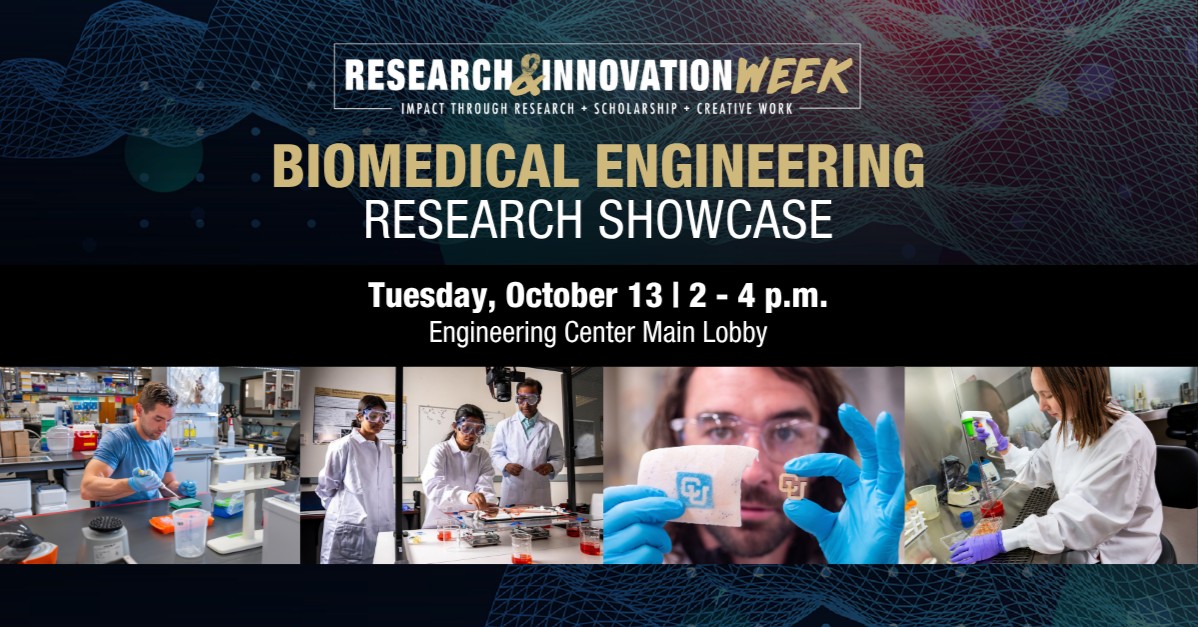
Discover the future of healthcare innovation at the @CUBoulder Biomedical Engineering Research Showcase. Explore smart tattoos, wearable tech, AI-powered diagnostics, advanced imaging and more.
Tuesday, Oct. 13
2–4 p.m.
EC Main Lobby
https://t.co/OTbcuUn1Of
#CUEngineering
As AI continues to evolve, so do the risks. @CUBoulder Professor Martha Palmer shares insights on cybersecurity, infrastructure vulnerabilities and the potential consequences of increasingly autonomous systems.
https://t.co/j3nYK8sfjQ
#CUEngineering#ComputerScience#AI
🎉 Congratulations to Prof. Debanjan Mukherjee and the FLOWLab team on receiving an NIH NIGMS Maximizing Investigators' Research Award (MIRA)! The $2.05M award will support research exploring chaos in nonlinear fluid flows and its biomedical relevance.🔬
#CUEngineering
.@CUBoulder Robotics PhD student Izzy Collins is finding ways to cut data demands in large-scale systems, with applications to power grids spanning countries.
In Prof. Jensen’s controls lab, she’s exploring how systems can perform with less information.
https://t.co/oQ3aZN303p
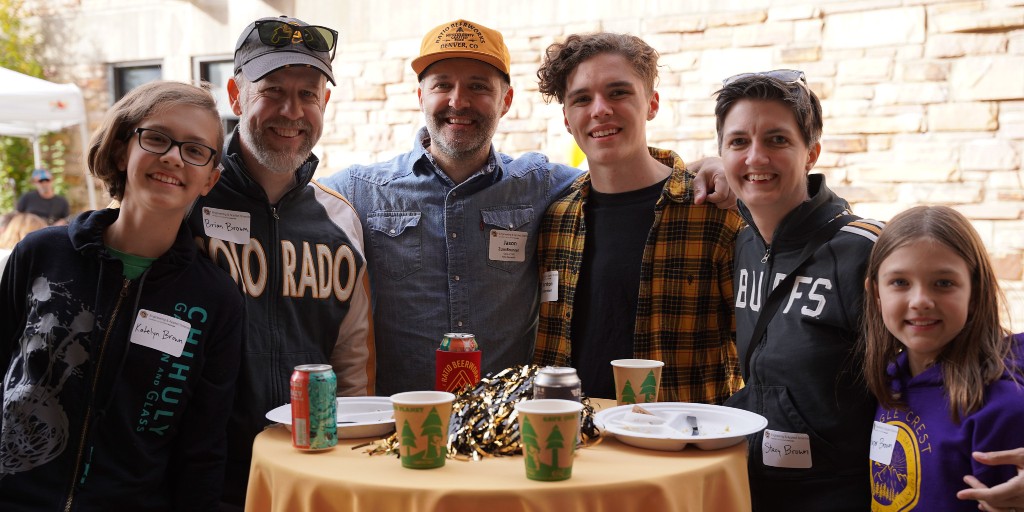
CU Engineering Homecoming Tailgate returns this Saturday, Oct. 3!
Join fellow alumni, friends, and the CU Engineering community as we reconnect, celebrate CU Boulder's 150th anniversary, and get into the Buffs spirit before the game! 💛🖤
https://t.co/TBQ4aoRtVk
#CUEngineering
Research led by Evan Thomas found that pedestrian bridges in rural Rwanda boosted income, agriculture, school attendance and access to health care. The study is the world's first randomized controlled trial of civil engineering infrastructure.
https://t.co/QyEGcQv7Wq
What we don’t know about Uranus and Neptune could shape how we explore them. @CUBoulder PhD student Cate Leszcz is using computational fluid dynamics to study their atmospheres and the extreme heating that future probes could face during hypersonic entry.
https://t.co/rpDrT8bdWh
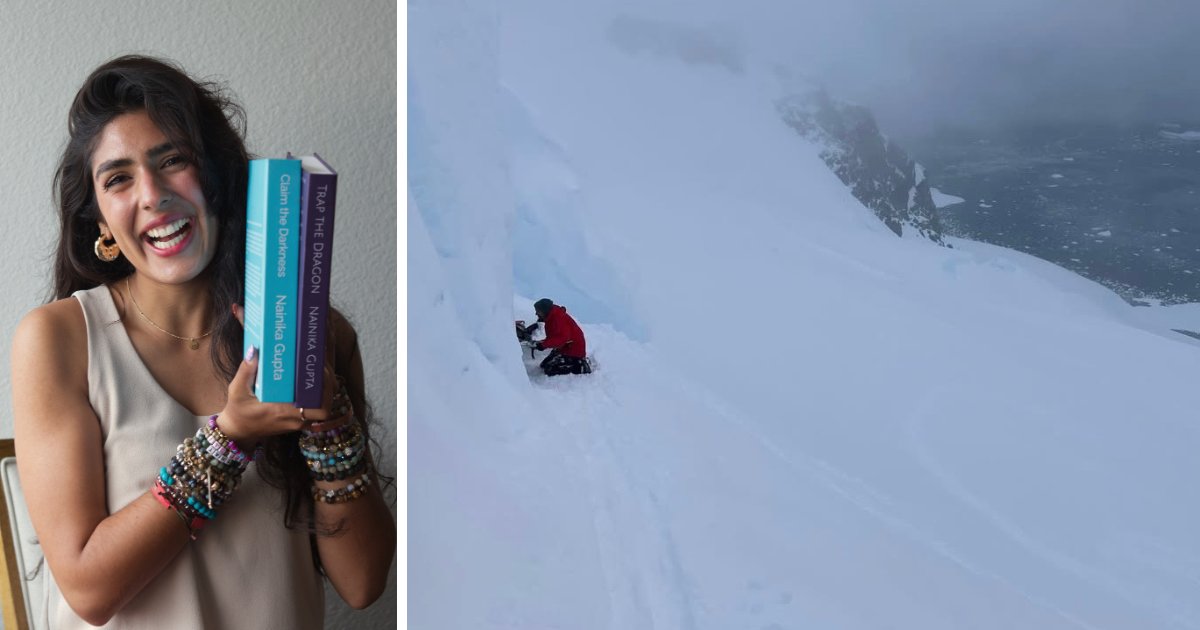
From Antarctica to the electric grid, @CUBoulder senior Nainika Gupta is using environmental engineering to tackle challenges in climate, energy and infrastructure building more resilient systems through research and innovation.
https://t.co/2F4RuOvXp7
#CUEngineering
.@CUBoulder engineering students Sami Yohannes and Caleb Woldemichael turned an industry challenge into an AI startup that streamlines the time-consuming RFP process. Now, they’re mentoring future STEM students and investing in access to STEM education.
https://t.co/Go8akUf0td
What’s next for aerospace innovation? 🚀
Join @CUBoulder engineering alumni and leaders in Denver for a conversation on emerging technology, space exploration and the future of discovery.
Wednesday, Sept. 16 | 6:30 p.m. MT
📍 The Jacquard Hotel, Denver
https://t.co/EerMsAFZKP
.@CUBoulder Prof. Mahmoud I. Hussein is advancing research to reduce turbulence and improve aircraft fuel efficiency.
Breakthroughs in super-resonance and scatterless interference could improve airflow control across aircraft surfaces.
https://t.co/eljIwCoJgd
#CUEngineering
New @CUBoulder research puts numbers behind the unpredictability of war. Prof. Aaron Clauset's study finds escalation is remarkably common, offering insights that could help policymakers better understand and reduce conflict risks.
https://t.co/KgwA4QHkf5
#CUEngineering
.@CUBoulder Prof. Chris Myers is partnering with @NIST to advance synthetic biology through better data standards, automation and AI—helping make biological systems more predictable and accelerating scientific discovery.
https://t.co/dLrnv1TTh1
#CUEngineering#SyntheticBiology
NEMO, developed by @CUBoulder BioServe Space Technologies, is a new automated microscope and incubator aboard the ISS that will help scientists study biological samples in microgravity, with much of the work controlled remotely from Earth.
https://t.co/xDxN7lTQzx
#CUEngineering