🚨 Rising US wages could start adding to inflation pressure
The US job market may be turning from a source of stability into a new source of inflation pressure. Employers kept adding jobs in October, unemployment held steady, and wages grew at a solid pace, all signs of a labour market that's still firm despite higher interest rates.
That matters because inflation also came in hotter than expected in October. With wages now rising fast enough to keep up with prices, workers are no longer losing purchasing power, but that extra spending power could keep inflation stubborn.
For the Federal Reserve, it adds weight to the case for further rate hikes, which markets already see as likely in December. Investors will be watching upcoming jobs and inflation data, along with any signals from Fed officials, for clues on how far policymakers are prepared to go.
🚨 Metaplanet keeps buying back shares as its stock slides ahead of an MSCI index exit
Japanese Bitcoin treasury company Metaplanet has bought back another batch of its own shares, as it tries to increase the amount of Bitcoin each remaining share represents. The latest purchases bring it past halfway through a buyback programme approved just a month ago.
It hasn't stopped the selling, though. Metaplanet's shares fell again and closed below the average price the company paid in its latest buying round.
Pressure is mounting on several fronts. Metaplanet is set to be dropped from the MSCI Japan Small Cap Index at the end of November, which typically triggers selling by index-tracking funds, and it recently cut its revenue forecast. Money spent on buybacks also isn't being used to buy more Bitcoin, a trade-off investors will be watching closely.
🚨 Mercedes-Benz tests green hydrogen-made steel from Namibia in a car demonstrator
Mercedes-Benz has used steel made with green hydrogen in a component for its EQS demonstrator car, as it looks for ways to cut emissions from its supply chain. The iron came from HyIron, a pilot project in Namibia that uses renewable-powered hydrogen instead of coal to process iron ore, producing a fraction of the usual emissions.
Mercedes says the trial shows hydrogen-based steel can work across the entire supply chain, and it has signed a letter of intent with HyIron to explore scaling up production.
Cost remains the big hurdle, as green steel carries a premium that could eat into carmakers' profits. But European lawmakers are backing new incentives to encourage the use of low-carbon, EU-made steel, which could boost demand. Mercedes aims to cut emissions from its own production by 90% by 2039.
🚨 TRON holds steady as its network passes 414 million accounts
TRON's TRX token has held up better than most of the crypto market during this week's selloff, slipping only slightly while Bitcoin fell much harder. The network has also passed 414 million total accounts, though that counts every address ever created rather than individual users.
TRON's main strength remains stablecoins. It handles the large majority of USDT transfers, making it one of the busiest payment networks in crypto, according to third-party research cited by TRON.
It's also expanding access, with a new integration letting Backpack Wallet users send, receive and bridge TRON-based assets, including USDT, following TRX listings on Backpack's exchange.
Strong network usage doesn't guarantee the token's price will follow, though, and TRX remains below its recent highs as market volatility continues.
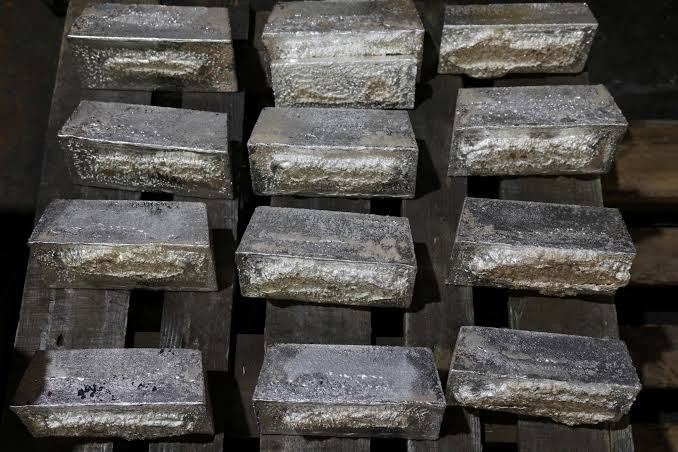
🚨 Americas Gold and Silver reports record silver production as revenue jumps
Americas Gold and Silver, a North American miner, has reported its highest-ever quarterly silver production, driven by strong results at its Cosalá operations in Mexico, where it has started mining richer parts of the deposit. Higher silver prices and increased output pushed revenue up sharply from a year earlier.
The company also reported some of its best drilling results so far at both Cosalá and its Galena complex in Idaho, including a new high-grade discovery that could expand future mining plans.
It's still not profitable, though, posting a net loss for the quarter, albeit a smaller one than a year ago. Costs per ounce remain high, and the company expects to finish the year only at the low end of its production guidance.
Its shares have surged over the past three years, earning it a spot on the TSX's list of top-performing stocks.
🚨 Hyperliquid keeps burning HYPE, but the token is still stuck in a downtrend
Hyperliquid is pushing ahead with its buyback programme, using a large share of its trading fees to buy HYPE on the open market and permanently remove it from circulation. The protocol has now burned more than 5% of HYPE's total supply, backed by more than $1B in lifetime revenue.
On paper, that's a strong setup: a busy exchange generating real income and channelling it straight into demand for its own token. But so far it hasn't been enough to turn the price around. HYPE remains in a steady downtrend, with each recovery attempt fading before it can break higher.
The problem is simple. Buybacks only lift the price if they outweigh the selling, and in the current market, with Bitcoin slipping below $70,000 and sentiment deep in fear, sellers are still in control.
Supporters argue the steady burn strengthens HYPE's long-term supply picture regardless of short-term moves. For a real reversal, traders want to see the token break out of its falling trend on rising volume, a sign that buyers are finally gaining the upper hand.
🚨 Ghana plans to end raw cocoa exports by 2030
Ghana, one of the world's biggest cocoa producers, plans to phase out exports of raw cocoa beans by 2030, Finance Minister Cassiel Ato Forson announced in the country's 2027 budget. The government wants half of its cocoa processed at home by 2028 and all of it by the end of the decade.
The aim is to keep more of the industry's value in Ghana, from grinding beans to making cocoa butter, powder, chocolate and cosmetics. "The country that grows the bean must retain a far greater share of the industry built around it," Forson told Parliament.
The plan comes as cocoa prices have fallen sharply this year and El Niño threatens next year's harvest. The budget didn't explain how the ban would be enforced or funded, or how it would affect farmers.
🚨 Solana treasury firm DeFi Development posts a $66.6M profit despite revenue nearly halving
DeFi Development, a Nasdaq-listed company that holds Solana on its balance sheet, reported a $66.6M third-quarter profit, but its shares fell sharply on the day. The profit didn't come from its business: revenue almost halved from a year earlier and didn't cover operating costs. Instead, it came almost entirely from gains on its SOL holdings and derivatives.
The company borrows and issues preferred stock to buy more SOL, which magnifies moves in its share price in both directions. "Amplification works in both directions, and shareholders felt its impact over the last year as SOL fell," CEO Joseph Onorati admitted.
It now plans to fund more purchases mainly through a high-yield preferred stock. Its own stress test shows that if SOL halved, income would fall short of covering those payouts.
🚨 Malaysia investigates AI chips linked to the firm at the centre of Nvidia's spy scandal
Malaysia is investigating whether AI chips imported by Speedmatrix, the local arm of Singapore-based cloud firm Megaspeed, were illegally shipped onwards. Megaspeed is at the heart of the scandal that cost Jensen Huang his job as Nvidia CEO, after a former executive there was alleged by the US to have spied for China, which Beijing denies.
Malaysia's trade ministry says it's working with customs, Singapore and the US to trace the chips. Since 2025, re-exporting US-made AI chips from Malaysia has required a permit.
Prime Minister Anwar Ibrahim said there's no sign yet that the chips left the country, and that Malaysia will cooperate with any investigation. Renting out chips held in Malaysian data centres remains legal. Shipping them out without a permit does not.
🚨 HSBC launches digital support to help first-time investors get started
HSBC has launched a new digital service aimed at helping novice investors, becoming one of the first big banks to use the UK regulator's new "targeted support" rules. The scheme went live at the end of October after the bank won approval from the Financial Conduct Authority.
The service walks customers through educational material on inflation and investing, followed by a quiz to identify their investor style. Based on the result, the HSBC app then suggests a matching ready-made portfolio. HSBC plans to step up marketing next year, including inviting customers who hold large amounts of cash.
The FCA introduced targeted support in April to let firms suggest products to groups of customers with similar circumstances, without giving full personal advice. Quilter and Vanguard were among the first to use it, while banks have been slower to join.
🚨 Claude goes down for thousands of users as Microsoft's global outage drags into a second day
Anthropic's Claude has been hit by major outages as the fallout from Microsoft's global systems failure continues for a second day. Thousands of users reported problems, with Claude's status page showing elevated errors, Claude Code and its developer platform, and Anthropic investigating issues with users logging in.
The trouble began on Thursday evening, when Microsoft's 365 incident disrupted Claude's connectors to Outlook mail, SharePoint, Teams and calendars. OpenAI reported similar problems with its own Microsoft connectors.
The wider Microsoft outage has knocked out Outlook and Teams for schools, NHS trusts, police forces and supermarkets. Microsoft says recovery work is ongoing and has extended its email timeout window to 48 hours to protect delayed messages.
🚨 India's gem and jewellery exports jump 34% ahead of the holiday season
India's gem and jewellery exports climbed sharply in October compared with a year earlier, driven by strong demand for gold jewellery and a recovery in polished diamond shipments, according to the Gem and Jewellery Export Promotion Council.
The industry says the boost reflects exporters racing to meet orders from international buyers ahead of the year-end holiday season, one of the most important selling periods for jewellery in the US, Europe and other key markets. Higher gold prices over the past year have also lifted the value of shipments.
The surge comes as gold itself has been sliding in recent weeks, falling below $4,000 an ounce on the back of hot US inflation and expectations of further Fed rate hikes. That drop has had a very different effect on India's import side, with the country's gold imports plunging in October as buyers held back.
For India, one of the world's biggest jewellery hubs, strong exports are a welcome sign as global demand holds up despite economic uncertainty.
🚨 Crypto market loses $130B in a day after the Nvidia shock
The global crypto market shed around $130B in a single day as fallout from Jensen Huang's resignation at Nvidia spread from AI stocks into digital assets. Bitcoin fell below $70,000 and Ethereum dropped under $2,000, both hitting their lowest levels since August, with BNB and Solana sliding too.
Analysts point to a mix of pressures. Bloomberg cited growing expectations of further Fed rate hikes and worries about tougher crypto regulation next year now that Democrats control Congress. GSR co-founder Rich Rosenblum said volatility in AI stocks, a strong dollar and the leadership change at Nvidia all weighed on riskier assets.
The drop then fed on itself. Once Bitcoin broke below $70,000, more than $1B in leveraged bets on rising prices were forcibly closed, adding to the selling pressure.
The slide is also hitting companies that hold large amounts of Bitcoin on their balance sheets. Japan's Metaplanet reported a hefty net loss for the first nine months of the year, driven by paper losses on its Bitcoin holdings, even as it kept adding to its stack.
🚨 Binance says it has fully covered customer losses as the FBI seizes $1.2B from its hackers
Binance says it has now "completed coverage" of all customer assets affected by last month's record hack, as US authorities announced they had seized more than $1.2B of the stolen crypto. The exchange has also published a fresh proof of reserves snapshot, and says users will soon be able to independently verify that their funds are fully backed.
The 29 October attack, carried out by a North Korean military hacking unit known as TraderTraitor, saw billions of dollars drained from Binance in under 20 minutes. It's the largest crypto theft on record, far surpassing last year's Bybit hack. Binance co-CEO Richard Teng says it may have started with a compromised engineer's laptop, though he stressed it was a complex attack rather than a single mistake.
More than $2.7B of the stolen funds have now been frozen by US authorities and crypto firms working together. A judge will ultimately decide who has a rightful claim to the recovered money.
The FBI has also blamed North Korea for a separate deepfake video call scam that has stolen hundreds of millions from crypto users over the past 18 months.
🚨 Fund manager Sean Peche warns he's "a bear for AI-related stocks"
Sean Peche, founder of Ranmore Fund Management, says he's turned bearish on AI stocks, warning that Big Tech's enormous spending on AI infrastructure leaves investors exposed. "The large technology companies are spending an absolute fortune on AI capex, and I think investors need to be very careful," he said.
Peche argues that investors too often assume past winners will keep winning, and that his fund focuses on "the numbers, not the story." He compares the AI trade to a big wave: "You've got to exit these waves before they crash."
His warning lands at a tense moment. AI stocks have been hit hard recently, with the Nasdaq suffering its worst day in over a year last week, and Jensen Huang's shock exit from Nvidia has added fresh uncertainty. The cost of the AI build-out is also starting to show, with cash flow turning negative at Meta and Alphabet, and several tech giants pausing share buybacks and raising money through debt and equity.
Not everyone agrees. Bernstein says it doesn't find the bear case "particularly compelling" and remains positive on AI over the long term, even if the near term is hard to call.
🚨 Iowa county moves to rezone farmland for a Bitcoin mine, with strict conditions
Officials in Delaware County, Iowa, have given initial approval to rezone farmland near the town of Hopkinton so that Bitcoin mining company Compass Mining can keep operating there, but only if it makes some big changes. The site, which Compass has run since early 2025, would be reclassified from agricultural to light industrial use.
Noise has been the main complaint. Local residents and a nearby cattle farmer say the mine's cooling fans can be heard for miles when the wind blows the wrong way. Compass has agreed to house its machines inside a dedicated building to muffle the sound, and the county will hire an independent consultant to check that the noise has actually come down. It will also require the company to switch to a quieter liquid cooling system using water and antifreeze.
Residents at a public hearing also raised concerns about lost farmland and the mine's heavy electricity use. County officials say there's been no rate increase for locals, as the company has its own separate power agreement. A final vote on the rezoning will come at a future meeting.
🚨 Hyperliquid whale opens a $34.5M long on Bitcoin just below $69,000
A trader on Hyperliquid has made a big bet that Bitcoin will bounce, opening a long position on 500 BTC worth around $34.5M at an average price just under $69,000. The trade came as Bitcoin slipped below $70,000 for the first time since August, following a wave of forced liquidations, continued ETF outflows and renewed tensions in the Middle East.
It's a bold move into a market gripped by fear. Sentiment gauges have sunk into "extreme fear" territory, and some investors have compared the mood to the aftermath of the FTX collapse. Large leveraged short positions have also been building up, which could fuel a sharp rally if prices turn higher and those bets are forced to close.
Whale trades like this are closely watched, but one position doesn't guarantee a turnaround. Leveraged longs can be liquidated quickly if the price keeps falling, so traders will be watching whether this buyer adds to the position or gets shaken out.
🚨 Kraken gives Bitcoin firm Nakamoto an extra year to repay part of its loan
Nasdaq-listed Bitcoin company Nakamoto has agreed with Kraken to push back part of its loan repayment by a full year, clearing all scheduled principal payments from its 2026 calendar. The $60M portion that was due this December is now due in December 2027, alongside a larger tranche due in the middle of that year.
The deal also widens what Nakamoto can put up as collateral, allowing it to count the value of Bitcoin derivatives positions it holds with another Kraken entity. Nakamoto's chief investment officer said the change gives the company more financial flexibility and resilience against market volatility, letting it focus on its core business and Bitcoin holdings.
The loan, denominated in Tether's USDT stablecoin, is backed by Bitcoin, which lets Nakamoto raise cash without selling its holdings. With Bitcoin sliding below $70,000 this week, that breathing room matters. Falling prices shrink the value of the collateral behind loans like this, so getting an extra year before repayment eases pressure on a company whose balance sheet rises and falls with Bitcoin.
🚨 Bittensor subnets are now earning real revenue from paying customers
One of Bittensor's subnets is showing that decentralised AI can attract real paying customers. Lium, known as Subnet 51, runs a decentralised GPU cloud where developers rent Nvidia hardware by the second, and its customer spending is now on pace for roughly $35M a year. Over the past month, both its number of paying customers and the amount they spend have grown sharply, with existing users spending more as well as new ones signing up.
Most rentals don't go through Lium's website but are launched directly from code, through its command line and API. That suggests developers and AI agents are building it into their workflows, which tends to make customers stickier.
Lium isn't alone, with other subnets offering services such as AI-generated CAD files for 3D printing, and combined revenue across Bittensor subnets is approaching $70M a year.
There's an important caveat. GPU providers on Lium also earn token emissions on top of rental fees, which helps keep prices low. The real test will be whether customers stick around as those subsidies shrink.